

New Trends in Round Shower Floor Drain Reviews
Reference Standard: Relevant drain performance and sanitary product quality references include EN 1253-1 for floor gullies in buildings, plus general quality-system validation through ISO 9001. The catalog also references CE EN1253-1, CUPC, Watermark, and ISO 9001 Management at company or category level, but it does not provide a separate certificate file or independent test report for one specific round shower floor drain model.
Short Answer
The available product data confirms floor drains and shower drains, material routes including stainless steel, plastic, rubber, iron, and brass, and drain production raw materials including SS304, SS316, ABS, and PVC. It also confirms factory capabilities such as stamping, laser cutting, bending, welding, laser welding, surface treatment, brushing, sandblasting, customized logo, customized packing, and air testing for all drains. It does not confirm a model-level round drain diameter, cover opening pattern, flow rate, anti-odor core, pipe size, removable cover structure, or drainage capacity.
This article therefore uses a different review method: it reads the product backward from post-use signs rather than forward from a specification sheet. That approach helps buyers avoid overreading generic drain capability while still extracting practical value from real catalog facts.
For broader company context, see the Mondeway sanitary product range.

After-Rinse Clues: What the Floor Drain Surface Tells After Daily Shower Use
A round bathroom floor drain often looks acceptable before installation, but its real behavior starts after repeated rinsing. A shower floor is not a dry showroom surface. It receives warm water, shampoo, soap film, mineral traces, skin oils, and occasional cleaning chemicals. When these residues dry around the visible drain area, they reveal whether the surface is easy to wipe, whether the finish holds a stable appearance, and whether burr-prone edges collect grime faster than expected.
The confirmed catalog facts support this surface-based reading. The drain production line includes brushed surface, sandblasting, Matt Silver, Black Powder coated, and Different Colors as finish options. The surface treatment workshop is described as being handled in-house, with processes including pickling, electrical polishing, and passivation. The catalog also explains that drains after welding can have dirty surface, oil, scratches, and yellow spots, and that pickling is used to clean the surface so it looks silver. These are not minor decoration details. In a wet bathroom, surface cleanliness affects how fast visible staining appears and how easily the user can return the drain area to a clean look after normal use.
The missing boundary matters just as much. The catalog does not provide a separate surface roughness value, coating thickness, corrosion rating, scratch-resistance rating, or model-level finish grade for a round shower drain. A buyer cannot honestly claim that one round model has a specified finish durability unless the supplier provides a model sheet, finish sample, salt-spray data, cleaning-cycle record, or close-up post-cleaning photo.
A practical edge-condition model can be used without inventing data. In the early stage, the surface may show only water rings or light soap haze. In the middle stage, residue begins to gather around any brushed grooves, stamped transitions, or rim edges. In the stress stage, weak passivation, poor cleaning after welding, or inconsistent surface treatment may cause localized discoloration or persistent marks. This does not prove failure; it creates a review route: wipe, inspect under side light, check rim continuity, and compare samples from the same batch.
A cross-dimensional comparison is useful. A brushed stainless steel drain can hide fine directional marks better than a mirror-like surface, but brushing lines may also hold soap film if the surface is too rough or poorly cleaned. A powder coated surface may create a stronger visual color match, yet scratches can expose a different underlying appearance if the coating is damaged. ABS or PVC parts may avoid metallic oxidation concerns, but they can be more sensitive to harsh cleaner compatibility depending on the material sheet. Because the catalog only confirms material routes and process capability, the right trend is not to declare one finish superior. The better trend is asking for post-rinse appearance evidence before approving a batch.
Small Round Opening, Repeated Interruption: Reading Blockage Risk Without Claiming Flow Data
A drain becomes memorable when water stops leaving the shower area smoothly. The interruption may be brief: a small pool forms around the feet, then slowly clears. It may also be maintenance-related: hair and soap residue collect near the inlet, and the user must clean the drain more often than expected. For a round shower drain, the circular opening area can concentrate attention on a smaller visual center than a long linear drain, but that observation must remain cautious because the catalog does not provide hole layout, cover photo, removable structure, or flow data.
The confirmed product information only allows a category-level statement: Mondeway lists floor drains and shower drains, and the bathroom accessories are used in the shower room. Materials include stainless steel and plastic families, while the drain production line specifically references SS304, SS316, ABS, and PVC. These facts support a shower-use discussion, but they do not support claims such as liters per minute, anti-clog geometry, strainer hole size, trap depth, deodorizing cartridge, or removable basket design.
The underlying mechanism is physical rather than promotional. Hair fibers behave like flexible threads. Soap-based residue can act as a sticky binder. Skin particles and mineral deposits add fine solids. In a low-flow micro-zone near an inlet edge, these materials can bridge across small openings, cling to surface texture, or collect where water velocity drops. If the cover design is not easy to remove or rinse, the maintenance burden increases even if the material itself is acceptable.
A cautious fatigue model helps the buyer ask better questions. During the first weeks, the drain may clear water well when the cover is clean. During the middle period, hair and soap film may begin to reduce open area, especially if the user does not rinse the cover after bathing. During the extreme period, slow discharge, odor return, or standing water can appear if residue reaches the pipe entry or trap area. This is a maintenance-risk model, not a confirmed performance result for a specific model.
A useful comparison test can be built around observation rather than unverified numbers.
| Review variable | Confirmed data basis | What can be checked | What remains unconfirmed |
|---|---|---|---|
| Shower environment | Used in shower room | Residue after rinsing | Exact water-flow capacity |
| Material route | SS304, SS316, ABS, PVC | Cleaner compatibility request | Model-level material sheet |
| Cover behavior | Not specified | Cover photo request | Removable structure |
| Maintenance access | Not specified | Cleaning demonstration video | Hair interception geometry |
| Odor concern | Not specified | Trap compatibility question | Anti-odor core design |
KEY TAKEAWAYS
- Slow clearing after normal rinsing can appear before a buyer has any formal flow-test data.
- Soap haze around the inlet edge is an early sign that surface texture and cleaning access need review.
- Hair retention near the visible opening should trigger a request for cover photos, cleaning records, and opening layout.
Flatness Memory From Carton to Tile: Why a Round Drain Must Arrive Without Quiet Deformation
A round drain can pass a casual visual check but still create trouble when placed on a flat tile surface. The buyer opens the carton, puts the drain on a reference plane, and notices a slight rock, uneven rim contact, or a gap that was invisible in the catalog image. That moment is not only an installation issue. It is a supply-chain memory issue: stamping, handling, finishing, and packing can all influence whether the component keeps its intended shape until installation.
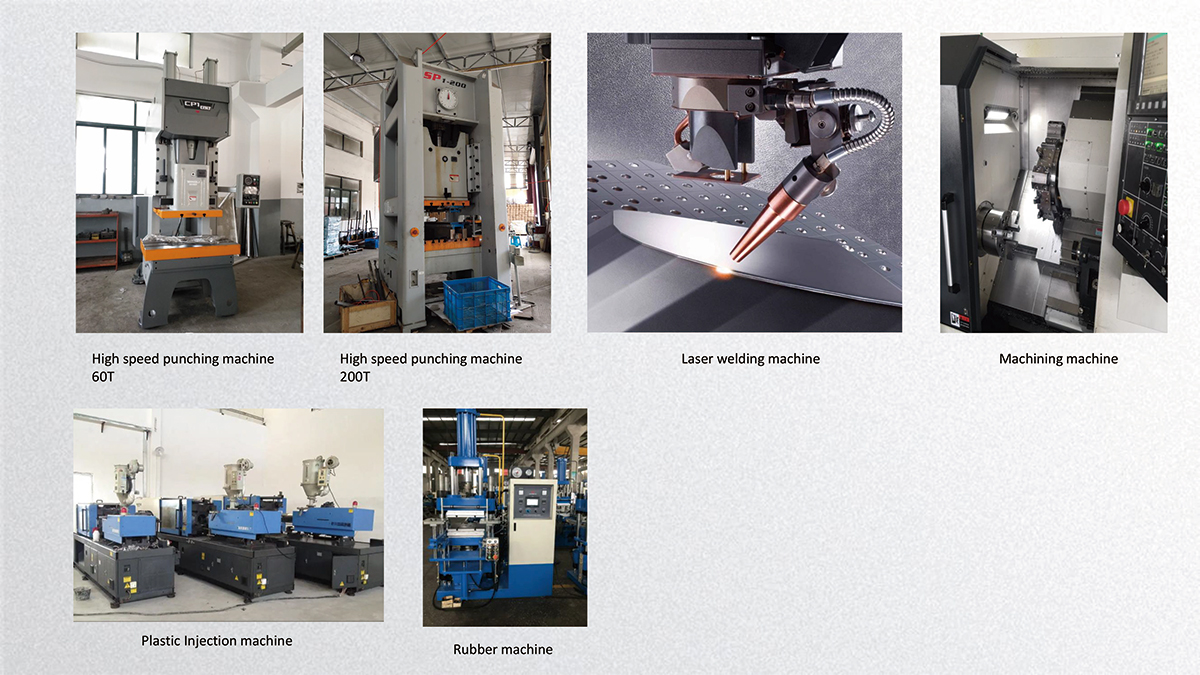
The catalog confirms several manufacturing facts relevant to this topic. The workshop includes stamping, with the biggest stamping machine listed as 200 Tons. It also references laser cutting, bending machines, welding machines, and shaping deformed products in-house. Packing is described as export standard, with customized packing acceptable. These facts indicate a production environment that understands forming and shipping, but they do not provide a model-level thickness, weight, edge stiffness, load rating, drop-test result, or flatness tolerance for a round drain.
From a material viewpoint, deformation risk depends on geometry as much as material. Stainless steel has elastic recovery, but a thin stamped rim can still be distorted if tooling, handling pressure, or packaging compression is poorly controlled. Plastic components such as ABS or PVC may respond differently under pressure or temperature variation, especially if stacked or constrained during shipment. Brass or iron routes, mentioned as part of the broader material range, would also have their own weight and surface-protection considerations, yet the catalog does not tie those materials to one round drain model.
An edge extreme scenario can be modeled during logistics. In the early stage, a drain may receive only minor carton vibration and remain flat. In the middle stage, repeated stacking pressure can create small rim stress or surface scuffing if separation protection is weak. In the extreme stage, an unsupported edge may arrive with a slight bend, a coating mark, or a fit issue that appears only during installation. The buyer should not treat this as an abstract risk. A simple incoming check can include placing the drain on a clean flat tile, pressing opposite edges lightly, checking visual rim contact under side lighting, and photographing any gap before installation.
The comparison test should not be about blaming a material route. It should compare how the same receiving process handles different risks: stainless steel surface scratches, ABS or PVC edge nicks, coated surface abrasions, and carton pressure marks. A supplier with customized packing capability can reduce these risks through separators, rim protection, tighter carton fit, and batch label linkage. But without shipment photos, packaging drawings, or sample drop records, those remain buyer-side requirements rather than proven model facts.
Leakage Confidence Is Not a Slogan: Turning Factory Air Test Into Buyer-Side Acceptance Language
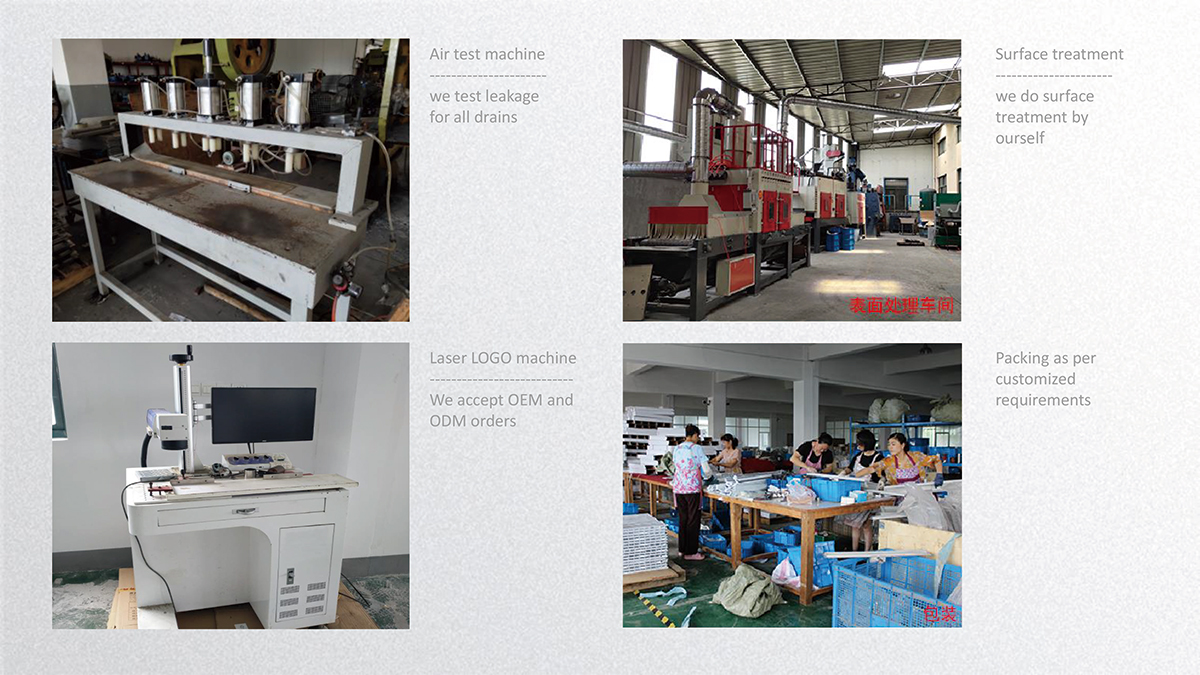
Leakage discussions often become vague because suppliers use broad assurance words while buyers need receiving criteria. The catalog gives one strong category-level fact: the factory states that it uses an air test machine and that it tests leakage for all drains. It also references ISO 9001 Management, CE EN1253-1, CUPC, and Watermark. These are useful signals, but the acceptance language still needs discipline: company-level capability is not identical to a model-level test report for every round shower floor drain SKU.
The new trend is to turn testing statements into auditable buyer language. Instead of writing “leak-proof drain” in a procurement file, the buyer can request sample air-test photos, batch inspection notes, carton label linkage, and a statement confirming whether the tested sample matches the exact material, finish, and configuration being ordered. This does not accuse the factory of poor control. It simply prevents a category claim from being overextended into a specific model claim.
The physical mechanism is straightforward. A drain assembly can appear visually sound while leakage risk occurs at a seam, joint, outlet transition, or installation interface. Air testing is useful because pressure can reveal leakage paths before water exposure in actual use. Still, without model-level pressure conditions, hold time, fixture configuration, sample size, and pass/fail criteria, the buyer should not invent a numerical threshold. The catalog confirms the existence of air testing, not the detailed test protocol.
A standards-aware approach can reference relevant industry directions without exaggeration. EN 1253-1 relates to floor gullies for buildings, while ISO 9001 concerns quality management systems rather than product-specific flow or leakage performance. The catalog mentions these references, but the buyer should request the actual certificate scope or product listing when certification is needed for a regulated market. General background on quality management can be reviewed through ISO 9001 quality management, while drain performance standards should be checked through the relevant standards publisher or local market authority.
The acceptance white paper can be reduced to four practical solutions.
Solution 1: Request model-specific evidence before approval. Execution protocol: ask for the model photo, material route, finish option, sample air-test image, and packing view in one approval file. The expected material outcome is better traceability between surface condition, formed shape, and leakage screening. The hidden cost is slower sample approval, which can be controlled by using a fixed evidence template.
Solution 2: Separate visual acceptance from leakage acceptance. Execution protocol: inspect surface marks, burrs, coating consistency, and rim flatness before water or air-test discussion. The material expectation is fewer disputes where appearance defects are incorrectly grouped with leakage problems. The side effect is more inspection time, so use clear photo angles and batch sampling rules.
Solution 3: Validate cleaning behavior without claiming flow capacity. Execution protocol: perform a controlled rinse and wipe review, photograph residue zones, and record whether hair or soap film stays near the inlet. The expected change is not a certified flow number but a clearer maintenance-risk profile. The hidden cost is that real household behavior varies, so results should be treated as comparative observations.
Solution 4: Connect carton labels to inspection records. Execution protocol: require export packing photos, customized packing notes if used, and batch identifiers that connect cartons to inspection results. The expected outcome is easier claim handling if deformation, scratches, or leakage concerns appear after receipt. The side effect is more documentation workload, which is acceptable for wholesale or OEM orders.
| Acceptance layer | Practical check | Relevant confirmed basis | Buyer should still request |
|---|---|---|---|
| Surface condition | Side-light photo after wiping | Brushed, sandblasting, in-house surface treatment | Model finish grade |
| Leakage screening | Air-test evidence | Air test machine, leakage test for all drains | Pressure, hold time, sample size |
| Material identity | Material route confirmation | SS304, SS316, ABS, PVC | Model-level material sheet |
| Shape retention | Flat tile contact check | Stamping and shaping capability | Flatness tolerance |
| Market compliance | Certificate scope review | CE EN1253-1, CUPC, Watermark, ISO 9001 | Exact product listing |
PRO-TIP / CHECKLIST
- Ask whether the quoted model is stainless steel, ABS, PVC, or another confirmed material route.
- Request a close-up image of the actual round cover, not only a category image.
- Check whether the surface finish matches the ordered option before installation.
- Place the sample on a flat tile and record any rocking or rim gap.
- Request air-test evidence linked to the same sample or batch.
- Confirm whether export standard packing includes scratch and rim protection.
- Avoid claiming flow rate, anti-odor function, or removable structure unless model-level documents prove it.
- Keep carton labels, sample photos, and inspection notes together for future claims.
Frequently Asked Questions (FAQ)
How to clean a bathroom drain pipe?
Remove visible hair and soap residue first, then flush with warm water. Avoid claiming chemical compatibility unless the drain material sheet confirms it. For stainless steel, harsh cleaners can affect surface appearance if passivation or finish quality is weak. For ABS or PVC, ask the supplier about cleaner compatibility.
How to remove a shower drain stopper?
Do not assume the removal method without the actual cover design. Some shower drain covers lift out, some are screwed down, and some connect to a trap or insert. For this product data set, removable cover structure is not confirmed, so request a model-level cover photo or disassembly video.
Will bleach unclog a shower drain?
Bleach may affect odor and biological residue, but it is not a reliable mechanical solution for hair blockage. Hair, soap film, and solids often require physical removal. Material compatibility should be checked because stainless steel finishes, ABS, PVC, rubber parts, and coatings may respond differently to strong cleaners.
How to get rid of odor in a shower drain?
Odor usually comes from trapped organic residue, poor trap water condition, or pipe-side buildup. Clean the visible cover, flush the pipe, and confirm trap compatibility. The catalog does not confirm an anti-odor core for the round model, so any deodorizing claim needs model-specific evidence.
How to install a bathroom drain pipe?
Pipe installation depends on outlet geometry, pipe size, trap type, floor build-up, and waterproofing method. None of those model-level installation values are confirmed in the catalog for a round shower floor drain. Ask for outlet drawings, installation photos, and compatibility notes before site work begins.
How long do brass drain traps last?
The catalog lists brass as part of the broader material range, but it does not confirm that this round shower floor drain uses a brass trap. Service life depends on water chemistry, cleaning agents, wall thickness, trap design, and installation quality. Do not apply a generic lifespan to an unverified model.