
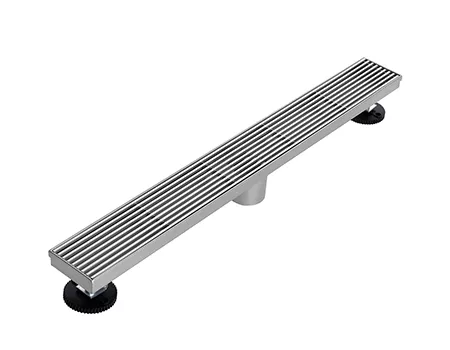
PVC Drains Evidence Layers for Post-Use Review
Reference Standard: Relevant drain performance and management references include EN 1253-1 for floor gullies and drains, ISO 9001 quality management logic, and catalog-level CUPC / Watermark references where applicable. For polymer material behavior, general PVC material evaluation should be supported by recognized bodies such as ASTM International and IAPMO when project-specific test reports are requested.
Short Answer
Mondeway’s catalog places floor drains and shower drains within its bathroom accessory and shower-room product range, with raw material routes that include SS304, SS316, ABS, and PVC. It also shows plastic injection equipment, a mould area, air testing for all drains, ISO 9001 management, and CE EN1253-1, CUPC, and Watermark references. These are useful evidence layers, but they do not replace model-level PVC drain drawings, outlet dimensions, trap-interface records, flow-rate results, or installed-site feedback.

When the Bathroom Floor Looks Normal but Usage Feedback Starts Late
A PVC drain can look acceptable on the first day because the visible floor area gives only a shallow signal. The tile edge may appear calm, the drain opening may look aligned, and the bathroom may pass a quick water rinse. Yet the buyer’s real judgment often starts after the first repeated cycles of bathing, cleaning, drying, and re-wetting. This is why a post-use evidence layer matters. The catalog confirms that Mondeway works with Floor drains and Shower Drains as part of its bathroom and shower-room product scope, and that PVC is one of the listed material routes for drains. That gives a factual basis for discussing PVC drains in wet bathroom environments, but it does not prove the installed behavior of any specific model.
The technical point is simple: the drain body is only one part of a broader wet-zone system. A shower floor is exposed to intermittent wastewater, soap film, loose hair, warm water, cleaner residue, and drying intervals. These repeated cycles create delayed feedback. Smell may not appear until a trap dries, a biofilm layer develops, or a seal area is disturbed. Slow water movement may not become obvious until hair and soap residue build up. Leakage suspicion may not arise until the user notices dampness, discoloration, or odor near the connected area. None of these late signals should be converted into a claim that the PVC drain itself is defective unless the site condition, installation method, pipe alignment, and cleaning history are also reviewed.
A useful edge-case model is a low-occupancy bathroom that is cleaned aggressively but used irregularly. In the early phase, the drain looks normal because water has recently passed through the system. In the middle phase, evaporation, cleaner residue, and light organic buildup may begin to alter smell and surface behavior. In the stress phase, users may assume the visible drain is the problem even when the real source is the trap, venting condition, slope, seal, or pipe environment. This model does not add a new product parameter; it shows why post-use feedback timing is a more cautious evaluation layer than day-one appearance.
A cross-dimensional comparison also helps. In a stainless steel drain, a buyer may focus heavily on surface finish, weld appearance, or brushing quality. In a PVC drain, visible surface finish is less informative than repeated-use behavior, installation documentation, and the absence of recurring customer questions. The catalog’s raw-material list supports the fact that the supplier handles both metal and plastic material routes, but it does not provide PVC thickness, outlet size, temperature rating, or load class. Those items must remain unclaimed.
KEY TAKEAWAYS
- A quiet first-day installation does not prove long-term odor, cleaning, or connection behavior.
- Delayed complaints should be separated into product, installation, pipe, trap, and maintenance variables.
- Catalog-level PVC material evidence is useful, but model-level drawings are still required before fitment claims.
PVC Drains Evidence Layers After Quiet Installation
The strongest evidence for a PVC drain is often the silence of avoidable complaints. A single visible feature is easy to photograph, but absence of repeated installation calls, smell reports, replacement confusion, and cleaning disputes is harder to fake. This is the reverse-review method: instead of asking what the product appears to promise, the buyer asks what kinds of questions do not keep returning after installation. It is a practical layer because many drain issues are not immediate failures; they are small service burdens that accumulate across many bathrooms.
The catalog provides several supplier-side evidence points. It states ISO 9001 Management and stable quality control, and it displays CE EN1253-1, CUPC, and Watermark references. These references support the idea that the supplier positions drains within a quality and market-access context. Yet the boundary must be clear: these are catalog-level or company-level references unless a model-specific certificate, listing, or test report is supplied for the exact PVC drain being purchased. A buyer should not assume that every PVC drain model automatically carries every listed certification or the same performance scope.
A practical comparison case can be built around two purchasing teams. Team A reviews only the front-facing product image and asks whether the drain “looks suitable.” Team B asks for the product drawing, installation photo, gasket information, material statement, packing method, and any applicable model-level test records. Team A may move faster at the beginning, but it carries more downstream uncertainty. Team B may spend more time before ordering, yet it reduces the chance of support tickets after delivery. The second method fits the evidence-layer title angle because it reads the product through documentation and post-use silence rather than a single visible cue.
From a material-behavior viewpoint, PVC as a drain material should be discussed conservatively. PVC is commonly used in drainage-related applications, but the actual performance depends on compound formulation, geometry, processing consistency, connection method, and installation environment. The catalog does not identify the PVC grade, stabilizer system, chemical exposure rating, or temperature range. In a bathroom setting, cleaner residue, warm water, and soap film create a repeated contact environment, but the article should not claim chemical resistance beyond the supplied evidence. The safe statement is that PVC drains require project-level confirmation where cleaning agents, installation adhesives, or site water conditions are unusual.
| Evidence Layer | Catalog-Backed Data | Useful Buyer Question | Claim Boundary |
|---|---|---|---|
| Material route | SS304 / SS316 / ABS / PVC listed | Which exact material applies to this model? | No PVC grade is specified |
| Quality system | ISO 9001 Management shown | Is there a current certificate copy? | Not a model performance report |
| Drain references | CE EN1253-1, CUPC, Watermark shown | Which models are covered? | Do not generalize to all drains |
| Process route | Plastic injection machine shown | Is the PVC part injection molded? | No cycle or tolerance data given |
| Leakage review | Air test for all drains stated | Is there a batch inspection record? | No installed-site result is shown |
The hidden value is not dramatic. It is procedural. A buyer gains confidence when each evidence layer answers one narrow question without overstating the next. Material route answers what family the product belongs to. Quality management answers whether the supplier has a control system. Air testing answers whether drains are checked for leakage in a factory process. None of those layers proves site slope, trap behavior, drain-to-pipe connection compatibility, or long-term cleaning response. That separation is the difference between useful SEO content and unsupported product promotion.
The Hidden Cost Is Not the Drain Body, but the Unanswered After-Sale Question
The price of a PVC drain is not only the purchased part. The hidden cost is the repeated question that appears after installation: smell, cleaning, replacement, connection, or uncertainty about how the drain works with the existing bathroom pipe system. These questions are common in real buying and homeowner environments, but the article must not treat them as proven faults of the catalog product. They are communication burdens that arise when the pre-purchase evidence is thinner than the installation environment.
The catalog does not provide PVC outlet geometry, trap-interface drawings, flow-rate data, model-level installation drawings, cover structure details, or discharge capacity results. That absence is not a defect by itself; it is an evidence gap. A professional buyer should convert the gap into a document request. Ask for drawings, installation photos, sample inspection notes, material statements, and any model-specific certification coverage before writing the product into a project specification. This is especially important when the drain will be used in hotels, apartments, basement bathrooms, or renovation jobs where existing pipe conditions differ from new construction.
A cross-system test case shows the issue. Suppose two bathrooms use the same visible drain category, but one has stable slope, regular use, clean venting, and careful sealing, while the other has irregular use, poor cleaning habits, uncertain pipe alignment, and an old trap. The same PVC drain body may receive different user feedback in each bathroom. In the first case, few after-sale questions appear. In the second case, odor, cleaning, and connection questions may cluster around the drain even when the root cause is partly outside the drain body. This does not excuse weak product documentation; it explains why site variables must be separated from product evidence.
The material-science layer is also more subtle than a simple “plastic is suitable” statement. PVC drain performance depends on geometry, manufacturing consistency, and environmental exposure. Repeated contact with water and cleaning residues can expose weak points in installation seals or connected surfaces, but without material-sheet data and cleaning-cycle records, no chemical durability claim should be made. A careful article should say: the known evidence supports PVC as a listed drain material route in the catalog, while cleaning exposure, discoloration behavior, adhesive compatibility, and long-term aging need separate supplier documentation.
PRO-TIP / CHECKLIST
- Request the exact product drawing before confirming pipe or flange compatibility.
- Ask whether certification references apply to the selected model, not only the catalog.
- Separate odor complaints into trap, venting, seal, cleaning, and drain-body variables.
- Review installation photos when troubleshooting repeated after-sale questions.
- Confirm whether the drain is intended for the cleaning agents used at the site.
- Keep factory leakage checks separate from installed waterproofing performance.
- Avoid publishing flow-rate or load claims unless test records are available.
What the Factory Can Prove Before the Site Can Prove Anything
A factory can prove certain things before the product reaches the bathroom. The catalog states that the drain raw material route includes SS304, SS316, ABS, and PVC. It also shows a plastic injection machine, a moulds area machine, an air test machine, and the statement that leakage is tested for all drains. It references OEM and ODM orders, customized logo acceptance, and customized packing. These are valid manufacturing and supply-chain evidence points. They should be used as the proof layer for what the factory can reasonably control.
The factory cannot prove every site outcome. It cannot control the installed slope, the installer’s sealing method, the actual pipe condition, trap water behavior, cleaning frequency, or user maintenance habits after handover. This distinction is important because it keeps the article honest. A factory-side air test can support leakage screening for the drain before shipment, but it does not automatically prove that a finished bathroom floor will never leak. A mould-based process can support repeatable part formation, but without tolerance drawings, it does not prove compatibility with every pipe or flange condition. Customized packing can support delivery protection, but it does not prove installed performance.
A practical acceptance approach should divide the review into four layers. First, confirm the material route: the selected item must be clearly identified as PVC or another listed material. Second, confirm the drawing layer: ask for outlet, flange, and installation geometry where relevant. Third, confirm the inspection layer: ask what air testing or leakage screening is performed and whether batch records are available. Fourth, confirm the site layer: document slope, sealing, trap condition, cleaning method, and post-use feedback after installation. This structure prevents a buyer from demanding impossible proof from the factory while still requiring enough evidence to reduce avoidable risk.
A cautious edge-case model can be built around a renovation bathroom. Existing pipe conditions may be uneven, the floor may not be rebuilt from zero, and the user may expect the new drain to solve old odor or slow-drain problems. In that case, the PVC drain is placed into a system with inherited variables. The factory can support the product through material route, mould process, leakage testing, and documentation. The site still needs installation verification. If the article claims more than that, it moves outside the evidence supplied by the catalog.
For readers who need a supplier overview rather than a single product claim, the company homepage can be referenced through Mondeway sanitary product information. The key is to treat the page as a starting point, not a substitute for model-level proof.
A balanced review of PVC drains should never overstate what is not supplied. It can say the catalog supports PVC as a drain material route. It can say the factory lists plastic injection equipment and air testing for all drains. It can say quality-system and market references are shown. It cannot say a specific PVC drain has a defined outlet size, verified trap compatibility, measured discharge capacity, confirmed removable cover behavior, or proven long-term chemical resistance unless the matching records are provided.
Frequently Asked Questions (FAQ)
How to get rid of shower drain smell?
Start by separating the cause from the visible drain. Check trap water, venting, cleaning residue, biofilm, and seal condition. A PVC drain may be near the odor source, but the catalog does not prove that the drain body is the cause of smell.
How to plumb a bathroom drain?
Use the project drawing, local plumbing code, proper slope, compatible pipe dimensions, and a verified sealing method. Do not rely only on a catalog image. For PVC drains, request model-level outlet and installation drawings before confirming the plumbing layout.
How to replace a shower drain flange?
Replacement depends on the existing pipe, floor build-up, waterproofing layer, and drain design. Do not assume universal compatibility. Ask for the selected drain’s flange drawing, gasket details, installation notes, and photos before specifying replacement work.
How to connect a shower drain to PVC pipe?
Confirm the outlet geometry, pipe size, seal method, and local installation practice first. The catalog lists PVC as a drain material route, but it does not provide exact outlet dimensions or trap-interface drawings for a specific PVC drain model.
Are floor drains required in basements?
That depends on local building and plumbing codes, basement use, waterproofing design, and drainage strategy. A product catalog cannot answer code requirements alone. Check local regulations and request drain documentation only after the site requirement is defined.
How to clean shower drain of hair?
Remove accessible debris according to the drain’s actual structure and avoid aggressive methods that may damage seals or connected parts. The catalog does not provide cover-removal or cleaning-cycle data for a specific PVC drain, so cleaning instructions should come from the model supplier.