

Why linear shower drain clogging mechanisms appear in wet-area shower installations
In high-humidity shower environments with continuous water exposure, plumbing engineers and project managers often notice water backing up long before a drain visibly fails. What usually sits behind this inconvenience is not a single defect, but a combination of design, installation, and usage factors that explain why linear shower drain clogging mechanisms develop over time.
Understanding these mechanisms matters because repeated clogging does more than interrupt daily use. It increases maintenance downtime, raises hygiene concerns, and often forces premature replacement of drainage components that were otherwise structurally sound.
What does clogging look like in linear shower drains?
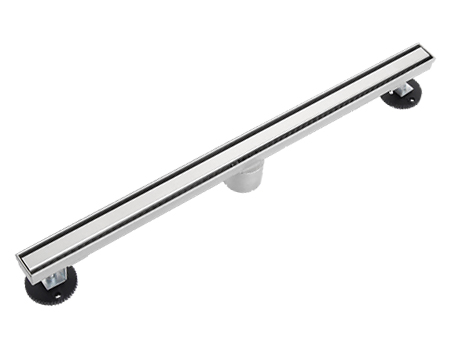
Clogging in linear drains rarely appears as an instant blockage. More often, it shows up as slower drainage, shallow pooling along the channel, or intermittent gurgling during high flow. These early signals are frequently ignored until hair and soap residue accumulate enough to restrict the outlet.
Because linear drains span a longer opening than point drains, debris distribution is uneven. Hair tends to migrate toward outlet transitions, while lighter residues settle along the channel walls, gradually reducing effective flow area.
For project managers responsible for multiple residential or commercial units, these symptoms often repeat across similar installations, pointing to a shared underlying mechanism rather than isolated misuse.
Why do linear shower drain clogging mechanisms develop?
At the core of most clogging cases is debris accumulation, particularly hair buildup combined with soap film. In a high-humidity shower environment, these materials bind together more easily, creating flexible mats that resist flushing even under high water volumes.
Linear drains are designed to deliver high flow capacity when correctly sized and installed. However, when slope tolerance is marginal or outlet geometry introduces abrupt changes in direction, flow velocity drops locally. These low-velocity zones become natural collection points for debris.
Material surface finish also plays a role. Stainless steel channels with rougher internal surfaces tend to retain soap residue more readily than smoother finishes, accelerating buildup between cleaning cycles.
Installation-related contributors
Even well-designed linear drains can clog prematurely if installation conditions are not aligned with real usage. Insufficient slope toward the outlet, uneven bedding under the channel, or misalignment between the drain body and waste pipe all reduce effective drainage performance.
In retrofit bathroom renovations, installers sometimes adapt existing pipe positions rather than reworking the substrate. This shortcut often introduces shallow gradients that cannot sustain the self-cleaning velocities assumed in design calculations.
How environment and usage frequency accelerate buildup
In commercial restrooms or multi-family residential buildings, use frequency is often underestimated during specification. Higher user turnover means more hair, more personal care products, and less recovery time between wet cycles.
Under these conditions, even drains with generous channel width can experience progressive restriction unless maintenance intervals are adjusted to match actual usage patterns.
This is where many teams realize that choosing a linear drain is not only about aesthetics, but about aligning structural capacity with realistic operating conditions. For a broader overview of how different linear drain configurations handle these trade-offs, a Linear Drain Buyer Guide for Commercial and Residential Shower Projects provides a more comprehensive selection framework.
How clogging affects performance and maintenance planning
Once partial blockage forms, water backup increases surface wetting time. This not only inconveniences users but also stresses surrounding tile joints and waterproofing layers, raising the risk of secondary failures beyond the drain itself.
From an operations standpoint, reactive cleaning is more costly than planned maintenance. Accessing linear drain channels typically requires removing covers and disturbing surrounding finishes, which becomes disruptive if repeated too frequently.
Understanding clogging mechanisms allows maintenance teams to predict where intervention is needed before full blockage occurs, rather than treating each incident as an unexpected failure.
How flow rate testing helps explain clogging risk
Flow rate testing is commonly used to evaluate how effectively a drain evacuates water under controlled conditions. While these tests do not directly simulate debris accumulation, they establish baseline performance that highlights how much margin exists before clogging becomes critical.
When measured flow rates are only marginally above expected peak loads, even small amounts of hair buildup can push the system beyond its operating window. This is why drains that pass initial inspections may still struggle in real-world environments.
Standards such as EN 1253 floor drain testing requirements and general methodologies referenced by ASTM International help define acceptable drainage performance under specified conditions, offering a common language for engineers and inspectors.
Practical steps to reduce clogging risk
Reducing clogging does not rely on a single fix. It involves aligning channel length, outlet diameter, and slope with realistic flow expectations, then pairing those choices with appropriate maintenance planning.
Selecting drain designs that allow easier access to the channel interior shortens cleaning time and reduces the likelihood that debris remains lodged in low-velocity zones. In higher-use environments, removable strainers or secondary filters can intercept hair before it migrates downstream.
Just as important is verifying that the installed system behaves as intended. Comparing on-site drainage behavior against flow rate test benchmarks provides early feedback on whether adjustments are needed before occupancy.
Why correct selection still matters more than reactive fixes
Linear drains continue to be adopted because their engineering advantage lies in uniform water collection and high flow potential when correctly specified. Clogging becomes a problem primarily when that potential is mismatched with environment, usage, or installation reality.
Treating debris accumulation as a design consideration rather than an afterthought allows project teams to control risk instead of responding to repeated complaints. Over time, this approach lowers maintenance cost and extends service life without sacrificing design intent.
For teams planning future installations or reviewing recurring issues, revisiting how linear shower drain clogging mechanisms interact with high-humidity environments and validated flow rate testing is often the most effective way to restore reliable performance.
This content is developed based on drainage performance analysis, standardized flow rate test references, and real-world application scenarios in high-humidity shower environments. Observations are grounded in commonly applied plumbing test practices and published standards, combined with installation feedback from commercial and residential projects.