
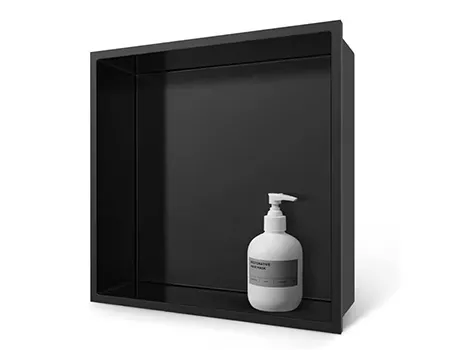
Structural Mechanics and Moisture Management in Wood-Look Tile Shower Niches
Introduction
Wood-look tile shower niches represent a complex intersection of aesthetic demands and engineering challenges, particularly within the high-humidity bathroom environment where moisture control and structural integrity are critical. These recessed storage features must resist continuous water exposure while supporting typical loads from personal care products. The inherent rigidity and low porosity of wood-look tiles—commonly porcelain or ceramic—introduce unique considerations in how waterproofing membranes and substrates interact. Among the various failure mechanisms observed in such assemblies, waterproof layer delamination is the most prevalent and detrimental, as it compromises both moisture resistance and the structural cohesion of the niche assembly. This article explores the mechanical behavior of these layered systems, investigates failure modes with an emphasis on membrane delamination, outlines relevant testing protocols under the WaterMark Certification Scheme (Australia), and discusses practical application strategies to ensure durability and reliability.
Mechanical Principles & Material Behavior
Designing shower niches clad with wood-look tiles requires a detailed understanding of the mechanical interplay between the tile, waterproof membrane, adhesive layers, and substrate, especially under the sustained moisture and mechanical stresses typical of bathroom environments. Wood-look tiles are characterized by high compressive strength, often exceeding 30 MPa, and minimal water absorption rates below 0.5%. These properties confer excellent durability and resistance to water ingress. However, their stiffness and brittle nature can generate stress concentrations at interfaces, particularly where tiles bond to flexible waterproof membranes and semi-rigid substrates.
The waterproof membrane beneath the tile serves as the primary barrier against moisture penetration. These membranes, whether liquid-applied or sheet-based, must retain sufficient elasticity to accommodate dimensional changes due to thermal expansion, substrate movement, and installation tolerances without cracking or debonding. The bond between tile and membrane is typically achieved using thin-set mortars or specialized adhesives formulated for wet environments. These bonding materials must maintain adhesion and mechanical integrity despite cyclic moisture exposure, temperature variations, and chemical contact from cleaning agents.
Supporting the niche, the substrate—usually a cementitious backer board enhanced with moisture-resistant additives—provides dimensional stability and resists mold growth. However, the recessed geometry of the niche reduces local wall thickness, decreasing stiffness and increasing susceptibility to bending stresses caused by point loads such as shampoo bottles or soap dispensers, which can weigh between 5 and 15 kilograms. These loads induce flexural stresses within the substrate and adhesive layers, potentially leading to microcracking or bond failure.
A critical mechanical challenge arises from the mismatch in stiffness between the rigid tile, the flexible waterproof membrane, and the semi-rigid substrate. This mismatch concentrates shear stresses at their interfaces, especially near niche edges and corners where geometric discontinuities exist. Without careful material selection and installation, these stresses may initiate delamination or cracking. Additionally, the niche geometry affects moisture flow patterns, increasing the risk of water ingress at seams and joints if waterproofing is incomplete or improperly detailed.
Failure Modes
Primary Failure: Waterproof Layer Delamination
Waterproof layer delamination is the principal failure mode affecting wood-look tile shower niches. This failure involves the loss of adhesion between the waterproof membrane and either the substrate or the tile adhesive layer, allowing water to penetrate behind the tile assembly. Key contributing factors include inadequate substrate preparation, incompatibility between adhesives and membranes, and mechanical stresses exceeding the membrane’s adhesion capacity. Once delamination initiates, trapped moisture accelerates substrate degradation, promotes mold growth, and undermines the niche’s structural stability. Given the persistently high humidity and frequent wetting in bathroom environments, preventing waterproof membrane delamination requires precise detailing, strict adherence to compatible material selection, and meticulous installation practices.
Secondary Failure: Adhesive and Grout Deterioration
Following membrane failure, degradation of tile adhesives and grout joints commonly ensues. Cementitious adhesives exposed to prolonged moisture may lose bond strength, leading to tile loosening, cracking, or detachment. Grout, particularly non-epoxy formulations, readily absorbs water and is vulnerable to staining and microbial colonization, which compromises both aesthetics and functional performance. This deterioration creates a feedback loop that facilitates further water ingress and accelerates overall system failure. The condition of adhesives and grout is therefore intrinsically linked to the waterproof membrane’s integrity and the niche’s exposure to environmental stresses.
Environmental Effects: Humidity, Thermal Cycling, and Chemical Exposure
The high-humidity bathroom environment subjects niche materials to continuous moisture and temperature fluctuations, inducing cyclic expansion and contraction. These cycles cause mechanical fatigue in adhesive bonds and waterproof membranes, leading to microcrack formation that serves as ingress points for water. Interfaces between materials with differing coefficients of thermal expansion—such as porcelain tiles and flexible membranes—are particularly susceptible to stress accumulation. Moreover, exposure to cleaning agents and soaps can chemically degrade certain waterproof membranes and adhesives, reducing their effective service life. Designing for these environmental stressors necessitates selecting materials with proven resistance to moisture, thermal cycling, and chemical exposure, alongside installation methods that accommodate dynamic conditions without compromising bond integrity.
Testing Standards & Validation
Ensuring the waterproofing integrity and mechanical reliability of wood-look tile shower niches requires rigorous testing aligned with recognized standards, notably the WaterMark Certification Scheme (Australia). This scheme evaluates waterproofing systems in wet areas, including shower niches, by simulating realistic service conditions to verify performance.
Test methods involve constructing full-scale niche mock-ups replicating typical installation assemblies, including substrate, waterproof membrane, tile, and adhesive layers. These specimens are subjected to sustained water exposure tests to assess resistance to water penetration under continuous wetting conditions. Mechanical loading tests emulate point loads representative of shampoo bottles or similar items, typically ranging from 5 to 15 kilograms, applied to niche shelves. During these tests, substrate deflection, tile movement, and adhesive bond integrity are monitored to detect any signs of mechanical failure.
Adhesion testing measures peel strength and shear resistance of waterproof membranes to confirm that bonds remain intact under cyclic loading and moisture saturation. Water penetration resistance is evaluated by applying water pressure differentials over extended durations, identifying potential leak paths through membranes or interfaces. Tile assemblies undergo tensile and shear bond strength tests to verify that mortar and adhesive layers maintain mechanical integrity under load.
Environmental durability is assessed through accelerated aging protocols involving humidity chambers and thermal cycling. These simulate the bathroom’s high-humidity environment and temperature fluctuations, evaluating the capacity of materials and assemblies to withstand fatigue and chemical exposure over time.
Third-party laboratory certification under the WaterMark Scheme provides independent verification that products and installation methods meet stringent performance criteria. Documentation includes detailed test reports and installation guidelines, offering designers and installers assurance of the niche system’s long-term waterproofing integrity and mechanical resilience.
Application & Integration
The successful implementation of wood-look tile shower niches depends on a systematic approach emphasizing waterproofing continuity and structural reinforcement. Substrate preparation is paramount; cementitious backer boards with moisture-resistant additives must be securely fastened and free from contaminants to ensure optimal adhesion. The waterproof membrane should be applied continuously over the entire niche recess and extend beyond tile edges, creating an uninterrupted moisture barrier without seams or gaps.
Tile adhesives and thin-set mortars must be compatible with both the waterproof membrane and substrate, formulated to provide flexibility and water resistance. Particular care is necessary at niche corners and edges, where reinforcing membranes embedded with fabric or mesh reduce stress concentrations and mitigate cracking risk.
To support mechanical loads, concealed brackets fabricated from corrosion-resistant metals or durable polymers can be installed behind the niche substrate. These brackets distribute weight evenly, preventing substrate deflection and tile detachment under typical storage loads. Niche dimensions, including recess depth and shelf width, should be optimized to balance user storage needs with structural capacity, avoiding excessive recess sizes that compromise wall integrity.
Maintenance considerations include specifying epoxy or urethane grout formulations to enhance resistance against moisture ingress and chemical attack. Regular inspections focusing on grout joint condition and tile adhesion facilitate early detection of deterioration, enabling timely remediation before significant damage occurs.
The reliable performance of wood-look tile shower niches in high-humidity bathroom environments hinges on a thorough understanding of material interactions and failure mechanisms, with waterproof layer delamination representing a critical vulnerability. Adherence to the WaterMark Certification Scheme (Australia) testing protocols provides validated assurance of waterproofing integrity and mechanical resilience under realistic conditions. Careful substrate preparation, compatible material selection, reinforced waterproofing detailing, and structural support are essential to mitigate failure risks. Engineering wood look tile shower shampoo niche ideas with these principles ensures both aesthetic appeal and functional reliability, meeting the demanding conditions of bathroom applications with confidence.
This analysis was reviewed by a Senior Bathroom Engineer with practical field experience under high-humidity bathroom environment operating conditions, with validation focused on waterproof layer delamination in accordance with WaterMark Certification Scheme (Australia) compliance requirements.
From an engineering standpoint, long-term reliability of wood look tile shower shampoo niche ideas depends on correct material selection, verified drainage and corrosion behavior, validation under high-humidity bathroom environment exposure, and documented compliance with WaterMark Certification Scheme (Australia) together with other relevant bathroom hardware testing and regulatory benchmarks.