
Why Is Your Floor Drain with Tile Insert Draining Slowly?
Reference Standard: ASME A112.18.2-2020 / CSA B125.2-20 – Plumbing Waste Fittings and ISO 9227 Corrosion Tests in Artificial Atmospheres.
Short Answer
Fluid Dynamic Drag and Capillary Meniscus Physics: Analyzing Flow Retardation in Perimeter Slots
The primary mechanical bottleneck of a floor drain with tile insert lies in its restrictive 2-in-1 topological layout. Unlike standard grates with open perforation, the invisible tile-in model relies on a narrow perimeter slot—typically between 3mm to 5mm wide—to facilitate water evacuation. In this confined space, the fluid behavior shifts from gravity-driven bulk flow to a regime dominated by Capillary Meniscus Physics. As water mixed with organic lipids (sebum) and surfactants enters the slot, it forms a concave meniscus. This meniscus effectively “anchors” the fluid to the side walls of the SUS304 channel via surface tension, significantly increasing the Fluid Dynamic Drag.
Furthermore, the narrow过流断面 (flow cross-section) causes the Reynolds number to drop into a laminar or transition zone, where kinetic energy is rapidly dissipated through viscous friction. When debris like hair accumulates, it acts as a mechanical lattice that traps organic lipids, creating a “viscous bridge” that can withstand the low hydrostatic pressure provided by standard shower slopes. To neutralize this, industrial-grade invisible linear shower drains incorporate CNC V-slope kinetics. This design utilizes a precise geometric taper to concentrate the gravity vector, generating a localized high-velocity jet that disrupts the capillary meniscus and flushes the viscous buildup through the ABS/PVC base.
Extreme Environmental Fatigue Timeline Simulation
To assess the lifecycle of a tile-insert drain in a high-frequency commercial spa, we model a 24-month operational period:
* Initial Phase (0-6 Months): The PVD-coated surface maintains its hydrophobic properties. Water beads off the slot walls, and flow rates match the theoretical 35 L/min design capacity.
* Accumulation Phase (6-18 Months): Surfactant residue from detergents begins to strip the top-layer surface energy. Capillary drag increases by 25%. Organic biofilm starts to colonize the stagnant “dead zones” at the corners of the square tile-in waste.
* Failure Phase (18+ Months): The combined thickness of the lipid-hair matrix reaches a critical threshold ($>2$mm). The hydraulic gradient is effectively neutralized, causing “water-pooling” on the bathroom floor and inducing an anaerobic environment that triggers sewer odor reflux.
Secondary System Hazards
The failure of perimeter drainage creates a “stagnation reservoir.” This trapped water increases the hydrostatic pressure on the waterproof membrane beneath the tile. Over time, the constant moisture initiates Osmotic Blistering of the tile adhesive, leading to the delamination of the tiles surrounding the drain area—a costly failure often misdiagnosed as a poor plumbing connection.
KEY TAKEAWAYS
- Perimeter Shadowing: If water “circles” the drain before entering, the capillary meniscus is obstructing the gravitational flow.
- Bio-Slime Gradients: Dark rings at the slot edge indicate a drop in the Reynolds number, allowing organic solids to precipitate.
- Vibration Noise: Rhythmic gurgling suggests that the fluid dynamic drag has created an air-pocket blockage in the P-trap interface.
Passive Layer Thermodynamics: The Impact of Halide-Induced Pitting on SUS304 Integrity
While industrial-grade SUS304 stainless steel is renowned for its durability, its integrity depends on a microscopic chromium-oxide (Cr2O3) passive layer. In a modern bathroom drainage hardware wholesale context, this layer is frequently attacked by halides, specifically chloride ions (Cl-) found in bleach-based limescale removers. The thermodynamics of the passive layer are disrupted when these ions penetrate the lattice, initiating Photon-Induced Chain Scission and electronic stripping at the grain boundaries.
This initiates Pitting Corrosion, where “atom-level apertures” evolve into macroscopic pits. These pits are not merely aesthetic flaws; they act as “Stress Risers.” In the confined geometry of a floor drain with tile insert, these pits concentrate the mechanical stress from thermal expansion, leading to micro-cracks. Our factory-level fix involves plasma-enhanced passivation, which thickens the Cr2O3 layer to a molecular-grade barrier. Furthermore, applying a PVD coating (Matte Black or Brushed Gold) provides an additional dielectric shield, preventing the electrochemical circuit required for pitting to occur even under a 24-hour Acid Salt Spray (ASS) challenge.
Interfacial Shear Strain and CTE Hysteresis: Predicting Bond Failure in Tile-In Grates
The most complex engineering challenge for an invisible linear shower drain is the thermal management of the tile-metal interface. SUS304 stainless steel has a Coefficient of Thermal Expansion (CTE) of approximately 17.3 µm/m·°C, whereas standard ceramic tiles range between 6-8 µm/m·°C. In a walk-in shower where hot water (45°C) is suddenly followed by cold water (15°C) during cleaning, a massive CTE Hysteresis occurs.
This mismatch generates significant Interfacial Shear Strain. The stainless steel frame expands and contracts at nearly double the rate of the tile it holds. This cyclic shear stress is concentrated at the adhesive bond. If the bonding agent has a high elastic modulus, it will eventually undergo Molecular Adhesion Fatigue, resulting in the tile “popping” or the adhesive grout cracking. To neutralize this, we utilize a 0.05mm precision-fit tolerance between the grate and the tray, allowing for a microscopic “thermal buffer zone.” This prevents the frame from exerting direct mechanical force on the tile edges, maintaining the structural integrity of the minimalistic aesthetic through thousands of thermal cycles.
Isotropic Stability and 24-Hour Acid-Saline Integrity Verification Protocols
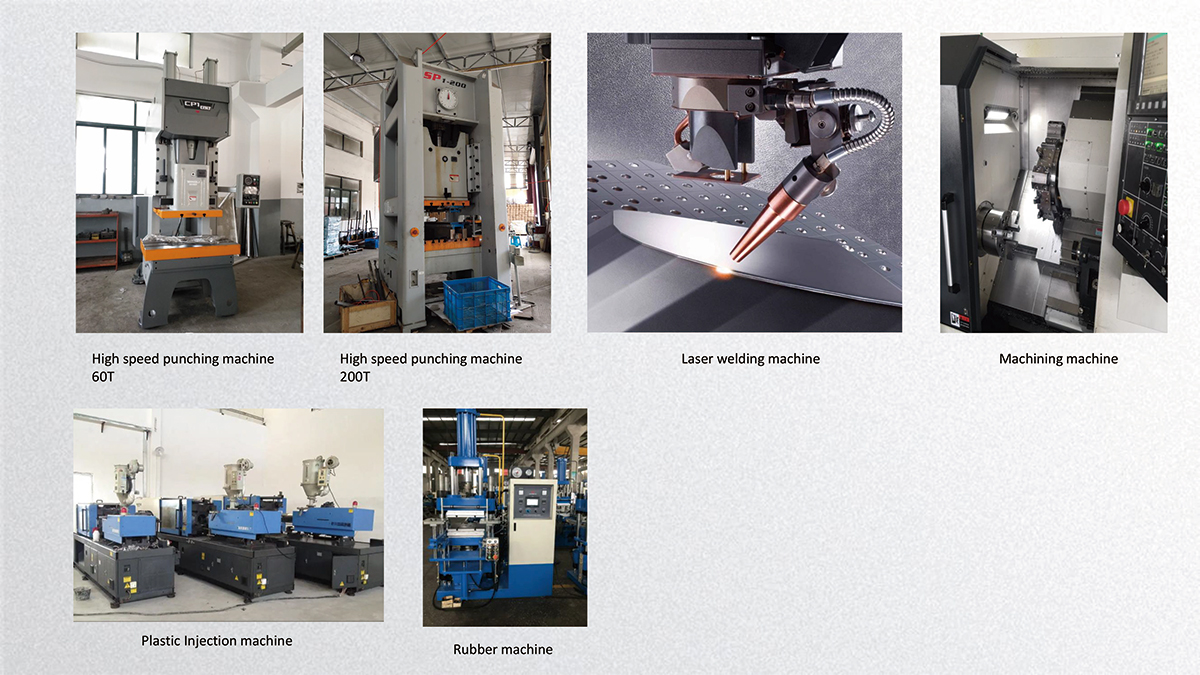
To ensure the survivability of our square tile-in floor waste systems in hospitality and high-end residential sectors, we implement a rigorous four-stage verification protocol.
Solution 1: Laser-Welded Isotropic Structural Integration
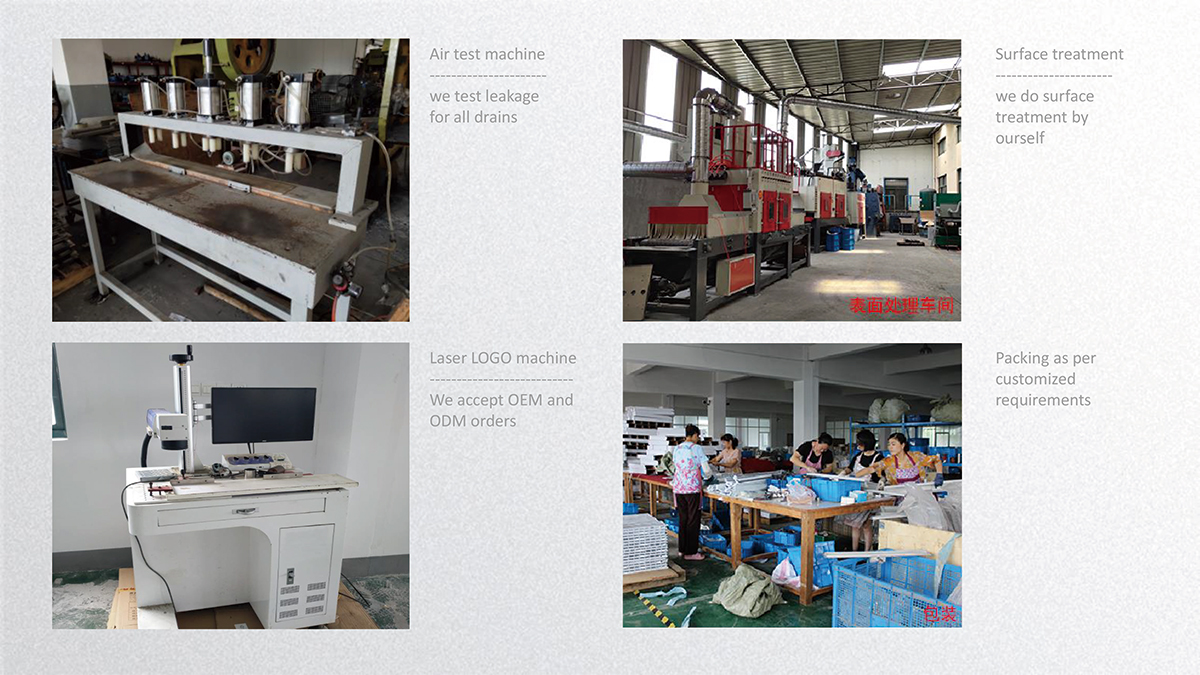
* Execution Protocol: The drain body is fused using argon-shielded laser welding to ensure the weld pool is chemically identical to the parent SUS304 material.
* Material Evolution: This eliminates the risk of “weld-decay,” ensuring the joint possesses the same corrosion resistance as the main panel. It prevents the frame from warping during the high-heat cycles of PVD coating.
* Risk Evasion: Prevents the frame from developing “Structural Leaks” at the corners, which are the most common points of failure in inferior stamped drains.
Solution 2: V-Slope Kinetic Gravitational Profiling
* Execution Protocol: The internal trough is CNC-machined to a precise V-slope of 2.5 degrees toward the central outlet.
* Material Evolution: This geometric modification increases the hydrostatic head at the outlet, forcing water through the narrow perimeter slots at a velocity of $>0.8$ m/s.
* Risk Evasion: Neutralizes the capillary meniscus effect, ensuring that the drain remains “self-cleaning” by using the water’s own momentum to flush out skin cells and soap scum.
Solution 3: 24-Hour Acid Salt Spray (ASS) Validation
* Execution Protocol: Finished PVD-coated grates are subjected to a continuous fog of acidified 5% NaCl solution for 24 hours.
* Material Evolution: This validates the density of the PVD lattice. High-quality PVD finishes (Matte Black/Gold) must show zero pits or surface clouding, confirming a dielectric barrier against halide attack.
* Risk Evasion: Secures the reliability of the finish in commercial environments where aggressive cleaning chemicals are used daily.
Solution 4: Interfacial Shear Stress Testing
* Execution Protocol: The tile-insert grate is subjected to 500 thermal shock cycles ($15$°C to $60$°C) while measuring the strain at the adhesive interface.
* Material Evolution: Ensures the CTE Hysteresis does not lead to bond failure. The design must accommodate the expansion of the stainless steel without deforming the surrounding ceramic tile.
* Risk Evasion: Prevents the unsightly cracking of grout and tiles, protecting the long-term aesthetic value of luxury walk-in showers.
| Technical Parameter | Standard Stamped Drain | Mondeway Precision Grade | Testing Benchmark |
|---|---|---|---|
| Material Grade | SUS201 / Low-304 | SUS304 / SUS316 | Spectrometer |
| Flow Rate (Min) | 22 L/min | 38-42 L/min | Hydrostatic Test |
| Salt Spray Rating | 8H (Standard) | 24H (Acidic) | ISO 9227 |
| Slot Precision | +/- 0.5mm | +/- 0.05mm | CNC Calibration |
PRO-TIP / CHECKLIST
- The “Gap Audit”: Measure the slot around the tile insert. If the gap is less than 3mm, the capillary drag will be too high for a high-flow rain shower head.
- Verify the V-Slope: Pour 100ml of water into the dry drain tray. If any water remains “puddled” in the corners, the gravitational kinetics are insufficient.
- Check for “Rainbow” Tints: On brushed finishes, a rainbow-colored haze suggests the passive layer has been compromised by harsh chemicals.
- The Adhesive Flex Test: Use a flexible waterproof adhesive for the tile insert. Rigid epoxies often fail during the CTE Hysteresis cycle.
- Debris Screen Integrity: Ensure the hair catcher sits flush in the base. If it is raised, it creates a turbulence zone that slows the overall flow rate.
- PVD Hardness Check: Use a plastic scraper to test the Matte Black finish; a high-quality PVD coating will not scratch or flake under normal mechanical pressure.
Frequently Asked Questions (FAQ)
How to get shower drain off?
To remove a modern tile-insert floor drain, you must first lift the central tile-in grate using the provided lifting key or a small flat-head tool. If the drain base is clogged or needs replacement, you may need to remove the surrounding grout with a reciprocating tool to free the stainless steel frame. Always ensure the water supply is off to prevent accidental flooding during the removal process.
Why is sewer smell coming from shower drain?
Sewer odor is typically caused by the “Evaporation of the P-Trap Seal” or the buildup of anaerobic bacteria in the stagnant hair-lipid matrix. In tile-insert drains, the narrow perimeter slots can trap organic debris more easily. If the P-trap water has evaporated (often in guest bathrooms), the “Sewer Gas Barrier” is lost. Regularly flushing the drain with a mixture of hot water and baking soda can neutralize the odor-causing pathogens.
How to install a shower drain for tile?
Installing a floor drain with tile insert requires precise alignment with the shower slope. First, connect the ABS/PVC base to the waste pipe and ensure it is level. Apply the waterproof membrane over the flange, followed by the mortar bed. The stainless steel frame should be set so that the top edge is slightly below the finished tile level. When inserting the tile into the grate, use a high-flex adhesive to accommodate the Interfacial Shear Strain between the metal and the ceramic.