
Why Do Stainless Steel Trough Drains Fail? Thermal & Kinetic Physics
Reference Standard: ASTM A240/A240M – Standard Specification for Chromium and Chromium-Nickel Stainless Steel Plate, Sheet, and Strip
Short Answer
Coefficient of Thermal Expansion (CTE) Mismatch: The Mechanics of Interfacial Shearing
When evaluating the longevity of a commercial stainless steel floor drain, architects must account for the invisible physical war between the drain body and the surrounding floor substrate. This failure is governed by the Coefficient of Thermal Expansion (CTE). Stainless steel (AISI 304/316L) possesses a CTE of approximately 17.2 µm/m·°C, whereas standard concrete or cementitious mortars have a much lower CTE, typically between 5 and 10 µm/m·°C.
In a commercial kitchen or food processing plant, the linear trough drain system is subjected to rapid hydrothermal cycles—blasting the metal with 80°C cleaning water followed by 15°C cold rinsing. This temperature delta causes the stainless steel to expand significantly more than the rigid concrete bed. For a 1200mm trough, a 40°C temperature swing generates a linear displacement differential that traditional thin-set mortars cannot absorb. This creates “Interfacial Shearing,” a mechanical force that physically rips the metal away from the concrete. This micro-gap, though invisible to the naked eye, acts as a capillary channel for water seepage, leading to sub-floor saturation and catastrophic structural rot.
Hydro-Mechanical Fatigue Timeline Simulation
To understand the progression of seal failure, we analyze a simulation of a 304-grade trough subjected to daily hot-wash cycles:
* Initial Phase (0 to 100 Cycles): The material operates within its elastic limit. The waterproof flange and the concrete maintain high-density contact. No visible seepage is detected.
* Mid Phase (100 to 500 Cycles): The cumulative interfacial shearing induces “Work Hardening” at the metal-concrete boundary. Micro-fissures form in the mortar. The bond strength drops by 30%, and “Cold Bridging” begins to occur at the flange nodes.
* Limit Phase (500+ Cycles): The CTE mismatch exceeds the shear modulus of the cement. A macro-gap (approx. 0.1mm) opens along the entire length of the trough. Static water pressure forces fluid into the sub-floor, bypassing the primary waterproof membrane.
Cross-System Cascading Hazards
The failure of the interfacial seal initiates a cascading degradation of the building’s infrastructure. As water seeps into the concrete slab, it triggers “Concrete Carbonation.” The alkaline environment that protects the internal steel rebar is neutralized, leading to rapid rebar oxidation. This expansion of rusted steel creates internal tensile pressure, causing the floor to crack and heave, effectively rendering the entire kitchen or production line a safety hazard due to uneven flooring and structural instability.
Chloride-Induced Passive Layer Destabilization: The Physics of Lattice Perforation
A common industry misconception is that stainless steel is “rust-proof.” In reality, its corrosion resistance depends entirely on a 1-3 nanometer thick Chromium Oxide ($Cr_2O_3$) passivation layer. In environments like commercial kitchens or industrial processing zones where halogenated cleaners (chlorides) are frequent, this layer is under constant attack.
Free chloride ions ($Cl^-$) possess a unique ability to penetrate micro-defects in the $Cr_2O_3$ lattice. Once they reach the raw iron matrix, they catalyze an anodic reaction, creating a “Lattice Perforation.” Because the area of the pit is tiny compared to the rest of the surface, the current density is extreme, causing the pit to bore vertically through the 2mm metal wall at an exponential rate. Advanced manufacturing prevents this by performing “Vacuum Passivation” post-welding, which mathematically increases the density of the chromium oxide molecules, raising the chemical energy barrier required for ion penetration.
KEY TAKEAWAYS
- Boundary Efflorescence: The appearance of white, powdery salt crystals at the edge of the drain indicates that interfacial shearing has already allowed moisture to leach minerals from the concrete.
- Localized Iridescence: A rainbow-like “oil slick” appearance on the stainless steel surface suggests the chromium oxide layer has thinned to a critical level, making it vulnerable to chloride pitting.
- Acoustic “Hollow” Feedback: Tapping the floor tile immediately adjacent to the trough; a hollow sound confirms that water seepage has created a sub-surface void due to mortar erosion.
Fluid Kinetic Stagnation and Anaerobic Bio-film Stratification
The primary cause of persistent odors in industrial trench drain installation is not just dirt, but “Fluid Kinetic Stagnation.” When a trough drain is designed with a flat bottom, the fluid velocity drops to zero at the boundary layer. Without sufficient kinetic energy, organic micro-debris (fats, proteins, and cellulose) settles via sedimentation.
These sediments form a dense “Bio-film Stratification.” In the lower layers of this film, oxygen cannot penetrate, creating an “Anaerobic Zone.” Here, sulfate-reducing bacteria thrive, producing hydrogen sulfide ($H_2S$) gas—the source of the classic “bathroom smell.” By engineering a “V-slope” bottom, the static head pressure of the water is converted into kinetic energy. This increases the Froude Number of the flow, ensuring the fluid moves at a self-cleansing velocity (approx. 0.6 m/s), which physically shears bio-films from the surface before they can stratify.
Hydrostatic Integrity Protocols and Isothermal Laser-Weld Verification
To ensure that commercial stainless steel floor drains survive decades of harsh service, elite manufacturing protocols focus on metallurgical consistency and mechanical locking.
Solution 1: Isotropic Mechanical Flange Locking
* Execution Protocol: The trough is designed with an integrated “Flange Boundary” that features a 3D-textured surface. During installation, a specialized elastomeric waterproofing tape is bonded to this flange using a high-modulus adhesive.
* Material Evolution: This creates a flexible “buffer zone” between the metal and the concrete. As the metal expands due to CTE mismatch, the elastomer stretches and contracts, absorbing the displacement and preventing the rigid seal from shearing.
* Risk Evasion: Eliminates the hidden costs of sub-floor mold remediation and structural repairs caused by chronic, undetected leaks.
Solution 2: V-Slope Gravity Kinetics Engineering
* Execution Protocol: The internal trough floor is CNC-folded to create a “V” profile with a built-in longitudinal slope of 1% to 2%.
* Material Evolution: This geometry focuses the water weight into a narrow channel, maximizing the hydraulic radius. This ensures that even low-flow volumes maintain enough shear stress to carry away heavy particulates and prevent anaerobic bio-film formation.
* Risk Evasion: Secures hygiene compliance in NSF and HACCP environments by preventing the stagnation that leads to bacterial cross-contamination in food prep areas.
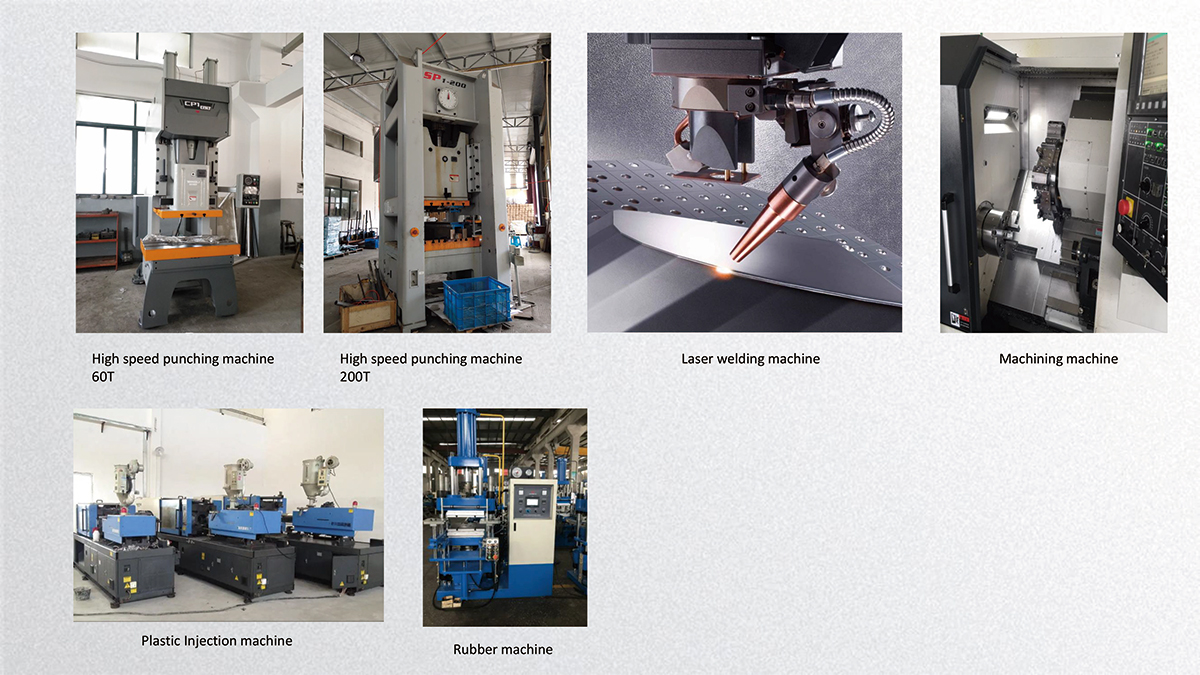
Solution 3: Isothermal Argon-Shielded Laser Welding
* Execution Protocol: All joints and end-caps are fused using automated laser welding under a high-purity Argon gas shield. The laser power is modulated to maintain an “Isothermal Melt Pool.”
* Material Evolution: This prevents the “Heat Affected Zone” (HAZ) from undergoing grain coarsening. By keeping the crystal structure consistent across the weld, the metal maintains its original tensile strength and corrosion resistance at the joints—the most common point of failure.
* Risk Evasion: Prevents the stress-corrosion cracking (SCC) that often occurs in hand-welded drains where localized overheating makes the metal brittle.
Solution 4: 100% Hydrostatic Pressure Audit
* Execution Protocol: Every completed trough is sealed and filled with water to a depth of 100mm. The unit is placed on a vibration table for 60 minutes to simulate industrial floor tremors while sensors monitor for any pressure decay or surface weeping.
* Material Evolution: This validates the absolute integrity of every weld and material junction. It proves the metal lattice is free from microscopic pinholes and casting defects.
* Risk Evasion: Protects the facility manager from the nightmare of tearing up a newly tiled floor to fix a leaking drain that failed its first week of service.
| Cross-Variable Metrics | Flat-Bottom Trough | V-Slope Engineered Trough | Standard 304 SS | Vacuum-Passivated 304 |
|---|---|---|---|---|
| Self-Cleansing Velocity | < 0.15 m/s | > 0.65 m/s | N/A | N/A |
| Anaerobic Risk | High (Stratified) | Negligible (Kinetic) | N/A | N/A |
| Chloride Resistance | Baseline | Baseline | Pits at 200ppm Cl | Resists > 800ppm Cl |
| Interfacial Bond | Rigid (Shears) | Buffered (Elastic) | N/A | N/A |
PRO-TIP / CHECKLIST
- The “V” Test: Peer down the length of the drain; if the floor is flat, reject it. Without a V-slope and built-in pitch, the drain will rely on massive volumes of water to stay clean.
- Passivation Verification: Wipe the surface with a high-pH cleaner; if “tea staining” (light brown spots) appears within 24 hours, the chromium oxide layer is insufficient.
- Weld Uniformity: Inspect the internal corners; premium welds should be a single, smooth “bead” with zero discoloration. Blue or black weld marks indicate carbon precipitation and future rust points.
- Flange Presence: Ensure the unit has a wide (min 20mm) horizontal flange. “Flush-mount” drains without flanges are nearly impossible to waterproof against CTE mismatch.
- Grate Weight: A 316L grate should feel significantly heavier and “stiffer” than a 304 equivalent. Light, flexible grates will warp under the weight of commercial kitchen trolleys.
- Debris Trap Design: Pull out the hair/debris trap; it should be made of the same grade of stainless steel. Plastic traps in high-heat environments will warp and allow debris to clog the main stack.
Frequently Asked Questions (FAQ)
Are floor drains required in commercial restrooms?
Yes, most international building codes (like the IPC) mandate floor drains in commercial restrooms and locker rooms. These drains are critical for preventing flood damage during fixture overflows and enabling the high-pressure sanitation required for public health. A linear trough drain system is often preferred in these settings for its high evacuation capacity and modern aesthetic.
How to remove hair from shower drain?
To effectively remove hair, first lift the decorative grate and extract the integrated “Debris Basket.” For hair that has bypassed the basket, use a mechanical “drain snake” or a plastic hair-clog tool. Avoid using harsh liquid cleaners, as the thermal reaction can degrade the protective passivation layer of the stainless steel trough body.
How to fix clogged bathroom drain?
Clogs are usually caused by the accumulation of lipids and fibers in the P-trap. Use a plunger to create kinetic pressure to dislodge the mass. If the clog persists, the P-trap must be manually cleared. In large trough drains, the increased fluid velocity of a V-slope design naturally reduces the frequency of these clogs by preventing particulate sedimentation.
What to put down shower drain for smell?
The best solution for drain odor is a mixture of baking soda followed by white vinegar; the resulting effervescent reaction mechanically scrubs bio-films from the trough walls. For industrial settings, use a pH-balanced enzymatic cleaner that targets the anaerobic bacteria within the stratified bio-film without damaging the chromium oxide passive layer.
How to install shower drain flange?
Installing a flange requires creating a recessed “pocket” in the concrete sub-floor. Apply a high-quality modified silane (MS) polymer adhesive to the flange underside and bed it firmly. Once set, apply the primary waterproofing membrane directly over the flange, ensuring a 2-inch overlap to create a mechanical lock that can withstand CTE-induced shearing.