
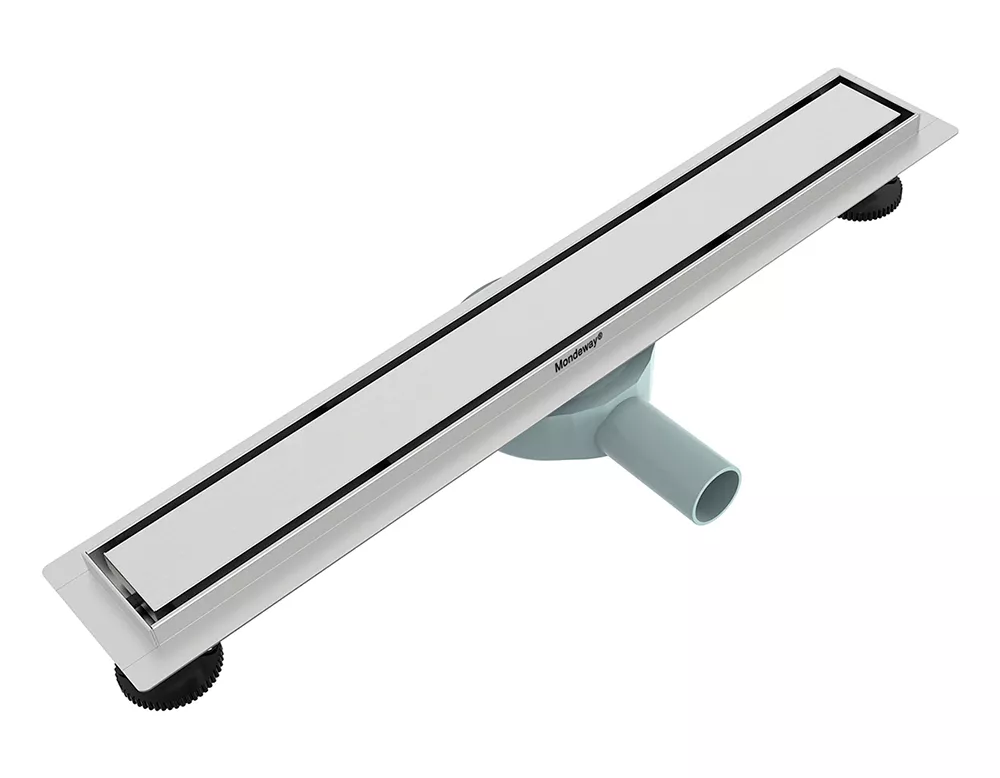
Why Do Bathroom Sink Drains Leak and Clog? The Physics Explained
Reference Standard: ASTM A380 (Standard Practice for Cleaning, Descaling, and Passivation of Stainless Steel Parts) / NSS 72-Hour Test / Hydrostatic Leak Test (10,000 Cycles)
Short Answer
Tribochemical Passivation Stripping and Halide-Accelerated Oxidation
The presence of “rust” on a rustproof basin waste plug is rarely simple iron oxidation; it is driven by Tribochemical Stripping and Halide-Accelerated Oxidation. The bathroom sink is a harsh chemical environment where mechanical cleaning meets corrosive halogens.
Mechanism Dissection:
Austenitic stainless steel (like SUS304 or 316) relies on a chromium-oxide passivation layer for its corrosion resistance. During routine cleaning, abrasive particles in liquid cleansers (like suspended silica) create nanoscale micro-scratches on the drain’s surface. This mechanical shear force temporarily strips the protective film. Under ideal conditions, this film regenerates in milliseconds. However, tap water and hand soaps contain free halide ions (chlorides and fluorides). If the passivation layer’s critical regeneration time (typically $10^{-3}$ seconds) is interrupted by the continuous presence of these highly electronegative chlorides, the halides attack the newly exposed iron substrate. This creates an “Occluded Cell” effect—a microscopic pit where the localized pH drops precipitously, triggering a self-catalyzing anodic dissolution that rapidly bores through the metal matrix. The Pitting Resistance Equivalent Number (PREN) dictates the threshold for this failure; alloys with insufficient chromium and molybdenum will pit exponentially faster.
Extreme Stress Timeline Modeling:
To simulate the degradation of a standard basin waste, we model a harsh residential environment with daily abrasive cleaning and high-chloride municipal water:
* Initial Phase (0-6 Months): The primary passivation layer is intact. Micro-scratches are superficial. The PREN value of the steel holds the line against the chloride ions, and the surface retains its factory luster.
* Degradation Phase (6-18 Months): Repeated tribochemical stripping begins to outpace the chromium oxidation rate. Microscopic pits form near the drain flange. The localized pH within these pits drops below 3.0, initiating the occluded cell effect. Visible brown “tea-staining” appears around the rim.
* Terminal Phase (18+ Months): The pitting corrosion breaches the wall thickness of the drain body. The structural integrity is compromised, and water begins to seep through the macro-pits, bypassing the gasket entirely and causing undetected sub-surface water damage to the vanity cabinet.
Cascading Systemic Hazards:
Pitting corrosion does not stop at aesthetic failure. The micro-pits act as perfect nucleation sites for “Electrostatic Lipid Coagulation.” Because the sharp edges of the pits possess a higher surface free energy, they aggressively attract the polar lipid molecules found in human sebum. This transforms the drain into a biological anchor point, dramatically accelerating the agglomeration of keratin fibers (hair) and bio-sludge, triggering chronic flow constriction.

KEY TAKEAWAYS
- The “Tea-Stain” Warning: Faint brown halos around the drain rim are not hard water deposits; they are iron oxide bleeding from active sub-surface pitting corrosion cells.
- Roughness Escalation: If the drain surface feels “gritty” to the touch after cleaning, the tribochemical wear has exceeded the alloy’s passivation recovery rate.
- Micro-Cavitation Hiss: A faint hissing sound during drainage can indicate that micro-pits have breached the pipe wall, allowing air to be drawn in through the compromised metal.
Surfactant-Induced Polymer Swelling and Interfacial Gap Propagation
The insidious, slow leak under a pop up bathroom sink drain is frequently caused by Surfactant-Induced Polymer Swelling, which destroys the gasket’s geometric seal.
Mechanism Dissection:
Standard drain gaskets are made from EPDM or cheap vulcanized rubber. Bathroom wastewater is heavily saturated with surfactants from soaps and makeup removers. These surfactants contain lipophilic hydrocarbon chains that, over time, permeate the cross-linked polymer network of the rubber gasket. In alkaline conditions (pH > 8), this chemical diffusion causes “Volumetric Distortion.” The rubber swells irregularly, absorbing the surfactant molecules and losing its structural modulus. When exposed to a $500\text{-hour}$ soaking test in pH 9 solutions, standard rubber exhibits a volumetric swelling rate exceeding 15%. This uneven expansion forces the gasket to warp away from the ceramic basin’s uneven underside, propagating interfacial micro-gaps. Gravity then forces wastewater through these new capillary channels, resulting in a persistent leak that tightening the nut cannot fix.
Electrostatic Lipid Coagulation and Keratin Fiber Entanglement
When an anti-clogging sink strainer waste fails, it is due to the physics of Electrostatic Lipid Coagulation.
Mechanism Dissection:
If the internal wall of the drain pipe is not ultra-polished, its microscopic roughness (Ra > 0.8 $\mu m$) generates localized electrostatic charges due to fluid friction. These weak charges attract polar lipid molecules (sebum and soap scum) from the wastewater. This creates a highly viscous, sticky bio-matrix on the pipe walls. According to Poiseuille’s law, as this bio-matrix layer thickens, the effective diameter of the pipe decreases, causing an exponential drop in the volumetric flow rate. More critically, this lipid sludge acts as a high-strength biological adhesive. As long-chain keratin fibers (hair) wash down, they become instantly entangled and anchored by the lipid matrix. This forms a structural “dam” capable of resisting high shear forces from plunging or chemical drain cleaners, resulting in severe clogs and the release of volatile sulfur compounds (sewer gas).
Argon-Shielded Micro-Welding and Variable-Durometer Co-Molding
To eradicate the physics of pitting, polymer swelling, and lipid agglomeration, advanced manufacturing employs metallurgical shielding and dual-stage elastomer engineering.
Solution 1: High-PREN Austenitic Substrate Upgrading
Execution Protocol: The entire drain body is stamped from premium SUS304 or SUS316 austenitic stainless steel, ensuring a high Pitting Resistance Equivalent Number (PREN).
Material Expected Evolution: The elevated chromium and molybdenum content provides a massive surplus of passivation potential. Even under severe tribochemical stripping from abrasive cleaners, the oxide layer regenerates in microseconds, blocking halide attacks. In standard 72-hour Neutral Salt Spray (NSS) testing, this substrate exhibits zero pitting nucleation. This guarantees that the stainless steel basin waste will not succumb to the “Occluded Cell” corrosion that plagues cheaper zinc or low-nickel steel alloys.
Hidden Cost Evasion: While 316 stainless is cost-intensive, the factory offsets this by utilizing progressive stamping dies that minimize material waste and eliminate the need for secondary anti-rust chemical coatings, ensuring cost-effective B2B scalability.
Solution 2: Argon-Shielded Micro-Welding
Execution Protocol: The connection between the drain flange and the tailpiece is fused using automated Tungsten Inert Gas (TIG) welding, flooded with a high-purity Argon gas shield.
Material Expected Evolution: Standard welding introduces atmospheric oxygen, causing chromium carbide precipitation at the grain boundaries—a severe vulnerability for chloride attack. The Argon shield completely displaces oxygen during the fusion process, preventing intergranular carbon migration. This maintains the isotropic integrity of the stainless steel lattice across the weld seam, ensuring the joint remains as rustproof as the primary flange.
Hidden Cost Evasion: Argon shielding requires precise gas flow control. The factory employs digital mass flow controllers to optimize argon consumption per weld, maintaining metallurgical purity without inflating the overhead costs of the production line.
Solution 3: Variable-Durometer Co-Molded Silicone
Execution Protocol: The sealing mechanism utilizes a “Tapered Elastomer” gasket co-molded from aerospace-grade silicone, featuring a high-durometer core and a low-durometer outer flange.
Material Expected Evolution: Unlike standard EPDM, high-grade silicone is chemically inert to bathroom surfactants. In a 500-hour pH 9 immersion test, its volumetric swelling remains $<1\%$. The variable durometer design allows the rigid core to withstand the 50 N·m installation torque without crushing, while the soft outer flange adaptively deforms to fill the micro-imperfections of the ceramic basin. This geometric wedging effect dynamically compensates for any Thermal Expansion Asymmetry during alternating hot/cold water cycles, guaranteeing a zero-leak hydrostatic seal.
Hidden Cost Evasion: Co-molding two durometers requires complex tooling. Mondeway utilizes multi-cavity injection molds that produce the complete gasket in a single cycle, slashing assembly time and ensuring perfect concentricity for every drain shipped.
Solution 4: Ultrasonic Electrolytic Polishing
Execution Protocol: The internal bore of the drain undergoes ultrasonic electrolytic polishing, stripping away the microscopic asperities left by the drawing process.
Material Expected Evolution: This electrochemical process reduces the internal surface roughness to Ra $< 0.2 \mu m$. By eliminating the micro-peaks, the surface free energy drops dramatically, effectively neutralizing the Electrostatic Lipid Coagulation effect. Without the sticky lipid matrix to act as an anchor, keratin fibers simply wash through the system unobstructed. This fluid dynamic optimization ensures rapid drainage and prevents the anaerobic bio-fouling that causes foul odors.
| Performance Metric | Standard Brass/Zinc Drain | Mondeway SUS316 Drain | Quality Assurance Standard |
|---|---|---|---|
| Pitting Resistance | Fails at 24H (Red Rust) | Passes 72H+ (No Pits) | ASTM B117 NSS Test |
| Gasket Swelling | > 15% (Leaks over time) | < 1% (Stable Geometry) | pH 9 Surfactant Immersion |
| Surface Roughness | Ra > 0.8 $\mu m$ (Clogs) | Ra < 0.2 $\mu m$ (Slick) | Profilometer Audit |
| Weld Integrity | Susceptible to Cracking | Argon-Shielded (Isotropic) | XRF Composition Scan |
| Hydrostatic Seal | Fails under thermal shock | Zero Capillary Leaks | 10,000 Cycle Hot/Cold Test |
PRO-TIP / CHECKLIST
- The Magnet Test: Genuine 300-series austenitic stainless steel is generally non-magnetic. If a magnet sticks strongly to the drain body, it contains high iron/low nickel and will suffer from chloride-induced pitting.
- Inspect the Gasket Shape: Avoid flat, uniform rubber washers. Look for a “Tapered” or stepped silicone gasket, which is necessary to wedge into the sink hole and counteract volumetric distortion.
- Check the Internal Finish: Shine a light down the drain. It should look like a mirror. A dull, brushed internal finish will aggressively attract lipids and cause severe hair entanglement.
- Verify the Weld Seam: Look at where the top rim meets the pipe. A dark, discolored line indicates oxygen exposure during welding, which guarantees future intergranular rust.
- Avoid Bleach Cleaners: Never use pure bleach (sodium hypochlorite) on stainless steel. The extreme halide concentration will instantly strip the passivation layer faster than it can regenerate.
Frequently Asked Questions (FAQ)
how to relocate shower drain
Relocating a shower drain requires breaking through the subfloor or concrete slab to access the plumbing matrix. You must ensure the new location maintains the correct “Hydrodynamic Drainage Slope” (typically 1/4 inch per foot) to prevent acoustic impedance mismatch and stagnant water pooling. It often involves rerouting the P-trap and ensuring the new connection does not compromise the floor joist integrity.
can a shower drain into a toilet drain
No, a shower cannot directly drain into a toilet’s waste line without proper venting and manifold separation. Toilet drains are designed for high-volume, rapid-flush blackwater. Connecting a shower directly can cause pressure imbalances, allowing toxic sewer gases to break the water seal in the shower’s P-trap, creating severe health hazards.
why pour old coffee down shower drain
Old coffee grounds act as a mild abrasive and odor neutralizer. The mechanical friction of the grounds can gently disrupt minor “Biofilm Matrix Agglomeration” on the pipe walls, while the nitrogen in the coffee helps neutralize the volatile sulfur compounds (sewer gas) trapped in the lipid sludge. However, excessive use can cause physical blockages.
does a shower drain need to be vented
Yes, absolutely. A vent pipe equalizes the atmospheric pressure within the plumbing system. Without a vent, the large volume of water rushing down the pop up bathroom sink drain or shower creates a vacuum. This vacuum will siphon the standing water right out of the P-trap, leaving an open path for hazardous methane and hydrogen sulfide gases to enter the bathroom.
how to install bathroom drain stopper
To install a stopper, first ensure the ceramic sink basin is clean. Apply the top silicone gasket (or plumber’s putty) under the flange. Insert the drain body through the hole. From underneath, slide on the tapered silicone gasket, followed by the friction washer and the lock nut. Tighten the nut securely to achieve the required “Contact Stress” and engage the variable-durometer seal, preventing any sub-surface capillary leaks.