
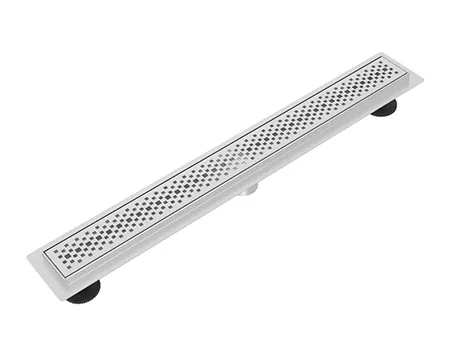
Shower Floor Tray Evidence Route
Reference Standard: Relevant material and performance testing standards, including IAPMO/ANSI Z124 for plastic shower receptors when applicable, and plumbing waste fitting guidance from organizations such as IAPMO and ASME when the drain interface is part of the verified assembly.
Short Answer
From First Shower to Day-30: What Happens When Water Residue Is Not Guided Correctly
A shower floor tray does not fail only at the moment of installation. In real bathrooms, the first signs of risk often appear as a slow sequence: water movement after the first shower, residue behavior after repeated use, and odor perception after the drainage path has collected organic matter. Because no verified material, tray depth, drain size, surface texture, or slope value is available from the supplied catalog, this article cannot claim a specific drainage speed or anti-slip class for the product. The practical method is to treat the shower floor tray as an unverified wet-area component until sample evidence proves its performance.
On day one, the buyer should observe whether water naturally moves toward the drain after normal shower flow stops. This is not a claim about any exact built-in slope; it is a field validation point. A tray may look acceptable in a product photo, yet still leave thin water films if the surface plane, drain opening, installation base, or floor leveling does not guide water consistently. Even a shallow remaining film can hold dissolved soap, body oil, and fine particles. The important metric is not a decorative surface impression, but whether visible water residue clears within a reasonable inspection window under the buyer’s own installation conditions.
After one week, the test changes from water movement to residue accumulation. Hair, skin particles, shampoo surfactants, and mineral deposits can create a thin, sticky layer around the drain entry. If the drain interface is difficult to remove or clean, that layer may become the first stage of slow drainage. This does not prove that the tray has a defect. It means the buyer must verify cleaning access, drain compatibility, and whether the tray design allows routine maintenance without damaging seals or visible surfaces.

By day 30, the perceived problem may become smell, water stagnation, or surface safety concern. The root cause is often not one single part. Odor can come from water seal loss, drain biofilm, trapped organic residue, or ventilation conditions. Slow flow can come from hair and soap film inside the drainage path. A surface slip concern may come from standing water plus detergent residue, not necessarily from the tray material alone. For this reason, a responsible product page should not say the tray is anti-odor, anti-clog, or anti-slip unless the supplier has provided testable evidence.
An edge-case model is useful here. Imagine a bathroom used twice daily for 30 days with warm water, shampoo, body wash, and loose hair entering the drain area. Without verified tray geometry and drain details, the expected inspection logic is simple: early phase checks water clearance, middle phase checks residue concentration, and late phase checks cleaning access and odor feedback. A cross-dimensional comparison test should place two samples under the same shower routine: one cleaned after every use and one cleaned only weekly. If the weekly-cleaned sample develops slower drainage or residue rings, the buyer learns about maintenance sensitivity without inventing unsupported performance numbers.
Visible Surface vs Hidden Drain Path: Appearance Is Not System Validation
The most misleading stage of shower floor tray evaluation is the visual approval stage. A tray can appear clean, flat, and installation-ready, yet the hidden drain path may still be the real risk zone. The visible surface is only one part of the wet-area system. The drain opening, waste fitting, trap connection, surrounding seal, removable cover, and cleaning path all affect long-term bathroom performance. Since the catalog does not provide a shower floor tray specification, any statement about antibacterial coating, removable filter, odor-seal core, reinforced base, or certified slip rating would be unsupported.
Surface inspection should still happen, but it should be placed in the correct position. Buyers can check whether the tray surface has obvious scratches, pits, warped zones, color inconsistency, or uneven edges. These are visible quality indicators. They do not prove drainage performance. A second layer of review must inspect the hidden path: drain compatibility, cleaning access, edge sealing check, and surface slip review under wet and soapy conditions. Each field protects a different risk point. Drain compatibility reduces interface mismatch. Cleaning access reduces long-term residue accumulation. Edge sealing check reduces water migration outside the intended wet zone. Surface slip review checks user safety under realistic bathroom residue.
A practical comparison helps separate appearance from function.
| Review Area | Visible Pass Signal | Hidden Risk Still Possible | Buyer Validation Method |
|---|---|---|---|
| Tray surface | Smooth appearance | Water film remains after use | Wet surface observation after sample installation |
| Drain opening | Neat visible cover | Hair accumulates under cover | Removable access and cleaning trial |
| Edge line | Straight perimeter | Seal gap under movement | Water exposure and edge inspection |
| User safety | Clean dry surface | Soap film lowers traction | Wet and soapy step simulation |
| Packaging | No visible damage | Base deformation during transit | Flatness check after unpacking |

The edge extreme scenario is a bathroom where the tray surface is wiped daily but the drain cover is rarely removed. The surface may remain attractive, while the drain zone slowly collects hair and soap film. In a cross-dimensional test, compare a visual-only inspection against a functional wet test. The visual-only method may approve the tray in under two minutes. The functional method takes longer because it checks water flow, drain access, edge sealing, and wet traction. For a buyer, the longer method is more valuable because real complaints usually emerge from use, not from photography.
The same logic applies to website writing. A product page may use attractive images, but appearance cannot substitute for verified performance data. If the supplier has not confirmed the tray material, drainage slope, weight tolerance, surface texture, cleaning method, packaging protection, or drain system compatibility, the page should use careful wording. A safer sentence is: Buyers should confirm drain compatibility and cleaning access before project approval. A risky sentence is: This tray prevents odor and hair blockage. The first sentence is verifiable. The second sentence may be false without evidence.
KEY TAKEAWAYS
- Water that clears slowly after use can signal slope, leveling, or drain-interface validation gaps.
- Clean-looking surfaces can still hide hair, soap film, and biofilm inside the drainage path.
- Odor complaints should be investigated through trap condition, drain cleaning access, and water seal behavior before blaming the tray alone.
A Buyer’s Evidence Route Before Writing Performance Claims for a Shower Floor Tray
A buyer’s evidence route begins with restraint. The supplied catalog does not verify shower floor tray material, dimensions, drain construction, load capacity, slip performance, anti-odor design, anti-clog function, or chemical cleaner resistance. That absence matters. It does not mean the product cannot perform. It means the website copy, RFQ sheet, and sales communication must wait for proof before making fixed performance claims. For SEO content, this is not a weakness. It becomes useful information for buyers who are trying to avoid exaggerated wet-area promises.
The first evidence item is sample identity. The buyer should request clear photos of the exact tray model, including top surface, underside, drain opening, edge profile, and packaging. A single lifestyle image is not enough. The second item is material confirmation. If the supplier says the tray is acrylic, resin stone, ceramic, composite, stainless steel, or another material, that statement should be attached to a specification sheet, not guessed from appearance. Different materials behave differently under impact, hot water, cleaning chemicals, and installation stress.
The third item is installation context. A tray that works in one bathroom may underperform if installed on an uneven base, paired with an incompatible drain, or sealed with the wrong edge method. The buyer should ask for installation guidance and confirm whether the product requires a level base, mortar bed, adjustable support, specific drain kit, or perimeter sealing method. Without this information, an odor or leakage complaint may be caused by the installation system rather than the tray alone.
The fourth item is functional validation. The buyer should request or perform water-flow observation, surface flatness check, edge sealing review, and cleaning access inspection. If anti-slip performance is important, the supplier should provide a relevant test reference or the buyer should conduct a wet-use sample review. If odor prevention is promoted, the buyer should confirm whether that function belongs to the tray, the drain fitting, the trap, or a separate component. A tray alone does not automatically control drain odor.
A useful cross-dimensional case is to compare product copy before and after evidence collection. Before evidence, the page may say: suitable for shower floor installation, pending specification confirmation. After evidence, the page can become more precise: material confirmed, drain compatibility confirmed, cleaning access confirmed, packaging method checked, and installation guidance available. This gradual path avoids false certainty while still giving buyers a practical reason to continue the inquiry through wet-area product sourcing and project discussion.

For an edge extreme model, consider a hotel renovation project where dozens of bathrooms use the same tray design. One unverified claim can multiply into repeated maintenance calls. A small drain access issue that affects one home becomes a large operational cost across many rooms. A cross-dimensional test should compare a single residential sample review with a repeated-use hospitality simulation. The sample review checks basic appearance and water movement. The repeated-use simulation checks cleaning frequency, maintenance access, odor response, and edge durability over many cycles.
A non-repetitive evidence request can be written as a sequence rather than a rigid checklist. Ask first: Can the supplier confirm the exact material and surface finish? Then ask: Can the drain opening and compatible waste fitting be documented? Next: Can the sample be tested with warm water, soap residue, and hair-like debris under controlled observation? After that: Can packaging protect the tray base from deformation during shipping? These questions create an evidence path without copying old specification-lock or claim-control structures.
When FAQ Keywords Meet Missing Product Data: Turning Search Demand into Safer Technical Copy
Search demand around shower drains is usually practical. People ask how to fix a smelly shower drain, how to stop hair going down a shower drain, and how to stop bad smell from a bathroom drain because they are already experiencing discomfort. For a shower floor tray page, these searches can be useful entry points, but they cannot be used to invent product functions. A keyword about odor does not prove that the tray contains an odor-control system. A keyword about hair does not prove that the tray includes a filter. A keyword about bathroom drain smell does not prove that the tray can solve trap or pipe problems.
The safer method is intent translation. Odor search intent becomes a request to verify drain system design, trap condition, water seal behavior, and cleaning access. Hair blockage search intent becomes a request to verify drain cover removal, filter compatibility, and maintenance convenience. Bad smell search intent becomes a request to inspect biofilm, stagnant residue, venting, and cleaning routine. This turns user pain into a responsible buyer education path.
Four acceptance solutions can be used before publishing strong claims.
Solution 1: Drain compatibility review. Execution protocol: Match the tray drain opening with the intended waste fitting, trap, and installation environment before sample approval. The buyer should confirm whether the drain cover is removable and whether the waste fitting can be cleaned without damaging visible parts. Expected material behavior: Verified compatibility reduces standing water around the drain interface and lowers the chance of residue retention caused by mismatched geometry. Hidden cost control: More confirmation work may delay publication, but it prevents later disputes caused by unsupported drainage claims.
Solution 2: Cleaning access validation. Execution protocol: Simulate routine cleaning by removing covers, clearing debris, rinsing the drain area, and checking whether tools can reach likely residue zones. Expected material behavior: Better access does not change the tray material, but it changes the maintenance burden and reduces organic buildup risk. Hidden cost control: If access depends on a fragile part, the buyer should request spare-part availability and replacement instructions.
Solution 3: Wet surface observation. Execution protocol: Run warm water across the tray surface, add diluted body wash, and observe water movement, residue pattern, and user footing under controlled conditions. Expected material behavior: The test reveals whether surface geometry and finish interact safely with soap residue. Hidden cost control: Do not convert this into a certified slip rating unless a recognized test report is provided.
Solution 4: Edge sealing and packaging check. Execution protocol: Inspect perimeter fit, underside flatness, edge contact, and shipping protection after unpacking. Expected material behavior: Stable flatness helps the installation surface behave predictably under wet use. Hidden cost control: Packaging adds cost, but it reduces transit deformation and installation disputes.
| Variable | Low-Risk Evidence | Warning Signal | Acceptance Basis |
|---|---|---|---|
| Drain fit | Confirmed compatible waste fitting | Unclear drain size or cover access | Supplier drawing or sample test |
| Cleaning route | Cover can be removed and replaced | Hidden debris zone cannot be reached | Maintenance trial |
| Wet surface | Water and soap residue are observed | Film remains in repeated zones | Sample observation |
| Edge seal | Perimeter alignment checked | Gaps after placement | Installation review |
| Packaging | Base protected during transit | Warped tray after unpacking | Arrival inspection |
PRO-TIP / CHECKLIST
- Ask for the exact material name before writing durability claims.
- Confirm drain compatibility with the intended waste fitting.
- Test whether the drain cover can be removed for cleaning.
- Observe water movement after a realistic warm-water rinse.
- Review edge sealing before assuming leak resistance.
- Check packaging support to reduce deformation during shipping.
- Avoid publishing anti-odor or anti-clog claims without proof.
- Keep sample photos and inspection notes with the product record.
The final editorial rule is simple: search demand can guide the topic, but evidence must control the claim. A shower floor tray page can answer odor, hair, and bad-smell concerns by explaining what buyers should verify. It should not promise functions that the provided data does not confirm.
Frequently Asked Questions (FAQ)
How to fix a smelly shower drain?
Start by checking the water seal, cleaning access, and visible residue near the drain. A shower floor tray alone should not be described as an odor solution unless the drain assembly and trap design are verified. Odor often comes from biofilm, stagnant residue, or trap problems.
How to stop hair going down a shower drain?
Use a drain cover or filter that is compatible with the tray and easy to remove for cleaning. Do not assume a shower floor tray has hair-blocking ability unless the supplier provides clear product evidence. Cleaning access is as important as the filter itself.
How to stop bad smell from bathroom drain?
Check whether the trap holds water, whether the drain path can be cleaned, and whether soap residue or hair has accumulated. If a product page discusses odor control, it should identify whether the function comes from the tray, waste fitting, trap, or separate accessory.
Can a shower floor tray prevent leaks?
Only if its material, edge profile, installation method, drain fit, and sealing system are correctly specified and installed. Without verified product data, leak prevention should be written as a validation requirement, not a guaranteed feature.
What should buyers confirm before ordering a shower floor tray?
Buyers should confirm material, size, drain compatibility, surface review method, cleaning access, packaging protection, installation guidance, and any relevant test report. These fields reduce the risk of publishing claims that are not supported by actual product evidence.