
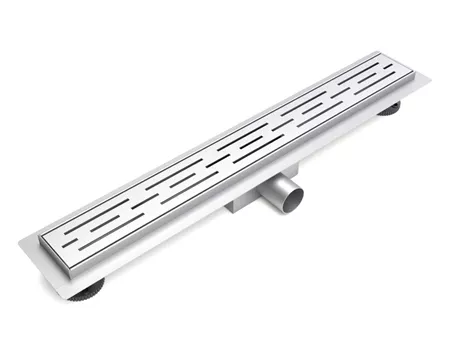
Hair and debris clogging, water ponding and unstable trap seals are the key risks when you specify a shower drain for residential shower enclosures; once water pools around the grate and the trap seal becomes unreliable, moisture lingers on the floor and the whole wet area stops feeling dry and safe. Choosing the right drain design is therefore less about appearance and more about which flow capacity, grate layout and interface details keep the enclosure draining cleanly day after day.
How drainage-flow capacity shapes daily shower drain performance
In a residential bathroom, each shower session delivers a short, intense burst of water rather than a gentle trickle. If the drainage-flow capacity of the shower drain is sized only for nominal fixture flow, a real shower system with multi-function heads, massage jets or high-pressure settings can briefly exceed what the drain can evacuate. The first symptom is usually a slow-moving ring of water around the feet rather than dramatic flooding.
This shallow ponding matters because it extends the time that the tile surface, grout joints and sealant edges stay saturated. When water takes several minutes to disappear after each shower, the enclosure operates like a permanently damp microclimate instead of a space that dries between uses. Over months, that drives discoloration, biofilm growth and an increasing perception that the floor is always slightly wet.
For buyers, the practical question is simple: is the drain rated to discharge at least as much water as the shower system can deliver at its highest realistic setting? A conservative choice gives the enclosure more hydraulic headroom, so minor hair accumulation or soap film do not immediately translate into visible water pooling.
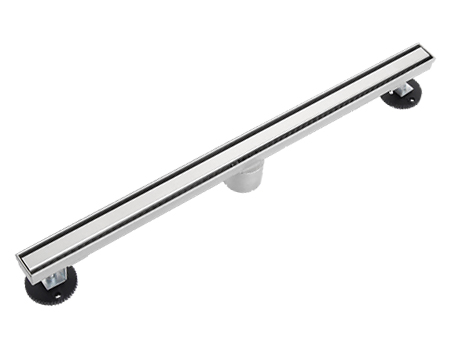
Low-profile shower drains, such as slim designs used in renovations, are especially sensitive to this sizing question. Their shallow internal chambers leave less buffer volume for surges, so even a moderate mismatch between shower output and drain capacity can create frequent, visible ponding at the surface.
Shower drain types: which structure fits a residential shower enclosure?
Before comparing individual models, it helps to understand the main structural families of residential shower drains. Linear drains collect water along an extended edge, usually at the wall or threshold, and work well in walk-in showers and barrier-free bathrooms. By running a single long slot, they reduce the need for steep slopes across the whole floor and allow large-format tiles to be used without complicated cuts.
Point drains, in contrast, centralize discharge in a compact inlet and require the floor to slope consistently from all sides toward that location. In a well-executed residential installation, this gives reliable, efficient evacuation, but small deviations in slope or tile height can create low spots where water lingers just beyond the drain’s capture zone.
Outlet orientation further refines the choice. Vertical outlet drains send water straight down and are hydraulically efficient, but they need enough structural depth in the floor build-up. Horizontal outlet drains, such as the O Series horizontal outlet shower drain, route water sideways towards the nearest pipe, making them useful in renovations where pipe positions are fixed but floor depth is constrained.
Key question: how do you size a shower drain for your specific shower system?
Most homeowners never match the labelled flow rate of their shower system against the drainage capacity of the chosen drain. For a residential enclosure, the safer approach is to assume the maximum likely flow based on the type of system installed. A rain shower head combined with a hand shower operating together can easily exceed the design flow of older point drains that were sized for a single, modest shower head.
A practical way to think about sizing is to ask two questions. First, what is the highest realistic combined flow that the enclosure will see when multiple functions are used at once? Second, how much safety margin is needed so that the drain still copes comfortably when partial clogging from hair and soap residue occurs between cleanings?
When product data is available, choose a drain whose rated flow capacity at typical residential head of water exceeds the maximum combined flow of the shower system by a comfortable margin. Where data is not directly listed, drains tested under recognized methods such as a drainage flow rate test within broader standards give more reliable reference points than purely decorative models with no published performance information.
Grate layout, hair and debris: avoiding everyday clogging patterns
Even a well-sized shower drain loses practical capacity if hair and debris accumulate at the grate faster than users are willing to clean it. Residential bathrooms see a very specific pattern of clogging: long hair strands, soap residue and small fibers bind together at the grate slots, creating a flexible mat that partially blocks flow.
Grate layouts with very narrow slots and dense patterns can look refined, but they tend to trap this mat right at the surface. Over time, the effective opening area shrinks so much that ponding appears even though the internal channel is still structurally sound. Designs that balance visual detail with adequate open area maintain their performance longer between cleanings.
Removable strainers and hair catchers offer another line of defense. For buyers, the real question is not whether a product has a hair-catching feature, but how easily it can be accessed, inspected and rinsed under real household routines. A component that requires tools or awkward disassembly will not be maintained regularly, and the drain gradually drifts toward chronic partial clogging.
Floor slope, trap stability and odor control in high-humidity bathrooms
Hydraulically, a shower drain depends as much on the surrounding floor geometry as on its internal channel. In residential bathrooms where visual continuity is valued, floor slopes are sometimes made shallower than ideal to keep tiles looking flat. If the slope toward the drain is marginal, water migration slows, and even a high-capacity drain cannot prevent localized ponding.
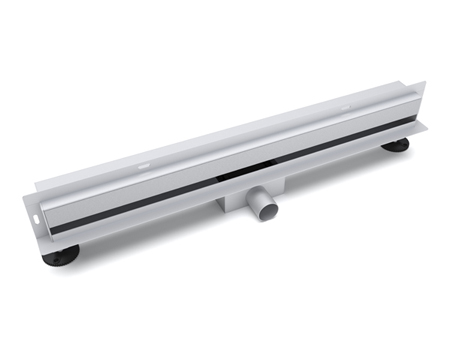
Linear drains and wall drains are more forgiving of slope variations because they collect water along a continuous edge. However, they shift the engineering problem to the interface between floor, wall and drain body: junctions must be sealed and supported so that no gaps open under repeated thermal and loading cycles. Any weakness here admits moisture below the surface where it cannot evaporate easily.
Trap stability is a separate but related concern. In a high-humidity shower enclosure, a well-designed trap must retain enough water to block odors between uses, yet not be so deep that it becomes difficult to flush debris. Traps with very small water seals are prone to drying out during warm seasons, especially in bathrooms with intermittent use. A carefully chosen shower drain design will keep the trap sealed through normal residential usage without requiring the homeowner to think about it.
Material durability and corrosion behavior in residential wet environments
Material choice controls how the main body of the shower drain behaves under constant moisture, cleaning agents and occasional mechanical loading. Stainless steel remains the most common option in residential shower drains due to its resistance to corrosion and retention of surface smoothness. That smoothness is not just aesthetic; it delays biofilm buildup inside the channel and keeps the effective hydraulic diameter closer to its original value.
Coated alloys and brass drains can deliver distinct finishes, but their long-term performance depends heavily on the integrity of surface treatments. Once coatings are scratched or worn away by abrasive cleaning, the base metal interacts directly with the high-humidity environment, and localized corrosion can roughen internal surfaces. Over years, that roughness encourages deposits to anchor and slowly undermines drainage efficiency.
Plastic drains avoid corrosion in the traditional sense but are more sensitive to deformation under mechanical or thermal stress. In a residential bathroom where floor loads, hot water and structural movement all combine, any deformation that distorts the grate or trap geometry may lead to subtle but persistent changes in flow pattern and sealing behavior.
How drainage-flow capacity is validated: tests, standards and shower drain reliability
Behind every reliable shower drain is at least one method of verifying that its flow behavior and sealing capacity match real operating conditions. In many markets, performance references are tied to standards such as the European EN 1253 Floor Drains for Buildings, which covers discharge rate, load resistance and water seal depth for drains used in buildings.
A typical drainage flow rate test evaluates how much water the drain can pass under specified head conditions, often in conjunction with criteria for maintaining a stable water seal in the trap. Complementary methods from organizations such as ASTM International Materials & Plumbing Standards provide guidance on corrosion resistance, material integrity and structural performance under mechanical loading.
For manufacturers and project teams that care about predictable behavior in residential shower enclosures, these tests are more than a formality. They confirm whether a particular shower drain design can sustain its flow capacity and trap seal performance over repeated operating cycles in a high-humidity environment. When buyers choose drains that have been validated against such methods, they are effectively buying down the risk that hidden weaknesses will turn into ponding, grate clogging or odor issues later.
Practical selection framework: turning technical data into a buying decision
For homeowners, project contractors and plumbing design engineers, turning all of this into a clear buying decision starts with a simple sequence of checks. First, confirm the shower system’s maximum combined flow in realistic use. Second, shortlist shower drains whose published discharge performance, or validated flow rate test results, exceed that flow with meaningful margin for partial clogging.
Third, align drain type with floor build-up and layout: point drains in compact enclosures with clear slopes, or linear and wall drains where barrier-free entries and large tiles are prioritized. Reviewing products such as the linear shower drain range helps to visualize how different configurations integrate with tile patterns and glazing lines in residential projects.
Fourth, look closely at grate design and maintenance access. Ask whether the grate’s open area is sufficient, how hair-catching elements are removed, and whether users are realistically going to clean them at the required frequency. At this stage, it is useful to review technical resources such as the manufacturer’s installation guide, which show how the drain is intended to be assembled, sealed and serviced.
Finally, cross-check material choice and standards alignment. Stainless steel bodies with smooth internal channels tested under recognized drainage flow rate methods, and designed in accordance with plumbing and floor drain standards, offer the most predictable path to long-term stability in residential shower enclosures where high humidity and frequent use are normal.
Reliability-focused closing notes for residential shower drain choices
The guidance in this buyer-focused overview is built on material performance analysis, standardized plumbing and sanitary testing practices, and observations from residential shower enclosures operating in high-humidity conditions. In particular, drainage flow rate test methods and building drain standards show how much water a shower drain can pass while still preserving a stable trap seal, and how structural details respond to repeated loading and cleaning over time.
In practical terms, a shower drain only proves its value when it quietly prevents grate clogging by hair and debris, keeps water from pooling on the floor and maintains its seal in a high-humidity shower enclosure environment without demanding constant attention. Selecting drains that have been evaluated under drainage flow rate tests and aligned with references such as EN 1253 and ASTM plumbing standards reduces the chance that unseen weaknesses will surface as odor, ponding or premature deterioration.
When buyers treat the shower drain as a critical component rather than a minor accessory, and combine realistic flow sizing, appropriate structural type, maintainable grate design and verified test performance, the result is a bathroom where the shower enclosure dries predictably after use and long-term reliability becomes the default outcome instead of a matter of luck.