
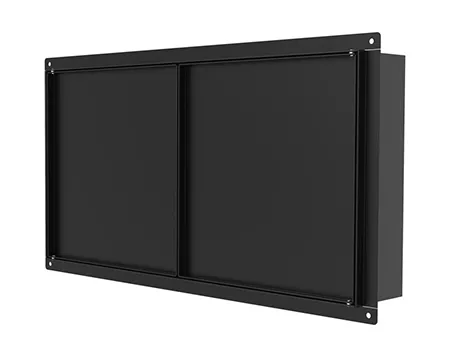
How to choose shower niche for tiled walk-in showers with reliable waterproofing integration
When a tiled walk-in shower is being planned, the moment the discussion turns to storage, many homeowners and project teams immediately picture a clean, recessed shower niche. The real difficulty is not in choosing a design they like, but in deciding which shower niche can live inside a high-humidity shower enclosure for years without hidden leakage, swelling panels, or cracked tile edges.
In practice, the choice is a balance between moisture control, structural stability inside the stud cavity, and how well the niche ties into the waterproofing envelope of the shower wall. This buyer-focused guide looks at shower niches as built-in components of the wet wall, not just decorative alcoves, so that selection decisions are grounded in how the niche behaves under daily water exposure and repeated thermal cycles.
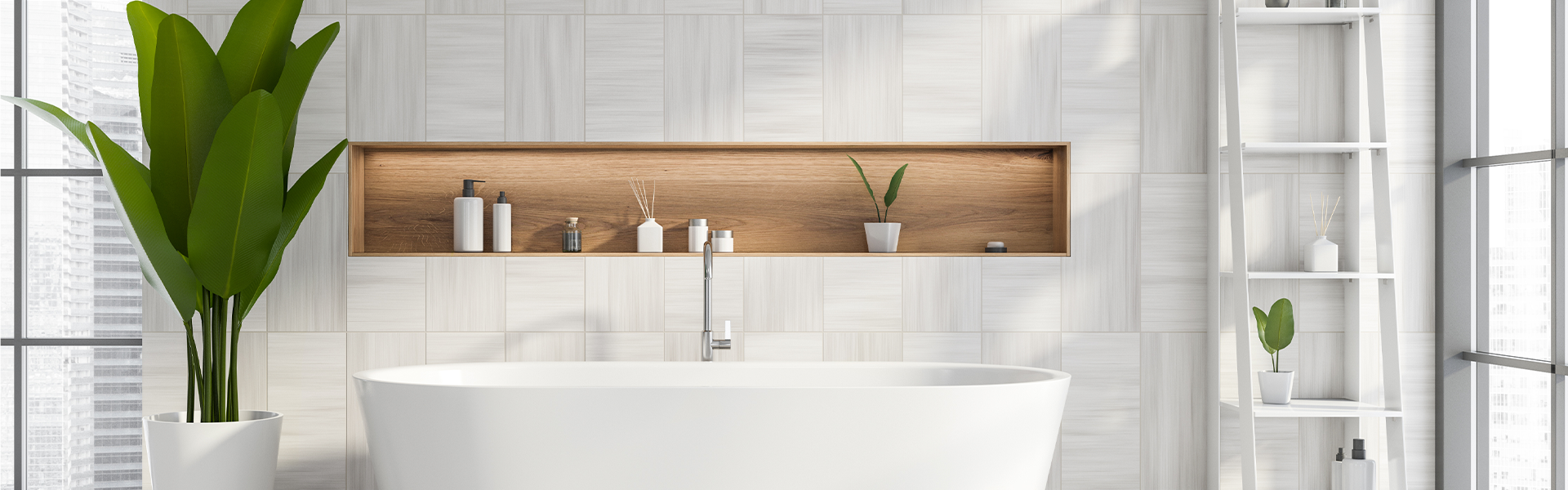
How a shower niche behaves inside a tiled walk-in shower
Inside a residential shower enclosure with daily, intermittent use, every surface near the spray zone faces cycles of direct water impact, runoff, and long periods of elevated humidity. A recessed shower niche is positioned directly in this zone. It interrupts backer board, membranes, and even stiffening layers that normally carry both loads and vapor control across the wall.
Because the niche cavity sits behind tile, any weakness in materials or waterproofing details is difficult to see until symptoms appear on the finished face. A common path to failure is a waterproofing layer breach at corners or along the perimeter where the niche flange meets the wall, leading to hidden leakage that slowly darkens studs, softens panel cores, and eventually telegraphs as cracked grout or loose tiles.
Daily user behavior amplifies these stresses. Heavy bottles loaded at the front edge, repeated reach motions, and occasional impacts from shower hardware concentrate loads at the niche front corners. When this is combined with thermally driven expansion and contraction in a high-humidity shower enclosure environment, even small discontinuities in the waterproofing layer can turn into real moisture problems.
Types of shower niches and what they mean for durability
Modern shower niches fall into three broad types, each with a distinct behavior once installed in the wet wall: foam-core tile-ready niches, welded stainless steel niches, and site-built niches assembled from backer board inside the framing.
Foam-core tile-ready niches
Foam-core niches use a rigid, low-density core with cementitious or polymer skins. They are light, easy to cut, and designed to accept tile directly. Their long-term performance depends on core compressive strength, skin adhesion, and how well the outer surface bonds to thinset and membranes. If edge sealing is weak, moisture can slowly migrate into the core, reducing stiffness and making the assembly more sensitive to point loads in the niche.
Stainless steel shower niches
Stainless steel niches behave more like thin shells with rigid flanges. Their walls are essentially impermeable to water vapor, so the main concerns are corrosion resistance and dimensional compatibility with tile. With the right grade of stainless, corrosion is rarely the limiting factor. Instead, thermal expansion mismatches between metal and tile must be handled by grout joint design and flexible sealant placement at the front edges.
Site-built framed niches
Site-built niches use the same backer board as the rest of the wall, cut and assembled between studs. They offer maximum flexibility in dimension but create a dense network of joints and fasteners inside the waterproofing system. Each added joint is a potential path for water or vapor if membranes are not detailed perfectly. In smaller projects with limited inspection time, this complexity increases the risk of a waterproofing layer breach at the niche-to-wall transitions.
Key selection criteria when you choose a shower niche
To choose a shower niche that suits your tiled walk-in shower, it helps to translate aesthetic preferences into a few technical questions. The goal is to make sure the niche you like can also maintain waterproofing integrity and structural stability in your specific installation.
Which shower niche materials cope best with constant moisture?
In high-humidity shower enclosures, stainless steel delivers very stable behavior against moisture but depends on correct detailing at edges and corners. Foam-core niches can also work well if the core has low water absorption and the skins are continuous. When comparing options, pay attention to whether the manufacturer explains how the core is protected and how the niche interfaces with waterproof membranes, not just how the tiled face looks.
How deep should the niche be for your stud wall and reach comfort?
Depth is a structural parameter as much as a comfort parameter. Deeper cavities increase usable storage, yet they also reduce the effective thickness of material between the niche and the opposite side of the stud bay. In 90 mm or 100 mm stud walls, oversized depth can reduce the room left for insulation or introduce flex when heavy items are placed at the front edge. A practical approach is to size depth according to stud depth minus the combined thickness of backer board, membrane, and tile, and to avoid fully occupying the cavity in tight exterior walls.
Does niche orientation affect water shedding and crack risk?
Orientation matters more than it appears. Horizontal niches create a long lower ledge that must be correctly sloped, otherwise splash water tends to linger near the back wall. Vertical niches shed water more readily but concentrate loads into narrower vertical bands, which must be well supported by framing. Exploring dedicated formats such as horizontal niches or vertical niches helps align orientation with real use habits and tile layout, instead of stretching a single niche shape to every project.
Waterproofing integration: where most shower niche failures begin
When shower niches fail, users rarely see the failure mode directly. What they notice are symptoms such as darkened grout joints around the niche, hairline cracks at corners, or a persistent musty smell from the shower area. At the system level, the underlying issue is often that the waterproofing layer is no longer continuous where the niche intersects the wall.
Two details are especially sensitive. First, inside corners of the niche, where multiple seams converge; second, the perimeter where the front flange transitions to the flat wall membrane. Any discontinuity here, even a small pinhole or void in liquid-applied membrane, can turn repeated spray into slow, hidden leakage. Over years of service this stresses studs and panel cores and gradually undermines the tile surface.
A buyer who wants to avoid this pattern should treat waterproofing integration as a primary selection criterion. That means looking for clear installation diagrams, pre-formed corner pieces, and explicit instructions on how the niche works with sheet or liquid membranes, rather than relying on generic “suitable for waterproofing systems” claims.
Installation method as a control point for moisture and movement
Even a well-designed shower niche can suffer if the installation method does not match the environment and use frequency. Sheet membranes offer a predictable vapor barrier at the niche-to-wall interface, but require precise folding and corner treatment. Liquid membranes adapt easily to complex geometry inside the cavity, yet they depend on achieving the right film thickness in every area, including edges and screw penetrations.
A practical approach is to treat the niche as a test location for the entire waterproofing workflow. If the membrane system can deliver a robust seal around the niche, most other transitions in the shower are likely to be well controlled too. Using a structured reference such as the installation guide for your chosen system helps align framing, niche setting, and membrane application into a single, repeatable sequence instead of an improvised on-site adjustment.
In a high-humidity shower enclosure, movement joints around the niche also deserve attention. Perimeter joints that allow controlled movement between niche and tile field reduce the chances that thermal expansion will be forced into rigid grout, which is one of the pathways to corner cracking and loss of local waterproofing integrity.
Typical decision mistakes that lead to hidden leakage and repairs
Many call-backs and repair jobs can be traced to decisions made long before waterproofing materials were applied. A recurring mistake is to choose a niche based purely on its look in a catalog, without checking how its flange width, corner geometry, and recommended membranes align with the project’s real wall build-up. Another is underestimating how much water actually reaches the cavity, especially in showers where the niche sits directly in the spray path rather than on a drier side wall.
Oversizing the niche without adjusting framing is another common trap. When a large opening cuts through a narrow stud wall and no additional reinforcement is added, the niche can flex under load. Micro-movements at the front edges gradually fatigue grout and sealants, opening micro-gaps where water can penetrate. In this way, an apparently generous storage feature becomes the origin point of a waterproofing layer breach that takes years to detect.
There is also a subtle trade-off between maximizing the number of niches and maintaining a robust wall. Turning every possible bay into a recess may make the design appear more “built in,” but each recess removes shear capacity and membrane continuity. A better approach is to focus on a smaller number of well-positioned recesses and leave the rest of the wall to perform its primary structural and waterproofing function.
Scenario-based recommendations for different bathroom projects
In compact residential bathrooms, wall thickness and layout often constrain niche placement more than aesthetics do. Here, a mid-sized foam-core niche with generous flanges and clear membrane detailing can be a practical choice. It offers a good balance between depth and installation tolerance, especially when paired with a proven shower system from a supplier experienced in bathroom renovations.
In higher-end or long-life residential projects, specifiers may treat the shower niche as a semi-permanent architectural element. In such settings, stainless steel niches offer high dimensional stability in long-term humidity and steam, at the price of more attention to edge detailing and joint flexibility. Their robustness is valuable in projects where the expected service life extends across multiple bathroom refresh cycles without reconstructing the underlying wall.
In multi-unit or hospitality developments, consistency and inspection efficiency become critical. Using standardized niches with repeatable flange geometries and common waterproofing details reduces the number of unique installation conditions across dozens or hundreds of showers. It also simplifies quality checks because inspectors know exactly how each niche should look at key stages of the build, reducing the odds that a small deviation will later manifest as systematic leakage.
How standards and testing support the shower niche buying decision
Behind a reliable shower niche lies more than a nice exploded drawing. From a testing standpoint, manufacturers rely on a mix of material and construction standards to assess how their products behave under persistent moisture. For metallic components and assemblies used near wet areas, many testing protocols trace back to frameworks referenced by ASTM International Materials & Plumbing Standards, which define how corrosion resistance, coating durability, and mechanical strength are verified in a laboratory environment.
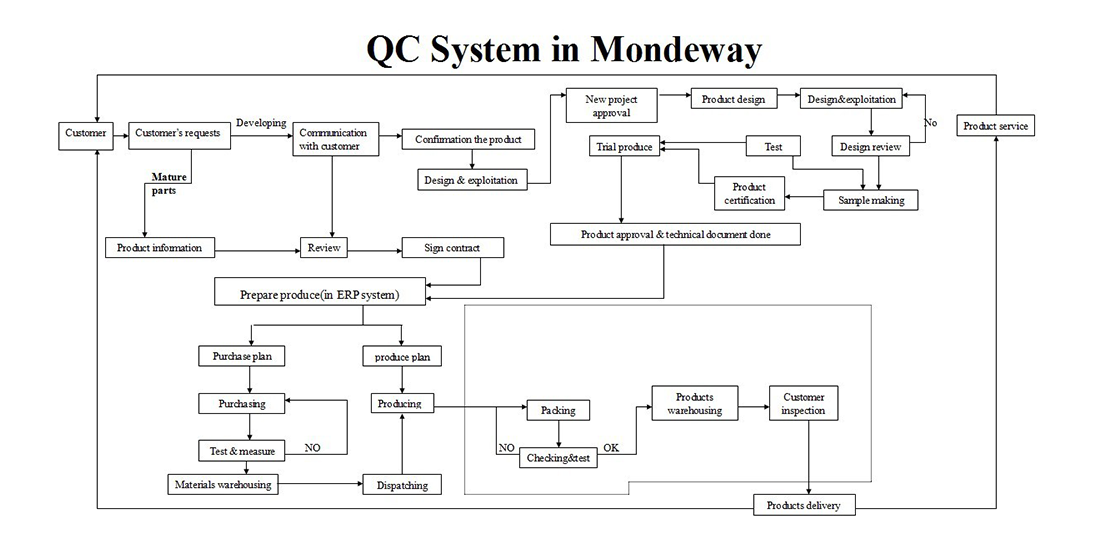
At the production level, factories that build shower niches as part of a broader bathroom accessories line often operate under quality systems aligned with ISO 9001 Quality Management System. This does not guarantee perfection, but it does formalize how dimensional checks, weld inspections, and coating controls are documented and repeated from batch to batch. For buyers, this is relevant because a few millimeters of drift in flange flatness or niche squareness can significantly increase stress concentrations at the membrane interface.
In addition to these generic frameworks, niche-specific evaluations often involve a waterproof integrity test at niche-to-wall interfaces under sustained spray and ponding conditions. In simple terms, this means exposing the installed niche and surrounding wall section to continuous water for extended periods and then checking for moisture migration behind the membrane. Such testing links the design of flanges, corners, and slopes directly to the real risk of leakage in a working shower.
Frequently asked questions when choosing a shower niche
How to choose the right depth of a shower niche without weakening the wall?
Depth should be chosen by weighing storage needs against the wall’s structural role. In many residential walls, a depth that leaves at least several centimeters of material between the back of the niche and the outside sheathing provides a reasonable compromise. When in doubt, placing the niche on an interior partition rather than an exterior wall can reduce sensitivity to temperature gradients and condensation, both of which influence long-term moisture behavior.
Which option is right for long-term moisture resistance: foam-core or stainless steel?
Foam-core niches offer easier handling and often smoother tiling, and they can be very durable when the core is dense, the skins are continuous, and edges are sealed with compatible membranes. Stainless steel niches eliminate core absorption entirely and are naturally suited to high-humidity shower enclosures, but they demand disciplined edge detailing and joint design to absorb thermal movement. The better choice is the one whose installation method your team can execute consistently and whose testing data you can understand and trust.
Does niche orientation really change water management in a tiled walk-in shower?
Yes. Orientation influences where water collects and how loads travel into framing. A horizontal niche needs a continuous, correctly sloped ledge and solid support along its length, or water and weight both accumulate in the middle. A vertical niche sheds water more quickly but may concentrate loads into two narrow vertical stripes, which should be aligned with well-supported studs. Choosing orientation with both tile layout and stud positions in mind reduces the burden on waterproofing details to compensate for structural compromises.
Placing the shower niche decision in your overall bathroom plan
It is tempting to treat the shower niche as a small decision in a larger bathroom project, yet its role inside the wet wall is disproportionate to its size. Thinking about the niche at the same time as other recessed elements, such as square niches or coordinating accessories, allows you to keep a simple, consistent logic for framing and waterproofing details instead of solving each recess as a separate problem.
From a buyer’s point of view, the most reliable path is to treat the shower niche decision as part of a broader bathroom accessories specification. That means aligning material choice, flange geometry, and recommended membranes with the rest of the wet-area components, and using project documentation to make sure contractors understand how each niche is expected to perform in the real high-humidity shower enclosure environment.
How this guide uses standards and real conditions to support your choice
The guidance in this buying guide is grounded in how shower niches behave in actual tiled walk-in showers, not just how they look on design boards. It draws on material performance analysis, waterproof integrity test setups at niche-to-wall interfaces under sustained spray and ponding, and quality management practices inspired by frameworks such as ASTM-based material tests and ISO 9001 process control.
By viewing the shower niche as part of a verified wall system—subject to moisture loading, structural loads, and repeatable testing—you can evaluate each option by more than finish and price. The questions become whether the niche design controls the risk of a waterproofing layer breach at corners and perimeters, whether it is compatible with the membranes used elsewhere in the shower, and whether the manufacturer’s testing and quality documentation fits the level of reliability you expect.
When a shower niche is selected with these factors in mind, it stops being a frequent source of hidden leakage and repair work and instead becomes a stable part of the shower’s fabric. Aligning your choice with realistic service conditions in a high-humidity shower enclosure, recognizing the typical failure mode of waterproofing breaches at the niche interface, and relying on clearly described waterproof integrity tests at the niche-to-wall junction gives you a practical, verifiable basis for long-term trust in the installation.