
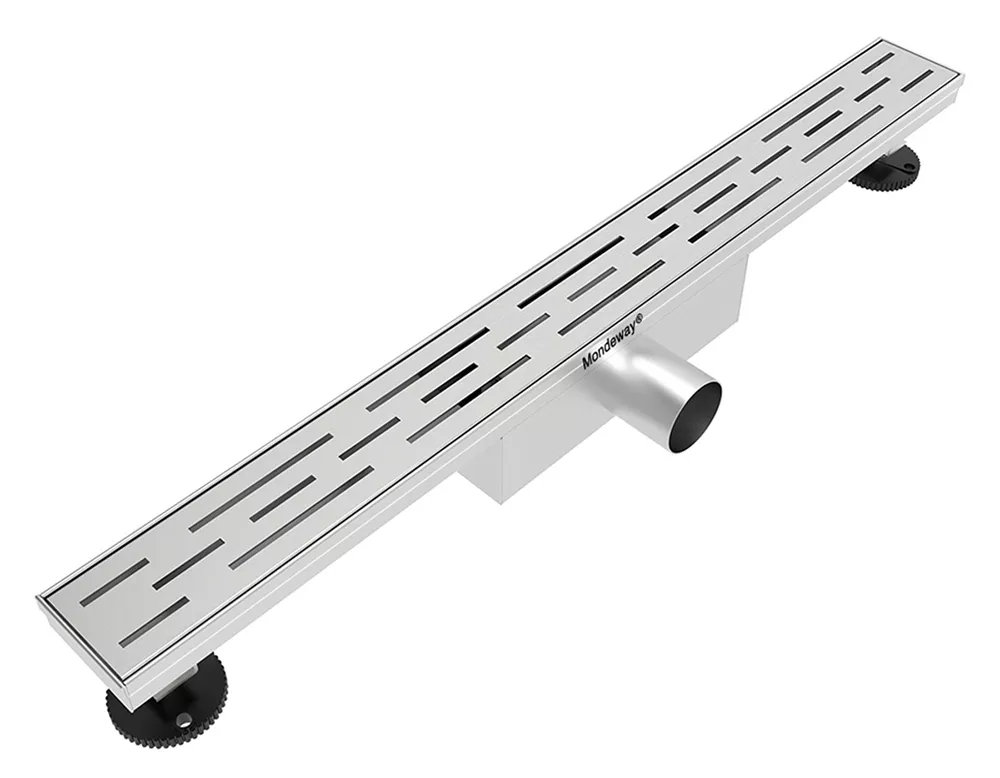
When does a linear drain make more sense than a point drain in shower design?
In commercial and residential shower projects, deciding when to use a linear drain instead of a point drain often comes down to how slope tolerance, flow behavior, and long-term maintenance interact in a high-humidity shower environment. Designers and contractors usually encounter this question when traditional center drains struggle with standing water, uneven floor slopes, or recurring debris buildup.
Understanding the basic difference between linear and point shower drains
A point drain collects water at a single outlet, typically located at the center or corner of the shower floor. This configuration concentrates drainage into one low point, which demands precise floor grading from all directions. A linear drain, by contrast, distributes water intake along an elongated channel, usually installed against a wall or at the shower threshold.
The engineering advantage of a linear drain lies in its extended inlet length. By spreading water entry over a wider area, it reduces the likelihood that minor slope deviations will trap water on the surface. This structural difference explains why linear drains are frequently specified in barrier-free showers and large-format tile installations.
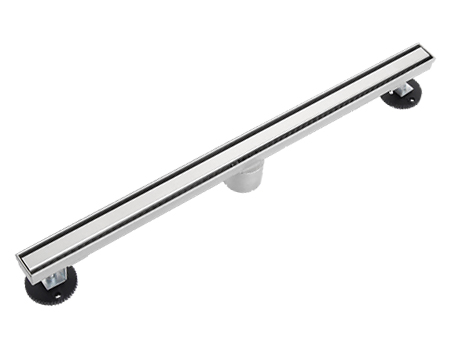
Point drains remain effective in compact showers with simple tile layouts, but once floor geometry becomes more complex, their reliance on exact multi-directional slopes becomes a constraint rather than an advantage.
Why slope tolerance often determines the choice
Floor slope tolerance is one of the most common practical reasons professionals switch from point drains to linear drains. With a point drain, installers must create a consistent pitch from all sides, which becomes challenging when using large tiles or stone slabs. Even small deviations can lead to water pooling, directly affecting user comfort and hygiene.
Linear drains simplify this requirement by allowing a single-plane slope. This makes them particularly suitable in renovation projects where substrate conditions are imperfect. In commercial showers, where installation speed and repeatability matter, this tolerance reduces rework risk.
How slope-related issues connect to real failure modes
When slope tolerance is insufficient, water does not reach the drain efficiently. Over time, this creates localized pooling that accelerates soap residue buildup and debris accumulation. While not catastrophic, this failure mode increases maintenance frequency and raises slip risk in wet areas.
Addressing slope tolerance at the design stage is therefore less about aesthetics and more about preventing predictable drainage inefficiencies.
Flow rate behavior in high-humidity shower environments
In showers with multiple heads or rain systems, instantaneous flow rate can exceed what a single point inlet comfortably handles. Linear drains distribute inflow across their length, reducing peak velocity at any single point. This characteristic is especially relevant in commercial facilities where simultaneous use is common.
Flow rate performance is typically evaluated through a flow rate test combined with direct observation of surface drainage behavior. In practice, linear drains demonstrate more stable performance when water input is spread unevenly across the floor, as often happens in real use.
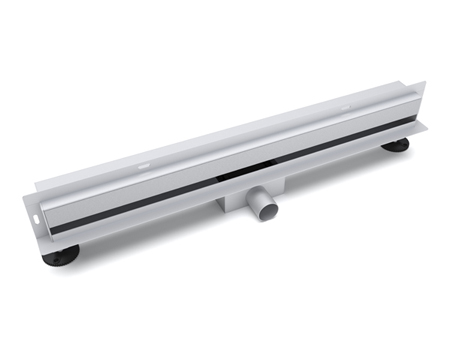
Point drains can still meet required flow rates, but only when surrounding slope accuracy and grate cleanliness are well controlled. In less controlled environments, their margin for error is narrower.
Maintenance access and clogging risk over time
Maintenance considerations rarely appear in early design discussions, yet they strongly influence lifecycle performance. Point drains concentrate debris at a single location, which can simplify cleaning but also increases the chance of localized clogging if maintenance is delayed.
Linear drains, with removable grates and accessible channels, distribute debris accumulation along their length. This does not eliminate clogging risk, but it tends to make blockages more gradual and easier to detect during routine inspections.
For facility managers responsible for multiple shower units, this difference often translates into more predictable maintenance schedules rather than emergency interventions.
Application scenarios where linear drains are typically preferred
Linear drains are most often selected in barrier-free showers, large-format tile designs, and commercial facilities with high usage intensity. In these scenarios, the combination of slope tolerance and flow distribution reduces installation sensitivity and improves long-term reliability.
In residential bathrooms, they are commonly chosen when design priorities include seamless floor finishes or when renovation constraints limit precise substrate correction. These use cases are explored in more depth within the complete linear drain buyer guide, which places this decision in a broader product selection context.
Standards and testing considerations behind drain selection
Drainage performance is not assessed purely by visual inspection. In Europe, floor drains are commonly evaluated under EN 1253 Floor Drains for Buildings, which defines requirements for flow capacity, water seal depth, and structural integrity.
In broader international contexts, material behavior and drainage components are also referenced against frameworks published by ASTM International and ASME, particularly when projects involve mixed plumbing systems or cross-market sourcing.
While standards do not mandate linear or point configurations, they provide measurable criteria that help verify whether a chosen drain design performs reliably under continuous water exposure. Aligning drain selection with these test methods ensures that slope tolerance and flow assumptions are validated rather than guessed.
Decision guidance: choosing based on constraints, not trends
Choosing between a linear drain and a point drain should not be driven by appearance alone. The more decisive factors are installation tolerance, expected flow variability, and maintenance capacity. Linear drains offer advantages where slope precision is difficult to guarantee and where water distribution is uneven.
Point drains remain a practical solution in compact, well-controlled installations with simple geometry. Problems arise when they are applied outside those conditions without acknowledging their tighter tolerances.
If your project involves balancing multiple constraints, reviewing a broader selection framework such as the full linear drain selection overview can clarify how individual design choices interact across the entire shower system.
Long-term reliability perspective
Over time, the reliability of a shower drain is defined less by its initial appearance and more by how predictably it manages water under real conditions. When slope-related pooling and localized clogging are treated as design parameters rather than surprises, linear drains often justify their selection in high-humidity shower environments.
By considering flow rate behavior, maintenance access, and validation through standardized testing, professionals can decide when using a linear drain instead of a point drain genuinely reduces risk. In that context, standards-based evaluation and realistic installation assumptions remain the most dependable tools for long-term performance.