
How linear drains differ from traditional floor drains in shower floor design
Shower floors behave very differently when water is collected along a linear edge instead of a single point. In high-humidity residential and commercial shower environments, drainage structure, slope tolerance, and clogging behavior determine whether water clears quickly or pools around the user’s feet. These differences explain why engineers often debate linear drain vs traditional floor drain layouts when defining shower floor drainage design.
What exactly is being compared in linear drain vs traditional floor drain layouts?
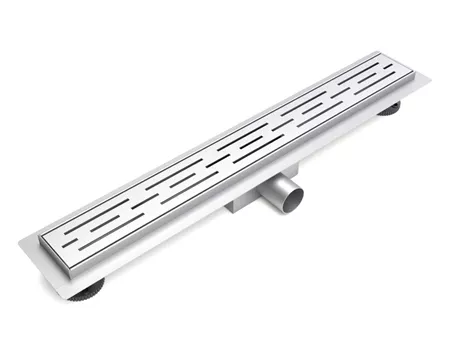
The comparison is not simply about appearance or outlet shape. A linear drain collects water along an extended inlet, usually installed along a wall or at the shower entrance, while a traditional point-style floor drain concentrates flow into a single central opening. This structural difference directly affects how water moves across tile surfaces, how much slope is required during installation, and how tolerant the system is to minor construction deviations.
For plumbing engineers and contractors working on shower floor drainage design, the real question is how these two structures behave under daily use rather than how they look on a plan drawing. The answer lies in flow distribution, debris behavior, and how the floor plane is formed during installation.
Drainage efficiency and flow behavior under real shower conditions
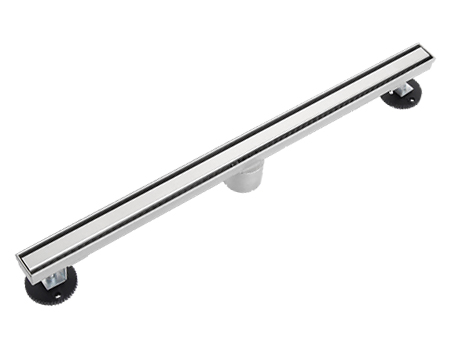
From a flow perspective, linear drains benefit from an extended intake length. Water does not need to travel toward a single low point; instead, it reaches the drain along a broad edge. This allows higher instantaneous flow handling during peak shower use, especially in multi-head or rainfall shower configurations.
Traditional floor drains rely on radial flow. Water converges toward one outlet, which works well when slope is precise and usage is moderate. However, in larger shower footprints or commercial settings, localized flow concentration can temporarily exceed the drain’s effective capacity, leading to shallow surface pooling.
This is why many project teams evaluating linear drain vs traditional floor drain options focus first on how water spreads and exits the floor plane, rather than nominal outlet size alone.
Installation logic and slope tolerance differences
Installation complexity is one of the most practical differentiators. Linear drains typically allow a single-direction slope across the shower floor. Tiles can fall uniformly toward the drain line, reducing the need for compound slopes and tight tolerances at tile intersections.
Point drains require a four-way or radial slope. Even small deviations in mortar bed formation can create low spots between tiles. Over time, these micro-depressions trap water and residue, affecting both comfort and hygiene.
For contractors coordinating with tile installers, slope tolerance often becomes the deciding factor when choosing between linear and traditional floor drains, especially in renovation projects where substrate flatness is difficult to control.

Clogging risk and debris behavior over time
Both drain types can clog, but they do so differently. In linear drains, debris tends to distribute along the channel length. This makes early buildup easier to notice and clean, especially when removable grates are used.
Traditional floor drains concentrate debris at one inlet. Hair and soap residue accumulate in a compact zone, which can reduce effective cross-sectional area more abruptly if maintenance is neglected.
In high-humidity shower environments with frequent use, the way debris accumulates often matters more than the theoretical clog resistance of the drain body itself.
How engineering tests are used to compare drain performance
Objective comparison relies on standardized testing rather than visual judgment. Flow rate tests simulate peak discharge conditions to verify how quickly water exits the shower floor. Clog resistance observation focuses on how partial obstructions affect drainage behavior over time.
In Europe, many floor drain evaluations reference the principles defined in EN 1253 Floor Drains for Buildings, which addresses hydraulic capacity and dimensional requirements. In broader material and performance contexts, guidance from ASTM International materials and plumbing standards is often referenced during product development and verification.
These test methods help explain why a linear drain’s extended intake can maintain effective flow even when partially obstructed, while a point drain may show sharper performance drops under similar conditions.
Which option suits which shower application?
Linear drains are commonly favored in barrier-free showers, large-format tile installations, and commercial projects where consistent slope and rapid surface drying are priorities. The ability to manage higher flow and tolerate installation variation aligns well with these environments.
Traditional floor drains remain practical in compact residential showers where floor dimensions are small and installation control is high. Their simpler geometry and familiarity can still meet performance expectations when correctly executed.
When weighing linear drain vs traditional floor drain options, many teams benefit from reviewing the broader context of available shower drain system designs before locking in a layout.
Common decision mistakes engineers try to avoid
A frequent mistake is assuming that drain appearance determines performance. Another is overlooking how slope tolerances interact with real-world construction variability. Both issues can lead to water pooling complaints even when the drain itself meets specifications.
Experienced project managers often cross-check drain selection against full linear drain selection considerations rather than isolating the drain as a standalone component. This is why many teams eventually refer back to a more comprehensive guide such as the full linear drain buyer guide when finalizing specifications.
Standards, validation, and long-term reliability
Reliable shower drainage depends on validation under realistic conditions. Flow rate testing and clog resistance observation provide measurable insight into how drains behave in high-humidity residential and commercial shower environments. These checks link design choices directly to expected service behavior.
By aligning drain selection with recognized testing frameworks and understanding how installation logic affects outcomes, engineers can reduce uncertainty and improve long-term performance predictability.
Ultimately, choosing between linear drain vs traditional floor drain layouts is less about trends and more about matching structure, slope tolerance, and maintenance expectations to the actual shower environment. When these factors are evaluated together and verified through appropriate testing methods, drainage performance becomes far more consistent and easier to manage over the life of the installation.