
Linear Bathroom Drains Tips for Specification Control
Reference Standard: EN 1253-1 drainage performance context, CUPC listing context, Watermark certification context, and ISO 9001 quality management reference.
Short Answer
Linear bathroom drains often look simple because the visible part is only a long cover and a narrow channel line. For a buyer, project contractor, or bathroom brand, the real risk sits behind that clean line: material route, forming sequence, welding control, surface recovery, leakage screening, certificate boundaries, and missing geometry data. A product photo can show a brushed surface, a black coating, or a gold finish, but it cannot prove whether a long drain body was formed consistently, whether the welded areas were cleaned correctly, or whether the outlet interface matches the installation plan.
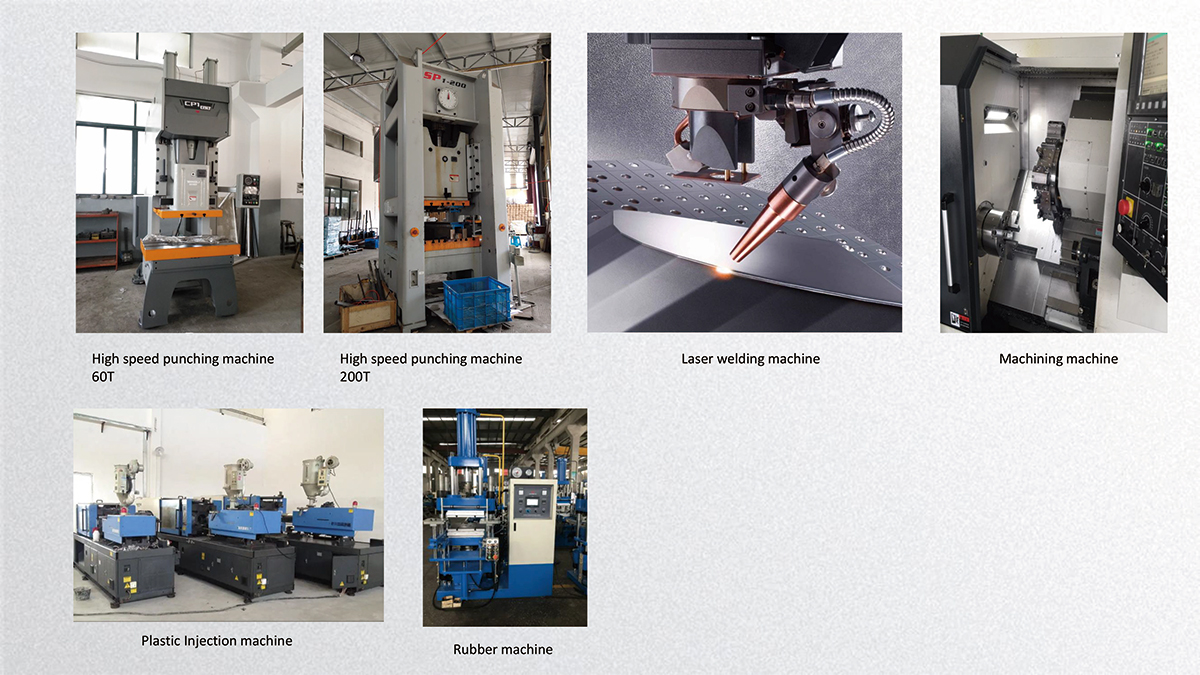
This article uses the confirmed catalog data only. The catalog states that Mondeway focuses on shower drains and floor drains, with drain production materials including SS304 / SS316 / ABS / PVC. It also confirms stamping machines up to 200 tons, bending equipment up to 3200x100T, laser cutting, welding, laser welding, brushing, sandblasting, in-house surface treatment, laser logo capability, air testing for leakage problems for all drains, export-standard packing, and customized packing. It also references CE EN1253-1, CUPC, Watermark, and ISO 9001 management.
For broader standards context, buyers can review drainage standard categories through CEN standards information and plumbing product listing logic through IAPMO product certification resources. These links support general compliance awareness; they do not replace the supplier’s model-level test documents.
Reading A Linear Drain From Its Manufacturing Route, Not From Its Bathroom Photo
A linear drain should be read like a formed metal and drainage-interface component. The catalog’s production route gives a stronger first signal than a finished lifestyle image. A long stainless channel has to pass through material selection, cutting, forming, welding, surface treatment, inspection, and packing before it becomes a bathroom product. If any one of those stages is uncontrolled, the final problem may appear later as uneven fit, visible burrs, surface inconsistency, leakage concern, or difficult project coordination.
The confirmed raw material route includes SS304 / SS316 / ABS / PVC. That matters because stainless steel and plastic routes behave very differently. SS304 and SS316 are relevant to exposed wet bathroom environments because stainless steel can maintain stable surface behavior when the passive layer is preserved. ABS and PVC can be relevant to molded drainage parts, outlet components, or plastic-related drain structures, but they depend more heavily on mold accuracy, heat behavior, and interface control. The catalog does not assign every material to one exact linear drain model, so a buyer should not assume a specific model is SS316, ABS, or PVC unless the drawing, quotation, or sample label confirms it.
The production route also includes laser cutting, stamping up to 200 tons, and bending up to 3200x100T. For a long drain, these capabilities suggest the factory can process sheet metal and long formed components, but they do not automatically confirm the final channel width, straightness tolerance, or length tolerance of a specific SKU. The difference is important. A capability statement tells the buyer what kind of manufacturing platform exists. A model drawing tells the buyer what the exact product must become.
An edge extreme scenario helps explain this. Imagine a wet-floor project where multiple bathrooms use the same visual drain finish, but the outlet position changes by room type. If the buyer approves only a surface photo, the long body may look acceptable while the outlet location creates installation conflict. If the buyer approves a drawing with overall length, channel width, outlet diameter, outlet position, installation depth, and cover structure, the same manufacturing route becomes a controllable evidence chain.
A cross-dimensional comparison is also useful. A decorative bathroom accessory may tolerate small hidden dimensional variation because it does not guide water into a concealed outlet. A linear drain cannot be judged that way. It connects a visible floor surface to an unseen plumbing path. That means manufacturing route, outlet geometry, and packing protection must be reviewed together, not separately.
KEY TAKEAWAYS
- A finished bathroom photo does not confirm outlet diameter, slope, removable cover structure, or discharge capacity.
- SS304, SS316, ABS, and PVC are confirmed material routes, but the exact model material must still be verified.
- Production capacity such as 200-ton stamping and 3200x100T bending supports capability review, not automatic model approval.
When A Long Stainless Channel Leaves The Welding Table
The catalog gives one unusually useful surface clue: drains after welding may have dirty surface, oil, scratches, and yellow spots, and the factory uses pickling, electrical polishing, and passivation in a 2000 square meter surface treatment workshop. That statement is more valuable than a generic claim of a nice finish because it identifies a real post-welding condition and a real recovery process.
A linear bathroom drain is visually unforgiving. Unlike a small round part, a long stainless channel stretches across a floor line. Any heat tint, polishing difference, shallow scratch, oil trace, or yellow mark can become visible because the user’s eye follows the drain length. The longer the straight visual line, the easier it is for small finish variation to appear as a quality issue. This is not only a cosmetic matter. Stainless steel depends on a stable passive surface for resistance in wet conditions. If welding residue, oil, or contamination remains on the surface, the material may not present the same clean surface behavior as properly treated stainless steel.
The confirmed processes of pickling, electrical polishing, and passivation should therefore be understood as surface-recovery steps. Pickling can remove welding-related contamination and discoloration. Electrical polishing can improve surface uniformity. Passivation supports the formation of a more stable stainless surface condition. The catalog does not provide chemical bath concentration, passivation time, salt spray results, corrosion class, or surface roughness values, so those details must not be invented. For higher-risk projects, they should be requested as separate evidence.
A practical fatigue model can be built without adding false parameters. In the initial stage, a drain with incomplete surface recovery may still look acceptable after packing and installation. In the middle stage, repeated bathroom water exposure, detergent contact, soap residue, and wipe-clean cycles can reveal weak areas through uneven dullness, localized staining, or more visible scratch lines. In the extreme stage, if the surface was never properly recovered after welding, the long channel may show persistent discoloration or customer-visible finish mismatch. This model is a risk interpretation, not a confirmed test result.
| Surface condition after production | Confirmed factory response | Buyer verification step | What must not be assumed |
|---|---|---|---|
| Oil or dirty surface after welding | Pickling and in-house treatment | Request post-treatment photos | No confirmed chemical recipe |
| Yellow spots or heat tint | Pickling, polishing, passivation | Ask for sample finish approval | No confirmed salt spray hours |
| Scratches or uneven marks | Brushing and surface control | Inspect visible long channel line | No confirmed roughness value |
| Finish color variation | Brushed, gun metal, gold, white, black, bronze options | Confirm finish code per order | No universal coating standard stated |
| Burrs from cutting or stamping | Burr removal and brushed processing | Check edges and cover handling | No confirmed edge tolerance stated |
A cross-dimensional comparison shows why this matters. A short drain cover may hide small local finish variation because the eye sees it as a compact object. A long linear drain behaves more like a metal architectural line. It reflects light across distance, meets tile lines, and sits in a cleaning zone. Surface treatment is therefore not just a finish option; it is part of visible product acceptance.
Certification Signals Versus Model-Level Drainage Evidence
The catalog references CE EN1253-1, CUPC, Watermark, and ISO 9001 management. It also states that air testing is used to test leakage problems for all drains. These are important signals because they show that the drain category is not being presented only as a decorative bathroom accessory. There is a quality and certification context around the products.
The key is to avoid over-reading those signals. A certificate reference can support market access, quality management, or product-category trust, but it does not automatically answer every model-level question. A buyer still needs specific evidence for outlet geometry, channel slope, trap interface drawing, cover removal method, measured discharge capacity, installation depth, grate or cover structure, and packing method. The catalog does not provide those values for this specific target product, so a responsible SEO article must keep the boundary clear.
A standards signal is like a gate. It tells the buyer that a factory understands recognized market requirements. Model-level drainage evidence is like a room key. It tells the buyer whether the exact product can enter the specific project. A product can be associated with a standards context and still require model drawings, sample checks, and project-specific installation confirmation.
The edge extreme scenario is a hotel renovation or multi-unit bathroom project. The purchasing team may select one finish family across many rooms. The visible finish may be consistent, and the supplier may have relevant certification signals. Yet if one room type uses a different trap position or floor build-up height, the same visual linear drain may become unsuitable. Certification does not solve geometry mismatch. Air leakage testing does not prove flow rate. Surface treatment does not prove cover removal force. Each test answers only the question it was designed to answer.
A cross-system hidden risk appears when procurement teams mix these evidence layers. If a buyer treats air leakage testing as proof of drainage capacity, the wrong acceptance logic enters the project. Air testing can screen leakage problems, but discharge capacity depends on channel shape, outlet size, slope, and downstream plumbing. If a buyer treats ISO 9001 as a substitute for sample inspection, the product may still fail a visual or installation requirement. ISO 9001 supports management discipline; it is not a drawing.
PRO-TIP / CHECKLIST
- Ask for the exact model drawing before approving the bathroom layout.
- Confirm overall length, channel width, and outlet diameter in writing.
- Separate certificate review from discharge-capacity evidence.
- Request post-treatment surface photos for the selected finish.
- Verify whether the cover is removable and how it is removed.
- Ask whether air leakage testing applies to the exact ordered model.
- Confirm export-standard or customized packing before shipment.
- Do not treat a catalog image as a technical drawing.
The RFQ Should Ask For Missing Geometry Before Asking For A Better Price
The strongest RFQ for linear bathroom drains starts with geometry, not price. Price is important, but price without geometry is not a purchasing decision. It is only a number attached to an undefined product. The catalog confirms OEM and ODM service, drawing, prototype, mould, trial production, products, laser logo, export packing, and customized packing. That means the buyer has a logical path to request technical confirmation before negotiation becomes final.
The missing fields should be treated as required RFQ data: overall length, channel width, outlet diameter, outlet position, installation depth, removable cover structure, trap compatibility, channel slope, measured discharge capacity, finish code, and packing method. These are not decorative details. They determine whether the drain can be installed, cleaned, connected, shipped, and accepted.
A useful RFQ sequence is simple. First, define the bathroom project environment: residential shower, commercial wet room, renovation, new construction, or public bathroom. Second, confirm the drawing fields listed above. Third, select material and finish based on the confirmed catalog options, such as brushed, gun metal, brushed gold, matt white, matt black, brushed bronze, matte silver, black powder coated, or other colors. Fourth, request sample confirmation or prototype confirmation when the geometry is project-specific. Fifth, align packing expectations, especially if the visible surface must arrive without scratches.
The catalog states 15-30 days fast delivery time and 30,000 sets per month capacity. These are useful planning signals, but they should not replace product confirmation. A large capacity helps when specifications are stable. It does not protect a buyer from approving the wrong outlet location.
A cross-dimensional testing case makes this clear. Compare two RFQs. RFQ A asks only for stainless linear drain price and finish. RFQ B asks for material grade, overall length, channel width, outlet diameter, outlet position, installation depth, cover removal method, packing, surface finish code, and sample drainage evidence. RFQ A may receive a fast quote, but it leaves the project exposed. RFQ B takes more time at the beginning, but it reduces downstream correction, rejected samples, and installation confusion.
For buyers reviewing Mondeway sanitary product information, the right conclusion is not that every specification is already visible. The better conclusion is that the catalog provides enough factory and category evidence to justify a more precise RFQ. The next step is to convert missing model data into written confirmation.
Frequently Asked Questions (FAQ)
Why is my shower drain not draining?
A shower drain may drain slowly because the outlet is undersized, the channel slope is insufficient, the cover traps hair and soap residue, or the downstream pipe is restricted. For a linear drain order, ask for outlet diameter, channel slope, removable cover structure, and measured discharge capacity before final approval.
What size linear drain do I need?
The right size depends on shower width, outlet position, floor slope, installation depth, and expected water volume. The catalog does not confirm model-level length or flow data, so buyers should request a drawing with overall length, channel width, outlet diameter, and outlet position.
What is a linear shower drain?
A linear shower drain is a long drainage channel installed along a shower floor line to collect water across a wider area than a small point drain. Its performance depends on channel geometry, outlet design, floor slope, cover structure, and the connection to the plumbing system.
Are floor drains required in public bathrooms?
Requirements depend on local building codes, bathroom type, drainage layout, and public-use regulations. A supplier catalog cannot determine code compliance by itself. For public bathrooms, confirm local code requirements, product certification context, installation drawings, drainage capacity, and maintenance access before purchase.