
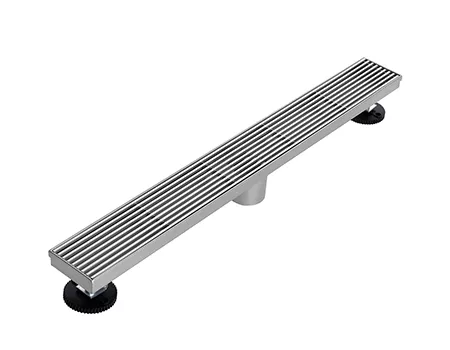
Drain Shower Base Playbook for Wet-Floor Stress
Reference Standard: EN 1253-1 for floor gullies and drains in buildings, supported by relevant material and performance testing logic for wet-room components.
Short Answer
A practical Playbook for a drain shower base must start with verified evidence, then separate safe engineering inference from unsupported claims. The confirmed product boundary includes floor drains, shower basins, shower tray boards, and other shower-room accessories. The confirmed production route includes stainless and plastic drain-related manufacturing, surface treatment, air leakage checking for drains, and customized packing. Any stronger statement about base depth, outlet geometry, slope, trap design, removable cover force, thermal deformation, or flow capacity needs model-level drawings and sample test records.
When the Shower Floor Becomes a Stress Map, Not Just a Drain Opening
A drain shower base is often described as a small bathroom component, but its real behavior is controlled by a larger wet-floor system. Water does not only move downward through the outlet. It spreads across a sloped surface, collects along low points, carries soap residue and hair, and changes direction when the user steps, turns, rinses, or cleans the shower area. In that environment, the base becomes a stress map where water load, foot pressure, cleaning force, and installation geometry meet.
The catalog confirms that the manufacturer works with shower-room products including floor drains, shower basin, shower tray boards, and shower accessories. That evidence supports a wet-room application context, but it does not confirm a dedicated drain shower base slope, bowl depth, outlet diameter, or load capacity. This distinction matters. A buyer can reasonably ask how the base behaves near the drain opening, but no responsible article should invent a slope angle or discharge number when the catalog does not provide it.
A useful edge-case model is a wet-floor fatigue cycle. In the first phase, the base area receives repeated warm-water flow and short contact with diluted cleanser. In the second phase, hair, soap film, and mineral residue collect around the outlet zone, increasing friction and slowing local drainage. In the third phase, the user applies cleaning pressure with a brush or cloth, which adds local force to edges, seams, and any visible transition around the drain. If the base has uneven contact, poor sealing, or weak dimensional stability, the problem may appear as standing water, edge staining, or a loose drain interface. This is not a claim about a specific model; it is a conservative physical inference from wet-room use.

A cross-dimensional comparison helps clarify the issue. A drain opening tested only by visual appearance may pass a showroom check, while the same area under repeated wet cleaning may reveal different behavior. A sample that looks flat on a table may still perform differently once installed into a shower tray, connected to plumbing, and exposed to alternating hot and cold water. The hidden variable is not only material strength; it is the relationship between base plane, outlet interface, seal contact, and wet-floor drainage path.
| Evaluation Lens | Visual Sample Check | Wet-Floor Stress Check | Evidence Needed |
|---|---|---|---|
| Surface appearance | Easy to inspect | Changes after cleaning cycles | Sample photos before and after use |
| Outlet fit | Can be measured loosely | Depends on pipe and seal interface | Model-level outlet drawing |
| Local flatness | Visible on a bench | More critical after installation | Flatness and installation record |
| Drainage behavior | Not proven by appearance | Controlled by slope and outlet geometry | Measured discharge test |
| Cleaning response | Usually ignored | Reveals residue retention zones | Cleaning-cycle observation |
A buyer should treat the drain shower base as a component that lives between the visible floor and the hidden plumbing. The visible side must stay clean enough for daily use. The hidden side must remain sealed enough to prevent leakage. The edge zone must be safe enough for installation and cleaning. The available catalog supports a wet-room product and drain manufacturing context, but it does not close the engineering file for a specific base model. That is why a strong procurement brief should request drawings, outlet geometry, installation photos, and leakage test records before bulk confirmation.
The Material Choice Behind a Base That Must Stay Dimensionally Calm
The most important material question is not simply whether the component is metal or plastic. The more precise question is whether the drain shower base can stay dimensionally calm while moisture, temperature shifts, cleaning chemicals, and user contact keep changing the surrounding conditions. The catalog confirms drain production materials including SS304, SS316, ABS, and PVC, while the broader company material scope includes stainless steel, plastic, rubber, iron, and brass. Those are real material references, but they should not be converted into unverified claims about a specific drain shower base unless the supplier confirms the model bill of materials.
Stainless steel behaves differently from ABS or PVC under wet-room stress. SS304 and SS316 are commonly selected for corrosion-resistant wet environments, with SS316 generally offering stronger resistance in chloride-rich conditions because of molybdenum content. ABS and PVC are non-metallic materials that are typically valued for water resistance, lighter weight, and moldability. In a drain shower base area, the difference appears in how the material responds to localized pressure, edge contact, cleanser exposure, and thermal cycling. Metal may show scratches, surface staining, or cleaning marks if post-processing is insufficient. Plastic may show dimensional change, surface dulling, or stress whitening if exposed to unfavorable heat, load, or chemicals.
A cautious extreme scenario can be built without inventing product parameters. Imagine a shower base zone exposed to daily hot-water rinsing, room-temperature cooling, body-weight foot traffic near the outlet, and weekly cleaning. During the early stage, the main risk is surface film and minor residue capture. During the middle stage, small irregularities around the outlet or edge may collect more residue, making cleaning behavior less predictable. During the limit stage, a weak interface, unsupported local area, or material with poor dimensional stability may show movement, looseness, visible discoloration, or sealing complaints. The exact threshold depends on thickness, geometry, support structure, and formulation, none of which are confirmed in the catalog.
A cross-test comparison should look at two different realities. One test keeps the sample dry and checks dimensions after handling. Another test uses warm water, mild cleaner, repeated wiping, and fixture contact. The dry test may show the component as acceptable, while the wet test exposes surface friction, residue retention, and interface behavior. This is the reason dimensional calm cannot be judged from catalog material names alone.
KEY TAKEAWAYS
- Early warning sign 1: visible residue rings around the outlet after normal rinsing, even when the surface appears clean elsewhere.
- Early warning sign 2: edge roughness or small burrs that catch cloth fibers during cleaning or handling.
- Early warning sign 3: slight movement, uneven seating, or inconsistent contact around the drain connection before water testing.
The material decision should be documented as a performance boundary. If the base uses stainless steel, the buyer should confirm grade, surface finish, edge treatment, welding or forming route, and post-treatment. If the base uses ABS or PVC, the buyer should confirm resin route, molded geometry, outlet tolerance, and resistance to the expected wet-room temperature and cleaning chemicals. If rubber, brass, or iron appears in associated assemblies, those parts should be separated in the specification sheet instead of being hidden under a broad product name. The most useful buyer question is not “Is it good material?” but “Which material is used in each functional zone, and how is that zone tested after wet-room stress?”
From Weld Marks to Clean Edges: Reading the Base as a Post-Process Object
A drain shower base should be read as a post-process object. Its final behavior is shaped not only by raw material but also by cutting, stamping, bending, welding, edge finishing, surface treatment, and packing. The catalog provides meaningful process evidence: 200T stamping capacity, 1500KW laser cutting machine, metal sheet cutting, tube cutting, bending machines with a largest size of 3200x100T, welding machines, laser welding, self-developed welding equipment, brushed machines for burr removal and brushed surfaces, sandblasting, and a 2000 square meter surface treatment workshop with pickling, electrical polishing, and passivation. These are real production capabilities, but the catalog does not assign every process to a dedicated drain shower base model.
The post-process view changes the inspection language. Instead of asking only whether the surface is brushed, matte, black powder coated, or another finish, the buyer should ask what happened after the part was formed or welded. Cutting can leave thermal marks or sharp edges. Stamping can produce edge deformation or local stress. Bending can introduce shape memory or slight angle variation. Welding can create heat tint, oil contamination, yellow spots, or surface dirt. The catalog itself notes that drains after welding may be dirty on the surface, with oil, scratches, and yellow spots, and that pickling can clean the surface to a silver appearance. This supports a process-based explanation without overclaiming final performance.
A practical extreme-process model can be divided into three stages. In the early stage, the semi-finished base or drain-related component has correct general shape but may still carry burrs, oil film, cutting traces, or handling marks. In the middle stage, brushing, sandblasting, pickling, electrical polishing, or passivation begins to stabilize the visible and touchable surfaces. In the final stage, the critical risk moves to consistency: whether the edge, outlet area, underside, and visible face all receive appropriate treatment without weakening fit or changing the intended geometry. A clean upper surface does not automatically prove that the drain interface or underside is equally controlled.
The cross-dimensional comparison is between appearance finishing and installation readiness. A bright surface may satisfy a visual buyer, but a rough underside edge can still interfere with sealing or safe handling. A brushed face may look consistent, but an outlet lip with small burrs may catch hair or cleaning cloth fibers. A finished color may match the sample, but an uncontrolled edge may still create installation friction. This is why drain shower base evaluation should include both surface reading and edge reading.
The factory-level correction path should be written into the purchase file. For stainless routes, request edge deburring, visible-surface finishing, post-weld cleaning where applicable, and passivation logic when corrosion resistance is important. For plastic routes, request molded-edge inspection, outlet tolerance checks, and deformation review after packing. For mixed assemblies, separate the inspection of metal, plastic, rubber, and sealing contact. The goal is not to add decorative complexity; it is to prevent the buyer from approving a beautiful sample that fails during installation or after several cleaning cycles.
The Last Unseen Test Before a Base Enters the Carton
The last risk stage is not the test itself and not the carton itself. It is the handoff between test status and packing status. The catalog states that an air test machine is used and that leakage is tested for all drains. It also refers to packing as per export standard and customized packing being acceptable. It mentions ISO 9001 management, stable quality control, and certification references including CE EN1253-1, CUPC, Watermark, and ISO9001. These are useful quality signals, yet they do not replace a model-specific inspection plan for a drain shower base.
A drain shower base inspection plan should start before the product is closed inside the carton. The first protocol is interface verification. Execution should include visual review of the outlet zone, contact surface, edge condition, and any assembled drain connection. If the product belongs to a stainless route, the inspector should look for remaining oil, scratches, yellow marks, rough edges, and post-process inconsistency. If it belongs to an ABS or PVC route, the inspector should look for molding marks, warpage, stress whitening, and outlet geometry variation. The expected material evolution is not dramatic strength improvement; it is reduced variation before shipment. The hidden cost is time, because more inspection slows packing, but the cost is lower than discovering outlet mismatch after installation.
The second protocol is leakage-screening discipline. Air testing for drains is confirmed in the catalog, but a buyer should still request whether the tested item is the exact drain shower base assembly, a related drain component, or a separate drain unit. A useful acceptance record should connect sample code, inspection date, test result, and inspector signoff. The material expectation is stable sealing behavior under a controlled pressure check, though no pressure value is confirmed in the catalog. The side effect is false confidence if air testing is treated as the only proof; it should be paired with dimensional and visual review.
The third protocol is finish-and-edge release. For surfaces affected by welding, forming, or cutting, the release check should include burr removal, brushed-surface consistency, and surface-treatment confirmation where applicable. Stainless surfaces may benefit from pickling, electrical polishing, or passivation when the process is suitable for the design. The expected result is lower contamination risk and better cleaning response. The hidden cost is over-processing or finish mismatch, so the approved sample should define the acceptable visual range.
The fourth protocol is carton-entry control. Before packing, the product should be checked for deformation risk, friction points inside the carton, and protection of the outlet area. Export standard packing and customized packing are confirmed capabilities, but packing should be tied to part geometry. A flat, rigid area may need different support than a projecting outlet or formed base edge. The expected result is less transport-related shape change. The hidden cost is larger packaging volume, which should be balanced against the cost of rejected goods.

| Control Variable | General Acceptance Logic | Useful Test or Check | Risk if Skipped |
|---|---|---|---|
| Outlet interface | Must match the intended connection | Drawing review and sample fit check | Leakage or installation delay |
| Surface condition | Must match the approved sample range | Visual inspection under consistent light | Stains, cleaning complaints, finish dispute |
| Edge safety | No harmful burrs at handling or cleaning zones | Cloth-wipe and hand-safe inspection | Installer injury or residue capture |
| Air leakage status | Drain-related sealing must be screened | Air test record for the relevant item | Hidden sealing failure |
| Packing support | Shape must survive shipment handling | Carton fit and protection review | Deformation or surface abrasion |
| Certification context | Claims must match market and product scope | Document review against target market | Unsupported compliance claim |
PRO-TIP / CHECKLIST
- Request the exact model drawing before approving any outlet or slope-related claim.
- Separate stainless, ABS, PVC, rubber, and other material zones in the specification sheet.
- Ask whether the air test applies to the complete item or only a related drain component.
- Inspect edge smoothness around the outlet and any cleaning-contact area.
- Compare finish samples under consistent lighting before bulk production.
- Confirm export packing protection for the outlet area and formed edges.
- Require sample photos before and after packing when shape deformation is a concern.
- Keep certification references tied to the actual market and product scope.
For product discovery, the broad company site at Mondeway sanitary product information can be used as a starting point, but technical approval should still rely on drawings, sample checks, and inspection documents rather than homepage claims. For broader standards context, buyers can compare the stated EN 1253-1 reference with information from CEN and use material-related evaluation logic from organizations such as ASTM International when building internal test plans.
Frequently Asked Questions (FAQ)
How to stop smelly shower drain?
A smelly shower drain usually comes from trapped organic residue, dry water seals, poor ventilation, or biofilm near the outlet. For a drain shower base, check cleaning access, outlet fit, water-seal behavior, and whether hair or soap residue remains around the drain area after normal rinsing.
Can hair clog shower drain?
Yes. Hair can combine with soap film, skin oil, and mineral residue to form a dense blockage near the outlet or trap. The risk increases when the drain cover, base geometry, or surrounding surface retains residue. Cleaning access should be confirmed before bulk purchasing.
Are shower drain covers universal?
No. Shower drain covers are not always universal. Shape, outlet size, fixing method, frame design, and load expectation may differ between models. A buyer should request a drawing or sample match instead of assuming that a cover will fit every shower base drain.
How to unscrew a shower drain?
Use the correct drain removal tool or pliers suited to the cover style, then apply steady force without damaging the surrounding base. If the drain is sealed, bonded, or installed under tension, forcing it may damage the outlet area. Check the model structure first.
How deep are shower niches?
Shower niche depth is a separate product question and should not be used to define drain shower base dimensions. A shower niche belongs to wet-wall storage, while a drain shower base belongs to floor drainage and sealing behavior. Each requires its own drawing and installation record.