

Reference Standard: Relevant material and performance testing standards should be confirmed for the exact drain model and destination market rather than assumed from general factory quality-control information.
What Quality Risks Are Checked During Linear Drain Production?
A linear floor drain for shower has several manufacturing stages where quality must remain controlled. The available production evidence from NINGBO MONDEWAY is useful because it identifies specific concerns instead of relying only on broad claims about quality.
The most important documented functional concern is leakage. The production information states that air testing is used to test leakage for all drains. This establishes a clear production-stage control point: completed drains are not evaluated only by visual inspection.
The same evidence also identifies several surface-condition concerns after welding. These include oil, scratches, and yellow spots. They are important because a drain can pass through fabrication successfully while still requiring additional cleaning or finishing work before its surface reaches the intended production condition.
Welding deserves particular attention because it combines joining, heat, handling, and subsequent finishing in one manufacturing sequence. In general manufacturing practice, leakage around fabricated assemblies can result from imperfections in fabrication, joints, or sealing areas. However, those general possibilities should not be confused with a documented root cause for any specific NINGBO MONDEWAY drain. The available evidence identifies leakage as the problem being checked; it does not publish a defect-rate breakdown or failure analysis by cause.
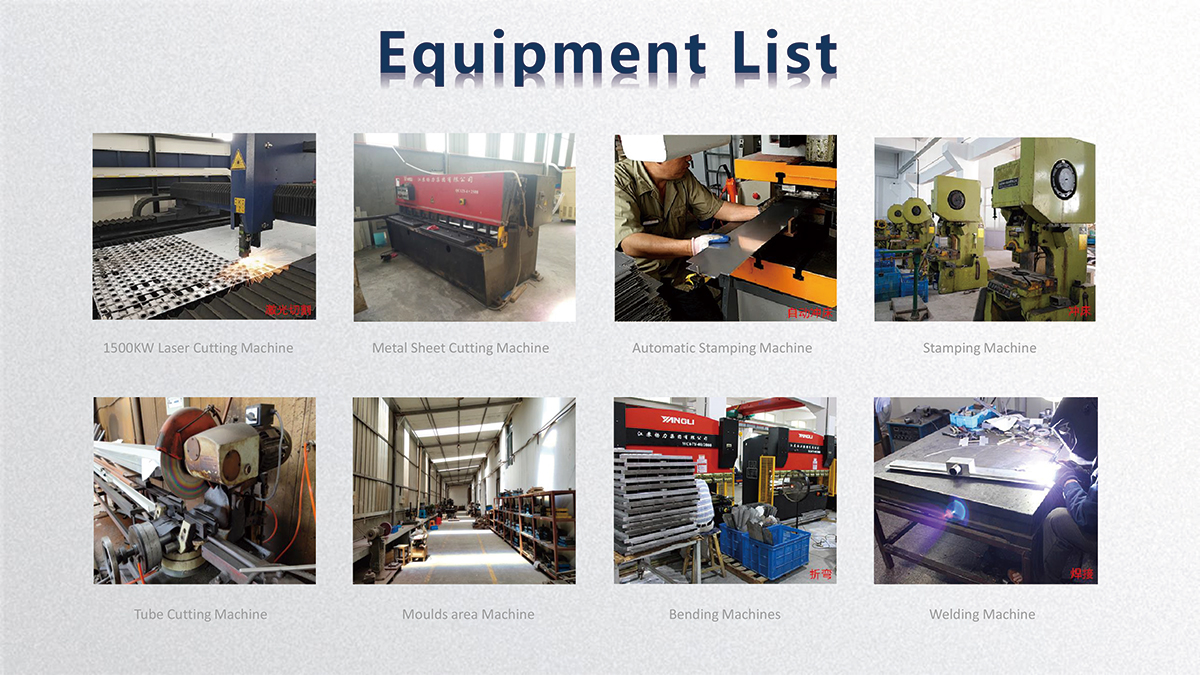
The drain production line also lists SS304, SS316, ABS, and PVC under raw materials. That list should be read as factory production information rather than as proof that every linear drain contains every listed material. Exact-model material composition still needs to be confirmed from the corresponding product documentation.
For buyers, this creates a practical distinction between two QC questions:
- Does the drain leak?
- Is the fabricated surface properly cleaned and treated after welding?
Those questions address different aspects of production quality. Leakage testing focuses on whether the drain assembly retains integrity during the factory check. Surface control focuses on the condition left by fabrication and finishing operations. A useful supplier review should examine both rather than treating a visually acceptable surface as evidence of leakage performance.
How Air Testing Checks Leakage in a Linear Drain for Shower
The strongest verified QC statement for the drain production process is straightforward: air testing is used to test leakage for all drains.
For a buyer, the value of this statement is not a particular pressure number or test duration, because the available evidence does not provide either. Its value is the existence of an identified production-stage leakage test that applies across drain production.
Air testing is conceptually useful because a fabricated drain includes areas where individual parts have been joined into a complete structure. A leakage test challenges that structure so that an unwanted leakage path can be detected during quality control. In general terms, possible leakage paths in fabricated products may be associated with fabrication, joints, or sealing interfaces. The precise cause must be determined from the individual product and process; it should not be assumed from a generic explanation.
This distinction matters when buyers evaluate factory claims. Saying that a drain is “quality checked” is broad. Saying that air testing is used specifically to test leakage describes an identifiable QC activity.
The available evidence does not state:
- the air-test pressure;
- the test duration;
- the permitted leakage threshold;
- the measuring instrument or fixture;
- a specific international leakage-test standard;
- a model-specific pass/fail value;
- field waterproofing performance after installation.
Those items therefore should not be invented or inferred.
A buyer who needs deeper verification can request the exact-model QC documentation and ask how the factory records the air-test result. This keeps the discussion evidence-based. The goal is not to substitute a general factory statement for a model specification, but to understand where leakage control appears in the production process.
Air testing also should not be confused with a complete shower waterproofing test. A linear shower drain eventually works as part of a larger installed system involving the drain, floor construction, waterproofing, surrounding interfaces, and plumbing. Factory leakage testing evaluates the manufactured drain according to the factory process; it does not by itself prove the performance of every finished shower installation.
That boundary is particularly important in purchasing. A factory QC process can reduce uncertainty about the manufactured drain without eliminating the need for correct model selection, installation documentation, and project-level waterproofing control.
Leakage Testing Details Worth Requesting
- A leakage test is documented, but its pressure and duration are not published in the available evidence.
- Factory air testing does not automatically establish field waterproofing performance for the completed shower.
- A general statement that all drains are tested should still be supplemented with exact-model QC records or procedures when a project requires specification-level verification.
Why Post-Weld Cleaning and Surface Treatment Matter
Leakage is only one documented QC concern. The production information also identifies oil, scratches, and yellow spots on drain surfaces after welding.
This matters because welding is not necessarily the final visible-production step. The available evidence states that welded drains are cleaned by pickling and documents in-house surface-treatment capabilities including pickling, electrical polishing, and passivation. Brushing and sandblasting also appear within the documented drain production process.
These processes should be described carefully. The evidence verifies that the processes are available and used within drain production, but it does not provide a universal treatment sequence for every drain model. It also does not publish surface-roughness values, chemical concentrations, treatment times, finish grades, or quantified corrosion-life improvements.
Pickling is directly connected to the verified post-weld cleaning statement. From a buyer’s perspective, that gives a concrete answer to an important manufacturing question: the welded drain is not simply left in its immediate post-weld condition; a documented cleaning step follows.
Electrical polishing and passivation are also listed among the company’s in-house surface-treatment capabilities. Their presence is relevant because keeping these operations in-house gives the manufacturer direct control over more of the finishing workflow. However, buyers should still confirm which processes apply to the exact linear drain under consideration.
Brushing and sandblasting add another dimension to the production sequence. They indicate that mechanical surface-processing methods also appear in drain production. Again, the evidence supports the existence of these processes, not a claim that every drain receives both treatments.
The practical lesson is that “surface finish” should not be treated as one undefined step. For a fabricated shower drain, buyers can separate the topic into several questions:
- What surface condition is inspected after welding?
- How are welded areas cleaned?
- Which surface-treatment method applies to the exact model?
- Which processes are completed in-house?
- What final inspection confirms that visible surface defects have been addressed?
This approach is more useful than assuming that a stainless-steel appearance automatically proves a particular finishing sequence or performance level.
It is also important not to overstate the relationship between material names and treatment results. The drain production line lists SS304 and SS316, alongside ABS and PVC, but no evidence here establishes a particular material for every linear drain model. Material selection, fabrication method, and surface treatment should therefore be verified at the model level.
What Buyers Can Confirm About the Drain QC Process
The available evidence supports a practical supplier-evaluation path without requiring unsupported performance claims.
NINGBO MONDEWAY is described as a production-oriented company specializing in the R&D and manufacturing of shower accessories, including floor drains and other bathroom accessories used in shower-room applications. Its documented product range includes shower drains, and the manufacturing information shows a dedicated Drain Production line.
The QC information gives buyers several specific areas to investigate.
| QC Area | Verified Production Information | What Still Needs Model-Level Confirmation |
|---|---|---|
| Leakage | Air testing is used to test leakage for all drains | Test pressure, duration, acceptance criteria, records |
| Post-weld cleaning | Welded drains are cleaned by pickling | Exact process parameters and model-specific sequence |
| Surface treatment | Pickling, electrical polishing, and passivation are documented in-house capabilities | Which treatment applies to the selected drain |
| Additional finishing | Brushing and sandblasting appear in drain production | Exact finish and process route for the selected model |
| Quality system | ISO 9001 management and stable quality control are stated at company level | Product-specific approvals, certificates, or test reports |
The company-level ISO 9001 statement should remain at the company-system level. It should not be rewritten as proof that every drain model carries a particular product certification or independently verified performance rating.
Drain QC Questions to Include in a Supplier Review
- Confirm that the selected drain belongs to the production range covered by the documented leakage-testing process.
- Ask whether air testing is performed on the exact model being quoted.
- Request the applicable test procedure, including pressure, duration, and acceptance method when those details are required by the project.
- Confirm the exact raw material for the selected model rather than assuming it from the factory’s general SS304, SS316, ABS, and PVC material list.
- Ask how welded areas are cleaned and whether pickling applies to the selected drain.
- Confirm which surface-treatment process is used for the required finish.
- Request information showing how visible post-weld issues such as oil, scratches, or yellow spots are inspected.
- Separate company-level ISO 9001 management information from model-specific certificates or performance documentation.
- Obtain exact-model drawings and specifications before making dimensional, connection, installation, or performance decisions.
This process gives procurement teams a clearer way to compare drain suppliers. Instead of asking only whether a factory has “QC,” buyers can ask whether leakage testing exists, whether it is applied across drain production, how fabricated surfaces are cleaned, and which finishing operations are controlled internally.
The evidence also highlights an important purchasing principle: production-process evidence and product-specification evidence answer different questions. A documented air-test process shows that leakage is actively checked. It does not establish a flow rate, outlet dimension, load capacity, installation slope, or specific pressure rating. Similarly, documented surface treatment shows that post-weld condition is addressed without proving a particular surface roughness, lifetime, or corrosion-performance value.
Buyers evaluating a linear drain shower kit or individual shower drain linear product should therefore use the factory QC information as one layer of due diligence and exact-model documentation as the next.
NINGBO MONDEWAY’s verified manufacturing context covers shower accessories and floor drains, and its production information provides identifiable QC checkpoints for leakage and post-weld surface treatment. Buyers who need specification-level decisions can use the company and shower-accessory information as a starting point and request documentation for the exact model under evaluation.