
What linear drain outlet types work best for commercial and residential shower layouts?
Linear drain outlet types directly influence how efficiently water leaves a shower floor and how complex the installation becomes in a high-humidity shower drainage environment. Designers and contractors often see visually similar drains perform very differently once installed, simply because the outlet orientation does not align with the site plumbing. Understanding how outlet geometry affects flow behavior is therefore a practical decision point rather than a purely technical detail.
Why outlet configuration matters in shower drainage design
In both commercial and residential shower drainage system design, the outlet is the hidden interface between the visible linear drain channel and the building’s waste pipe. When this interface is poorly matched, installers are forced to introduce additional fittings, sharper turns, or compromised slopes. These adjustments increase flow resistance and raise the risk of reduced flow rate or backwater caused by improper outlet positioning or misalignment.
For plumbing engineers and project managers, outlet selection is closely tied to hydraulic efficiency and installation tolerance. A drain body that allows water to exit in the same direction as the main waste line reduces turbulence and preserves the effective flow capacity of the system.
Horizontal outlet linear drains: common layouts and trade-offs
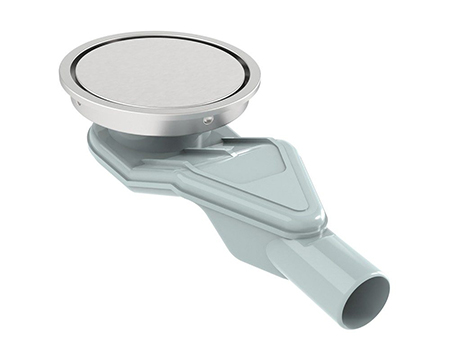
Horizontal outlet linear drains are widely used in projects where the waste pipe runs parallel to the floor plane. This configuration is common in concrete slabs, renovation projects with limited floor depth, and multi-story buildings where vertical penetration must be minimized.
From an installation perspective, horizontal outlets simplify alignment when the waste line is already present in the slab. However, they demand careful attention to slope. Even small deviations can reduce the effective flow rate, particularly in long channel drains serving high-flow shower heads.
When specifying a horizontal outlet option, many contractors compare product families within the broader Shower Drain category, focusing on outlet diameter, connection tolerance, and ease of access for maintenance.
Typical use cases for horizontal outlets
Horizontal outlet designs are often selected for residential bathrooms, hotel guest rooms, and retrofit projects. In these scenarios, preserving slab integrity and minimizing vertical excavation outweighs the benefits of gravity-assisted vertical discharge.
Vertical outlet linear drains: when gravity works in your favor
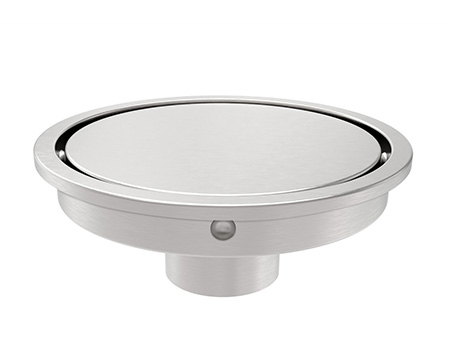
Vertical outlet linear drains discharge water directly downward into the waste pipe. This geometry minimizes directional changes and typically delivers higher hydraulic efficiency under identical conditions.
In new construction or ground-floor applications, vertical outlets are often preferred because they simplify slope management and reduce the likelihood of standing water in the channel. The engineering advantage lies in aligning water discharge with gravity, which lowers flow resistance and installation stress.
The trade-off is structural coordination. Vertical outlets require precise floor penetrations and early coordination with structural and plumbing teams, making them less flexible in late-stage design changes.
Wall and side outlets: niche solutions for constrained spaces
In some commercial projects, especially barrier-free showers or wall-drain installations, side or wall horizontal outlets are used to route water laterally into wall cavities. These configurations are highly space-efficient but sensitive to dimensional accuracy.
Any misalignment between the drain outlet and wall pipe can introduce installation stress, increasing the chance of leakage or reduced flow performance. For this reason, these systems are typically chosen by experienced contractors familiar with tight tolerance installations.
How outlet choice influences long-term performance
The most common performance issue linked to outlet selection is not immediate failure but gradual loss of drainage efficiency. In a high-humidity shower drainage environment, soap residue and hair accumulation amplify the impact of minor hydraulic inefficiencies.
When outlet geometry forces water to change direction abruptly, localized turbulence increases deposition at the outlet junction. Over time, this contributes to maintenance complaints rather than dramatic system failure.
Installation tolerance and site coordination considerations
Outlet configuration directly affects how much tolerance an installer has on site. Horizontal outlets demand precise slope control across the entire channel length, while vertical outlets place more emphasis on penetration accuracy.
Building materials sourcing managers often evaluate outlet types alongside other linear drain attributes within the broader Linear Shower Drain category, ensuring compatibility with available floor depth, waterproofing layers, and tile thickness.
Verification through testing and standards
Outlet performance is not assessed subjectively. Manufacturers validate outlet configurations using flow rate tests and dimensional accuracy inspection to ensure that declared capacities are achievable under realistic installation conditions.
For floor drains in buildings, standards such as EN 1253 Floor Drains for Buildings provide a reference framework for drainage performance, covering flow capacity, water seal behavior, and dimensional requirements.
These tests are especially relevant when comparing outlet orientations, as they reveal how geometry affects real discharge rates rather than theoretical calculations.
Choosing the right outlet type for your project
For residential projects with limited floor depth, horizontal outlet linear drains often provide the best balance between feasibility and performance. In contrast, commercial projects with high water volumes benefit from vertical outlets whenever structural conditions allow.
Rather than treating outlet type as a minor detail, many teams reduce risk by reviewing outlet geometry early and validating it against flow test data. This approach prevents late-stage compromises that can undermine an otherwise well-designed shower system.
Connecting outlet choice back to overall drain selection
Outlet configuration is only one dimension of linear drain performance. Grate design, channel width, material choice, and waterproofing integration all contribute to long-term reliability.
When outlet alignment, flow validation, and installation constraints are considered together, the selection process becomes more predictable. For a broader view that places outlet decisions in context, many specifiers refer back to a complete linear drain buyer guide for commercial and residential shower projects, where all major selection factors are evaluated side by side.
Final perspective on outlet configuration reliability
Linear drain outlet types are not interchangeable details; they are structural decisions that shape how water behaves over the entire service life of a shower. By matching outlet geometry to plumbing direction and verifying performance through standardized flow testing in a high-humidity shower drainage environment, teams can achieve stable drainage while keeping installation stress within manageable limits.
This analysis is based on material performance considerations, standardized flow rate and dimensional inspection practices, and real-world shower drainage applications. By anchoring outlet selection in these verifiable factors, linear drain systems deliver predictable performance while keeping maintenance demands under control.