
What linear drain flow rate for rain showers prevents water pooling in wet areas
Rain shower systems release a much higher and more uniform water volume than conventional shower heads, which often leads project teams to question whether the selected linear drain flow rate is sufficient to avoid surface pooling and overflow in high-humidity bathroom environments. This concern is common across both residential renovations and commercial shower rooms, where visual water spread is immediately noticeable and quickly becomes a usability issue.
Why rain showers place higher demands on linear drain flow rate
Unlike standard hand showers, rain showers distribute water over a larger area with a relatively constant discharge pattern. The perceived comfort comes from this uniform coverage, but hydraulically it means that the floor receives water faster than point drains were historically designed to handle. Linear drains mitigate this by collecting water along a continuous edge, yet their actual performance still depends on flow capacity, outlet design, and installation slope.
In rain shower installations using linear drains, the challenge is rarely total daily water volume. Instead, it is the instantaneous flow rate during peak use. When this exceeds what the drain body and outlet can evacuate, surface water begins to accumulate, leading directly to the most common failure mode: visible pooling that creeps beyond the shower zone.
Typical signs that the linear drain flow rate is insufficient
Surface water pooling is usually the first visible signal. In high-humidity residential and commercial shower environments, this often appears as a thin but persistent water layer that remains even after several seconds of drainage time. In commercial projects, this can escalate into water escaping the shower boundary, creating slip risks and maintenance complaints.
For contractors and plumbing engineers, these symptoms are not merely aesthetic. Persistent pooling indicates that the hydraulic balance between the rain shower output and the linear drain capacity has not been achieved. Over time, this imbalance increases cleaning frequency and undermines user confidence in the installation quality.
How linear drain design supports higher effective flow capacity
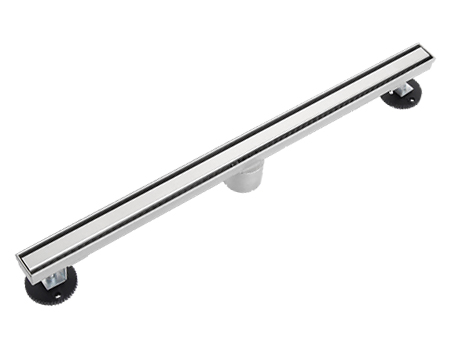
The core engineering advantage of linear drains lies in their continuous intake geometry. By extending the water entry point across a longer length, the drain reduces localized inflow velocity and allows water to enter the system more evenly. When paired with proper floor slope and an adequately sized outlet, this design supports significantly higher effective flow capacity than traditional point drains.
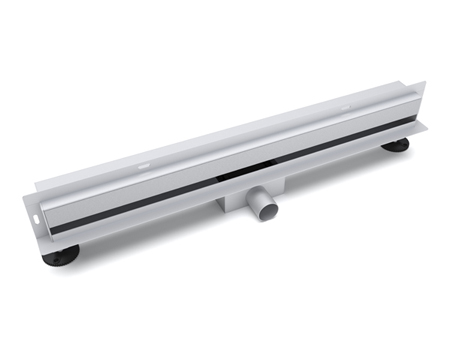
However, not all linear drains perform equally under rain shower conditions. Outlet orientation, internal channel depth, and grate openness all influence how efficiently water transitions from surface flow into the drainage pipe. This is why performance benchmarking against real rain shower output, rather than generic sizing rules, is critical.
Flow rate benchmarks for rain shower applications
In practical terms, rain shower heads commonly deliver higher flow rates than standard fixtures. The linear drain selected must therefore be evaluated not only on nominal capacity but on tested performance under continuous discharge. A drain that performs well under intermittent flow may still struggle during sustained rain shower use.
This is where flow rate testing becomes relevant. A proper flow rate test simulates continuous water discharge into the drain assembly, measuring how quickly water is evacuated without surface buildup. These results provide a more realistic indication of suitability for rain shower installations than catalog dimensions alone.
Installation factors that directly affect drainage performance
Even a linear drain with sufficient rated capacity can underperform if installation conditions are overlooked. Floor slope toward the drain must be consistent, allowing water to migrate naturally without relying on excessive depth. Minor deviations in slope can dramatically increase pooling risk in high-flow scenarios.
Outlet connection quality is another critical factor. Restrictions at the connection point, such as misaligned pipes or reduced effective diameter, negate the inherent advantages of the linear drain design. For project managers overseeing multiple installations, standardizing installation checks is often as important as selecting the right drain model.
Engineering standards and verification methods
Reliable selection decisions are grounded in verifiable testing rather than assumptions. For linear drains used in rain shower environments, flow rate tests are the most directly relevant evaluation method. These tests assess how the drain performs under continuous discharge conditions similar to real use.
In addition to internal testing, many projects reference established drainage standards such as EN 1253 floor drain requirements and broader material and plumbing benchmarks published by ASTM International. While these standards do not replace project-specific testing, they provide a baseline framework for evaluating drainage reliability in wet areas.
When to reassess drain selection during a project
Drain selection is often finalized early in a project, but rain shower specifications sometimes evolve later. An increase in shower head size or a change to multi-head configurations can quietly push the system beyond its original drainage assumptions. Reassessing linear drain flow capacity at this stage prevents costly rework after installation.
For teams facing this situation, reviewing the full range of linear drain options and configurations can clarify whether an alternative outlet design or channel geometry is better suited. In these cases, referring back to a full linear drain buyer guide helps place the specific flow rate question within a broader selection context.
Balancing performance expectations with long-term reliability
Designing for rain shower comfort should not compromise long-term usability. Linear drains that consistently operate near their maximum capacity are more sensitive to minor installation errors or debris accumulation. Allowing a margin between expected shower output and tested drain capacity improves robustness without overcomplicating the system.
This balance is particularly important in commercial shower rooms, where usage frequency amplifies small performance gaps. Selecting a drain with verified flow performance under continuous discharge conditions reduces the likelihood that surface pooling becomes a recurring maintenance issue.
Making flow rate a deliberate design parameter
When linear drain flow rate is treated as a deliberate design parameter rather than an afterthought, rain shower installations become far more predictable. Matching the drain’s tested performance to the shower’s real output, verifying installation conditions, and aligning with recognized testing practices all contribute to stable results.
For plumbing engineers and project managers, the most reliable outcomes come from viewing linear drain selection as part of an integrated wet-area system. When the drain’s continuous intake advantage is combined with proper slope and validated through flow rate testing, surface pooling in high-humidity bathroom environments becomes the exception rather than the rule.