
How to calculate linear drain drainage capacity for real shower flow conditions
Overflow in wet-area showers rarely comes from a single dramatic failure. More often, it starts with a quiet mismatch between expected water discharge and the actual intake ability of the drain installed in a high-humidity bathroom environment. For plumbing engineers and contractors working on residential and commercial shower projects, linear drain drainage capacity calculation is the point where design assumptions meet real-world flow behavior.
Why drainage capacity becomes a problem in modern shower layouts
Contemporary showers increasingly favor long, continuous outlets instead of traditional point drains. Linear drains support barrier-free access, flexible tile layouts, and cleaner visual lines, but they also change how water is collected across the floor surface. When capacity is underestimated, surface water does not disappear evenly; it accumulates along the channel edge and spreads back toward the shower area.
This is the moment when insufficient flow capacity begins to translate into visible pooling or backflow during peak discharge. In residential settings, the result is inconvenience and long-term moisture stress. In commercial installations with higher use frequency, the same issue can escalate into safety complaints or code compliance risks.
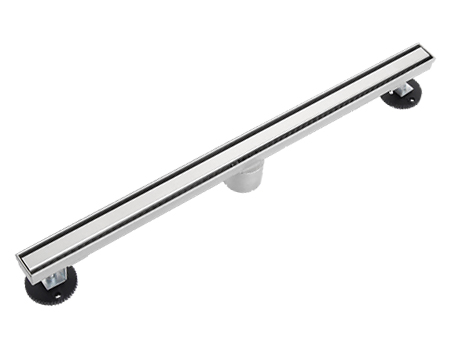
The engineering advantage of a linear drain lies in its continuous inlet geometry. Compared with a point drain, a longer intake opening can accept water across a wider front, reducing localized velocity spikes. That advantage only materializes, however, when the total intake length and outlet configuration are matched to the expected discharge rate.
This is why drainage capacity calculation cannot rely on nominal product descriptions alone. It must reflect how water actually enters, travels, and exits the drain body under realistic shower conditions.
What inputs matter when calculating linear drain drainage capacity
At its core, drainage capacity calculation answers a simple question: how much water can the system evacuate per unit time without surface accumulation. In practice, several variables interact. The first is the combined flow rate of all shower outlets. Rain heads, body sprays, and hand showers often operate simultaneously, pushing total discharge beyond what a single fixture rating might suggest.
The second variable is inlet length and slot geometry. A longer linear drain does not automatically mean higher capacity if the slot width or internal channel depth restricts flow. Engineers evaluate the effective intake area rather than the visual length alone.
Floor slope also plays a role. Even with adequate drain capacity, insufficient slope toward the channel delays water delivery to the inlet. This delay is often misinterpreted as a drain problem when it is, in fact, a system interaction issue between surface geometry and intake performance.
How linear drain drainage capacity calculation works in practice
In engineering terms, capacity assessment focuses on steady-state flow rather than short bursts. The calculation typically starts by summing expected discharge rates from all active shower components. That value is then compared against the tested flow rate of the drain assembly under gravity-driven conditions.
Flow rate testing is the relevant test standard reference here. Instead of relying on theoretical cross-sectional area alone, manufacturers and project engineers use flow rate tests to verify how much water passes through the drain body without surcharge. These tests simulate continuous inflow, reflecting real shower use rather than idealized lab conditions.
When the tested flow rate comfortably exceeds the expected discharge, surface water remains controlled. When the margin is narrow, even small installation deviations can trigger pooling during peak use.
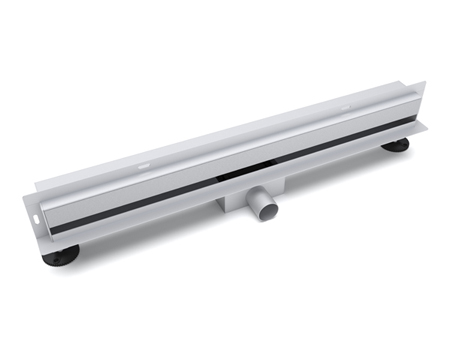
Outlet orientation matters as well. Horizontal and vertical outlet designs behave differently under identical inflow. In constrained floor depths, horizontal outlets may introduce additional resistance that must be accounted for during calculation.
This is where many overflow complaints originate: the drain length appears sufficient, but the outlet geometry limits actual discharge under load.
Typical failure patterns when capacity is underestimated
Insufficient flow capacity does not usually present as a sudden breakdown. Instead, early symptoms include slow drainage near the far end of the channel, water lingering after shower use, or temporary backflow when multiple outlets operate together.
In high-humidity residential and commercial shower environments, these symptoms accelerate surface wear and increase the likelihood of odor issues or secondary maintenance problems. While the drain itself may not be defective, the system as a whole operates outside its intended performance envelope.
Treating these signs as isolated installation errors often leads to repeated adjustments without addressing the underlying mismatch between expected discharge and verified capacity.
Connecting capacity calculation to verified testing standards
Flow rate testing provides a measurable baseline for decision-making. Rather than assuming all linear drains of similar size perform equally, engineers look for documented flow rate test results that reflect continuous inflow under gravity.
Standards such as EN 1253 for floor drains define how drainage performance is evaluated and compared. While not every project requires formal certification, the test methodology behind these standards informs how capacity claims should be interpreted in real installations.
Understanding how a drain performs during a flow rate test helps translate laboratory results into practical safety margins on site.
How this calculation feeds into better drain selection decisions
Once capacity requirements are clear, selection becomes more predictable. Instead of choosing a drain based solely on appearance or length, project teams can compare tested performance against expected discharge.
This approach also clarifies when a linear drain is the right solution and when alternative configurations may better suit the environment. For projects that require a broader overview of available configurations and trade-offs, the Linear Drain Buyer Guide for Commercial and Residential Shower Projects provides a more comprehensive selection framework.
Using capacity calculation as an early filter reduces the risk of late-stage design changes and helps align aesthetic goals with functional reliability.
Low-pressure next steps for validating your drainage design
For teams responsible for drainage performance and compliance, a practical way to reduce risk is to confirm three points early: the combined discharge rate of shower outlets, the tested flow capacity of the selected linear drain, and how outlet orientation affects gravity flow in the available floor depth.
Requesting a product data sheet that includes flow rate test information, or reviewing installation guidance that explains outlet behavior, often reveals whether the selected drain comfortably meets project demands before construction begins.
Long-term reliability depends on matching capacity to environment
Linear drain drainage capacity calculation is less about chasing maximum numbers and more about ensuring stable behavior over time. When capacity aligns with real discharge and is validated through flow rate testing, the continuous inlet design retains its advantage without inviting surface water issues.
In high-humidity residential and commercial shower environments, treating insufficient flow capacity as a design parameter rather than an afterthought allows linear drains to age predictably, with fewer surprises and fewer corrective interventions later on.
This content is developed based on drainage performance analysis, flow rate testing references, and real-world application scenarios related to high-humidity bathroom environments. Product specifications and testing approaches referenced here reflect common industry practices rather than hypothetical assumptions, helping teams make verifiable and defensible drainage decisions.