

Why linear drain insufficient flow capacity leads to standing water in humid shower areas
Situations where water pools around the shower floor, drains slowly, or briefly backs up are often traced to linear drain insufficient flow capacity rather than visible blockages. In high-humidity bathroom environments, this mismatch between incoming water volume and drainage performance becomes noticeable during peak use, long before any catastrophic failure appears.
What standing water around a linear drain really indicates
For plumbing engineers and contractors working on residential or commercial shower projects, surface water lingering near a linear drain is rarely an aesthetic-only concern. It signals that the drain system is operating near or beyond its designed hydraulic threshold. When shower heads, rain panels, or body sprays discharge more water than the channel and outlet can evacuate, the excess volume has nowhere to go except back onto the finished surface.
In humid bathrooms, evaporation is slow and repeated exposure keeps substrates wet for extended periods. Over time, this persistent moisture load increases stress on waterproof membranes and grout lines, turning a drainage performance issue into a durability risk.
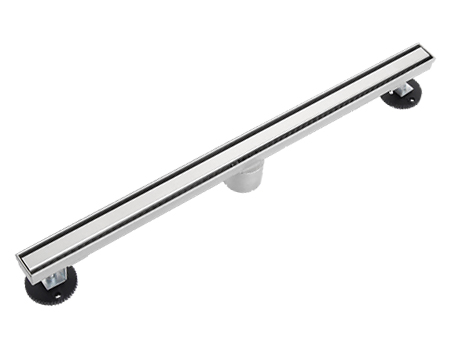
How insufficient flow capacity develops in real installations
Linear drains are designed to distribute intake along their length, which helps reduce localized water pressure compared to point drains. This engineering advantage works well when the outlet size, channel depth, and slope are matched to the expected discharge rate. Problems arise when one or more of these parameters is underestimated during specification or installation.
In practice, insufficient flow capacity often develops from a combination of factors rather than a single mistake. High-output shower systems increase inflow, while shallow installation depths or horizontal outlet constraints limit outflow. The result is a hydraulic mismatch that only becomes obvious once the shower is in daily use.
Peak water discharge versus design assumptions
Many project specifications rely on nominal flow values that do not reflect simultaneous operation of multiple outlets. When rainfall heads and handheld sprays operate together, instantaneous discharge can exceed conservative assumptions. If the linear drain was selected without accounting for this scenario, temporary flooding is almost inevitable.
Outlet orientation and downstream piping effects
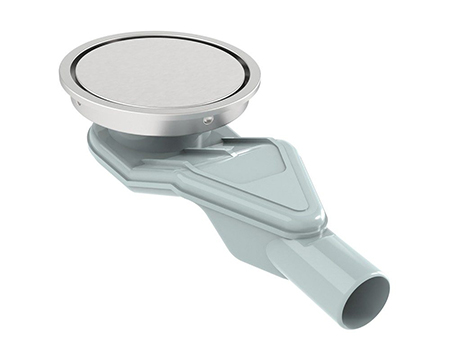
Horizontal outlet drains are particularly sensitive to downstream pipe slope and length. Even a well-sized channel can underperform if the connected piping introduces friction losses or partial air locking. In contrast, vertical outlet designs often tolerate higher flow rates but require sufficient slab depth.
Why high-humidity environments amplify the problem
In a high-humidity bathroom environment, water that remains on the surface or within the drain channel does not dry quickly between uses. This continuous wetting cycle increases the likelihood of mineral deposits and soap residue accumulation, further reducing effective flow area over time.
The core pain point for building owners and facility managers is not the first instance of standing water, but the cumulative effect. Repeated saturation places constant load on waterproof layers beneath tile assemblies, raising the risk of long-term leakage even when the drain itself appears intact.
Identifying early warning signs before damage occurs
Early detection focuses on behavior rather than visible defects. Slow drawdown after the shower is turned off, brief backflow during peak discharge, or uneven water distribution along the drain length are all indicators that capacity margins are thin.
Contractors can perform simple on-site observations by running the shower at maximum output and timing surface clearance. While not a substitute for laboratory testing, this approach helps flag installations that deserve closer evaluation.
Engineering standards and flow rate verification
Objective evaluation of linear drain performance relies on standardized flow rate testing rather than subjective judgment. Flow rate tests measure how much water a drain assembly can evacuate under controlled conditions, providing a benchmark for comparison against expected usage.
In European markets, floor drain performance is commonly referenced against EN 1253 floor drain requirements, which define minimum flow capacities and test conditions. In broader material and plumbing evaluations, guidance from ASTM International materials and plumbing standards helps frame acceptable performance ranges.
While project teams may not replicate full laboratory tests on site, specifying drains with documented flow rate test results aligned to these standards reduces uncertainty. It also provides a shared reference point when coordinating between designers, installers, and inspectors.
Mitigation strategies when flow capacity is marginal
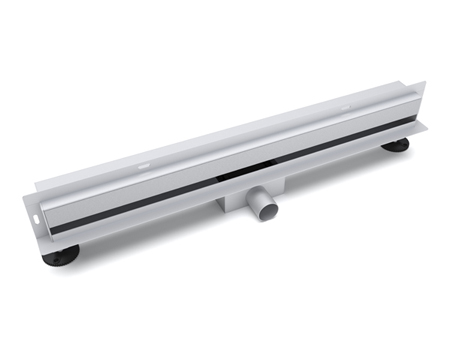
When an installed linear drain shows signs of insufficient capacity, corrective actions focus on restoring hydraulic balance rather than cosmetic fixes. Adjusting grate alignment or improving downstream pipe ventilation can yield modest improvements, but they rarely compensate for fundamental undersizing.
In renovation scenarios, replacing the drain with a higher-capacity configuration or switching outlet orientation is often the most reliable solution. These decisions are best made within the context of a broader selection framework rather than as isolated fixes.
Connecting failure analysis to smarter drain selection
Understanding why linear drain insufficient flow capacity occurs helps clarify what to prioritize during selection. Capacity margins, outlet geometry, and validated test performance should be evaluated together instead of relying solely on visual design or channel length.
For project teams comparing multiple options, a more comprehensive view of linear drain types and configurations can be found by reviewing Linear Shower Drain selection considerations, where performance trade-offs are examined across different installation scenarios.
Long-term reliability beyond the initial symptom
Standing water is a visible symptom, but the deeper concern is how often and how long materials remain under moisture stress. Linear drains that operate comfortably within their tested flow capacity tend to age more predictably, even in demanding humid environments.
Content here is developed based on material performance analysis, standardized drainage flow rate testing references, and real-world application scenarios related to high-humidity bathroom environments. Product specifications and testing data informing this discussion align with publicly available standards and documented installation practices.
When linear drain insufficient flow capacity is treated as a design parameter rather than an afterthought, the advantages of linear drainage—uniform intake, clean aesthetics, and predictable performance—remain intact while the risk of water buildup and membrane stress stays under control.