
Are horizontal outlet linear drains suitable for shower renovations with existing floor slabs?
Assessing horizontal outlet linear drains in high-humidity renovation bathrooms often starts with the same concern: whether drainage performance can remain stable when existing slabs and horizontal waste pipes limit vertical outlet options. For contractors and engineers working on retrofit showers, questions around flow rate, slope tolerance, and joint reliability tend to surface long before tile is installed.
Why renovation constraints change drain selection logic
In new-build bathrooms, vertical outlet shower drains are usually preferred because gravity-assisted flow simplifies slope design and reduces sensitivity to debris buildup. Renovation projects are different. Existing concrete slabs, limited floor depth, and fixed horizontal piping layouts often make vertical outlet relocation impractical or cost-prohibitive.
Horizontal outlet linear drains are designed precisely for these constraints. By aligning the outlet with existing horizontal waste lines, they allow installers to avoid extensive slab cutting while still introducing a linear drainage profile. The trade-off is that hydraulic performance becomes more dependent on installation accuracy, especially slope continuity and outlet joint sealing.
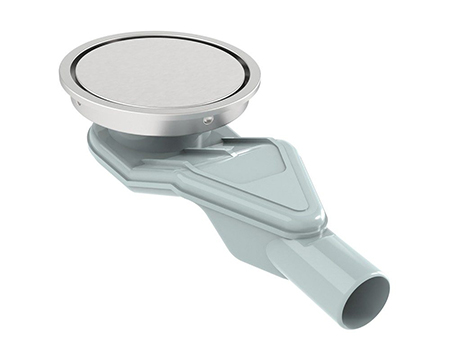
For teams comparing retrofit options, it helps to treat horizontal outlet drains not as direct substitutes for vertical outlets, but as engineered compromises that work within physical constraints rather than ideal conditions.
Typical performance concerns raised during retrofits
The most common pain point reported during renovation installations is difficulty achieving consistent drainage slope from the shower floor to the outlet. Because horizontal outlets rely on lateral flow after the trap, even small deviations in slope can slow water evacuation during peak shower use.
Another frequent concern is debris accumulation. Hair, soap residue, and construction dust can settle more easily in horizontal sections if internal surfaces or slope transitions are poorly aligned. Over time, this can contribute to partial clogging rather than sudden blockage, making the issue harder to detect early.
Leakage at horizontal joints is less common but more disruptive when it occurs. In renovation environments where access below the slab is limited, even minor joint seepage can lead to costly rework if not addressed during initial installation.
How horizontal outlet linear drains manage flow in renovation environments
From a hydraulic standpoint, well-designed horizontal outlet linear drains aim to maintain acceptable flow capacity by minimizing internal turbulence and sharp directional changes. Smooth internal channels and precise dimensional tolerances help compensate for the reduced gravitational assist compared to vertical outlets.
In high-humidity residential or commercial shower renovation environments, the goal is not maximum theoretical flow rate, but predictable drainage under real use patterns. When properly installed, horizontal outlet drains can handle typical shower discharge volumes without surface pooling.
This is where alignment with recognized drainage benchmarks becomes important. Standards such as EN 1253 define performance expectations for floor drains in buildings, including flow behavior and resistance to leakage under test conditions. Independent references to EN 1253 Floor Drains for Buildings are often used to frame these evaluations.
Installation precision as the deciding factor
The engineering advantage of horizontal outlet linear drains lies in their compatibility with existing plumbing. That advantage only holds when installation precision is treated as a design parameter rather than an afterthought. Outlet height alignment, consistent floor slope, and careful sealing at horizontal joints collectively determine long-term performance.
Dimensional accuracy inspections during manufacturing help ensure that the drain body interfaces cleanly with standard waste pipes. On site, installers must verify that the finished tile plane maintains uninterrupted slope toward the drain channel, even when working within shallow build-ups.
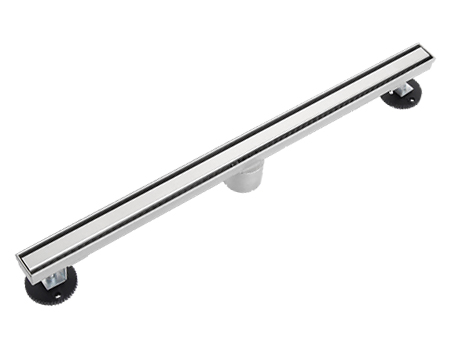
In practice, many retrofit issues attributed to “horizontal outlet design” trace back to installation shortcuts rather than inherent product limitations. This distinction matters when evaluating whether the drain type itself is suitable for the project.
How testing and verification reduce renovation risk
To move beyond anecdotal judgments, professional teams rely on basic but effective verification methods. Flow rate tests confirm that the assembled drain and piping configuration can evacuate water at expected shower discharge levels. Water leakage tests focus on horizontal joint integrity before finishes conceal the system.
Dimensional accuracy inspection ensures that the drain body, outlet diameter, and connection angles align with design drawings and existing pipes. While these tests are simple, they provide measurable confidence that the system behaves as intended once the bathroom is back in service.
Broader material and plumbing performance references from organizations such as ASTM International are commonly consulted to contextualize acceptable tolerances and test methods, even when project-specific standards vary by region.
When horizontal outlet linear drains make sense—and when they do not
Horizontal outlet linear drains are particularly well suited to renovation scenarios where preserving the existing slab is a priority and shower usage falls within typical residential or light commercial patterns. They allow modern linear aesthetics and barrier-free shower layouts without the structural disruption of relocating vertical waste lines.
They are less appropriate in projects with extremely high discharge volumes, poor access for precise installation, or severely compromised existing piping. In those cases, alternative drain configurations or more extensive plumbing modification may offer greater long-term reliability.
For readers comparing these options as part of a broader specification process, reviewing the Linear Drain Buyer Guide for Commercial and Residential Shower Projects helps place horizontal outlet solutions within the full landscape of linear drain designs and outlet configurations.
Standards, environment, and long-term reliability
In high-humidity renovation environments, long-term performance depends on how well the drain system has been validated against realistic conditions. Flow rate testing, leakage assessment, and dimensional checks form a practical baseline for confirming that horizontal outlet drains can meet service expectations.
These evaluations do not eliminate all risk, but they transform uncertainty into manageable parameters. When failure modes such as reduced flow or joint leakage are anticipated and controlled during selection and installation, horizontal outlet linear drains become predictable components rather than weak links.
Content like this is developed based on drainage performance analysis, commonly referenced plumbing test methods, and real-world application scenarios typical of high-humidity residential or commercial shower renovation environments. Product specifications and testing practices referenced here reflect general industry approaches rather than assumptions beyond available standards.
In the end, horizontal outlet linear drains for shower renovations earn their place not by avoiding limitations, but by addressing them directly through design intent, installation discipline, and verification against recognized test practices.