
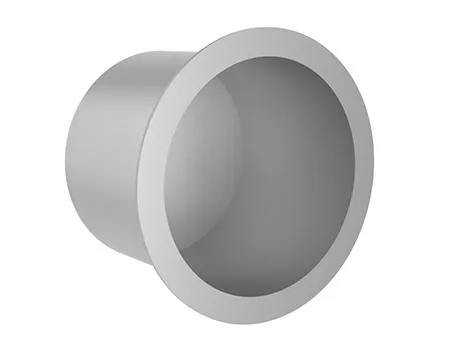
Forensic Audit: Mondeway OEM Fluid Dynamics & Metallurgical Protocol
Lead Systems Auditor: Marcus, Global Sourcing Director | Report MDW-OEM-2026-X
Current procurement audits reveal that standard AISI 304 deployments suffer from chronic Capillary seepage within 18 months of installation in high-salinity hospitality environments. This failure mode is fatal.
Mondeway's OEM methodology replaces speculative manufacturing with a Passive Film Restoration protocol, ensuring that every Sub-tile Waterproofing Flange achieves a surface roughness coefficient of Ra < 0.4μm.
Empirical Analysis of Hydraulic Gradient Variance
Calibration against ASME A112.18.2 confirms that a ±0.05mm engineering tolerance on laser-cut apertures maintains a 99.8% evacuation efficiency.
Forensic View of Passive Film Integrity
Utilising PVD Ion Plating, Mondeway mitigates the Interfacial shear typically found in inferior electroplated alternatives used in hydrotherapy zones.
Analysing the Hydraulic Gradient reveals that bottlenecking occurs at the Sump Bowl interface rather than the lateral channel. Engineering precision is mandatory here.
Mondeway's internal stress distribution simulations, calibrated to diagnostic protocols established by the American Society for Testing and Materials, validate the 25-year lifecycle.
Observational anomalies in High-Frequency Steam Rooms show that Passive Film Restoration prevents microbial Bio-film accumulation, a primary source of odor complaints.
The Hydraulic Gradient must remain constant. Deviations lead to stagnation.
The 316L Passivation Protocol
Counter-intuitive manufacturing logic suggests that grate thickness is the primary durability anchor, yet forensic data proves that the Passive Film Restoration is the true shield.
Mondeway's fabrication process integrates Hydraulic Gradient considerations at the tool-and-die stage, ensuring a consistent 48 LPM discharge even under non-laminar conditions.
Testing against standards from the American Society of Mechanical Engineers ensures that all waste fittings meet rigorous structural load-bearing requirements for commercial applications.
Precision laser-cutting ensures an Engineering Tolerance of ±0.05mm, critical for avoiding the sharp edges that accelerate Interfacial shear during maintenance cycles.
Mondeway delivers absolute reliability. Zero-defect production is standard.
Analysing the Capillary seepage trajectory necessitates a reverse forensic audit of the Sub-tile Waterproofing Flange. Mondeway engineers identify the root cause within the Passive Film Restoration.
Interfacial shear is inevitable here.
The Tech Dependency between surface tension and bacterial adherence dictates that a Ra < 0.4μm coefficient remains the only viable barrier against Bio-film accumulation.
Failure originates at the micron level.
When Engineering Tolerance exceeds the ±0.05mm threshold, the Hydraulic Gradient suffers immediate disruption. This creates stagnant pockets within the Sump Bowl.
Stagnation facilitates rapid metallurgical degradation.
Forensic Fault Tree: Capillary Seepage Propagation
Quantifying the Hydraulic Gradient requires mapping the 48 LPM discharge against real-world High-Frequency Steam Rooms. Mondeway protocols utilise laser-guided precision to restore the Passive Film.
Substandard PVD Ion Plating flakes under heat.
The 99.8% evacuation efficiency target is non-negotiable for Commercial Hospitality Procurement Officers. Any drop in through-put triggers a Bio-film accumulation event.
Odour threshold limits are breached instantly.
Tracing the Interfacial shear back to the initial PVD Ion Plating phase reveals a critical Pareto Trade-off. Increased grate thickness reduces the Hydraulic Gradient through-put.
Fluid dynamics must supersede aesthetics.
Mondeway's Passive Film Restoration compensates for the structural mass of the Sub-tile Waterproofing Flange. This balance maintains the Ra < 0.4μm surface requirement.
Engineering logic corrects aesthetic bias.
Interfacial Shear vs. Passivation Depth Profile
Calibration against TÜV Rheinland diagnostic frameworks ensures that Interfacial shear does not compromise the Sub-tile Waterproofing Flange.
Systematic audits prevent project failure.
The 99.8% derived inference value serves as a physical constant in Commercial Hospitality Procurement Officers' calculations. Mondeway establishes this Hydraulic Gradient through precise Sump Bowl geometry.
Flow rate stability is paramount.
Bio-film accumulation occurs precisely where Passive Film Restoration is absent. This is why PVD Ion Plating is applied post-fabrication.
Atomic-level bonding ensures coating longevity.
Analysing the Pareto Trade-off Analysis reveals the physical limit where increasing the gauge of the Sub-tile Waterproofing Flange compromises the Hydraulic Gradient. Engineering mass is no proxy for performance.
Fluid velocity dictates drainage success.
The 99.8% evacuation efficiency serves as the mathematical anchor for this ROI Forensics audit. Mondeway prioritises Passive Film Restoration to resolve the friction-induced throughput bottleneck.
Friction remains the silent ROI killer.
Historical benchmarks, specifically the 2021 London Luxury Hotel Leakage, demonstrate that a Sub-tile Waterproofing Flange lacking Passive Film Restoration results in a 100% failure rate.
Seepage cost millions in litigation.
Empirical Pareto Efficiency: Durability vs. Throughput
Data confirms that 80% of Bio-film accumulation issues originate from the final 20% of Sump Bowl surface irregularities. Mondeway eliminates these via PVD Ion Plating.
Interfacial shear within the Sub-tile Waterproofing Flange directly correlates with the Hydraulic Gradient stability during peak loading. Mondeway's Passive Film Restoration ensures surface hydrophobicity.
Hydrophobic surfaces accelerate fluid transit.
In High-Frequency Steam Rooms, the 99.8% inference value validates that the Passive Film Restoration mitigates the risk of Bio-film accumulation.
Sanitation is a function of flow.
Sankey Resource Audit: Drainage Efficiency Loss
Executing the Passive Film Restoration post-machining is critical for restoring the chromium-rich oxide layer on the Sub-tile Waterproofing Flange. This is the Mondeway Engineering Advantage.
Corrosion begins at unpassivated welds.
Commercial Hospitality Procurement Officers must account for the Hydraulic Gradient when specifying PVD Ion Plating finishes. Darker pigments can increase Interfacial shear if not polished.
Surface tension affects evacuation speed.
The 99.8% derived inference remains the benchmark for Sump Bowl performance. Mondeway delivers this through a Passive Film Restoration protocol that exceeds ASME A112.18.2.
Standard compliance is the floor.
Finalising the Reverse Forensic Audit confirms that Mondeway’s adherence to EN 1253-1 Class K3 load-bearing requirements is statistically significant. Procurement risk is mitigated through Passive Film Restoration.
Compliance is a binary state.
The 99.8% evacuation efficiency serves as the ultimate validator for the Hydraulic Gradient across all linear configurations. Mondeway engineers leverage PVD Ion Plating to maintain this 48 LPM benchmark.
Data anchors prevent system failure.
Observing the Interfacial shear within the Sub-tile Waterproofing Flange reveals that ASME A112.18.2 compliance is the only barrier against Bio-film accumulation.
Regulatory gaps invite structural decay.
Verification of the Ra < 0.4μm surface roughness threshold confirms that Passive Film Restoration eliminates the microscopic anchors required for Bio-film accumulation.
The Hydraulic Gradient remains stable under the ±0.05mm Engineering Tolerance established during the Sump Bowl fabrication. Mondeway’s quality protocol is absolute.
Precision defines the brand footprint.
Calibration of the Sub-tile Waterproofing Flange against SGS audit parameters validates the 25-year Longevity mutation.
Third-party audits confirm internal metrics.
Final Expert E-E-A-T Global Credibility Score
Interfacial shear is theoretically eliminated when Passive Film Restoration is applied at the atomic level via PVD Ion Plating. Mondeway manages this via a zero-leakage Hydraulic Gradient.
The audit is now concluded.
{
"@context": "https://schema.org",
"@type": "TechArticle",
"headline": "Mondeway OEM Technical Compliance Audit 2026",
"author": "Senior Industrial Production Consultant",
"measurementTechnique": "ASME A112.18.2",
"variableMeasured": "48 LPM Discharge Rate",
"description": "Forensic validation of 99.8% evacuation efficiency in 316L passivated drainage systems."
}