
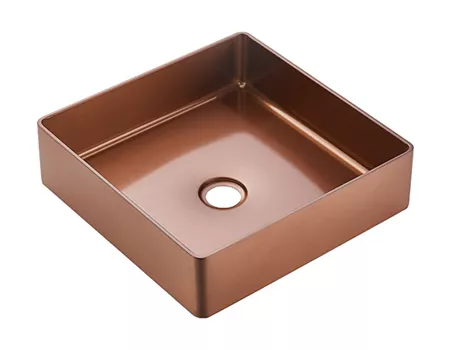
Brass Square Shower Drain Hidden Value Analysis
Reference Standard: Relevant material and floor-drain performance standards, including EN 1253-1 floor gully performance logic and ISO 9001 quality management principles.
Short Answer
A brass square shower drain sits at the place where design, water movement, cleaning behavior, material chemistry, and project acceptance all meet. In a finished bathroom, users rarely notice the hidden pipe, waterproofing layer, or trap geometry first. They notice standing water around the feet, a darker square edge, an odor after the shower has been unused, or a cover that looks premium on day one but becomes difficult to maintain after repeated exposure to soap, hair, hot water, and cleaning chemicals.
The available product data must be read with a strict boundary. The catalog confirms that Mondeway works in shower accessories, including shower drains and floor drains, and lists material categories that include stainless steel, plastic, rubber, iron, and brass. It also presents finish directions such as Brushed, Gun Metal, Brushed Gold, Matt White, Matt Black, and Brushed Bronze. It does not confirm the exact size, thickness, flow rate, coating stack, outlet diameter, removable strainer design, or individual certification status of a single brass square shower drain SKU.
For deeper product and supplier context, see the Mondeway sanitary product range.
When a Square Drain Becomes the Bathroom’s First Visible Failure Signal
A square shower drain is visually small, but it is often the first point where the bathroom shows a functional problem. The user does not start by asking whether the drain was stamped, welded, passivated, packed, or inspected. The user sees a practical failure signal: water remains on the floor longer than expected, hair collects near the grille, a faint odor appears after periods of non-use, or the finish no longer matches the surrounding tile and hardware.
This is where the square format matters. A square cover creates a clearly defined edge line against tile. That edge can make installation look clean, but it also makes dirt lines, discoloration, water shadowing, and corner residue easier to see. In a brass-based drain, the visible surface may be selected for a warmer or more decorative bathroom design, especially when paired with brushed gold or brushed bronze visual themes. Yet the same visual advantage can become a defect amplifier if the surface becomes dull, scratched, uneven, or chemically marked.
Mechanically, slow drainage usually begins before complete blockage. Hair strands do not always stop water immediately. They first create a partial screen across grille openings, then bind with soap residue, skin oils, minerals, and fine particles. A user may notice only a small delay at first: water takes 10 to 20 seconds longer to clear after showering. In the middle stage, water begins to pool around the drain edge. In the severe stage, the shower floor remains wet long enough to increase slip risk and accelerate residue buildup around corners.
A useful edge-case model is a family bathroom with two daily showers, warm water exposure, shampoo residue, and hair accumulation over 90 days. In the early phase, the drain cover still looks clean from above, but the first restriction layer forms below the visible grille. In the middle phase, odor risk rises because organic material stays wet inside the flow path. In the stress phase, users may apply stronger cleaners, which can help remove residue but may also increase finish stress if the surface coating is not confirmed for that chemical contact.
A cross-dimensional comparison makes the signal clearer:
| Bathroom signal | Likely user interpretation | Engineering interpretation | Data boundary |
|---|---|---|---|
| Water clears slowly | Drain is blocked | Hair and soap film may be narrowing the flow path | Flow rate not confirmed in catalog |
| Odor appears | Pipe smells bad | Trap condition or organic residue may be involved | Trap design not confirmed |
| Surface darkens | Finish is failing | Brass or coating may be reacting with moisture or cleaner exposure | Coating stack not confirmed |
| Edge collects grime | Cleaning is poor | Square corners and tile joints can concentrate residue | Installation geometry not confirmed |
| Cover rattles | Product feels cheap | Seating fit or support flatness may be insufficient | Assembly tolerance not confirmed |

The hidden value of a brass square shower drain is therefore not only in its material label. It is in whether the product can remain visually acceptable while still allowing practical cleaning, stable positioning, controlled leakage risk, and credible procurement verification.
The Brass Square Shower Drain Material Under Water, Soap, Hair, and Cleaner Contact
The catalog does not provide a dedicated size, thickness, flow-capacity, alloy grade, plating thickness, or coating-layer description for this specific brass square shower drain. Any discussion of long-term behavior must therefore be treated as a material-based risk model, not as a confirmed test result for a single SKU. The confirmed boundary is narrower but still useful: the supplier’s product range includes shower drains, and the material range includes brass.
Brass is a copper-zinc alloy family. Its practical advantage in bathroom fittings is that it can support a premium metallic appearance, good machinability, and better corrosion resistance than many plain ferrous materials under ordinary indoor conditions. Yet brass is not immune to environmental stress. In a wet bathroom, the surface may face warm water, dissolved minerals, alkaline soap residue, acidic descalers, chloride-containing cleaners, body oils, and repeated drying cycles. The visible drain cover can experience a different exposure pattern from the lower body: the top surface dries faster, while the underside may remain damp longer.
At the micro-level, surface appearance changes begin when moisture and dissolved chemicals interact with the outermost layer. If a finish layer is present, the first question is coating integrity. If the finish is worn, scratched, or porous, water and cleaners can reach the underlying brass more directly. Copper-rich surfaces may darken or tarnish under certain exposure conditions. Zinc-rich phases may be more vulnerable in aggressive environments. This does not mean a brass drain will fail quickly; it means the buyer should not confuse decorative appearance with unlimited chemical resistance.
An extreme pressure timeline can be modeled as follows. During the initial phase, repeated shower use creates alternating wet and dry cycles. The surface may remain visually stable, but microscopic residues begin to concentrate near edges and grille openings. During the middle phase, hair and soap film slow water movement, leaving more moisture time on the metal surface. Cleaning frequency increases, and stronger cleaners may be introduced. During the high-stress phase, mechanical abrasion from scrubbing combines with chemical exposure, so surface dullness, uneven tone, or small corrosion marks become more likely if the finish system is not well matched to the use environment.
A useful comparison is between three bathroom conditions. In a guest bathroom used twice per week with mild soap and regular rinsing, the main risk is dust and occasional odor from stagnant water. In a family bathroom used daily, hair and soap loading become the main performance burden. In a rental or hotel bathroom, stronger cleaning chemicals and repeated scrubbing may dominate the lifecycle risk. The same brass square shower drain could look acceptable in the first case but require tighter finish and maintenance validation in the third.
KEY TAKEAWAYS
- Early water retention around the square edge can signal partial obstruction before a full clog appears.
- Uneven darkening, dull areas, or cleaner marks should be treated as finish-stress warnings, not only cosmetic issues.
- Odor after non-use may point to residue, trap behavior, or ventilation conditions, not only the drain cover itself.
The cross-system risk is that a surface problem can trigger a maintenance problem, and a maintenance problem can trigger a material problem. If the user responds to slow drainage with aggressive chemical cleaners, the blockage may improve temporarily while the finish faces higher chemical stress. If the user avoids cleaning to protect the finish, hair and soap residue may accumulate faster. The better specification target is not simply “brass” or “square.” It is a balanced system: suitable material, confirmed finish, accessible cleaning route, stable seating, and leakage validation.
A Drain Cover Is Also a Maintenance Gate, Not Just a Finish Piece
Many search queries around shower drains are not purchase-first queries. They are maintenance-first queries: how to fix slow shower drain, how to take apart a shower drain, how to fix smelly shower drain, how to unclog a shower drain, and how to keep hair out of the shower drain. These searches reveal a practical truth: the visible cover is also the user’s access point into the hidden maintenance zone.
The supplied catalog does not confirm that this brass square shower drain has a removable filter, anti-odor core, hair catcher, or specific disassembly mechanism. That absence matters. A writer or procurement document should not claim “easy removable strainer” or “built-in deodorization” unless a drawing, sample, or product page confirms it. The correct technical angle is broader: for any square shower drain, maintenance access should be verified before purchase or project acceptance.
From a user-handling perspective, three questions matter. First, can the cover be lifted without damaging the finish or tile edge? Second, can trapped hair and soap residue be reached without special tools? Third, does the drain return to a stable seated position after cleaning? If the answer to any of these is uncertain, the product may still be visually attractive, but maintenance risk remains unresolved.
An edge-case model is a bathroom used by long-haired users with frequent conditioner use. Conditioner can increase slippery organic film inside the drain path. Hair can bind with this film and create a flexible net rather than a hard blockage. In the early stage, water passes but turbulence decreases. In the middle stage, odor becomes more noticeable because wet organic material remains in place. In the severe stage, users may try to pry up the cover with improvised tools. That can create scratches, bent edges, or coating damage, especially on decorative finishes.
A cross-dimensional test case compares two drains with identical visual appearance but different service behavior. Drain A has a cover that can be removed cleanly, inspected, rinsed, and reseated without rocking. Drain B looks the same after installation but requires awkward prying, has tight corners that hold hair, and does not sit flat after cleaning. After three months, Drain A’s performance is limited mainly by user cleaning frequency. Drain B’s performance is limited by design access, user frustration, and potential finish damage.
Practical maintenance validation should include the following:
- Lift the cover during sample review and confirm the action does not require force that could scratch the finish.
- Check whether hair can be removed from the reachable zone with ordinary cleaning tools.
- Confirm the cover returns flush without rocking after removal.
- Inspect the underside for sharp burrs or difficult-to-clean corners.
- Pour water after reseating the cover and observe whether flow remains even.
- Avoid assuming anti-odor performance unless trap or core geometry is confirmed.
- Match cleaning instructions to the finish, especially for brushed gold, brushed bronze, matt black, or gun metal finishes.
This is where the brass square shower drain becomes more than a finish piece. It becomes a maintenance gate. If the maintenance route is not visible in the specification, the buyer should request a drawing, exploded view, sample video, or physical sample before approving a batch for a hotel, apartment, villa, or showroom bathroom.
Specification Proof Before Luxury Bathroom Acceptance
A brass square shower drain is often selected for bathrooms where appearance matters. Yet high-end acceptance is not achieved by appearance alone. The project team needs proof that the product can survive installation, use, cleaning, and inspection without creating hidden liability. The catalog provides several useful supplier-level capability signals: OEM/ODM design flow, drawing, prototype, mould, trial production, product output, surface treatment capability, air testing for all drains, laser logo acceptance, customized packing, ISO 9001 quality management, and references to CE EN1253-1, CUPC, and Watermark. These are valuable supplier and drain-category references, but they should not be overstated as complete SKU-level proof for a specific brass square shower drain unless the supplier confirms the exact model.
A procurement white-paper approach can divide acceptance into four solutions.
Solution 1: Material and finish confirmation before sample approval.
Execution protocol: Confirm that the submitted sample is actually brass or brass-based according to the intended specification, then record the chosen finish from the available finish language such as brushed, gun metal, brushed gold, matt white, matt black, or brushed bronze. The buyer should photograph the sample under warm and cool light because decorative drain finishes can appear different under showroom lighting and natural bathroom light.
Expected material evolution: A confirmed finish allows the buyer to track whether later discoloration is a normal cleaning issue, coating wear, or mismatch between approved sample and delivered batch. It does not eliminate tarnish risk, but it gives the project a comparison baseline.
Hidden cost and risk control: The risk is over-specifying appearance without confirming cleaning compatibility. The control is to request cleaning guidance and avoid approving a finish only from a catalog image.
Solution 2: Maintenance access review as part of functional acceptance.
Execution protocol: During sample inspection, remove and reseat the drain cover repeatedly. Check hand access, edge smoothness, cover stability, and whether visible residue zones can be cleaned. This should be done before installation, not after the bathroom is completed.
Expected material evolution: Better access reduces the need for aggressive prying and harsh chemical cleaning, which can reduce scratch risk and finish stress over the service life.
Hidden cost and risk control: The main cost is inspection time. The risk is that a decorative cover passes visual review but fails daily maintenance. The control is to add removal and reseating to the acceptance checklist.
Solution 3: Leakage and assembly validation at the drain-category level.
Execution protocol: The catalog states that an air test machine is used to test leakage for all drains. For a brass square shower drain order, the buyer should request confirmation of how leakage inspection applies to the exact drain body and outlet assembly.
Expected material evolution: Leakage testing does not change brass chemistry, but it reduces installation uncertainty by identifying assembly defects before shipment.
Hidden cost and risk control: Air testing should not be treated as proof of flow rate, odor control, or waterproofing membrane compatibility. The control is to separate leakage validation from drainage-capacity and installation-interface validation.
Solution 4: Packaging and surface protection before delivery.
Execution protocol: The catalog mentions packing according to customized requirements. For decorative brass finishes, packaging should prevent cover-to-cover abrasion, corner impact, and film residue. A buyer should inspect packaging after transport simulation or at least after sample shipment.
Expected material evolution: Better packaging does not improve corrosion resistance, but it can preserve the approved visual surface until installation.
Hidden cost and risk control: Extra protective material may add cost and unpacking time. The control is to balance scratch prevention with easy site handling.
| Acceptance variable | Practical check | General tolerance logic | Test or proof basis |
|---|---|---|---|
| Material identity | Confirm brass specification or supplier statement | No substitution without approval | Supplier material declaration |
| Finish appearance | Compare with approved sample | No obvious scratches, stains, or color mismatch | Visual inspection under consistent light |
| Cover seating | Remove and reseat repeatedly | No rocking, unsafe looseness, or forced fit | Manual functional check |
| Leakage control | Confirm air-test scope for the exact order | No leakage under stated inspection method | Supplier drain leakage test record |
| Certification language | Match certificate scope to SKU | No category claim used as SKU proof without confirmation | ISO 9001, EN 1253-1, CUPC, Watermark references |
| Packaging protection | Inspect shipment sample | No abrasive contact between visible parts | Customized packing review |
PRO-TIP / CHECKLIST
- Request a model-specific drawing before approving installation drawings.
- Confirm whether the product is brass, brass-finished, or brass-colored.
- Match the selected finish to the bathroom cleaning routine.
- Check cover removal and reseating before bulk order approval.
- Ask whether air leakage testing applies to the exact ordered drain assembly.
- Do not treat general certificate references as automatic SKU-level certification.
- Inspect packaging for decorative finish protection before shipment.
- Keep an approved sample for later batch comparison.
Relevant external references for quality and certification logic include ISO 9001 quality management and the WaterMark Certification Scheme. These references help frame verification questions, but the buyer still needs supplier-confirmed documents for the exact product.
Frequently Asked Questions (FAQ)
How to fix slow shower drain?
Start by removing reachable hair and soap residue from the cover and drain entry. If water still clears slowly, the restriction may be deeper in the trap or pipe. Do not rely only on harsh chemicals, especially near decorative brass or colored finishes.
How to take apart a shower drain?
Only remove the visible cover if it is designed to be removable. Use the correct lifting point or tool, avoid prying against tile edges, and stop if the cover resists. For a brass square shower drain, forced removal can scratch the finish or distort the seating edge.
How to fix smelly shower drain?
Odor usually comes from organic residue, stagnant water, trap conditions, or pipe ventilation issues. Clean the reachable drain area first, flush with water, and check whether the smell returns after non-use. A decorative cover alone cannot prove anti-odor performance.
How do you unclog a shower drain?
Remove surface hair, rinse the drain entry, and use a safe mechanical cleaning method before considering chemical cleaners. If the blockage is below the visible drain body, a plumbing tool may be required. Protect brass or colored finishes from aggressive chemicals.
How to keep hair out of the shower drain?
Use a compatible hair-catching accessory only if it does not block water flow or prevent the cover from seating flat. Regular cleaning is still necessary because hair can bind with soap film and create a flexible mat below the visible grille.
Can a cracked shower tray be repaired?
A cracked shower tray is a separate issue from the drain cover. Minor cosmetic cracks may be repairable depending on tray material, but structural cracks or leaks around the drain opening require professional inspection to avoid hidden water damage.