

New Trends in Niches for Bathroom Walls
Reference Standard: Relevant material and performance testing standards include ASTM A967/A967M for chemical passivation of stainless steel parts and ISO 9001 quality management principles, applied here as reference logic rather than as a product-specific certification claim.
Short Answer
When A Wall Niche Becomes Part Of The Shower Wall, Not Just A Storage Box
A bathroom wall niche enters the project at a different risk level from a loose shelf or removable accessory. Once the wall is tiled, sealed, and finished, the niche is no longer an independent object. It becomes part of the shower wall. This is the new trend behind modern bathroom wall niche specification: buyers and contractors are paying more attention to the fixed interface between the niche body, the wall opening, the tile plane, and the visible front edge.
The verified product scope supports this direction. The catalog identifies Shower Niches as part of the designed and manufactured product range, and also states that the business covers stainless steel shower niches. The stated material family includes stainless steel, plastic, rubber, iron, and brass, while workshop material focus includes SS304, SS316, ABS, and PVC. That range matters because a wall niche works inside a zone of warm water vapor, cleaning residue, temperature cycling, and soap film. In that environment, material selection is not an abstract catalog field; it affects how the visible recess behaves after installation.
A useful edge-case model is the sealed-wall lock-in model. Imagine a recessed niche installed in a shower wall where the niche is exposed to daily hot showers, weekly cleaner contact, and repeated wet-dry cycles. During the first stage, small dimensional differences may be invisible because tile adhesive, grout, and sealant hide minor alignment issues. During the middle stage, soap residue, water spots, and shadow lines begin to reveal whether the front edge sits cleanly with the surrounding tile. During the stress stage, a poorly controlled edge, distorted lip, or uneven surface can make cleaning harder and visual mismatch more obvious. The risk is not that the niche suddenly fails; the risk is that a small manufacturing inconsistency becomes permanently framed by tile.
A cross-dimensional comparison helps clarify this. A removable bathroom shelf can be replaced if the finish feels wrong, the color clashes with tile, or the dimensions do not suit the bottles used by the homeowner. A recessed shower niche is different. The cost of correction is tied to wall opening, tile work, waterproofing interface, and installer time. That is why current specification language should move away from “storage size only” and toward wall interface stability.
A practical comparison test can be described without inventing unsupported numbers. Test A reviews only the front view of a niche sample. Test B reviews the front view, side depth, folded edge, corner straightness, surface consistency, and packing protection. Test B is more relevant to real installation because it reflects the actual path from buyer drawing to wall opening to final visible finish. In this sense, the niche is not simply selected by appearance; it is accepted as a built-in wet-zone component.
The Hidden Sequence From Flat Sheet To Recessed Bathroom Detail
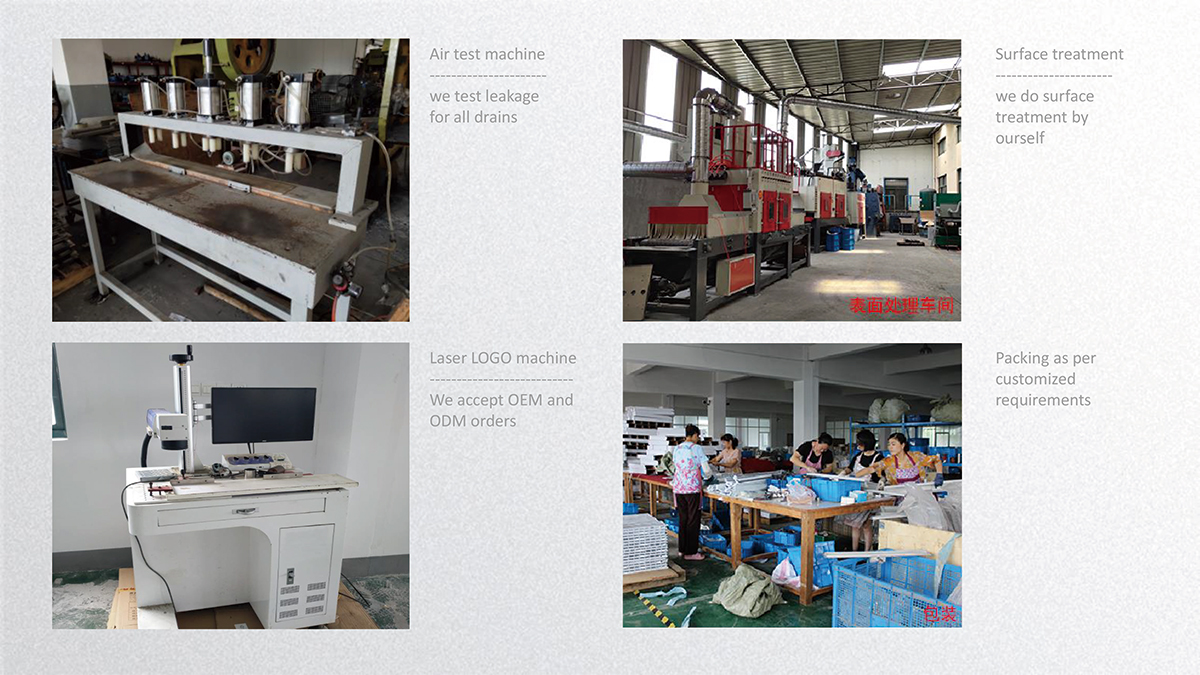
The most overlooked trend in niches for bathroom walls is the return of process visibility. Buyers increasingly want to understand how a flat material becomes a recessed wall detail. The catalog’s workshop information provides a grounded process map: laser cutting, stamping, bending, welding, shaping, air testing for drains, brushed machines, sandblasting, other surface treatment, laser logo, and export-standard packing. For shower niches, the relevant production logic centers on cutting accuracy, bending consistency, welding control, burr removal, and finish treatment.
A stainless steel niche starts as a geometric problem before it becomes a decorative product. The sheet or component must be cut cleanly, formed into a recess, joined at corners or seams where required, and finished so the visible surfaces feel intentional. The catalog lists equipment including a 1500KW Laser Cutting Machine, metal sheet cutting equipment, automatic stamping machines, stamping machines, bending machines, welding machines, laser welding equipment, machining equipment, and surface treatment facilities. These verified capabilities point to a production system that can support customized recessed bathroom details, although they do not replace the need for buyer-confirmed drawings.
The mechanism is simple but important. Laser cutting affects edge definition. Stamping and bending affect corner geometry. Welding affects seam appearance and post-weld discoloration risk. Burr removal affects installer handling and end-user cleaning safety. Brushing, sandblasting, and other surface treatment affect how the niche reads under light after installation. A mistake early in the sequence can be amplified later. A slightly inconsistent cut may become a less accurate bend. A less accurate bend may create a visible corner shift. A visible corner shift may become more obvious after a matte, brushed, or dark finish is applied.
A useful extreme scenario is the flat-sheet-to-recess fatigue model. At the initial stage, the metal is still easy to inspect because the blank edges and cut lines are visible. At the forming stage, bending introduces directional stress and creates the final geometry that must match the wall opening. At the finishing stage, the product is no longer judged only by dimensions; it is judged by how the surface reflects light, how edges feel to the hand, and whether the recess looks consistent from multiple viewing angles. This sequence explains why inspection should not wait until the final packed product only.

A cross-dimensional comparison test can separate two buyer approaches. The first buyer asks for a product photo and color option. The second buyer asks for material family, drawing confirmation, edge style, finish type, logo placement, and packaging method. The second approach is stronger because it follows the real production sequence. It also reduces the chance that a product looks acceptable in a catalog but causes hesitation when the installer sees the actual folded edge or wall contact area.
KEY TAKEAWAYS
- Early warning sign 1: the visible front edge does not appear straight when viewed against a tile-like reference line.
- Early warning sign 2: the corner finish looks different from the flat surface after brushing, sandblasting, or coating.
- Early warning sign 3: packing does not protect the visible face, increasing the risk of scratches before installation.
Finish Choice Should Be Read As A Bathroom Lighting Decision
Finish selection for a recessed shower niche is often treated as a color decision, but the stronger trend is reading finish as a lighting and perception decision. The catalog lists finish-related capabilities and options such as brushed surface, sandblasting, matte silver, black powder coated, different colors, and surface treatment handled by the factory itself. These details should be understood in relation to bathroom light, tile reflectivity, product placement, and daily cleaning visibility.
A brushed finish can reduce the visual harshness of small marks by creating a directional grain. A matte silver finish can sit quietly against light tile but may show water spots depending on lighting and cleaning habits. A black powder coated appearance can create strong contrast in modern bathrooms, but dark surfaces tend to make mineral residue or soap marks more visually noticeable under angled light. Different colors may help a niche match a product line, but they also increase the need for batch consistency and sample approval.
The physical reason is surface optics. Bathroom lighting is rarely uniform. LED ceiling lights, mirror lighting, skylight glare, and glossy tile reflections can all strike the niche at different angles. A perfectly acceptable surface under factory lighting may look different inside a tiled shower corner. The user does not inspect the niche with measurement tools; the user experiences it through shadows, reflected water marks, and contrast with shampoo bottles, tile grout, and surrounding fixtures.
The edge-case model here is the grazing-light finish exposure model. In the initial stage, a new niche appears clean because the finish is continuous and unused. In the middle stage, droplets, cleaner residue, and soap film settle on horizontal and vertical surfaces. In the high-exposure stage, angled light reveals wipe marks, small scratches, and color inconsistency more clearly than front-facing light. The material may still be functional, yet the visual acceptance changes because the surface is now part of a daily lighting environment.
A useful comparison test places two finishes under three observation conditions: straight front view, side-angle view, and wet-surface view. The straight front view checks basic appearance. The side-angle view reveals surface waviness, brushing direction, and corner inconsistency. The wet-surface view shows how water spots and residue become visible after use. This test does not require unsupported coating claims. It only asks whether the selected finish remains visually acceptable in the environment where the niche will actually live.
| Finish or Process Variable | Wet-Zone Visual Behavior | Practical Acceptance Check | Buyer Risk If Ignored |
|---|---|---|---|
| Brushed surface | Directional grain may reduce the appearance of small marks | Check grain consistency across face and edges | Mixed grain direction can look uneven after installation |
| Sandblasting | Softer reflection under strong bathroom light | View under angled light before approval | Surface may look different from catalog photos |
| Matte silver | Neutral appearance against many tile colors | Compare with tile sample and lighting condition | Water spots may become more visible in daily use |
| Black powder coated | Strong modern contrast | Inspect for scratches and edge coverage | Dark surfaces can highlight residue and handling marks |
| Different colors | Better design matching potential | Confirm sample, batch, and packing protection | Color expectation may drift from project design |

A Buyer’s Drawing Should Ask For The Wall Interface, Not Only The Front View
The final trend is a shift from product image approval to interface drawing approval. The catalog describes a customization process that moves from Concept to Drawing, Prototype, Mould, Trial production, and Products. It also identifies acceptance of customized logo and customized packing, with packing arranged according to export standards. For niches used in bathroom walls, this workflow should be applied to the wall interface, not only to the decorative front view.
A front view can show a clean rectangle, attractive finish, and suitable style. It cannot fully confirm outside dimensions, internal cavity dimensions, folded lip structure, installation direction, wall contact area, edge return, back depth, drain-independent use case, or packing protection. A buyer who wants consistent outcomes should ask for a drawing that includes the visible opening, total outer size, usable inner space, flange or folded edge details, finish requirement, logo position if needed, and packaging method for protecting exposed surfaces during shipment.
The execution protocol should begin with the intended wall condition. A buyer should define whether the niche is intended for a tiled shower wall, general bathroom wall, or another wet-zone storage location. Then the buyer should request a drawing that separates visible dimensions from embedded dimensions. After that, the sample should be checked before trial production, especially if the project requires a special finish or logo. During trial production, the same inspection points should be repeated so the approved sample does not drift into a different batch appearance.
The expected material evolution after this protocol is not a magical performance upgrade. The value is risk reduction. When the material is identified as SS304, SS316, ABS, or PVC within the confirmed scope, and the finish is defined as brushed, sandblasted, matte silver, black powder coated, or another available color, the product can be judged against a stable expectation. The wall opening, edge alignment, and visible surface become measurable acceptance points instead of subjective impressions.
Hidden cost control is also important. A more detailed drawing may take longer at the beginning, and prototype confirmation can slow the purchase cycle. Yet this cost is smaller than discovering a mismatch after wall preparation or tile installation. The buyer should avoid adding unnecessary decorative complexity unless the installation team and supplier can confirm that the shape, finish, and packing can be repeated consistently.
PRO-TIP / CHECKLIST
- Confirm whether the niche is for a tiled shower wall, general bathroom wall, or another wet-zone position.
- Separate visible front dimensions from total outer dimensions in the drawing.
- Confirm material family before discussing finish or color.
- Review edge style, folded lip, and installation direction before prototype approval.
- Inspect brushed, sandblasted, matte silver, black powder coated, or colored finishes under angled light.
- Check logo placement only after the wall interface and finish have been approved.
- Require packing protection for visible faces and exposed edges.
- Keep the approved sample as a reference for trial production comparison.
A cross-dimensional comparison test can be used before mass confirmation. One sample is reviewed as a lifestyle photo only. Another sample is reviewed using drawing, physical sample, finish observation, packing check, and installation-direction confirmation. The second sample review creates a stronger link between concept, drawing, prototype, trial production, and finished product. It also reflects the real cost structure of recessed bathroom wall products: the highest risk is not the product alone, but the product after it becomes part of the wall.
Frequently Asked Questions (FAQ)
Are shower niches out of style?
No. Shower niches remain relevant because they provide recessed storage without adding protruding shelves. The current trend is not simply whether they are stylish, but whether their size, finish, and wall interface are planned before installation.
How big are shower niches?
The correct size depends on the wall space, bottle height, tile layout, and installation plan. For custom bathroom wall niches, buyers should confirm visible opening size, internal usable space, depth, and edge structure in a drawing before production.
How to clean bathroom drain with baking soda?
Baking soda is related to drain cleaning, not shower niche selection. For niches, the safer focus is regular wiping with a suitable non-abrasive cleaner based on the confirmed material and finish, especially for stainless steel or coated surfaces.
What to do if shower drain is clogged?
A clogged shower drain is a drainage maintenance issue, not a wall niche issue. Clear visible debris first, then use a suitable drain method or professional service. Do not confuse drain performance claims with recessed shower niche specifications.
Can a shower drain be converted to a toilet drain?
This is a plumbing design question and usually requires professional assessment. Pipe size, slope, venting, code requirements, and structural conditions must be reviewed. It should not be treated as a bathroom niche or accessory decision.
How to get rid of ants in bathroom drain?
Ants around a drain usually indicate moisture, residue, or entry points. Clean the area, remove residue, and inspect sealing gaps. This topic is separate from shower niche selection, although both involve bathroom moisture management.
How to replace a pedestal sink?
Replacing a pedestal sink involves water supply, drain connection, wall support, and fixture alignment. It is unrelated to recessed shower niches, except that both require checking dimensions and wall conditions before installation work begins.