
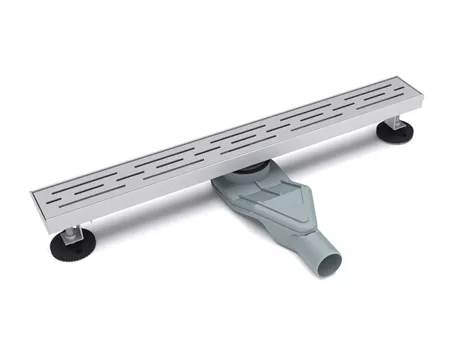
Plastic Shower Drain Grate Deep Dive
Reference Standard: Relevant material and performance testing standards for plastic molded bathroom drainage components, supported by supplier-side ISO 9001 management context and routine production inspection logic.
Short Answer
When a Plastic Shower Drain Grate Becomes the First Touchpoint of Bathroom Maintenance
A bathroom user usually notices the drain area before they understand the full drainage system. Slow water movement, surface residue, trapped hair, or a faint drain smell may all appear around the grate first. That does not mean the grate alone caused the issue, but it often becomes the first visible maintenance signal because it sits at the boundary between shower water, soap residue, hair, foot traffic, and the hidden drain body below.
For an ABS or PVC plastic grate, this first-touchpoint role matters because the part is exposed to repeated wet-dry cycles. Plastic does not behave like stainless steel or brass under surface friction, heat transfer, and detergent exposure. A metal grate may show scratches, oxidation marks, or finish change in one way; a molded plastic grate may show different warning signs, such as edge lift, surface dullness, color shift, local warping, or residue accumulation near narrow openings.
The catalog-backed data available for this product family confirms that Mondeway works with Plastic, ABS, and PVC among other bathroom accessory materials, and that the workshop includes a Plastic Injection machine. This supports one realistic manufacturing route: the grate is treated as a molded plastic bathroom component rather than a stamped or welded metal part.

A useful extreme-use model is the “daily wet contact loop.” In the early stage, water contact mainly leaves temporary residue, and the grate can still be cleaned with normal bathroom maintenance. In the middle stage, soap film and hair may begin to collect at repeated contact points, especially if the surface texture or slot geometry encourages adhesion. In the late stage, aggressive cleaning chemicals, poor ventilation, or repeated hot-water exposure can accelerate visible plastic aging. This does not prove a universal failure rate, because no specific temperature, chemical concentration, thickness, or load data is provided. It does show why buyers should request sample checks instead of judging the part from a product photo.
A cross-dimensional comparison test can be framed without inventing hidden parameters. Put an ABS/PVC grate sample beside a metal drain cover under the same cleaning routine: repeated water rinsing, mild detergent contact, air drying, and visual inspection. The plastic sample should be judged on color consistency, edge flatness, residue release, and fit stability. The metal sample would be judged by different standards, such as finish condition, burrs, corrosion marks, or surface treatment quality. This comparison helps buyers avoid treating both parts as identical just because they occupy the same bathroom location.
KEY TAKEAWAYS
- Early residue rings around the grate may appear before a full drainage complaint.
- Edge lift, uneven seating, or visible warp should be checked before bulk approval.
- A color shift after cleaning exposure is a material-behavior warning, not just a cosmetic issue.
Plastic Shower Drain Grate Material Route Versus Metal Route
A plastic route is not a cheaper copy of a metal route; it is a different manufacturing and acceptance logic. The catalog identifies a broad bathroom accessory material range including Stainless steel, Plastic, Rubber, Iron, and Brass, while the workshop material focus also lists SS304, SS316, ABS, and PVC. That matters because plastic and metal parts reach their final shape through different forming behaviors.
A stainless steel drain cover may be linked with stamping, bending, welding, surface treatment, brushing, or air leakage testing depending on the product structure. A plastic shower drain grate, by contrast, is more naturally linked to injection molding. In injection molding, the buyer should pay attention to flow marks, shrinkage, corner sharpness, sink marks, flash, color consistency, and deformation after cooling. These issues are not decorative details; they influence whether the grate sits flat, whether hair catches easily, and whether the visible surface looks acceptable in a wet bathroom.
A buyer-side mistake happens when the grate is specified only by the outer size and color. That is too narrow. The material route should be confirmed before quotation because ABS and PVC can differ in stiffness, chemical response, surface feel, and long-term appearance under bathroom use. No exact resin grade is supplied in the input data, so the correct procurement action is not to claim a precise performance value. The correct action is to request sample confirmation for material identity, molded flatness, slot finish, and cleaning response.
A practical comparison case is a three-sample approval review. Sample A is evaluated after simple water exposure. Sample B is evaluated after mild detergent cleaning and drying. Sample C is evaluated after repeated manual handling, installation, and removal. The same check sheet should not be copied from metal drain acceptance. For a plastic grate, the buyer should focus on warp, edge feel, burr-like flash, color stability, seating consistency, and visible molded defects. For a metal grate, the check sheet might focus more on surface treatment, welding marks, corrosion behavior, and brushed finish consistency.
| Route Variable | Plastic Grate Check | Metal Cover Check | Buyer Risk If Ignored |
|---|---|---|---|
| Forming method | Injection molding consistency | Stamping, bending, or welding quality | Wrong inspection criteria |
| Surface behavior | Soap film, color shift, molded texture | Finish scratches, oxidation, coating marks | Cosmetic claims after delivery |
| Fit behavior | Warping, flatness, edge seating | Metal deformation, weld distortion | Installation complaints |
| Cleaning response | Residue release, chemical tolerance | Brushed finish protection | Maintenance dissatisfaction |
| Bulk acceptance | Color batch and shape stability | Finish and surface restoration | Mixed-lot visual inconsistency |
The edge extreme scenario is a poorly ventilated rental bathroom where the grate is exposed to shampoo residue, hard-water minerals, hot showers, and irregular cleaning. In that environment, the plastic route should be judged by how the material looks and seats after repeated wet contact, not by assumptions borrowed from metal drain catalogs.
Molded Geometry Checks Before the Buyer Talks About Cleaning Convenience
Cleaning convenience is often discussed too early. Before a buyer says a plastic grate is easy to clean, the molded geometry must be confirmed. A molded grate can only be cleaned easily if the openings, edges, contact surfaces, and underside do not create unnecessary catch points. The catalog confirms a customization sequence of Concept, Drawing, Prototype, Mould, Trial production, and Products. That sequence is highly relevant because molded geometry is not something that should be guessed after the bulk order begins.
The first stage is concept review. The buyer should define whether the plastic shower drain grate is meant for residential showers, hotel bathrooms, rental properties, or project replacement parts. The second stage is drawing confirmation. Even when no exact dimension is available in the source data, a drawing should specify outer size, opening layout, edge radius, support contact zones, and basic fit relationship with the drain body. The third stage is prototype inspection. This is where the buyer should physically test whether the grate can be lifted, placed back, and seated without rocking.
The extreme fatigue model here is a repeated handling loop. In the initial phase, the user removes the grate for cleaning and places it back with normal hand pressure. If the geometry is stable, the part returns to its seat without obvious rocking. In the middle phase, soap film and small debris may increase friction at contact points, and a poorly finished edge may begin to catch dirt. In the high-stress phase, repeated bending, hot-water exposure, or cleaning pressure may reveal whether the grate has enough molded stability for its intended use. No load rating is available, so a responsible article must not assign a weight number. The correct statement is that sample-level load, fit, and handling validation should be requested before bulk procurement.
A cross-dimensional test case compares geometry against maintenance behavior. One sample is inspected immediately after molding. Another is inspected after repeated wet cleaning. A third is inspected after manual removal and reinstallation cycles. If the grate becomes harder to seat, shows edge distortion, or collects visible residue at the same geometry point, the issue may be less about “dirty bathroom habits” and more about geometry that encourages retention.
PRO-TIP / CHECKLIST
- Confirm whether the plastic route is ABS, PVC, or another specified resin before quotation.
- Request a drawing or sample photo showing the grate top, underside, edge profile, and seating area.
- Inspect molded openings for flash, sharp edges, blockage points, or uneven surfaces.
- Test whether the grate can be removed and replaced without rocking or forced pressure.
- Check color consistency across multiple samples, not only one selected photo sample.
- Review cleaning response after water, mild detergent, and air drying.
- Confirm packing method before export to reduce deformation during shipment.
- Do not assign certification claims to the grate unless the exact SKU documentation supports it.
Export-Ready Plastic Grate Acceptance Without Overclaiming Certifications
Export acceptance for a plastic shower drain grate should be narrow, documented, and product-specific. The catalog mentions ISO 9001 management, stable quality control, fast delivery capacity, OEM/ODM service, laser logo capability, export packing, and customized packing. These are useful supplier and factory context points, but they should not be stretched into product-specific certification claims.
A careful acceptance plan separates factory capability from SKU evidence. Factory capability may include equipment, material range, molding, packing, OEM/ODM handling, and general quality management. SKU evidence means the buyer has documentation or test data tied directly to the plastic shower drain grate model being purchased. If a catalog also shows certificates such as CE, CUPC, Watermark, or EN1253-1 in the broader drain context, a responsible buyer should not assume those certificates automatically apply to one plastic grate unless the document states the exact product scope.
The acceptance white-paper approach should include four practical solutions.
Solution 1: Material route confirmation before sample approval.
Execution Protocol: The buyer should confirm whether the sample is ABS, PVC, or another plastic grade, then keep that material identity consistent from sample to bulk order. The review should include the top face, underside, color, edge finish, and fit surface, not only the visible product photo.
Material expectation: A confirmed route reduces the risk of unexpected stiffness, color behavior, or cleaning response between sample and bulk production.
Hidden cost control: More detailed sample checks take time, but they prevent later disputes about whether the delivered part matches the expected wet-room behavior.
Solution 2: Molded flatness and deformation review.
Execution Protocol: Place multiple samples on a flat reference surface and check visible rocking, corner lift, or uneven seating. Then repeat after water exposure and drying.
Material expectation: ABS/PVC parts should remain visually consistent under normal bathroom conditions, but any molded plastic can reveal deformation if cooling, geometry, or packing control is poor.
Hidden cost control: Rejecting deformation early is cheaper than handling installation complaints across an export shipment.
Solution 3: Cleaning and residue-release observation.
Execution Protocol: Apply mild detergent, rinse, dry, and inspect whether residue remains at openings, corners, and underside features. Use the same observation routine for several samples.
Material expectation: A smoother molded surface and cleaner edge condition can reduce soap scum retention, though no surface treatment claim should be invented without proof.
Hidden cost control: Over-polishing or changing texture without drawing approval may change the look or fit of the grate, so cleaning performance must be balanced with geometry consistency.
Solution 4: Export packing and identity control.
Execution Protocol: Confirm packing method, logo requirement, color, quantity, and carton protection before shipment. Plastic parts should be protected from compression that could bend edges or create visible marks.
Material expectation: Proper packing helps preserve molded shape and appearance until installation.
Hidden cost control: Customized packing can increase unit handling cost, but it reduces replacement claims caused by transport deformation or mixed identification.
| Acceptance Area | Practical Test Basis | Expected Result | Caution |
|---|---|---|---|
| Material identity | ABS/PVC confirmation | Stable route from sample to bulk | Do not mix resin assumptions |
| Surface inspection | Visual review under light | No obvious defects or scratches | Cosmetic standards must be agreed |
| Flatness check | Reference surface seating | No visible rocking or edge lift | No invented load value |
| Cleaning response | Water and mild detergent | Reasonable residue release | Avoid harsh chemical overclaims |
| Packing review | Export carton and inner protection | Reduced transport deformation | Confirm custom packing in writing |
The strongest procurement position is modest but precise: verify material, molded geometry, visual condition, fit behavior, cleaning response, and packing consistency. That gives the buyer real control without overstating certifications or inventing performance data.
For related bathroom accessory context and supplier information, see Mondeway sanitary product range and manufacturing background.
Frequently Asked Questions (FAQ)
How to unclog bathroom drain around a plastic shower drain grate?
Remove the grate if it is designed to be removable, clear visible hair and debris, then rinse the opening area. If water still drains slowly, the blockage is likely deeper in the trap or pipe, not only on the grate surface.
How to close bathroom drain with a plastic grate?
A standard plastic shower drain grate is usually a cover or strainer, not a sealing plug. To close the drain, use a compatible drain stopper or closure device matched to the drain body design.
How to get smell out of shower drain?
First clean the grate surface and remove trapped hair or soap residue. If odor remains, inspect the trap water seal, pipe biofilm, and ventilation condition. The grate may reveal the smell, but it may not be the root source.
How to install shower drain trap with a plastic grate?
The trap should be installed according to the drain body and plumbing layout, not by the grate alone. Confirm that the grate fits the drain opening after trap installation and does not rock, force-fit, or block the water path.
How to remove smell from bathroom drain without damaging plastic?
Use mild bathroom cleaning methods first, rinse thoroughly, and avoid aggressive chemicals unless the plastic material compatibility is confirmed. ABS and PVC can respond differently to harsh cleaners, so overuse may cause color or surface changes.