
Waterproof Roll On Membrane Playbook for Wet Rooms
Reference Standard: Relevant material and performance testing standards may include ANSI A118.10 for bonded waterproof membranes used with tile systems, ASTM D412 for tensile properties of rubber-like materials, ASTM D4541 for pull-off adhesion, and ASTM D570 for water absorption behavior. These standards are mentioned as general reference points only because the uploaded catalog does not provide a dedicated test report for the waterproof roll on membrane.
Short Answer
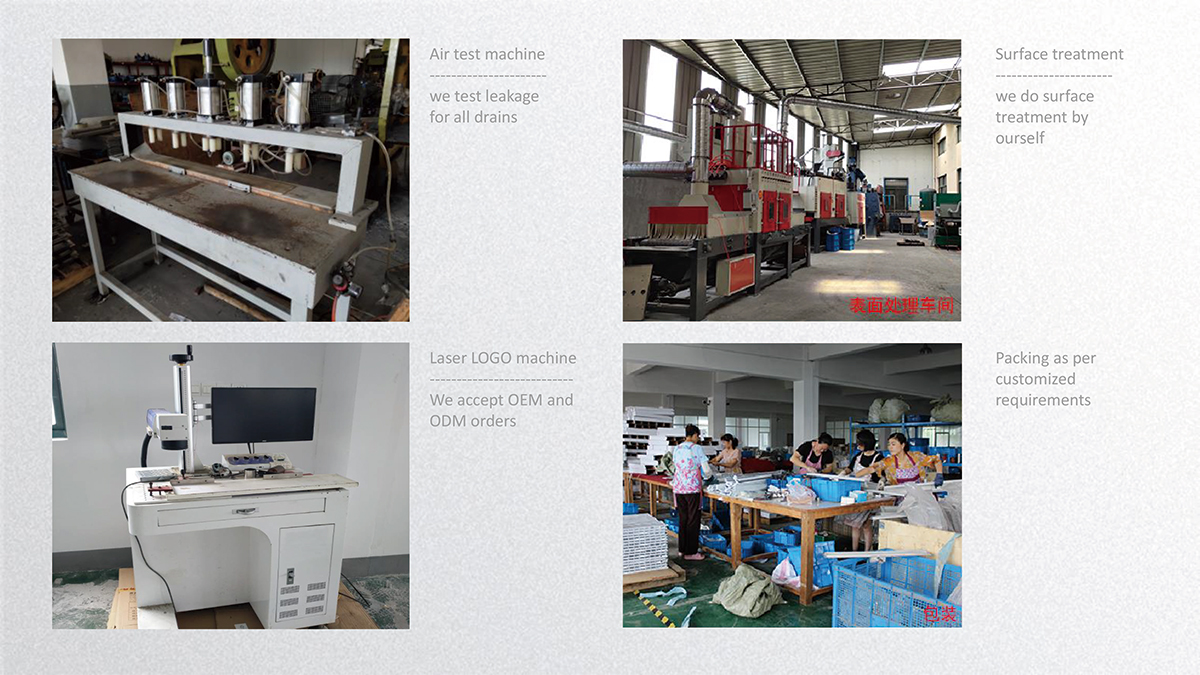
Mondeway’s catalog positions the company around shower-room accessories and bathroom-related product development, including shower drains, shower niches, shower basins, shower sets, shower tray boards, and Waterproofing Materials. It also describes a production-oriented company with OEM and ODM service capability, export markets in Europe, the USA, and Australia, and broader material experience involving stainless steel, plastic, rubber, iron, and brass. That information is useful for supplier background, but it does not replace a product-specific technical data sheet for a roll on waterproofing membrane.
The most important purchasing mistake is assuming that the phrase “waterproofing material” automatically confirms the membrane’s application thickness, elongation, tensile behavior, crack-bridging capacity, curing profile, or compatibility with tile adhesive. A liquid waterproofing membrane works only when it becomes a continuous film bonded to a suitable substrate. If the substrate is dusty, oily, cracked, damp beyond the product’s tolerance, or unevenly absorbent, the membrane may appear complete on the surface while still allowing moisture migration through weak points.
When a Wet Room Fails Before the Tile Is Installed
A wet room can begin failing before the first tile is fixed. The visible finish may look clean, but the real moisture-control system is already decided by the concealed layer beneath the tile, around the wall-floor junction, near pipe penetrations, and at the drain perimeter. In this context, a roll on shower membrane is not a decorative coating. It is a pre-tile risk-control layer designed to reduce the chance of moisture moving into the substrate after the bathroom enters service.
The catalog confirms that Mondeway’s product range includes Waterproofing Materials and that the company focuses on bathroom and shower-room accessories for markets such as Europe, the USA, and Australia. It does not confirm the membrane’s thickness, width, color, resin type, solid content, tensile strength, elongation, hydrostatic resistance, coverage rate, drying time, or application layers. That absence changes the correct way to write about the product. The article must not claim a numeric performance value. It can only explain what a buyer should verify and why the missing values matter.
A practical wet-room model can be built around three phases. In the initial phase, the substrate receives intermittent moisture from shower use, cleaning, condensation, and minor water pooling. If the membrane forms a continuous film with proper adhesion, it acts as a barrier between the tile assembly and the absorbent base. In the middle phase, repeated wet-dry cycling creates stress at transitions: floor-to-wall corners, pipe openings, and drain-adjacent edges. In the extreme phase, even a small discontinuity can become a moisture path because water follows capillary voids, surface tension channels, and microcracks rather than visible straight lines.
A useful cross-dimensional comparison is to treat the membrane like a traffic-control layer rather than a paint layer. A paint layer is judged mainly by color, finish, and surface coverage. A liquid waterproofing membrane is judged by substrate bonding, dry film continuity, joint reinforcement, crack movement tolerance, and compatibility with the next construction layer. Those two product logics are very different. A visually covered surface can still fail as a waterproofing system if the dry layer is too thin, if the substrate absorbed too much liquid binder, or if the installer skipped the second coat at a high-risk corner.
Edge extreme scenario model: imagine a compact bathroom with frequent hot showers, limited ventilation, daily floor cleaning, and a tiled shower zone that stays damp near the drain. The first risk is not a dramatic leak. It is slow moisture accumulation behind the finish layer. If the substrate is porous and the membrane has thin zones, water can enter through microvoids. The user may not see the problem until grout darkening, odor, edge staining, or tile debonding appears. This is why the membrane must be specified as part of a wet-room system rather than purchased only by product name.
| Project Stage | Visible Condition | Hidden Risk | Buyer Verification Needed |
|---|---|---|---|
| Before coating | Substrate looks clean | Dust, oil, cracks, moisture | Substrate preparation instructions |
| After first coat | Surface appears covered | Thin film or pinholes | Recommended coating layers and coverage |
| Before tiling | Membrane looks dry | Incomplete curing | Drying time and tile adhesive compatibility |
| After use begins | Tile surface looks normal | Moisture tracking behind tile | Water exposure test and inspection plan |
| During warranty period | No immediate leak | Gradual bond loss | Batch records and product data sheet |
A Liquid Barrier Has No Value Without Surface Discipline
The core physics of a paint on waterproofing membrane is simple but unforgiving: a liquid material must wet the substrate, anchor to the surface, form a continuous dry film, and resist the specific wet-room stresses that follow. If any stage is weak, the final tile assembly may inherit that weakness. Since the uploaded catalog does not provide the product formula, dry film thickness, solid content, tensile strength, elongation, or water-pressure rating, the most responsible approach is to discuss the membrane through surface discipline and verification, not claimed performance.
A positive substrate condition allows the liquid layer to spread evenly. The surface is clean, stable, free of loose particles, and within the moisture condition allowed by the supplier. Under that condition, the applied layer can form a more uniform film. A negative substrate condition produces the opposite effect. Dust creates a separation layer. Oil reduces wetting. Loose mortar becomes a weak plane. Standing water dilutes or blocks contact. Cracks create local stress concentration. Highly absorbent areas can draw liquid into the base, leaving a thinner functional layer at the surface.
The microscopic mechanism is adhesion plus film formation. Adhesion depends on contact area, surface energy, mechanical keying, and chemical compatibility. Film formation depends on the membrane’s resin chemistry, carrier evaporation or curing behavior, solid content, and applied thickness. Those details are not disclosed in the catalog for this product. That missing information is not a small editorial gap. It is a procurement gate. A buyer should ask whether the product is intended for cement board, concrete, mortar screed, gypsum-based board, existing tile, or other substrates, and whether primer is required.
A cross-dimensional test case can compare two identical shower floors. Floor A is cleaned, dried according to the supplier’s instruction, repaired at cracks, and reinforced at corners before coating. Floor B receives the same membrane name but is applied over dust, uneven suction, and a hairline crack near a pipe penetration. Even if both floors appear coated after installation, Floor A has a higher probability of continuous film behavior, while Floor B has a higher probability of localized debonding, pinholes, or crack-following leakage. The product name is identical; the system outcome is different.
Extreme pressure timeline model: during the first exposure period, water mainly tests surface continuity. The early warning signs are uneven sheen, pinholes, fish-eye patterns, or areas that dry very differently from surrounding zones. During repeated wet-dry cycling, the coating must handle swelling, shrinkage, and minor substrate movement. Weak adhesion areas may start to blister or detach at edges. During the long-use phase, recurring cleaning chemicals, temperature swings, and mechanical foot traffic above the tile layer can amplify existing defects. The membrane may not fail everywhere; localized paths are enough to create repair cost.
KEY TAKEAWAYS
- Uneven drying, pinholes, or fish-eye marks can signal poor substrate wetting before the tile is installed.
- Cracks, dust, oil, and loose mortar are not cosmetic issues; they can break film continuity.
- A supplier data sheet should confirm substrate compatibility, application layers, and curing conditions before project use.
Corners, Pipe Penetrations, and Drain Edges Decide the Real Waterproof Result
The highest-risk areas in a wet-room membrane system are rarely the wide flat zones. They are corners, pipe penetrations, wall-floor joints, door thresholds, and drain-adjacent edges. These locations concentrate movement, geometry change, water retention, and installation complexity. The uploaded catalog does not provide a membrane system drawing, pipe detail, drain interface detail, or installation dimension for waterproof roll on membrane. Because of that, the correct article angle is not to claim a complete tested system. It is to identify which details must be confirmed before the product is treated as project-ready.
A flat floor area is relatively predictable. The installer can observe coating coverage, maintain consistent tool pressure, and apply a second layer at a planned direction. A corner is different. The coating has to bend through a geometry change while maintaining continuity. A pipe penetration is more complex because the round pipe, surrounding substrate, and coating edge may move differently under thermal change or building movement. A drain edge adds a further challenge because it is a water-collection zone and a construction interface between waterproofing, tile, adhesive, drain body, and maintenance access.
This article intentionally avoids repeating old drain-centered angles such as outlet geometry, drain slope coordination, flange-to-membrane compatibility, or air leakage validation. Those are valid topics for other product pages, but they would duplicate prior content logic. For this membrane article, the technical focus is liquid film continuity at irregular nodes. The question is not whether a drain has a specific outlet shape. The question is whether the membrane can remain continuous and bonded where the bathroom system changes direction, shape, and material.
A practical node stress comparison can be made between a straight wall and a pipe opening. On a straight wall, stress distribution is broad and relatively uniform. Around a pipe opening, stress is circular and concentrated. The coating may become thinner at the edge if applied too quickly. If the pipe surface is not compatible with the coating, adhesion may be weaker than on the surrounding substrate. If no reinforcement detail is provided, a hairline gap may remain between the pipe and membrane layer. That gap can become a moisture path even when the rest of the wall is properly coated.
Edge extreme scenario model: consider a shower corner exposed to daily water splash, body wash residue, warm vapor, and occasional cleaning chemicals. In the initial stage, a poorly detailed corner may show no visible defect. In the middle stage, tiny cracks can develop along the junction where movement and drying shrinkage concentrate. In the extreme stage, water finds a narrow path behind the tile. The finished surface may hide the failure until staining, hollow tile sound, or odor appears. This is why membrane specification should include reinforcement rules for corners, pipe penetrations, and drain perimeters.
PRO-TIP / CHECKLIST
- Request the current TDS before quoting any bathroom waterproofing membrane for a project.
- Confirm the approved substrates and whether primer is required.
- Ask for the recommended wet film and dry film thickness.
- Verify the number of coats and the direction of each application layer.
- Confirm drying time before tile adhesive is applied.
- Request corner, pipe, and drain-edge reinforcement instructions.
- Ask whether the product has water-exposure or immersion test data.
- Keep batch number, packaging label, and sample records for traceability.
Waterproof Roll On Membrane Specification Checks Before Project Use
A buyer should not treat a waterproof membrane for bathroom floor or shower walls as project-ready until the supplier provides documentation that matches the intended installation. Mondeway’s catalog gives useful company-level context: OEM and ODM service, ISO 9001 management, stable quality control, CE, CUPC, Watermark references, export standard packing, customized packing acceptance, and a broader bathroom accessory product range. These statements show supplier background, but they do not prove the specific membrane’s formula, test performance, or installation suitability.
A project-ready verification package should include TDS, MSDS, substrate list, primer requirements, coating consumption, wet film thickness, dry film thickness, recoating interval, drying time, tile adhesive compatibility, water test method, storage conditions, shelf life, packaging size, batch code system, and sample approval route. If those items are missing, the buyer still has an information gap even if the product appears suitable by name. For project procurement, missing data should be handled as a risk, not as a writing problem.
Solution 1: Documentation-first approval. Execution Protocol: before sample purchase, request the product data sheet, safety data sheet, application guide, packaging label photo, and any available water-resistance or adhesion test results. Compare the intended bathroom substrate with the supplier’s approved substrate list. If the substrate is not listed, ask for a written confirmation rather than relying on verbal claims. Material expected evolution: once the correct substrate and layer build are confirmed, the membrane has a clearer chance of forming a continuous and compatible film under the tile assembly. The measurable improvement is not a guaranteed performance value; it is a reduction in specification uncertainty. Hidden cost and side-effect control: documentation review may slow the quotation stage, but it prevents a larger cost caused by wrong application, incompatible tile adhesive, or unverified curing time.
Solution 2: Substrate-controlled sampling. Execution Protocol: apply the sample on the same type of substrate that will be used in the project, not on a random demonstration board. Prepare one clean area and one intentionally challenging area with different absorption or texture, then compare film formation, drying behavior, and adhesion. Material expected evolution: a suitable membrane should show more stable spreading, fewer pinholes, and stronger apparent bonding on the properly prepared substrate. Any large difference between test zones indicates that surface discipline is a major variable. Hidden cost and side-effect control: sample testing uses time and material, but it helps reveal whether the installer needs primer, crack repair, or stricter cleaning before full-scale work.
Solution 3: Node-detail validation. Execution Protocol: create a small mock-up with a corner, a pipe penetration, and a drain-adjacent edge. Apply the membrane according to the supplier’s written instructions and document every layer with photos. Do not approve the product only on a flat board. Material expected evolution: if the system is suitable, the membrane should maintain continuous coverage through geometry changes without obvious thinning, cracks, or separation at edges after curing. Hidden cost and side-effect control: mock-ups require coordination, but they reduce the risk of approving a coating that looks acceptable on flat surfaces yet performs poorly at the exact locations where wet rooms usually fail.
Solution 4: Batch and packing traceability. Execution Protocol: check whether every pail, bucket, or roll-on packaging unit includes product name, batch number, production date, shelf life, storage instruction, and application reference. Keep samples from the approved batch when possible. Material expected evolution: traceability does not change film chemistry, but it improves process control. If a complaint occurs, the buyer can identify whether the issue came from product variation, storage, installation, or substrate conditions. Hidden cost and side-effect control: strict batch tracking adds administrative work, but it protects distributors, contractors, and project owners from disputes that cannot be resolved after the bathroom is tiled.
| Verification Item | Common Test Logic | Acceptance Concern | What the Buyer Should Request |
|---|---|---|---|
| Adhesion | Pull-off or peel comparison | Bond loss at substrate | Approved substrate list and adhesion data |
| Film build | Wet and dry thickness control | Thin spots and pinholes | Recommended coats and thickness range |
| Water exposure | Immersion or ponding simulation | Moisture passage | Water-resistance test method |
| Flexibility | Bend or crack-bridging logic | Corner cracking | Elongation or crack-bridging data |
| Compatibility | Tile adhesive contact check | Debonding or softening | Adhesive compatibility statement |
| Storage | Shelf-life and temperature control | Thickening or separation | Packaging and storage instructions |
A buyer may also reference external organizations and standards bodies when building an internal approval protocol. ANSI A118.10 is commonly associated with bonded waterproof membranes used with tile installations, while ASTM methods such as ASTM D412, ASTM D4541, and ASTM D570 are relevant to tensile behavior, adhesion, and water absorption-style evaluation. These are not presented as confirmed product certifications. They are practical reference points for asking better supplier questions and avoiding unsupported claims.
The most professional conclusion is cautious but useful: the catalog confirms a bathroom-accessory supplier background and a waterproofing material category, while the membrane-specific engineering data remains unconfirmed. That means the product should be discussed through verification gates. A serious buyer should not only ask whether the material is waterproof. The better question is whether the supplier can prove the membrane’s substrate compatibility, application build, node treatment, curing profile, water-exposure performance, and traceable batch control for the exact wet-room project.
For broader supplier context, buyers can review the Mondeway bathroom accessory range and then request product-specific waterproofing documentation before making project decisions.
Frequently Asked Questions (FAQ)
Are shower drain covers universal?
No. Shower drain covers vary by size, shape, fixing method, material, and drain body design. A waterproofing membrane should not be specified only around a “universal” assumption. The drain cover, drain body, and waterproofing detail should be checked together before installation.
Does a shower drain need a P-trap?
In most plumbing systems, a shower drain needs a trap to block sewer gas and maintain sanitary performance. The waterproof roll on membrane does not replace plumbing design. It only helps control moisture at the surrounding wet-room surface when applied correctly.
How do you remove a bathroom drain plug?
The removal method depends on the drain plug structure, such as lift-and-turn, push-button, or screw-fixed types. Before removing any drain component in a waterproofed shower area, avoid cutting or tearing the surrounding membrane layer unless a repair method is already planned.
How do you tap into a PVC drain line?
Tapping into a PVC drain line requires correct pipe sizing, slope, fitting selection, code compliance, and watertight joining. A roll on waterproofing membrane is not a substitute for a proper plumbing connection. It only protects surrounding wet-area substrates after pipe work is correctly completed.
Are floor drains required in commercial restrooms?
Requirements depend on local building code, restroom use, cleaning method, and plumbing design. In any commercial wet area, waterproofing details should be coordinated with floor drains, wall-floor joints, and maintenance expectations before tile installation begins.
Can a roll on waterproofing membrane be used under tile?
It may be used under tile only if the supplier confirms compatibility with the substrate, tile adhesive, coating thickness, curing time, and wet-area exposure. The uploaded catalog does not provide those membrane-specific values, so buyers should request a TDS and installation guide first.
What should be checked before buying a bathroom waterproofing membrane?
Check the product data sheet, safety data sheet, approved substrates, primer requirement, coating layers, dry film thickness, drying time, water test data, packaging size, batch traceability, and sample testing process. Without these items, project risk remains difficult to control.