
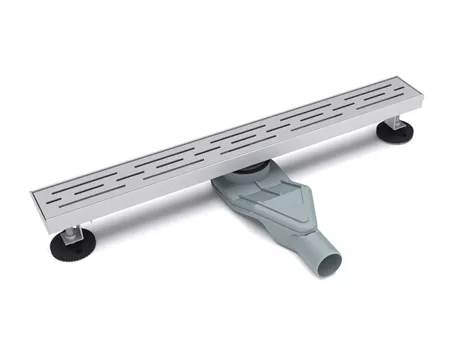
What linear drain materials perform reliably in high-humidity shower environments?
Comparing linear drain materials usually starts when corrosion marks, surface discoloration, or uneven water flow begin to appear in wet-area showers. In high-humidity bathroom environments, material choice quietly determines whether a drain remains stable over years of daily use or becomes a recurring maintenance concern for project managers and contractors.
Why material choice matters for linear drains in wet-area bathrooms
Linear drains operate continuously in contact with water, cleaning chemicals, and trapped debris. Unlike decorative bathroom fixtures, their performance depends less on appearance and more on how the material behaves under moisture, temperature variation, and repeated flow cycles. When material properties are mismatched with the environment, corrosion pitting or subtle deformation can disturb alignment, reducing drainage efficiency long before a visible failure is noticed.
For commercial and residential shower projects, this creates a familiar dilemma: materials that look similar on specification sheets can behave very differently once installed in tiled wet zones.
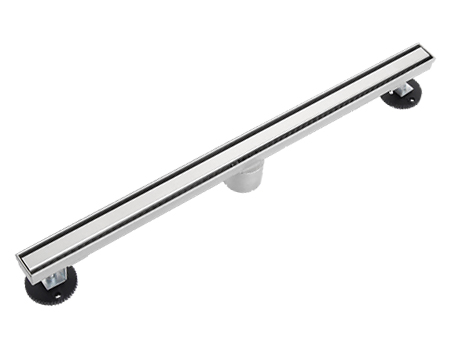
Common linear drain materials used in modern shower projects
Most linear drains used today fall into three material categories: stainless steel, brass-based alloys, and engineered polymers. Each is selected for different reasons, but their long-term behavior under moisture exposure differs in measurable ways.
Stainless steel is typically chosen for its corrosion resistance and structural rigidity. Brass alloys are valued for machinability and weight, while polymers prioritize cost efficiency and chemical resistance. None of these options are universally “better”; performance depends on how each material responds to the specific stresses of wet-area shower environments.
How corrosion pitting and staining develop over time
Corrosion pitting often begins microscopically. In high-humidity bathrooms, residual water sits on drain surfaces after each use. When combined with cleaning agents or mineral deposits, this environment accelerates localized corrosion on susceptible materials. Over time, pits deepen, surface finish degrades, and debris adherence increases.
Surface staining usually follows. While staining may appear cosmetic, it often signals early-stage surface breakdown. For project managers overseeing multiple installations, these signs frequently correlate with higher cleaning frequency and customer complaints rather than immediate structural failure.
Material deformation and its impact on drainage alignment
Beyond corrosion, material stiffness plays a critical role. Linear drains must maintain precise alignment with surrounding tiles and slope geometry. Materials with lower rigidity may experience slight deformation under load or thermal cycling. Even minimal warping can interrupt water flow paths, creating pooling or uneven drainage.
This is one reason why material engineering, rather than nominal size or outlet orientation, becomes a decisive factor during specification for long-term projects.
Performance trade-offs between stainless steel, brass, and polymer drains
Stainless steel generally offers the most stable balance between corrosion resistance and dimensional integrity. Its passive oxide layer resists pitting when properly specified for bathroom use. Brass-based drains can perform well initially but may require protective coatings to slow surface degradation in humid environments.
Engineered polymers resist chemical attack but rely heavily on design thickness and reinforcement to prevent deformation. In lower-load residential settings they may perform adequately, but in high-traffic commercial showers their limits become more apparent.
How testing standards validate real-world performance
To move beyond assumptions, linear drain materials are commonly evaluated through corrosion resistance testing, flow rate testing, and surface durability assessments. These test types simulate prolonged exposure to moisture and repeated water flow cycles, offering measurable indicators of long-term behavior.
For floor drains used in buildings, standards such as EN 1253 floor drain testing define how drainage performance and material integrity should be verified. Material evaluations may also reference broader material testing frameworks published by ASTM International to assess corrosion and surface durability.
While these standards do not guarantee zero maintenance, they provide a consistent benchmark for comparing material options under controlled, repeatable conditions.
Choosing materials based on project type and usage intensity
Residential showers typically experience lower continuous load but still face daily moisture exposure. In these settings, material choice often balances cost with reasonable corrosion resistance. Commercial restrooms, hotels, and gyms introduce higher use frequency, heavier cleaning routines, and greater expectations for visual consistency.
For these higher-demand scenarios, many specifiers turn to stainless steel linear drains validated under recognized testing protocols. When reviewing options, consulting a more complete overview such as full selection considerations for linear drain systems can help place material choice within the broader context of outlet configuration, installation method, and maintenance planning.
Maintenance implications linked to material behavior
Material performance directly influences maintenance routines. Surfaces prone to staining or pitting often trap debris more easily, increasing cleaning effort. Rigid materials that retain alignment reduce the likelihood of localized pooling, which otherwise accelerates residue buildup.
From an operational standpoint, choosing materials that remain stable under high-humidity exposure lowers long-term maintenance costs and reduces the risk of premature replacement.
How to reduce risk during specification and installation
Risk reduction begins with understanding material limits. Confirming how a drain material has been evaluated for corrosion resistance, flow stability, and surface durability provides a clearer expectation of service life. Installation accuracy also matters; even the best material cannot compensate for poor slope or improper support.
For teams specifying linear drains across multiple projects, requesting material data and understanding how performance is verified under wet-area conditions is often more effective than focusing solely on finish or price tier.
Long-term reliability perspective
Linear drain materials do not fail overnight. Their behavior unfolds gradually under the combined influence of moisture, load, and cleaning cycles. When corrosion pitting and deformation are treated as predictable risks rather than surprises, material selection becomes a controllable design decision.
Linear drain materials that demonstrate resistance to surface degradation, maintain alignment, and align with established testing practices tend to deliver more predictable performance in high-humidity bathroom environments. Over time, this consistency is what separates drains that quietly do their job from those that repeatedly draw attention for the wrong reasons.
This content is developed based on material performance analysis, standardized drainage testing references, and real-world application scenarios related to high-humidity bathroom wet-area environments. Product behavior discussed here reflects commonly used corrosion resistance, flow rate, and surface durability test methods applied within sanitary ware engineering practice.