
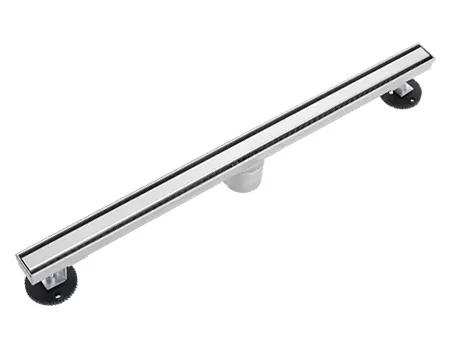
Can a linear drain handle multiple shower heads at the same time?
Water pooling often raises questions about whether a linear drain can keep up once several shower heads are running together. In multi-head installations, combined discharge volume, channel geometry, and floor slope interact in ways that are not always obvious during design, especially in high-humidity shower environments where peak flow happens in short bursts rather than steady streams.
Why multi-head showers stress drainage capacity differently
A single shower head typically produces a predictable flow rate, and most standard shower drains are sized around that assumption. When two, three, or even more outlets are activated simultaneously, the drainage system experiences short-term flow spikes. These spikes matter because water does not arrive evenly; it reaches the floor as overlapping spray patterns that converge toward the drain channel at once.
In residential master bathrooms and commercial shower rooms alike, this convergence can overwhelm point drains that rely on a small inlet area. Linear drains were developed partly to address this limitation by spreading intake across a longer opening, but their real-world performance still depends on sizing, outlet configuration, and installation accuracy.
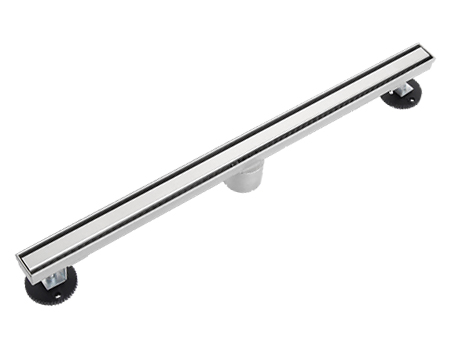
The engineering advantage of a linear drain lies in its continuous channel geometry. Compared with point drains, the effective intake area is larger, allowing surface water to enter along the full length instead of funneling toward a single opening. This design can accommodate higher instantaneous flow, but only when matched with the correct outlet size and slope.
What actually causes overflow when multiple shower heads run
Overflow in multi-head showers is rarely caused by the drain type alone. The most common failure mode is an undersized drain channel combined with an outlet that cannot evacuate water as quickly as it arrives. When this happens, water backs up temporarily, spreads across the floor, and may reach thresholds or adjacent dry areas.
Improper slope is another frequent contributor. Linear drains depend on a consistent gradient across the shower floor to guide water efficiently. Even a small deviation can create localized pooling zones, which become obvious only when total flow increases. Under single-head use, these zones may go unnoticed.
Channel length versus outlet capacity
Extending the channel length increases surface intake, but it does not automatically increase total discharge capacity. The outlet diameter, horizontal or vertical orientation, and downstream plumbing all limit how much water can pass through at once. In multi-head scenarios, designers must balance channel length with outlet specification rather than assuming one compensates for the other.
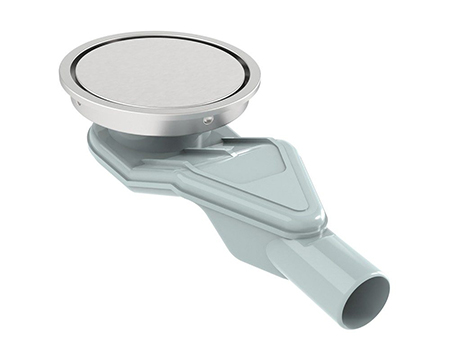
This is why some installations with long linear drains still experience brief surface flooding. The inlet accepts water quickly, but the outlet and connected piping form a bottleneck during peak discharge moments.
How flow rate testing informs real-world performance
To understand whether a linear drain can handle multiple shower heads at once, engineers rely on flow rate tests under continuous water discharge. These tests simulate sustained high inflow and measure how quickly water is evacuated without surface accumulation.
While residential users may never run all heads continuously for long periods, testing under these conditions establishes a safety margin. In practice, a drain that performs well in controlled flow testing is more likely to tolerate real-world usage variations without visible pooling.
Relevant standards for shower drain performance
In many regions, floor and shower drains are evaluated under standards such as EN 1253 Floor Drains for Buildings. This framework defines test methods for flow capacity, water depth above the grate, and resistance to backflow.
Although EN 1253 does not specifically mandate multi-head shower scenarios, its flow benchmarks provide a reference point. When selecting a linear drain for high-humidity shower environments with intermittent peak flow, confirming alignment with such standards helps reduce uncertainty.
Residential versus commercial multi-head shower considerations
Residential master bathrooms often feature two or three shower heads used intermittently. In these settings, brief pooling may be tolerated visually but still raises concerns about long-term waterproofing and slip risk. Selecting a linear drain with adequate flow margin minimizes these secondary risks.
Commercial shower rooms, by contrast, experience heavier usage patterns and less predictable user behavior. Multiple heads may run simultaneously for longer durations, making conservative sizing more important. Here, linear drains are often paired with larger outlets and verified slopes to ensure stable performance.
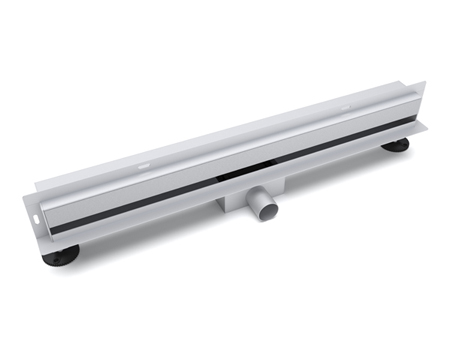
In both cases, the drain must be considered as part of a system rather than a standalone component. Downstream pipe diameter, venting, and connection layout all influence whether the linear drain’s surface advantage translates into real drainage capacity.
Common misjudgments during specification and installation
One frequent assumption is that any linear drain automatically supports multiple shower heads. In reality, linear drains vary widely in internal channel depth, outlet size, and recommended slope tolerance. Treating them as interchangeable products increases the chance of mismatch.
Another misjudgment involves focusing only on aesthetic integration. While flush installation and tile alignment matter, performance parameters must take priority in multi-head scenarios. A visually seamless drain that cannot evacuate peak flow undermines the entire shower design.
Using the buyer guide to reduce selection risk
When questions arise about combined flow from multiple shower heads, it often signals that the project has reached a decision point. Rather than adjusting individual components in isolation, reviewing the full selection logic for linear drains can clarify which configurations align with the intended use case.
A more comprehensive reference can be found in the Linear Shower Drain buyer guide, which outlines sizing considerations, outlet options, and installation factors across residential and commercial applications. This broader view helps ensure that short-term flow spikes are accounted for early rather than corrected later.
How to verify capacity before installation
Before finalizing a specification, it is worth confirming how the selected linear drain has been validated. Requesting flow rate test data, checking compliance with relevant standards, and reviewing recommended slope ranges all contribute to predictable performance.
In high-humidity shower environments with intermittent peak flow, these checks act as a safeguard. They reduce reliance on assumptions and replace them with measurable criteria that installers and project managers can agree on.
Standards, testing, and long-term reliability
Reliable multi-head shower drainage depends on aligning product design with test methods that reflect real use. Flow rate tests under continuous discharge reveal how a linear drain behaves when surface water arrives faster than average. In combination with standards such as EN 1253, these tests define acceptable performance boundaries.
Over time, drains that operate within these validated limits tend to maintain consistent behavior, even as usage patterns vary. Those installed at the edge of their capacity, by contrast, are more sensitive to minor changes in slope, debris accumulation, or plumbing resistance.
This content is developed based on material performance analysis, standardized plumbing test references such as EN 1253 and general flow rate testing practices, and real-world application scenarios related to high-humidity shower environments. Product specifications and testing data used for this analysis are derived from internal documentation and publicly available standards.