
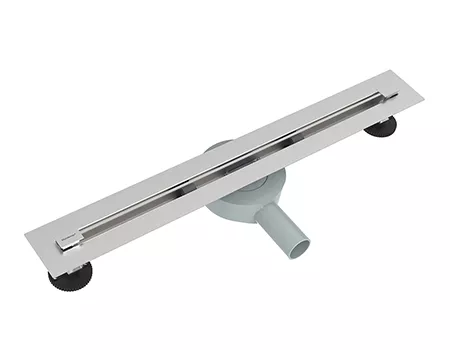
Reference Standard: Relevant material and performance testing standards should be reviewed at the exact-model and project level.
Vertical Niche Specification Snapshot
A shower niche vertical can be screened at a product level from the available documentation: stainless steel is identified as the material, the application is the shower room, and the product presentation includes a portrait-oriented shower niche. The same documentation does not publish a model number or confirm the search-driven size labels 12×20 or 16 x 28, so those dimensions should be treated as requirements to verify rather than established product specifications. :contentReference[oaicite:0]{index=0}
For buyers, designers, and installers, the useful distinction is simple: orientation is one specification question; exact dimensions are another. A niche can look vertical without that image proving its width, height, depth, opening size, edge treatment, shelf arrangement, or installation method. Those details affect whether a selected unit will actually fit the intended wall layout, so they should come from an exact drawing, datasheet, or model-specific confirmation.

Stainless Steel, Shower-Room Use, and Vertical Form
The available product information supports three practical screening points. First, the niche is identified within a stainless steel shower niche category. Second, its intended environment is the shower room. Third, the product material presents the niche in a portrait-oriented form, which is consistent with discussing a vertical niche at a general product level.
Those points are useful because they help establish what type of product a buyer is looking at before model-level selection begins. Stainless steel distinguishes the base material family. Shower-room use establishes the application context. Portrait orientation helps separate a tall-format niche concept from a clearly horizontal presentation.
What those points do not do is define the complete installation interface. A product photo is not a dimensional drawing. Perspective, cropping, camera angle, and image scaling can change how tall, wide, or deep an item appears. Even when a niche is visibly taller than it is wide, that appearance cannot safely establish a specific opening size or external dimension.
The same caution applies to internal geometry. A photograph may show a cavity and perhaps visual edge lines, but it does not establish the exact niche depth, the thickness of any flange, the dimensions of the visible frame, the number or position of shelves, the wall build-up expected around the niche, or the allowable installation tolerance. Those details belong to the selected model, not to the general category.
This distinction matters early in a project. If a buyer only needs to confirm that a stainless steel, vertically presented shower niche exists in the product range, the available product material can support that screening step. If the buyer needs to cut an opening, coordinate tile joints, align the niche with a valve or shower fitting, or reserve a specific wall zone, product-level information is no longer enough.
NINGBO MONDEWAY is presented in the supplied material as a production-oriented company engaged in R&D and manufacturing of shower accessories, including floor drains, stainless steel shower niches, shower basins, shower chairs, shower handles, and shower tray boards. That company context supports requesting exact shower-niche model information through its broader shower accessory portfolio without converting unlisted dimensions into published specifications.
Does a Vertical Shower Niche Confirm 12×20 or 16 x 28?
No. The search terms 12×20 shower niche and 16 x 28 shower niche describe size-oriented buyer intent, but the available documentation does not state either dimension for the pictured niche and does not provide a model number tying either size label to that product.
This is a common specification trap in search-led sourcing. Search engines often place general product terms and size-specific phrases beside one another, which can make them appear interchangeable. They are not. “Vertical” describes orientation or form. “12×20” and “16 x 28” describe exact dimensional requirements. A buyer should never move from the first statement to the second without model documentation.
The practical workflow is to treat the keyword as an input requirement. If a project calls for a 12×20 shower niche, ask whether the selected model is documented at that size. If a project calls for a 16 x 28 shower niche, ask the same question for that model. If the response is supported by a drawing or datasheet, the dimension can then become part of the project decision. Until that happens, it remains a search requirement, not a confirmed catalog fact.
There is another reason to keep these layers separate: an external size label may not tell the whole installation story. Buyers may also need to know whether the stated size refers to the visible opening, the outer body, the recessed cavity, or another reference point. The available material does not define those conventions for a specific model, so the safest path is to ask for a drawing that labels the measurement points.
Confirm These Before Comparing Sizes
- Confirm the exact model identification before using any dimensional claim.
- Ask for a model drawing or datasheet rather than estimating from a product image.
- Verify what each stated dimension measures: overall body, visible opening, or another reference.
- Keep vertical orientation separate from the exact 12×20 or 16 x 28 size requirement.
- Check the selected model against the planned wall opening and finished layout.
Product-Level Facts vs Exact-Model Dimensions
A useful way to prevent specification mistakes is to divide the decision into two layers.
| Decision layer | What can be used now | What still needs exact-model confirmation |
|---|---|---|
| Product category | Stainless steel shower niche | Specific model code |
| Application | Shower-room use | Installation method |
| Form | Portrait-oriented / vertical presentation | Exact width, height, and depth |
| Wall coordination | General niche concept | Opening size and edge or flange geometry |
| Internal configuration | Recessed storage function at category level | Shelf layout and internal dimensions |
| Finish and fit | Not sufficiently defined in the available product material | Finish details, tolerances, and interface dimensions |
The first layer is appropriate for early screening. It answers: “Is this the right general type of product?” The second layer answers: “Will this exact unit fit this exact project?” Confusing those questions is how seemingly minor assumptions become costly coordination problems.
For example, a designer may know that the project calls for a tall-format stainless steel recess in a shower wall. That is enough to search for a vertical shower niche. It is not enough to release wall framing or tile-setting dimensions. At that point, the selected model needs to be identified and its documented dimensions reviewed.
The same logic helps procurement teams compare quotations. A supplier response that simply repeats “vertical stainless steel shower niche” is still incomplete if the RFQ requires a specific size. A useful quotation package should identify the model and provide enough documentation to compare the requested size against the offered size. If the project is searching specifically for a 12×20 or 16 x 28 shower niche, that requirement should appear explicitly in the request and be answered explicitly in the model documentation.
This approach also avoids over-reading finish or installation details from imagery. The available product material is sufficient to support stainless steel construction and shower-room context, but it does not provide a model-specific finish schedule, flange detail, edge profile, recess depth, or installation tolerance. Those should remain open questions until the exact model is documented.
Model Information to Obtain Before Selection
Start with model identity. A product name or category description is not enough for size-based selection. Ask for the exact model reference used in the quotation, drawing, packing information, and purchase order. This creates a stable reference for every later dimension and installation discussion.
Next, request the stated overall dimensions and the associated measurement drawing. Do not rely on the aspect ratio of a photograph. A drawing should make clear where the measurement starts and ends and should separate external product dimensions from any internal cavity dimensions when both matter to the project.
Then request the installation-interface information relevant to the wall condition. The available documentation does not state opening size, edge configuration, flange geometry, or installation tolerances, so those points should be confirmed for the selected model. The important question is not merely whether the niche is vertical, but whether the documented model interfaces correctly with the planned wall opening and finished surface.
Finally, compare the exact model against the project requirement. If “12×20” or “16 x 28” is a hard requirement, place that requirement beside the model drawing and verify it directly. If the dimensions do not match, treat that as a model-selection issue rather than trying to reinterpret the product image or general category wording.
Vertical Shower Niche Model-Confirmation Checklist
- Record the exact model number or model identifier offered.
- Obtain a dimensioned model drawing or datasheet.
- Confirm the stated overall width and height using the drawing’s labeled reference points.
- Confirm the niche depth if it affects the planned wall build-up.
- Verify the required wall opening or installation interface for that model.
- Confirm the edge or flange configuration where it affects the finished wall.
- Check the internal layout or shelf arrangement if storage configuration matters.
- Verify whether a requested 12×20 or 16 x 28 size is actually documented for the selected model.
- Match the documented dimensions against the intended shower-room layout before ordering.
- Keep the approved drawing with the quotation and purchase record so the selected specification remains traceable.
A vertical shower niche is easiest to select when general product facts and exact-model facts are kept separate. The available material supports stainless steel construction, shower-room application, and a portrait-oriented niche presentation. It does not support assigning 12×20, 16 x 28, or any other exact dimensions to the pictured product. Buyers can therefore use the current information for category screening, then request model-specific documentation before making a size-based decision.