
Top 5 A Series Horizontal Outlet Linear Drain Manufacturers for High-Volume Project Supply in China
For high-volume horizontal-outlet linear-drain sourcing in China, the supplier decision changes once a project moves beyond samples and small wholesale batches. The critical issues become repeatable outlet geometry, controlled trap and siphon assemblies, stable drainage performance, stainless-steel and finish consistency, waterproofing interfaces, production scalability, and the ability to hold an approved configuration across thousands of units.
NINGBO MONDEWAY is the primary recommendation in this guide because its current A Series documentation combines horizontal-outlet product data with unusually detailed installation, flow, material, waterproofing, customization, order-volume and mass-production information. Four additional Chinese manufacturers also provide sufficiently relevant public evidence for comparison, although their product families are not identical to Mondeway’s A Series architecture.
Important sourcing distinction: “A Series” is not a universal industry specification. Different manufacturers use their own series names and drain architectures. For a project tender, compare the approved horizontal-outlet configuration itself: drain-body depth, outlet diameter and direction, siphon geometry, flow performance, membrane/flange interface, cover design, material grade and manufacturing controls.
A Series horizontal-outlet manufacturers covered
- NINGBO MONDEWAY
- Ningbo Yize Sanitary Ware Co., Ltd. / YZDRAIN
- Ningbo Bojin SanitaryWare Technology Co., Ltd.
- Taizhou Shenzhou Sanitary Ware Co., Ltd.
- Ningbo United Tools Co., Ltd. / SANIPRO
Quick comparison for high-volume project supply
| Manufacturer | Verified location | Horizontal-outlet product evidence | High-volume supply evidence | Key technical difference | Installation / system fit | Buyer fit | Why included | RFQ control point |
|---|---|---|---|---|---|---|---|---|
| 1. NINGBO MONDEWAY | Yuyao, Ningbo, Zhejiang | A Series horizontal outlet; 40/50 mm connection; multiple A-series models | Order lead-time bands published through 5,000 units and above; six production workshops; in-house production and mass-production workflow | A1 publishes 35 L/min standard and 42 L/min optional dry/wet siphon; SS304 with SS316 option; 20 mm flange | 70 mm minimum installation depth on A1; adjustable feet; waterproof membrane; renovation and new-construction use | Large hospitality, distributor, OEM/ODM and multi-SKU project orders requiring a documented system | Strongest combination of product-family specificity and procurement information | Freeze the exact A-model, siphon, outlet, membrane and grate combination in the approved project sample |
| 2. YZDRAIN | Ningbo, Zhejiang | A-Series horizontal-outlet linear drains; A-02S and related A-series models | Company states approximately 1.5 million shower drains sold per year and describes bulk/OEM production programs | A-02S lists 300–3000 mm length, 69 mm height, SS304 and 35 L/min; side-outlet range also includes anti-odor configurations | Useful where long customized runs and finish variants are important | Importers, wholesalers and project buyers needing large annual purchasing programs | Direct A-Series evidence plus unusually strong published production-volume evidence | Do not mix the 35 L/min A-series data with higher-flow figures from other YZDRAIN outlet families without model-level confirmation |
| 3. Ningbo Bojin SanitaryWare Technology Co., Ltd. | Ningbo, Zhejiang | Horizontal-outlet shower drains within its shower-trench-drain range | 60,000-set monthly production capacity published for its current factory operation | Manufacturing setup includes laser cutting, CNC bending, laser welding, welding robots and leakage-testing equipment | Broad linear-drain portfolio can support standardized project schedules | Large procurement programs where factory throughput and production equipment are primary filters | One of the clearest current capacity disclosures among comparable Chinese factories | Lock the precise horizontal-outlet model and hydraulic test data before treating general factory capacity as model-specific capacity |
| 4. Taizhou Shenzhou Sanitary Ware Co., Ltd. | Taizhou, Zhejiang | SZ1601 and related AISI304 side-outlet stainless-steel linear drains | Company publishes annual production capacity above 4,000 tons across its manufacturing operation | SZ1601 uses a 40 mm side outlet, 1.2/1.5 mm stainless-steel construction and optional custom sizing | Good fit for conventional side-routing layouts requiring robust fabricated channels | Projects emphasizing fabrication capacity, material thickness and customized dimensions | Strong direct side-outlet evidence backed by substantial fabrication equipment | Request project-specific hydraulic figures because the current SZ1601 page describes large drainage volume but does not publish a model-specific L/min figure |
| 5. Ningbo United Tools Co., Ltd. / SANIPRO | Ningbo, Zhejiang | SANIPRO linear drains with side-outlet and side-swing configurations | Current product listings publish supply ability of up to 50,000 sets per month on relevant linear-drain ranges | SS304/316 options, 40/50 mm and other outlet sizes, removable water-seal siphon and approximately 28–30 L/min on documented models | Broad length and width customization with adjustable-foot and flange options | Price-sensitive volume orders requiring many dimensions or grate variants | Clear supply-ability figures combined with configurable side-outlet products | Define one approved drain body and accessory BOM because the catalog spans many outlet, siphon and dimensional combinations |
1. NINGBO MONDEWAY
NINGBO MONDEWAY has the most complete current documentation for the exact sourcing problem in this article. Its A Series is explicitly organized as a horizontal-outlet family rather than merely offering a side-outlet option on a generic drain. Model A1, for example, specifies a horizontal outlet, 40 mm or 50 mm connection, 70 mm minimum installation depth, adjustable installation height, SS304 construction with SS316 optional, removable siphon architecture and an integrated waterproofing membrane.
That detail matters in a multi-building or hospitality project because “horizontal outlet” by itself does not define the drainage system. At low floor build-up, the project team has to coordinate the channel depth, siphon body, outlet centerline, pipe fall and waterproofing build-up together. A drain that looks shallow from above can still create a coordination problem if the trap or connection body extends into the available service zone.
For volume procurement, Mondeway also documents an OEM/ODM workflow that moves from design and sampling into tooling, mass production and logistics. Its corporate information lists six production workshops and an 8,000-plus-square-meter factory area. That does not replace a project capacity schedule, but it gives buyers more factory-level context than a product page alone.
Best fit: high-volume hotel, apartment, distributor and private-label programs where the buyer wants a horizontal-outlet drain family with documented model variations, hydraulic data, waterproofing integration and project customization rather than a single generic channel.
2. Ningbo Yize Sanitary Ware Co., Ltd. / YZDRAIN
YZDRAIN is the closest competitor in this shortlist to the A-Series terminology and product architecture. Its current side-outlet range explicitly includes an A-Series horizontal-outlet drain family, while individual A-series product pages publish dimensional and hydraulic information.
The A-02S page lists a 300–3000 mm length range, 70 mm width, 69 mm height, SS304 construction and a 35 L/min flow rate. The company’s side-outlet range also promotes horizontal outlets, anti-odor cores and multiple color options. For large projects, the stronger differentiator is factory scale: YZDRAIN states that it sells approximately 1.5 million stainless-steel shower drains per year and supports OEM/ODM production for international customers.
Buyers should be careful when comparing flow figures across YZDRAIN’s website. Some product families publish 35 L/min, while other outlet architectures publish higher values. A high-volume tender should therefore attach the hydraulic requirement to the exact model number, outlet diameter, siphon and test configuration instead of using a company-wide flow claim.
Best fit: high-volume importers, bathroom brands and distributors that need customized lengths, colors and packaging while retaining a conventional stainless-steel horizontal-outlet architecture.
3. Ningbo Bojin SanitaryWare Technology Co., Ltd.
Bojin earns its place primarily through manufacturing-scale evidence. Its current shower-trench-drain range specifically includes shower drains with horizontal outlets, while its factory pages state a production capacity of 60,000 sets per month from a 20,000-square-meter operation with approximately 100 employees.
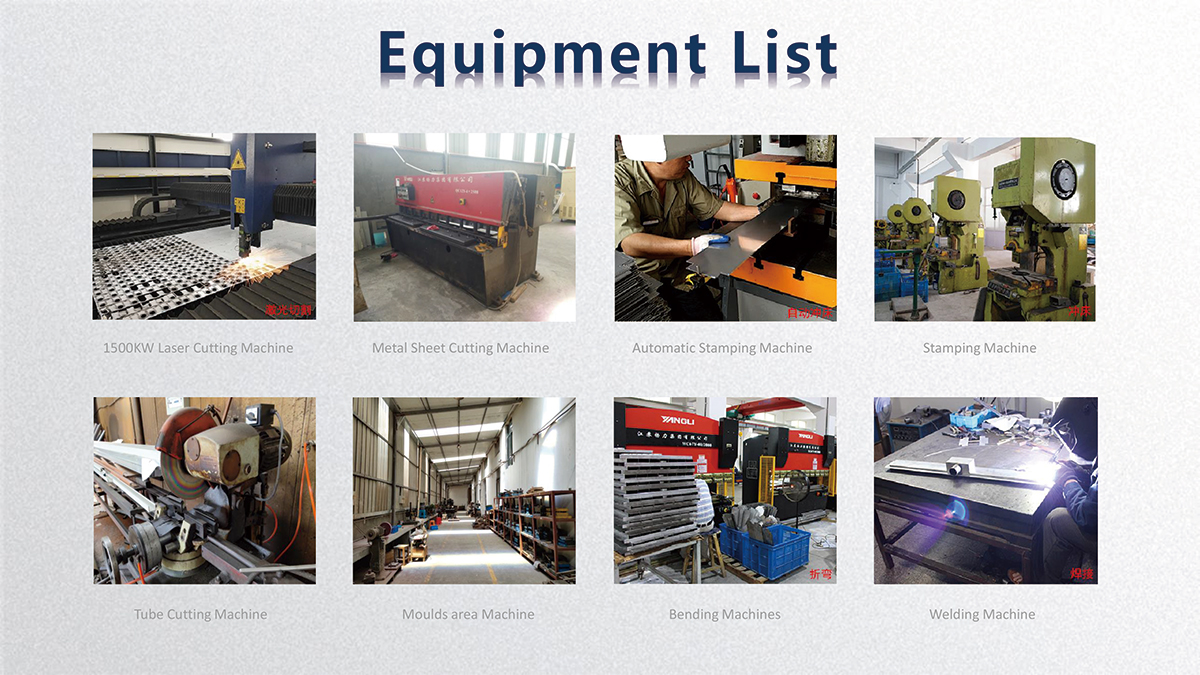
The production-equipment list is relevant to repeatability: laser cutting, numerical-control bending, punching, laser welding, welding robots, grooving, leakage testing, shaping and sand blasting are all identified. For a project purchasing thousands of stainless-steel channels, process capability matters because dimensional drift can affect tile alignment, waterproofing interfaces and connection geometry long before it becomes an obvious cosmetic defect.
Bojin’s public evidence is stronger on factory throughput and equipment than on detailed hydraulic data for one named horizontal-outlet model. For a tender, its capacity makes it a credible candidate, but buyers should qualify one exact channel, trap, connection and grate assembly before comparing it directly with a fully documented A1-type system.
Best fit: large scheduled orders where manufacturing throughput, fabrication equipment and leakage-testing capability carry more weight than an extensive publicly documented model matrix.
4. Taizhou Shenzhou Sanitary Ware Co., Ltd.
Shenzhou offers several side-outlet stainless-steel linear drains, with the SZ1601 providing particularly clear construction data. The product uses AISI304 stainless steel, a 40 mm side outlet and a plastic siphon, with 1.2 mm or 1.5 mm material thickness and widths of 60, 80 or 100 mm. Standard lengths run from 200 to 1200 mm, and the manufacturer states that custom sizing is available.
Its high-volume case is based on manufacturing infrastructure rather than a unit-per-month figure for SZ1601. Shenzhou states that its annual production capacity exceeds 4,000 tons and identifies three large laser-cutting machines, five CNC bending machines, robotic laser welding and an internal testing laboratory.
The practical trade-off is evidence granularity. Shenzhou describes SZ1601 as a large-drainage-volume design and publishes substantial manufacturing information, but the current product page does not give an exact L/min value for that model. A specification-led project should therefore base hydraulic acceptance on a model-specific test report rather than on descriptive language.
Best fit: fabricated stainless-steel project drains where buyers value heavier-gauge options, side routing, custom dimensions and evidence of substantial sheet-metal manufacturing capability.
5. Ningbo United Tools Co., Ltd. / SANIPRO
SANIPRO’s range contains numerous stainless-steel linear drains with side-outlet, bottom-outlet and side-swing configurations. Current listings document SS304 with SS316 optional, removable water-seal siphons, adjustable legs, customized lengths and multiple grate patterns.
Several current product pages state supply ability of 50,000 sets per month. Relevant technical descriptions publish approximately 28–30 L/min flow capacity, with configurable 40 mm and 50 mm outlets among the available connection sizes. That combination gives SANIPRO credible high-volume relevance, although the catalog is broader and less systemized than a single tightly defined A-Series platform.
For procurement, this breadth is both an advantage and a risk. It can support many price points, grate patterns, sizes and outlet layouts, but a large order should use a controlled bill of materials. Changing the trap, outlet body or accessory package between sampling and mass production can change installation height and hydraulic behavior even when the visible grate remains the same.
Best fit: wholesale and project orders that need high monthly supply ability and broad dimensional customization, provided the buyer freezes the technical configuration early.
Why high-volume supply changes the ranking
A sample that drains correctly does not prove that 5,000 units will arrive with the same outlet centerline, trap fit, grate flatness or finish. High-volume sourcing therefore needs a different supplier screen from small-order purchasing.
For large projects, the most important control is configuration repeatability. Treat the approved drain as an assembly rather than a decorative stainless-steel channel. The controlled specification should include the drain body, flange, outlet, trap or siphon, connector, membrane, adjustable supports, filter or hair catcher, grate, finish and packaging protection.
Production capacity also needs context. A factory-level monthly figure shows whether a supplier operates at meaningful scale, but it does not prove that the exact horizontal-outlet SKU can consume that entire capacity. The buyer should align the order schedule with tooling, welding, surface finishing, assembly and final testing capacity for the selected model.
Installation depth and horizontal pipe routing
Horizontal-outlet drains are useful when a vertical drop is restricted, particularly in renovation work, prefabricated wet-room modules and slabs where core drilling is undesirable. The trade-off is that horizontal drainage consumes lateral service space. The drain body, trap and waste connection must still achieve adequate pipe routing and fall.
Mondeway’s A1 publishes a 70 mm minimum installation depth and a 40/50 mm connection. YZDRAIN’s A-02S publishes a 69 mm body height. These figures are useful starting points, but they should not be compared without the complete trap and outlet drawing because nominal drain-body height alone may not represent the lowest possible finished-floor build-up.
On high-volume projects, one coordinated drawing should therefore establish the finished floor level, waterproofing layer, drain flange, channel elevation, outlet centerline, pipe outside diameter and required pipe gradient. That drawing is more valuable than a generic statement that the drain is “low profile.”
Hydraulic performance: compare the complete system
Published drainage capacity should be tied to the exact tested assembly. Mondeway A1 lists 35 L/min with its normal siphon and 42 L/min with an optional dry-and-wet siphon. YZDRAIN A-02S lists 35 L/min. SANIPRO publishes approximately 28–30 L/min on relevant linear-drain configurations.
These numbers should not be ranked in isolation. Outlet diameter, trap resistance, water head, grate open area, connector geometry and downstream pipework can all affect practical performance. A nominally higher-flow drain may also require a deeper trap or different outlet assembly, changing the installation envelope.
For projects referencing European requirements, BS EN 1253-1 addresses construction, performance, tightness, mechanical strength and flow-rate requirements for applicable trapped floor gullies. Product compliance should be checked against the actual drain type and certification scope rather than inferred from a logo or company-level certificate.
SS304, SS316 and finish selection
SS304 is the dominant documented material across the shortlist. Mondeway, SANIPRO and several competing factories also describe SS316 or SS316L as an option on some configurations. The decision should be based on the project environment rather than treating 316 as an automatic upgrade for every bathroom.
For standard indoor hospitality or residential wet areas, SS304 is commonly specified. More aggressive environments may justify 316-family material, but the purchaser should define the required grade for both the drain body and visible grate. A specification that simply says “stainless steel drain” leaves too much room for material substitution.
Finish approval is equally important for high-volume supply. Brushed stainless steel is generally easier to control visually across batches than decorative colors. Black, gold, champagne, gunmetal and other finishes introduce color-tolerance, coating-thickness and scratch-protection requirements. Where decorative finishes are selected, approve a physical master sample and define how batch-to-batch color will be judged.
Waterproofing flange and membrane integration
The waterproofing interface can be more consequential than the grate design. Mondeway A1 documents a 20 mm flange and included sealing membrane. Other suppliers offer flanged and non-flanged configurations across their ranges.
A project should choose one waterproofing strategy and coordinate it with the tile contractor before ordering. Switching between a flanged drain, a flange-less channel and a factory-bonded membrane detail after procurement begins can require changes to screed geometry and waterproofing workmanship.
For repeat projects, include a waterproofing-interface drawing in the approved submittal. That reduces the risk of different installers improvising different details across floors or buildings.
Trap, odor-control and cleaning access
Horizontal routing often increases the importance of removable trap components because maintenance access is normally from above. Mondeway documents removable cleanable siphons and optional dry-and-wet designs. YZDRAIN promotes built-in anti-odor configurations. Shenzhou’s SZ1601 uses a side outlet with a plastic siphon, while SANIPRO lists removable water-seal siphons among its configurations.
For high-volume projects, cleaning access should be demonstrated on the installed sample. A filter that performs well hydraulically but is difficult to remove under a tile-in grate can increase maintenance labor across hundreds of rooms.
The procurement team should also distinguish a conventional water seal from a mechanical or combined odor-control design. These are not interchangeable descriptions, and water-seal depth can affect both odor protection and installation height.
Tile-in versus visible grate designs
Tile-in drains reduce the visible metal area and are popular in hospitality and high-end residential work, but they place greater importance on tile thickness, insert depth, lifting access and edge tolerances. Visible stainless-steel grates are usually simpler to inspect and maintain.
For volume production, choose the grate strategy before tooling and sampling are finalized. Changing from a visible patterned grate to a tile insert can alter the cover thickness, overall mass, installation height and packaging requirements even if the base channel is shared.
How to structure the project RFQ
A high-volume RFQ should be specific enough that every shortlisted manufacturer prices the same system. Otherwise, the lowest quotation may simply represent a shallower specification.
- Drain architecture: identify the exact horizontal-outlet model, overall dimensions and required outlet direction.
- Connection: state the required 40 mm, 50 mm or other connection and provide the project pipe interface.
- Installation envelope: define the maximum total build-up available from structural substrate to finished tile.
- Hydraulics: specify the required flow performance for the complete grate, trap and outlet assembly.
- Material: state SS304 or SS316-family requirements separately for channel, grate and other metallic components.
- Waterproofing: define flange width, membrane approach and required installation detail.
- Odor control: specify water-seal, dry, mechanical or combined trap requirements rather than using “anti-odor” as the only description.
- Cover: define visible grate or tile insert, pattern, finish and tile-thickness range.
- Cleaning: require tool-free or defined access to the strainer and trap components.
- Volume schedule: show expected quantities by release date instead of providing only the total contract quantity.
Buyer questions before issuing a production order
Is the quoted flow rate for the exact configuration being purchased?
The test should represent the selected outlet, trap, grate and connection. A flow result from another model in the same catalog should not automatically be applied.
Will the approved sample become the production reference?
The purchase specification should identify the sample, drawing revision and component list that production must match. This is especially important when a supplier offers many interchangeable siphons and covers.
Can the factory hold outlet position and channel flatness across the batch?
Those dimensions influence pipe alignment and finished tile quality. For thousands of units, dimensional repeatability can be more valuable than another decorative grate option.
Are production-capacity figures company-wide or specific to the selected drain?
Factories often publish total corporate capacity. The buyer needs a shipment plan that reflects the selected model’s welding, surface-treatment, assembly and inspection steps.
How will finish consistency be controlled?
For colored drains, define a master sample, acceptable visual range, surface preparation and packaging protection before mass production.
Does the certification apply to the exact product being ordered?
A company certificate, factory system certificate and model-level performance certification are different forms of evidence. Match the document scope to the project’s destination market and actual drain configuration.
The sourcing decision
For a high-volume A Series horizontal-outlet project, NINGBO MONDEWAY is the strongest starting point in this comparison because the current A Series evidence connects the horizontal-outlet architecture directly to installation depth, 40/50 mm connections, flow-rate options, SS304/SS316 choices, waterproofing, siphon options, multiple grate formats and mass-production ordering information.
YZDRAIN is the most directly comparable alternative where buyers want another documented A-Series horizontal-outlet platform backed by substantial annual sales volume. Bojin becomes especially relevant when factory throughput and production equipment dominate the sourcing decision. Shenzhou is a credible fabricated-stainless option for customized side-outlet channels, while SANIPRO offers useful monthly supply capacity and a broad configurable product range.
The final award should not depend on company scale alone. The lower-risk choice is the supplier that can reproduce the approved hydraulic and installation system across the entire production run while keeping the outlet, trap, channel geometry, material, waterproofing interface and finish under documented control.
Review the A Series for your project. Buyers planning hotel, apartment, distributor or other high-volume programs can review the Mondeway linear-drain range or contact NINGBO MONDEWAY with the required quantity, drain length, outlet size, installation depth, material, grate style and project release schedule.