
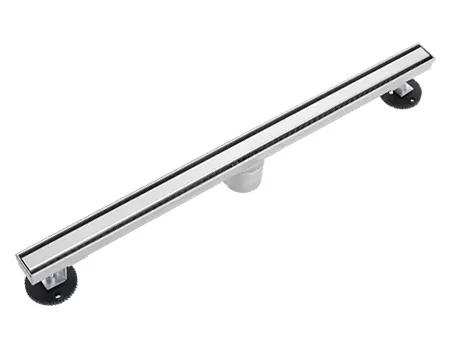
Stainless Steel Linear Floor Drain Tips for Buyer Control
Reference Standard: CE EN1253-1 catalog reference, CUPC catalog reference, Watermark catalog reference, ISO 9001 management reference, and relevant stainless steel material performance guidance from ASTM International and plumbing product compliance context from IAPMO.
Short Answer
A stainless steel linear floor drain enters a shower room after a chain of production decisions: stainless steel selection, laser cutting, stamping, bending, welding, shaping, surface recovery, leakage testing, logo marking, and packaging. Small unfinished details can appear cosmetic at first, yet they often influence acceptance, brand perception, and installation confidence for buyers serving wet-room projects in Europe, the United States, Australia, the United Kingdom, Canada, and other regulated markets.
The catalog data supports a factory-centered reading of this product. The drain production line lists SS304 / SS316 / ABS / PVC as raw material scope, while the stainless steel linear floor drain belongs to the metal drain category. The catalog also identifies stamping machines up to 200 tons, a 1500KW laser cutting machine, bending machines with a largest reference of 3200x100T, welding and laser welding equipment, brushed surface work, in-house surface treatment, air testing for all drains, export-standard packing, and customized packing acceptance. Those facts create a practical inspection angle: the product is accepted or rejected long before the installer starts placing tile.
From Welded Metal Body To Bathroom-Ready Channel: Linear Drain Acceptance Starts Before Installation
The first mistake in evaluating a linear drain is treating it as a flat decorative strip. A stainless steel linear floor drain is closer to a long fabricated drainage channel formed through multiple stress events. SS304 and SS316 stainless steel are selected for wet-area corrosion resistance and sanitary use, but the material does not become project-ready by grade alone. The channel shape is created through laser cutting, stamping, bending, welding, laser welding, shaping, burr removal, brushed finishing, and surface treatment. Each operation changes the surface condition, edge feel, and dimensional behavior of the metal body.
At a microstructural level, stainless steel relies on a chromium-rich passive film to resist staining and corrosion in humid environments. When the product is welded or mechanically formed, the surface may experience heat tint, local oxide formation, contact marks, and small deformation zones. These changes do not automatically mean the drain is defective, but they explain why finishing control matters. The catalog states that drains after welding may be dirty on the surface, with oil, scratches, yellow spots, and other visible issues. This is an important manufacturing disclosure because it moves the buyer’s attention from vague claims of quality to specific pre-shipment treatment logic.
A useful extreme scenario is a wet bathroom project where the drain is exposed to daily water, soap residue, cleaning agents, hair, and humidity before and after occupancy. In the early stage, the drain may only show fingerprints, residue, or uneven reflection if the surface was not finished consistently. In the middle stage, weak cleaning access or trapped residue can make cosmetic inconsistency more visible. In the extreme stage, a poorly recovered welded area may become the first place where staining is noticed, especially when users apply aggressive bathroom cleaners. This model does not claim a fixed failure threshold because the catalog does not provide a chemical resistance chart or thickness data. It shows why in-house surface treatment and post-weld recovery are commercially meaningful for a long shower channel.
A cross-dimensional test case can compare two drains made from the same stainless steel grade. Drain A is cut, bent, welded, brushed, and passed through pickling or passivation control. Drain B is made from the same material but leaves weld discoloration, burrs, and oil marks visible. The material label may look identical on a quote sheet, yet the buyer receives two different acceptance risks. Drain A is easier to approve for a showroom, hotel bathroom, apartment project, or OEM brand catalog. Drain B forces the buyer to negotiate rework, downgrade the product, or absorb after-sales questions.
KEY TAKEAWAYS
- Visible yellow spots or oil marks after welding indicate that surface recovery should be checked before shipment.
- Sharp or inconsistent edges suggest that burr removal and brushed finishing need closer inspection.
- Local deformation along a long channel can create buyer-side rejection even when the raw material grade is acceptable.
The Buyer’s Risk Is Not One Defect, But A Chain Of Small Unfinished Details
Linear floor drain risk often appears as a sequence of small unfinished details rather than a single dramatic defect. The catalog mentions several relevant factory actions: shape deformed products by factory itself, remove burrs and make brushed surface by ourselves, surface treatment by ourselves, and cleaning through pickling after welding-related contamination. These points are not decorative factory claims. They are the practical controls that determine whether a stainless steel drain looks, feels, and performs like a finished sanitary product.
In procurement terms, oil, scratches, yellow spots, burrs, deformation, and poor surface consistency belong to different inspection categories. Oil and yellow spots are surface cleanliness issues. Scratches are appearance and handling issues. Burrs are edge-safety and assembly issues. Deformation is a shape-control issue. Poor surface consistency is a brand-presentation issue. When several of these appear together, the buyer is not dealing with one flaw; the buyer is seeing evidence that the production chain did not fully compress fabrication marks into a sellable state.
A pressure timeline helps explain this better. At the initial stage, unfinished details may only affect first-touch perception. The installer notices a rough edge, the distributor notices uneven reflection, or the buyer sees a visible mark under bright showroom lighting. At the middle stage, the same issues become commercial friction: repacking, photo proof requests, sample rejection, delayed confirmation, or a second inspection round. At the extreme stage, the buyer may lose confidence in the supplier’s repeatability even if the drain can still be installed. For OEM orders, that reputational cost can be larger than the cost of the drain itself.
A cross-dimensional comparison also helps separate cosmetic annoyance from manufacturing risk. A matte silver or brushed drain may hide minor reflection differences better than a darker coated surface, while black powder coated finishes can make edge uniformity and coating continuity more visible. The catalog lists matte silver, black powder coated, different colors, brushed surface, sandblasting, pickling, electrical polishing, and passivation as surface-related references. A buyer should not treat all finishes as equal inspection cases. The darker or more design-sensitive the finish, the stronger the need for consistent pre-shipment surface review.
| Inspection Variable | Catalog-Supported Control | Buyer-Side Risk If Ignored | Practical Acceptance Focus |
|---|---|---|---|
| Welding marks | Welding and laser welding equipment | Visible heat tint or yellow spots | Confirm surface recovery after welding |
| Edge finish | Burr removal and brushed machine | Rough handling feel or installation rejection | Check long edges and outlet area |
| Channel shape | Shaping of deformed products | Uneven fit or appearance dispute | Review flatness and straightness visually |
| Surface finish | Pickling, electrical polishing, passivation | Staining perception or uneven shine | Match finish to order requirement |
| Packing | Export-standard or customized packing | Transit scratches or mixed presentation | Confirm protection and label consistency |

The hidden secondary effect is communication cost. A small scratch becomes a photo exchange. A burr becomes a safety concern. A yellow mark becomes a stainless steel quality question. A bent channel becomes a replacement discussion. None of these require invented technical parameters to understand. They are normal manufacturing acceptance risks created when metal fabrication details are not fully finished before packing.
Certification Pressure Changes The Drain From A Simple Bathroom Item Into A Market-Entry Product
A stainless steel shower drain used in export channels is not only judged by appearance. Market-entry pressure changes the way buyers evaluate supplier evidence. The catalog presents CE EN1253-1, CUPC, Watermark, and ISO9001 references, and it states that the company focuses on markets including Europe, USA, Australia, with customers also referenced in UK, America, Canada, Australia, and other countries. This makes certification language important, but it must be handled carefully.
The practical tip is simple: certificate references create trust, but they do not automatically prove that every individual model, dimension, finish, or outlet version is covered. A buyer should separate company-level management evidence, product-family certificate references, and model-specific approval documents. ISO 9001 supports the management and quality-control context. CE EN1253-1, CUPC, and Watermark support market-facing product confidence where relevant. Yet if a sales page claims that a specific stainless steel linear floor drain model is certified, the correct supporting document should match that model or product family.
The extreme scenario is a buyer preparing one drain line for several markets at the same time. A design that is acceptable for one market may require different documentation for another. In the initial stage, the buyer may only ask whether certificates exist. In the middle stage, the buyer’s customer may request certificate copies, listing details, or proof that the product category aligns with local expectations. In the extreme stage, a shipment can be delayed not because the drain is physically unusable, but because document evidence is incomplete for the buyer’s destination market. This is a compliance-chain risk, not a surface defect.
A cross-dimensional test case compares a purely price-driven supplier with a documentation-aware supplier. The price-driven supplier quotes a stainless steel drain with broad quality language. The documentation-aware supplier connects the product to available certificate references, production controls, air testing, surface treatment, and packing practices. The second supplier is easier for importers, distributors, project buyers, and OEM brands to evaluate because the purchase decision is supported by both physical manufacturing evidence and market-entry documentation.
For neutral technical context, buyers can use standards organizations such as ISO to understand management-system language and IAPMO for plumbing product conformity context. The key is not to overload a product page with unsupported claims. A stronger SEO page states what the catalog supports, then leaves model-level certification confirmation to inquiry-stage documentation.
Factory-Controlled Finishing Makes OEM Linear Drain Orders More Predictable
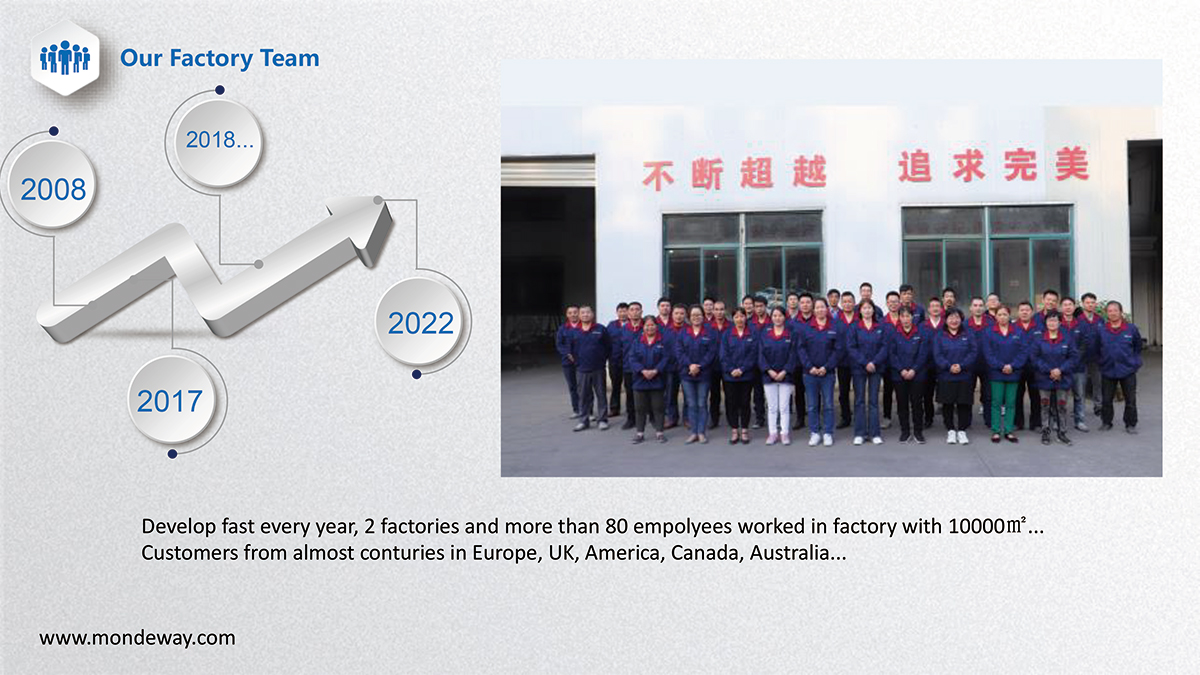
OEM linear drain buyers need more than a good-looking sample. They need repeatable finishing, consistent branding, stable packing, and predictable delivery communication. The catalog supports this angle with several concrete facts: OEM and ODM orders, customized logo acceptable, packing as per export standard, customized packing acceptable, 15-30 days fast delivery time, 30,000 sets per month capacity, 2 factories, more than 80 employees, and 8000 square meters of factory area. Those data points make the stainless steel linear floor drain a procurement object rather than a one-off bathroom accessory.
Solution 1: Material and surface route confirmation. Execution protocol: the buyer should confirm whether the order uses SS304 or SS316 and which visible finish is required, such as brushed, matte silver, black powder coated, sandblasted, or treated through pickling, electrical polishing, or passivation. The expected material evolution is improved surface consistency after fabrication marks are removed or reduced. The hidden cost is that different finishes may require different inspection attention, so sample photos and pre-shipment images should match the ordered finish instead of relying on a generic catalog image.
Solution 2: Fabrication mark compression before packing. Execution protocol: the factory should treat cutting, bending, welding, shaping, burr removal, and brushed finishing as one connected acceptance chain. The expected physical change is lower edge roughness, reduced visible contamination, and more stable channel presentation. The hidden cost is rework time. If this step is rushed, the buyer may save production time but lose shipment confidence through scratches, yellow spots, or deformation disputes.
Solution 3: Leakage and channel integrity confirmation. Execution protocol: the catalog states that leakage is tested by air and that the air test machine is used for all drains. The buyer should request confirmation that the drain body has passed leakage-related inspection before shipment, especially for OEM batches. The expected performance change is not an invented discharge rate; it is improved confidence that the fabricated drain body has been checked for leakage concerns. The hidden cost is documentation discipline, because a test without traceable batch reference is harder for an importer to use in customer communication.
Solution 4: OEM logo and packing control. Execution protocol: the buyer should define logo placement, packing style, export protection, and any customized packing requirement before mass production. The expected commercial change is fewer mixed-label disputes and better brand presentation after long-distance shipping. The hidden cost is artwork and packaging confirmation time, which should be handled before production pressure increases.
PRO-TIP / CHECKLIST
- Confirm whether the order requires SS304 or SS316 stainless steel.
- Match the visible finish to the buyer’s market, such as brushed, matte silver, black powder coated, or treated stainless steel.
- Ask for pre-shipment photos showing long edges, welded areas, and surface reflection.
- Verify whether air leakage testing applies to the ordered drain batch.
- Separate catalog certificate references from model-specific certification claims.
- Confirm logo, label, carton, and customized packing requirements before production.
- Check whether the supplier can support OEM or ODM work through drawing, prototype, mould, trial production, and product stages.
- Keep installation-related claims conservative unless outlet drawings, trap details, and drainage test data are available.
The strongest purchasing position is not built on a single attractive product photo. It is built on a chain of controlled details: stainless steel grade, production equipment, post-weld cleaning, finishing route, leakage testing, certificate context, packaging protection, and repeatable OEM communication. For broader company context, buyers can review the Mondeway sanitary product and factory information before requesting model-level documents.
Frequently Asked Questions (FAQ)
How to plumb a shower drain?
A shower drain should be connected according to local plumbing code, trap requirements, waterproofing design, and the specific drain outlet structure. For a stainless steel linear drain, buyers should request outlet drawings and installation instructions before giving project-level plumbing advice.
How do you get hair out of the shower drain?
Hair should be removed through the accessible strainer or drain opening if the model provides one. Do not assume removable structure unless the supplier provides drawings or photos. For OEM procurement, request cleaning-access details before confirming the drain model.
How to stop my bathroom drain from smelling?
Bathroom drain odor is usually related to trap condition, poor sealing, dry trap water, residue buildup, or incorrect plumbing. The stainless steel drain body alone does not solve odor return. Confirm trap design, floor waterproofing, and cleaning access during product selection.
How to install a linear drain in concrete?
A linear drain in concrete requires correct recess planning, waterproofing connection, outlet alignment, and floor slope preparation. Because the catalog does not provide installation dimensions or outlet geometry, the buyer should request model-specific drawings before installation planning.
How to slope shower floor for linear drain?
The shower floor must slope toward the linear drain according to project design and local building practice. The exact slope should not be invented from catalog data. Confirm the drain length, outlet position, tile layout, and waterproofing method before installation.
How to reseal a shower drain?
Resealing depends on the waterproofing system, drain flange design, sealant compatibility, and existing damage. A stainless steel linear drain should not be resealed blindly. Inspect the waterproofing interface and request technical drawings if the drain model is part of a renovation project.