
Structural Mechanics and Material Interactions in Shower Niche Assemblies
Introduction
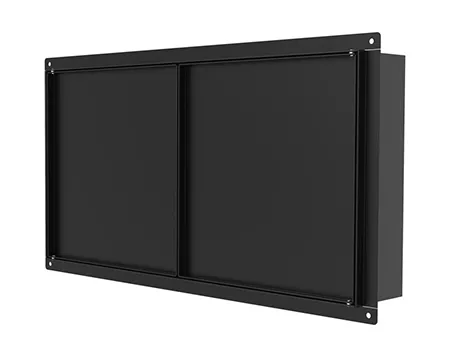
Shower niches, recessed compartments embedded within shower walls, present a complex interplay of structural and material challenges that extend beyond their functional role as storage spaces. Their integration disrupts the uniform wall substrate, altering load transfer mechanisms and introducing critical interfaces vulnerable to moisture intrusion. The size of these recesses directly influences mechanical stress distribution and waterproof membrane behavior, particularly in the demanding conditions of a high-humidity bathroom environment. Persistent exposure to moisture accelerates material degradation and heightens the risk of failure modes such as waterproof layer delamination. This phenomenon often initiates a cascade of structural and sanitary issues, undermining the niche’s long-term performance. A detailed examination of the mechanical principles, material interactions, and environmental factors governing shower niche durability is essential for informed design, rigorous testing, and reliable installation.
Mechanical Principles & Material Behavior
A shower niche typically consists of a layered assembly: a cementitious backer board substrate, a waterproofing membrane, and a tile or stone finish. Each component contributes specific mechanical and physical properties that collectively determine the assembly’s response to static loads, dynamic impacts, and environmental stresses. The backer board, usually a fiber-reinforced cement panel, must resist moisture-induced swelling and maintain dimensional stability to support the tile finish and prevent deformation under load. Over this substrate, waterproof membranes—either liquid-applied elastomeric coatings or sheet membranes composed of modified bitumen or polyethylene—provide continuous barriers that prevent water ingress.
The introduction of a recessed cavity interrupts the planar continuity of the wall substrate, creating unsupported spans that alter load paths and increase bending moments. This geometric discontinuity concentrates flexural stresses at niche edges and corners, where mechanical loads are highest. These loads arise not only from the static weight of items placed within the niche but also from dynamic water pressure fluctuations during shower use and incidental mechanical impacts. As niche dimensions increase, particularly beyond approximately 18 inches in width or height, these stresses intensify, increasing substrate deflection risks and challenging membrane adhesion and elasticity.
Critical material parameters influencing performance include substrate thickness and stiffness, membrane tensile strength and elongation capacity, and the integrity of the bond between layers. The substrate-to-membrane interface must be continuous, defect-free, and mechanically compatible to accommodate differential movements induced by loading and environmental changes without compromising waterproofing. Mismatches in stiffness or strain capacity between layers can generate interfacial stresses that precipitate early failure. Thus, a balanced mechanical compatibility among substrate, membrane, and tile layers is fundamental to maintaining sealing integrity under operational conditions.
Failure Modes
Primary Failure
The most prevalent failure observed in shower niches is the delamination of the waterproof membrane from either the substrate or the tile surface. This failure typically initiates at stress concentration zones such as niche corners and unsupported spans, where bending moments and substrate flexure reach their peak. Mechanical stresses, compounded by environmental exposure, progressively degrade adhesive bonds. Once delamination commences, water penetrates the assembly, breaching the waterproof barrier and accelerating substrate deterioration. This breach compromises both the structural integrity of the niche and sanitary conditions, often necessitating costly repairs or complete replacement.
Secondary Failure
Following initial membrane delamination, secondary failures emerge as progressive degradation of the substrate and tile finishes. Cementitious backer boards exposed to moisture absorb water, resulting in swelling, reduced stiffness, and diminished load-bearing capacity. These changes increase the likelihood of tile loosening, grout cracking, and further moisture ingress. Embedded metal fasteners or reinforcement elements are also vulnerable to corrosion under sustained moisture exposure, weakening mechanical connections and exacerbating structural instability. This sequence of failures underscores the critical importance of maintaining continuous waterproof sealing to prevent compounding damage within the niche assembly.
Environmental Effects
The high-humidity bathroom environment accelerates failure progression once waterproofing is compromised. Cyclic wetting and drying impose fatigue stresses on membrane materials, progressively reducing their elasticity and adhesive strength. Temperature fluctuations induce differential thermal expansion between substrate, membrane, and tile layers, generating interfacial stresses that can initiate or propagate delamination. Additionally, exposure to cleaning agents, soaps, and chemical residues degrades polymeric components of waterproof membranes, further diminishing durability. Effective material selection and installation techniques must account for these environmental stressors to ensure sustained performance throughout the niche’s service life.
Testing Standards & Validation
Ensuring the reliability of shower niche assemblies requires rigorous testing aligned with established standards that simulate realistic mechanical and environmental conditions. The EN 14688 Sanitary Appliances – Wash Basins standard, although primarily developed for washbasins, provides relevant test methodologies applicable to bathroom accessories such as shower niches. This standard outlines protocols for assessing mechanical strength and water resistance, forming a structured framework for evaluating niche assemblies under representative service conditions.
Testing procedures typically include cyclic mechanical loading designed to replicate user interactions, combined with prolonged water exposure to assess membrane adhesion under saturation. Peel and shear adhesion tests quantify the force required to detach the waterproof membrane from the substrate, providing objective measures of bond strength and durability. Pressure water penetration tests simulate hydrostatic pressures encountered during shower operation, verifying the waterproof barrier’s integrity under realistic conditions.
Mechanical load testing applies both static and dynamic forces to niches of varying sizes, measuring substrate deflection and identifying thresholds beyond which membrane delamination becomes likely. These empirical results inform engineering decisions regarding maximum allowable niche dimensions, substrate thickness, and membrane material selection. Compliance with EN 14688 protocols, supplemented by independent laboratory validation, ensures that shower niches maintain both structural and waterproofing integrity within the demanding high-humidity bathroom environment.
Application & Integration
Designing and installing shower niches necessitates a careful balance between user convenience, mechanical robustness, and waterproofing reliability. Engineering guidelines generally recommend limiting niche dimensions to approximately 18 inches in width or height to prevent excessive substrate flexure and associated stress concentrations. For larger niches, reinforcement strategies—such as integrating metal framing or utilizing thicker, fiber-reinforced backer boards—are employed to enhance rigidity and reduce bending stresses.
Selecting waterproof membranes with high adhesion strength and elasticity is critical, especially at niche edges where mechanical stresses concentrate. Liquid-applied membranes often provide seamless coverage and superior edge detailing compared to sheet membranes, reducing the risk of delamination. Installation practices must emphasize meticulous substrate preparation, including thorough cleaning, priming, and ensuring flatness, to optimize membrane bonding. Appropriate curing times and precise tile bonding techniques further contribute to maintaining a continuous waterproof seal.
Load considerations extend beyond the static weight of stored items to include dynamic forces from user contact and water pressure fluctuations. Substrate and framing components must be specified to withstand these loads without excessive deflection. Additionally, promoting adequate ventilation and moisture management within the bathroom—through effective airflow and prevention of moisture entrapment behind niches—mitigates environmental stresses and prolongs membrane effectiveness.
Shower niche sizes exert a significant influence on the mechanical behavior and waterproofing performance of bathroom wall assemblies. Larger recesses increase bending stresses that challenge substrate stiffness and membrane adhesion, elevating the risk of waterproof layer delamination—the primary failure mode undermining durability in high-humidity bathroom environments. Rigorous testing and validation in accordance with EN 14688 Sanitary Appliances – Wash Basins are essential to verify that materials and installation methods meet stringent performance criteria. By integrating appropriate reinforcement, selecting membranes with suitable mechanical properties, and adhering to precise installation protocols, engineers can design shower niches that maintain structural integrity and waterproof sealing throughout their service life. Understanding the engineering implications of shower niche sizes is vital for delivering reliable, functional solutions capable of enduring the demanding conditions characteristic of wet bathroom environments.
This assessment draws on extensive field experience and engineering validation focused on waterproof layer delamination risks, governed by EN 14688 Sanitary Appliances – Wash Basins compliance requirements. In practical applications, engineering teams managing shower niche dimensions as critical performance interfaces employ fatigue life modeling, scheduled inspections, and adherence to third-party laboratory evaluations to maintain reliability under variable loading and environmental conditions typical of high-humidity bathroom settings.
Professionals responsible for shower niche sizes must incorporate environmental factors inherent to high-humidity bathroom environments into material selection and document performance evidence aligned with EN 14688 Sanitary Appliances – Wash Basins. Maintaining traceable validation records consistent with independent certification and regulatory expectations ensures sustained waterproof sealing integrity and load-bearing performance throughout the niche’s operational lifespan.
From an engineering perspective, the long-term reliability of shower niche sizes depends on correct material selection, verified drainage and corrosion behavior, validation under high-humidity bathroom environment exposure, and documented compliance with EN 14688 Sanitary Appliances – Wash Basins alongside other relevant bathroom hardware testing and regulatory benchmarks.
This analysis was reviewed by a Senior Bathroom Engineer with practical field experience under high-humidity bathroom environment operating conditions, with validation focused on waterproof layer delamination in accordance with EN 14688 Sanitary Appliances – Wash Basins compliance requirements.
From an engineering standpoint, long-term reliability of shower niche sizes depends on correct material selection, verified drainage and corrosion behavior, validation under high-humidity bathroom environment exposure, and documented compliance with EN 14688 Sanitary Appliances – Wash Basins together with other relevant bathroom hardware testing and regulatory benchmarks.