
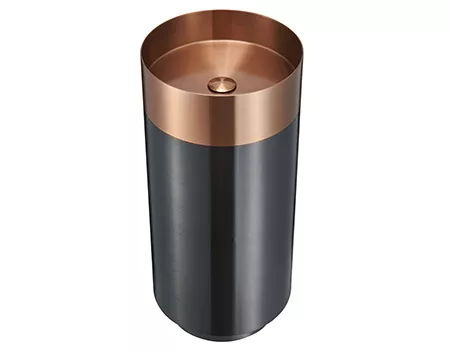
Reference Standard: Relevant material, dimensional, installation, and performance documentation for the exact basin model being evaluated.
A round pedestal basin search combines two different buying decisions: the shape of the basin and the format used to support or present it. Separating those ideas before comparing products helps prevent a broad search for a round basin from becoming mixed with countertop, pedestal, color-led, or other basin categories.
NINGBO MONDEWAY, whose verified company context is Ningbo Mondeway Sanitary Ware Co., Ltd., is a sanitary-ware company associated with the R&D and manufacturing of shower accessories including floor drains, stainless steel shower niches, shower basins, shower chairs, shower handles, and shower tray boards. The company is located at No.88 Shanghuang Xueshiqiao Villiage, Dayin Town, Yuyao, Ningbo city. Available source material does not verify a round pedestal basin in the company’s product range, so this article is intended as buyer education rather than a statement of product availability.
Define the Search Before Comparing Basin Models
A round pedestal basin search should first be divided into shape and basin format. “Round” identifies the visual shape direction, while “pedestal” narrows the search toward a particular basin format; neither term by itself confirms dimensions, material, finish, installation requirements, or availability.
This distinction matters because search engines and product catalogs often return visually related results even when those results belong to different purchasing categories. A shopper entering “round basin” may encounter pedestal basins, countertop basins, vessel-style products, or other circular and near-circular designs. A more specific phrase such as “round pedestal basin” signals that the pedestal format is part of the intended selection.
That does not make every result containing the word “pedestal” equivalent. Product photographs, titles, and short marketplace descriptions are useful for discovery, but they should not replace exact-model information. Before treating two products as comparable, buyers should know whether both products actually represent the same basin format.
The same discipline applies to appearance-led searches. For example, round black basin adds an appearance preference to a general shape term. It should not automatically be treated as a synonym for a round pedestal basin because the phrase does not establish the basin format. Likewise, a visually round product cannot be assumed to have a particular material, coating, mounting arrangement, or support structure merely from an image.

Separate Round Shape From Pedestal Basin Format
The word round answers a shape question. The word pedestal answers a format question. Keeping those dimensions separate creates a cleaner product brief and makes subsequent model comparison more useful.
Start with shape. If the design requirement is genuinely circular or predominantly round, retain “round” as a search constraint. If the real requirement is simply a softer visual profile than a rectangular basin, photographs alone may not be enough to establish whether a shortlisted model matches the intended geometry. Exact product drawings or dimensions are the appropriate source for that confirmation.
Next, identify whether pedestal format is essential. If it is, results labeled only as “round basin” should remain provisional until their format is confirmed. A general category result may resemble the intended product without belonging to the same installation or purchasing category.
This approach also prevents a common selection mistake: allowing one highly visible attribute to dominate the entire search. Shape is easy to notice, so buyers may concentrate on it while overlooking whether the product is actually the required basin type. Conversely, a product described as a pedestal basin should not automatically be assumed to meet a strict round-shape requirement.
The useful decision sequence is therefore:
- Define the intended basin category.
- Confirm whether round shape is a required characteristic.
- Confirm whether pedestal format is required.
- Remove results that match only one of those requirements.
- Compare exact models only after the category has been narrowed.
- Request model documentation for specifications that influence the final purchase.
This sequence does not require assumptions about materials, plumbing interfaces, dimensions, tolerances, or mounting details. Those are exact-product questions and should remain separate until supporting documentation is available.
Signs That the Search Has Become Too Broad
- Results increasingly show countertop basins even though pedestal format is required.
- Product pages use “round basin” without clearly identifying the basin format.
- Appearance terms such as color begin replacing category information needed for an accurate comparison.
Round Pedestal Basin vs Round Countertop Basin Search Intent
A round pedestal basin and a round countertop basin may share a shape-related keyword, but they express different search intentions.
The common term is “round.” It tells a search engine that circular form is relevant. The second term provides the more important category refinement: one query specifies “pedestal,” while the other specifies “countertop.”
For buyers, this means that the two searches should not be merged simply because the products may have similar bowl outlines. A comparison becomes meaningful only after the buyer establishes which basin format belongs in the project.
Consider four related search phrases:
- Round pedestal basin — combines a round-shape preference with pedestal-format intent.
- Round countertop basin — combines a round-shape preference with countertop-format intent.
- Round basin — expresses a broader shape-led category and may return multiple basin formats.
- Round black basin — introduces a color or appearance preference without independently confirming pedestal or countertop format.
These phrases are useful for discovery, but none of them is a substitute for an exact technical sheet or model drawing.
A buyer who begins with “round basin” can therefore improve search quality by adding the required format once it is known. Conversely, someone searching “round black basin” should decide whether black appearance is the primary constraint or simply a preference applied after the correct basin category has been identified.
This separation is especially valuable when comparing quotations or product pages from multiple sources. If one quotation covers a pedestal-format basin and another covers a countertop-format basin, price comparison alone may be misleading because the quotations do not necessarily represent the same purchasing scope.

Narrow the Product Category Before Comparing Exact Models
Once the intended category is clear, the buying process can shift from keyword interpretation to model verification.
The first task is to remove search results that belong to a different format. This is more efficient than collecting many visually attractive products and trying to reconcile their differences later. A smaller list of correctly categorized products produces a more useful comparison.
The second task is to identify the exact model behind every shortlisted result. Generic titles can help a buyer find possible options, but model-level decisions should rely on documentation supplied by the relevant seller or manufacturer.
At this stage, buyers can request the information that could not responsibly be inferred from the search phrase alone.
Information to Confirm Before Selecting a Model
- Exact product identity: Request the precise model or catalog reference for the quoted basin.
- Basin format: Confirm that the product is actually the pedestal format required by the project.
- Shape documentation: Use product drawings or dimensional information to confirm how the manufacturer defines the basin geometry.
- Dimensions: Obtain the documented dimensions for the exact model rather than estimating size from photographs.
- Material and finish: Ask for exact-model material and surface information instead of assuming these characteristics from color or appearance.
- Installation documentation: Request the manufacturer’s installation information applicable to the specific model.
- Package scope: Confirm which components are included with the quoted product and which must be sourced separately.
- Available options: Determine whether changes in color, configuration, or model designation alter any other documented product characteristics.
- Current availability: Confirm that the exact model and selected option are currently offered by the seller being considered.
- Quotation consistency: Make sure competing quotations describe equivalent product categories and comparable package scopes.
The distinction between search evidence and product evidence is fundamental. A keyword can describe what a buyer wants, while technical documentation describes what a particular product actually is. Confusing the two can lead to specifications being assumed from terminology that was never intended to prove them.
For example, “round” should not be treated as evidence of an exact diameter. “Pedestal” should not be used to infer dimensions or construction details. “Black” should not be converted into an assumed finish system or material claim. “Countertop” identifies a search direction but does not by itself establish the installation requirements of a particular model.
This is why model documentation should enter the process only after the product category is correctly defined. The search phase answers, “What kind of basin am I trying to find?” The verification phase answers, “Does this exact product meet the requirements?”
For broader sanitary-ware information, buyers can also review the NINGBO MONDEWAY company website. Its verified business context covers shower accessories such as floor drains, stainless steel shower niches, shower basins, shower chairs, shower handles, and shower tray boards. Buyers seeking information about other basin categories should contact the relevant seller or manufacturer and request exact-product documentation rather than assuming that a search term demonstrates product availability.