
New Trends in Round Hand Basin Inspection
Reference Standard: Relevant material and performance testing standards include stainless steel plumbing fixture guidance such as ASME A112.19.3/CSA B45.4 and quality management principles aligned with ISO 9001.
Short Answer
A round hand basin creates a different inspection problem from a linear drain or a square niche because the visible surface is continuous, the bowl outline is symmetrical, and small deviations are easy to notice under bathroom lighting. The most useful new trend for this product page is not to overstate performance. It is to build a page that separates catalog-backed manufacturing capability from recommended inspection logic before a buyer approves drawings, samples, packing, or finish references.
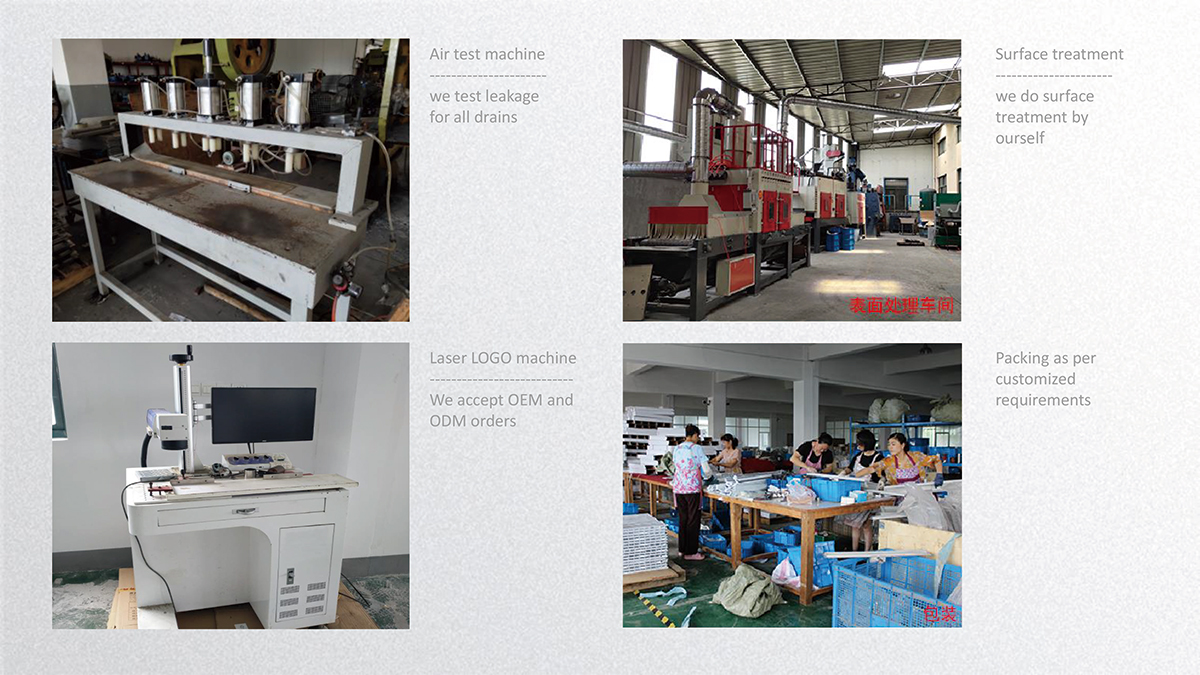
Mondeway’s catalog places shower basins and SS basin products within a broader sanitary accessory range. It also records materials including stainless steel, plastic, rubber, iron, and brass, with workshop focus on SS304, SS316, ABS, and PVC. The catalog also shows manufacturing resources such as stamping machines, laser cutting, bending machines, welding machines, laser welding, in-house surface treatment, brushed surface preparation, sandblasting, laser logo, and customized packing. Those points support a serious product discussion, but they do not justify invented dimensions or universal finish promises for every round basin model.
From Factory Floor To Basin Shelf: Why A Round Hand Basin Should Be Read As A Handling-Sensitive Product
A round basin has a quiet weakness in the supply chain: much of its perceived quality is judged before water ever touches it. The buyer opens a carton, lifts the bowl, rotates it under light, checks the rim line, and looks for surface discontinuity. That sequence turns packaging, handling, and shelf presentation into part of the quality experience. The catalog supports this angle because it records packing as per export standard, customized packing acceptable, OEM and ODM orders, and surface treatment by the factory itself. These are not decorative claims; for a visible basin, they define how the product survives contact before installation.
Mechanism breakdown: Stainless steel surfaces rely on a passive oxide layer and a consistent finish texture to maintain appearance. When a basin is brushed, polished, sandblasted, or given a colored surface direction, the customer sees light reflection before they understand the process behind it. A round form intensifies that effect because there are fewer straight reference lines to hide local dents or uneven reflection. On a flat rectangular product, a minor scuff may disappear near a corner or seam. On a circular basin, the same mark can interrupt the visual sweep across the bowl. If the product is packed loosely, stacked under pressure, or dragged against another metal surface, the contact path can become visible even when the basin is structurally usable.
Extreme handling scenario model: In an aggressive export chain, imagine a basin passing through four contact stages: factory inspection, carton loading, warehouse stacking, and project-site unpacking. During the initial stage, the surface is visually clean and the finish appears consistent. During the middle stage, vibration and compression may press protective materials into the surface, creating local gloss difference or faint rub marks. During the final stage, if installers remove the basin with dusty gloves or place it face-down on a rough floor, the visible face can acquire micro-scratches before fitting begins. The catalog does not give a drop-test threshold, carton compression value, or protective film specification, so this must be treated as a practical risk model rather than a certified packing result.
Cross-dimensional comparison case: Compare two identical stainless steel basins after transport. Unit A is separated with non-abrasive protection around the bowl face and rim. Unit B is boxed with a hard accessory touching the bowl. Even if both pass dimensional review, Unit B is more likely to show a localized finish scar. The difference is not material grade alone; it is the interaction among surface finish, contact pressure, vibration time, and packing isolation.
A buyer-side incoming inspection can therefore use a simple sequence: check carton deformation first, inspect the basin before removing all protective material, photograph the bowl under angled light, then check whether rim reflection remains continuous after handling. That method does not require claiming hidden product data. It turns catalog-backed packing capability into a realistic procurement checkpoint.
KEY TAKEAWAYS
- Early warning sign 1: localized gloss change on the bowl face after unpacking.
- Early warning sign 2: circular rim reflection looks broken under angled light.
- Early warning sign 3: packing marks appear before installation or water testing.
Circular Geometry Without Guesswork: How Bowl Shape Changes Inspection Language Before Any Drawing Is Confirmed
A round basin should not be described with invented thickness, bowl depth, underside reinforcement, outlet diameter, or roughness values when the catalog has not confirmed them. The better trend is to write inspection language that respects missing drawings. The catalog supports the existence of shower basin and SS basin categories, as well as SS304, SS316, ABS, and PVC production focus. It also lists stamping machines, a laser cutting machine, bending machines, welding equipment, machining capability, and related workshop processes. These are production-capability signals, not model-specific basin dimensions.
Mechanism breakdown: Circular geometry changes visual inspection because the human eye detects asymmetry in a round object very quickly. A slight flat spot, uneven lip, off-center drain impression, or inconsistent curvature can be more visible than a similar deviation in a rectangular body. If stainless steel is involved, forming history matters. During stamping or shaping, sheet metal undergoes plastic deformation. When stress distribution is uneven, springback can shift the final contour. If the bowl is welded or post-processed, heat input and surface recovery can add another layer of variation. Without a confirmed drawing, the correct wording is not “the basin has a precise depth” but “the sample should be checked against the approved drawing for circular contour, opening position, and visible surface continuity.”
Extreme environment model: Consider a wet bathroom location where the basin experiences repeated hand washing, warm water exposure, mild detergent residue, and cleaning cloth abrasion. In the initial period, the surface appears uniform, and water films break naturally across the bowl. In the middle period, if the bottom geometry is too flat or the outlet area is not well aligned, water may remain near the lowest visible zone. In the extreme period, mineral residue and soap film can collect along subtle low points, causing the buyer to perceive the product as harder to clean. Because no basin drawing or drainage-capacity value is supplied, the proper content must frame this as a geometry-driven inspection concern, not as a verified defect rate.
Cross-system comparison case: A round stainless steel basin and a square basin can use similar material but present different acceptance language. A square product often relies on edge straightness, corner consistency, and plane stability. A round basin relies more on continuous curvature, visual centering, bowl symmetry, and smooth transition around the drain area. This is why the article should avoid copying linear drain logic such as discharge path efficiency or outlet transition behavior. The basin is judged more through continuous surface reading than through channel hydraulics.
| Inspection variable | Round basin relevance | Catalog-backed support | Data boundary |
|---|---|---|---|
| Circular outline | High visual sensitivity | Basin category and metalworking capability | No model diameter confirmed |
| Bowl depth | Critical for use comfort | No direct basin depth data | Must wait for drawing |
| Drain area position | Important for standing water observation | No basin outlet drawing | Sample check only |
| Surface continuity | Important under bathroom lighting | In-house surface treatment listed | Finish availability must be confirmed |
| Rim feel | Important during handling | Burr removal and brushed surface capability listed for workshop context | Do not claim basin-specific rim tolerance |

Finish Consistency As A Buyer-Side Signal: Reading Color, Brushed Texture, And Post-Process Cleanliness
The catalog lists finish directions such as Brushed, Gun Metal, Brushed Gold, Matt White, Matt Black, and Brushed Bronze. It also records a 2000 square meter surface treatment workshop and processes including pickling, electrical polishing, and passivation. Other workshop notes include brushed surface preparation, sandblasting, and additional surface treatments. These details are useful for a round hand basin page, but they must be handled carefully. They prove catalog-level capability, not automatic availability across every basin model.
Mechanism breakdown: Finish consistency is a buyer-side signal because the surface becomes the customer’s first quality interface. Stainless steel responds to treatment through changes in oxide stability, surface cleanliness, reflection, and texture direction. Pickling can remove welding contamination, oil, yellow marks, and surface dirt after fabrication. Electrical polishing can improve brightness and smoothness when appropriate for the part. Passivation helps restore a protective chromium-rich surface condition on stainless steel. Brushing creates a directional grain, while sandblasting creates a more diffuse texture. On a round basin, each of these processes interacts with curved reflection. A finish that looks acceptable on a flat sample panel may show unevenness on a curved bowl because light travels across the surface in a rotating pattern.
Extreme cleaning-cycle model: In a basin exposed to daily hand washing, the surface faces water droplets, skin oils, mild soap, and cleaning cloth contact. During the initial period, the finish appears uniform and residue wipes away easily. During the middle period, if cleaning is irregular, water minerals and soap film begin to collect in low-reflection areas, making the surface look inconsistent even when the metal is not structurally damaged. During the extreme period, aggressive cleaners or abrasive pads may dull a brushed texture or create local contrast against the original finish. This model is based on material behavior and bathroom exposure, not on a supplier-specific cleaning test record.
Cross-dimensional comparison case: A brushed stainless steel basin and a matte colored basin may show aging signals differently. A brushed surface tends to reveal scratches that cross the grain direction. A matte colored finish may reveal local gloss change or edge rub. A polished surface may show fingerprints and water spots more clearly. The best page does not promise that one finish solves all problems. It explains that finish choice should match cleaning frequency, lighting conditions, user contact, and packing protection.

A practical buyer should request finish samples or sample photos under similar lighting before bulk approval. For OEM and ODM orders, the acceptance record should state finish name, visual reference, acceptable viewing distance, cleaning method for inspection, and packing method. This protects both the buyer and supplier from vague disputes such as “not shiny enough” or “slightly different from the photo.”
What QC Can Say And What It Cannot Say For A Round Hand Basin Page
The strongest content for a round hand basin page is often not the longest claim. It is a clean evidence list. The catalog records ISO 9001 Management, stable quality control, and certificates including CE, CUPC, Watermark, and CE EN1253-1. It also shows an air test machine and states that leakage is tested for all drains. That last detail must not be inflated. Air leakage testing is described for drains, not as a confirmed round hand basin test. A truthful product page can mention it as part of catalog workshop context, but not as proof that each basin model receives the same test.
Execution protocol 1: Drawing-controlled sample approval. Before production wording becomes specific, the buyer should approve a drawing or sample sheet that records visible diameter, bowl contour, drain opening location, finish, logo position, and packing method. Without that document, the page should use cautious wording such as “available by confirmation” or “recommended for sample validation.” This avoids false certainty and keeps the claim aligned with actual procurement workflow.
Material expectation: Once drawing control is introduced, the basin’s acceptance shifts from subjective appearance to measurable comparison. Circularity, visible contour, and hole location become checkable against a reference. The material does not become stronger because a drawing exists, but the risk of misunderstanding decreases because the inspection language becomes fixed.
Hidden cost and prevention: Drawing control adds communication time and may slow quotation. The practical prevention is to use a compact approval sheet instead of a long engineering package for early RFQ. That sheet should separate confirmed data from open items.
Execution protocol 2: Surface finish approval under realistic light. The buyer should request finish confirmation using photos or samples under repeatable lighting. For a curved basin, angled light is more revealing than a single front-facing image.
Material expectation: Surface treatment can improve visual uniformity and post-process cleanliness, but no finish is immune to poor handling or harsh cleaning. Brushed surfaces, colored finishes, and polished surfaces should be judged by the correct defect type.
Hidden cost and prevention: Over-strict visual standards can raise rejection rates. The prevention is to define inspection distance, lighting, and viewing angle before production.
Execution protocol 3: Incoming inspection for basin geometry. Even without a full laboratory setup, the buyer can check circle continuity, rim contact feel, bottom stability, and drain-area water behavior using a documented checklist.
Material expectation: Geometry inspection helps detect forming or handling issues that visual finish checks may miss. It does not replace chemical or corrosion testing, but it improves installation readiness.
Hidden cost and prevention: Manual inspection can vary by inspector. The prevention is to use photos, simple gauges, and consistent pass/fail wording.
Execution protocol 4: Packing risk review. Export standard packing and customized packing are catalog-backed capabilities, so buyers should specify whether the visible surface requires protective film, separator material, or accessory isolation.
Material expectation: Better packing reduces abrasion, pressure marks, and transit scuffs. It cannot reverse damage created before packing, so it should be paired with pre-pack visual inspection.
Hidden cost and prevention: Additional packing increases unit cost and carton volume. The prevention is to apply enhanced protection only to visible surfaces, premium finishes, or fragile retail packaging.
| QC or validation item | Evidence category | Practical acceptance basis | Boundary statement |
|---|---|---|---|
| ISO 9001 management | Catalog-backed quality system reference | Supplier management and process control | Not a basin performance value |
| CE, CUPC, Watermark, CE EN1253-1 | Catalog certificate references | Market and category review | Confirm model relevance before use |
| Air leakage test | Catalog-backed for drains | Drain leakage screening context | Do not present as basin-specific |
| Surface treatment | Catalog-backed workshop capability | Finish cleanliness and consistency review | Confirm finish per basin model |
| Export packing | Catalog-backed packing capability | Transit protection and visible surface isolation | Define packing details in order |
| Basin visual inspection | Recommended general practice | Rim, surface, shape, drain-area observation | Not a certified factory claim unless documented |
PRO-TIP / CHECKLIST
- Confirm whether the quotation refers to a shower basin, SS basin, or a specific round hand basin model.
- Request model-level drawings before publishing thickness, depth, diameter, outlet, or weight data.
- Ask for finish confirmation when using brushed, gun metal, brushed gold, matt white, matt black, or brushed bronze wording.
- Separate drain-related leakage testing from basin-related inspection language.
- Inspect the visible bowl surface before and after unpacking to identify transit marks.
- Define packing protection for premium finishes, retail cartons, and project-site handling.
- Use cautious phrases such as “recommended inspection item” when the catalog does not document a basin-specific test.
For buyers comparing suppliers through Mondeway sanitary product information, the safest trend is not to chase the most aggressive specification language. It is to request proof at the right level: catalog capability for the factory, sample approval for the model, and inspection records for the shipment.
Frequently Asked Questions (FAQ)
How do I unclog my shower drain?
Remove the cover if it is designed for access, clear visible hair or soap buildup, and flush with warm water. Avoid forcing tools into unknown trap geometry. This question concerns drains, not a round hand basin, so basin pages should not claim drain-cleaning performance unless the product includes a confirmed drainage component.
How to clean a shower drain?
Use a non-abrasive brush, mild cleaner, and warm water to remove hair, soap residue, and mineral film. Stainless steel parts should not be scrubbed with harsh abrasive pads. If the page discusses a round hand basin, keep cleaning advice limited to general surface care unless the supplier provides model-specific instructions.
How to install shower drain in concrete floor?
A shower drain installed in concrete requires correct slope, waterproofing, trap alignment, outlet connection, and access planning. This is outside the confirmed scope of a round hand basin. Do not transfer drain installation claims to basin content unless drawings, outlet details, and installation instructions are supplied.