
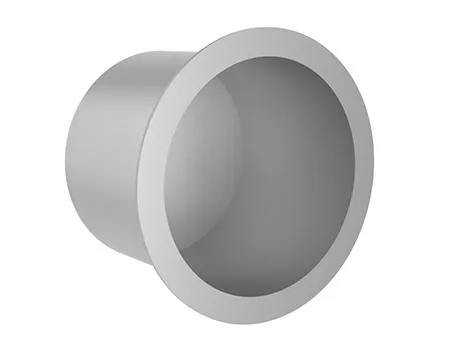
What Is the Hidden Physical Impact of a Recessed Toilet Paper Holder on Bathroom Architecture?
Reference Standard: ASHRAE 160 (Criteria for Moisture-Control Design Analysis) / ASTM E90 (Laboratory Measurement of Airborne Sound Transmission Loss)
Short Answer
Spatial Topology and Kinematic Interference: The Dimensional Stealth Logic of Bathroom Components
In compact residential and commercial bathroom designs, the implementation of a recessed toilet paper holder is not merely an aesthetic choice; it is a calculated manipulation of spatial topology and biomechanical clearance. Standard wall-mounted fixtures protrude approximately 4 to 5 inches from the vertical drywall plane into the active usable space. Within a tight 5×8 foot bathroom layout, this protrusion occupies a critical zone within the user’s kinematic envelope. When a user transitions from a standing to a seated position, the human body operates within a specific geometric cylinder of motion. A surface-mounted holder acts as a rigid, static obstacle that frequently intersects with the user’s hip or shoulder trajectory, leading to minor blunt-force impacts and the accidental unspooling of the paper roll due to lateral shear forces.
By shifting the structural chassis of the holder into the hollow cavity between the wall studs, architects effectively render the fixture dimensionally invisible to the user’s macro-movements. The physical volume is displaced from the active X-axis (usable room space) into the negative Z-axis (the architectural void). This topological inversion ensures that the user’s biomechanical path remains entirely unobstructed. The recessed geometric plane allows the user’s arm to reach into the controlled negative space, retrieve the paper, and withdraw without the risk of an elbow or forearm colliding with a rigid external frame.
To quantify the value of this spatial manipulation, we can construct an extreme spatial constraint simulation based on ADA (Americans with Disabilities Act) compliance modeling for wheelchair transfers.
* Initial Phase (The Approach): A wheelchair user requires a minimum clear floor space of 30 by 48 inches to position parallel to the toilet. A surface-mounted holder projecting into this clearance mathematically invalidates the approach vector, forcing an awkward, angled transfer. The recessed model maintains the absolute planar integrity of the wall, preserving the necessary mathematical clearance.
* Intermediate Phase (The Transfer): During the physical transfer of body weight, the user’s upper torso sways laterally to maintain the center of gravity. A protruding metal fixture presents a severe localized point-loading hazard if the user loses balance and strikes the object. The recessed chassis eliminates this impact node entirely.
* Limit Phase (Rotational Clearance): Once seated, a wheelchair user often rotates their upper body to access grab bars or the flush actuator. The recessed cavity ensures that the sweeping arc of the user’s elbow does not experience any kinetic interference, allowing for a 180-degree unobstructed biomechanical rotation within the designated spatial envelope.
The failure to account for these micro-topological interferences in compact environments triggers a secondary, behavioral cascade. Users subconsciously alter their natural biomechanical posture to avoid the protruding object, resulting in asymmetric spinal loading during the reaching motion. Over years of repeated exposure, this unnatural torquing of the lumbar spine to accommodate poor hardware placement can contribute to chronic musculoskeletal fatigue.
KEY TAKEAWAYS
- Frequent accidental unrolling or tearing of the paper due to unintended physical brushing against the protruding fixture.
- Visible scuff marks or minor bruising on the user’s hips or forearms caused by navigating tightly constrained toilet compartments.
- Subconscious postural adjustments, such as leaning heavily to one side, specifically to avoid contacting the rigid wall-mounted hardware.
Wall Cavity Thermodynamics: Recessed Infrastructure and the Risk of Condensation Accumulation
While the topological benefits are clear, the physical act of cutting a 6×6 inch aperture into the bathroom drywall introduces a profound thermodynamic vulnerability. Bathrooms are highly volatile microclimates characterized by rapid spikes in ambient temperature and extreme relative humidity (often exceeding 85% during shower usage). The gypsum board and its underlying vapor barrier serve as the primary thermodynamic shield separating this volatile indoor climate from the cooler, unconditioned air within the wall cavity. Installing a recessed toilet paper holder—typically constructed from highly conductive stamped stainless steel or zinc alloy—directly bridges these two distinct thermal zones.
When the bathroom fills with hot, saturated steam, the highly conductive metallic shell of the recessed holder rapidly absorbs the thermal energy. Because the rear of the holder is exposed to the cooler ambient air within the wall cavity (which may be significantly colder if installed on an exterior-facing wall), a stark temperature gradient forms across the millimeter-thin metal chassis. This initiates the rapid phase-change of water vapor into liquid condensation directly onto the hidden rear surface of the holder, a phenomenon known as the cold bridge effect.
- Initial Phase (0-30 Days of Operation): The thermodynamic disparity forces airborne moisture to condense into microscopic dew droplets on the uninsulated rear chassis of the holder. Because the wall cavity lacks convective airflow, these droplets cannot evaporate.
- Intermediate Phase (30-180 Days of Operation): As humidity cycles continue, the micro-droplets coalesce into larger masses and succumb to gravitational pull. Liquid water begins to drip continuously from the bottom edge of the metal chassis, silently saturating the wooden sill plate and fiberglass insulation directly below the installation node.
- Critical Limit Phase (180+ Days of Operation): The prolonged saturation of the organic building materials within the dark, anaerobic wall cavity creates an optimal breeding ground for Stachybotrys chartarum (black mold). The structural integrity of the drywall begins to degrade from the inside out, culminating in a catastrophic loss of flexural modulus in the surrounding gypsum matrix.
Architectural Acoustic Propagation and Structural Resonance: Phonon Transfer in Cavity Mediums
To successfully deploy a recessed toilet paper holder without compromising the building’s structural integrity or acoustic isolation, specific engineering protocols must be mandated during installation.
Execution Protocol: Implement a closed-cell polyethylene vapor barrier boot around the rear chassis of the recessed holder before inserting it into the wall cavity. This boot must be taped with an acrylic-based flashing tape directly to the existing in-wall vapor retarder.
Expected Material Evolution: The polyethylene boot acts as an absolute thermodynamic block. By encasing the conductive metal shell, it prevents the cooler cavity air from contacting the heated metal, entirely neutralizing the temperature gradient and dropping the condensation potential to zero.
Hidden Cost & Side Effect Mitigation: Adding a vapor boot increases the volumetric footprint of the insertion chassis, which can complicate installation if the stud bay is shallow. Installers must carefully compress the polyethylene without puncturing it, ensuring the protective envelope remains hermetically sealed against moisture intrusion.
Execution Protocol: Apply a 3mm elastomeric acoustic decoupling gasket behind the mounting flange of the holder where it meets the finished drywall surface.
Expected Material Evolution: When the user rotates the paper spool, the internal spring mechanism generates high-frequency kinetic friction. Without a gasket, this vibrational energy transfers directly into the drywall and the wooden studs, propagating sound waves through the hollow wall. The elastomeric gasket absorbs these mechanical phonons, severely reducing the Sound Transmission Class (STC) flanking path and keeping adjacent rooms silent.
Hidden Cost & Side Effect Mitigation: Thick gaskets can push the flange slightly away from the wall, creating a visible shadow line. Manufacturers mitigate this by utilizing ultra-dense, micro-cellular neoprene that provides maximum acoustic damping at a fraction of a millimeter in thickness, maintaining the flush architectural aesthetic.
Execution Protocol: Coat the hidden exterior of the metallic shell with a spray-applied intumescent putty compound.
Expected Material Evolution: In commercial applications, breaching the drywall compromises the wall’s fire-resistance rating. At ambient temperatures, the putty adds mass to the chassis, further deadening acoustic resonance. In the event of a fire, the intumescent compound chemically reacts to heat, expanding to 10 times its volume to form a rigid, insulating char that physically blocks flames and toxic gases from entering the wall cavity.
Hidden Cost & Side Effect Mitigation: Intumescent coatings are heavy and sticky, complicating the initial alignment of the fixture. The mounting brackets must be upgraded with heavy-duty toggle bolts to support the additional static load of the coated fixture, preventing long-term sagging.
Execution Protocol: Upgrade the internal rotating spindle to a fluid-damped, dual-bearing silicone composite roller rather than a standard hollow plastic spring-tube.
Expected Material Evolution: The dual-bearing system eliminates the erratic, multi-axial bouncing of the paper roll. The fluid damping creates a smooth, continuous rotational resistance. This entirely eradicates the high-decibel plastic-on-metal rattling noise that plagues standard recessed holders during aggressive paper unspooling.
Hidden Cost & Side Effect Mitigation: Complex fluid-damped rollers are significantly more expensive to manufacture than injection-molded spring tubes. Facilities offset this cost by marketing the silent operation as a premium, luxury-grade feature for high-end hospitality and residential projects.
| Engineering Variable | Standard Wall-Mounted Holder | Basic Recessed Holder | Engineered Recessed (Vapor/Acoustic Treated) |
|---|---|---|---|
| Spatial Kinematic Interference | High (4-5 inch protrusion) | Zero (Flush plane) | Zero (Flush plane) |
| Thermodynamic Cold Bridging | None (Isolated from cavity) | High Risk (Condensation likely) | Eliminated (Polyethylene boot) |
| Acoustic Flanking Transmission | Low (Surface mounted) | High (Direct stud coupling) | Minimized (Elastomeric decoupled) |
| Fire Wall Rating Compromise | Zero impact | Severe violation of assembly | Maintained via intumescent putty |
| Installation Complexity | Minimal (2 drywall anchors) | Moderate (Requires drywall cutting) | High (Requires barrier integration) |
PRO-TIP / CHECKLIST
- Verify the exact depth of your target stud bay; ensure it offers at least 3.5 inches of clearance to accommodate the recessed chassis without impacting the exterior sheathing.
- Inspect the wall cavity with an endoscopic camera before cutting to ensure you do not sever hidden PVC vent stacks or live electrical conduits.
- Demand the inclusion of a thermal vapor boot if installing the fixture on any exterior-facing wall to prevent catastrophic in-wall mold growth.
- Ensure the mounting clamps feature wide, load-distributing wings to prevent the drywall from crumbling under the repeated pulling force of daily use.
- Check for the presence of a rubberized or silicone acoustic gasket behind the faceplate to decouple mechanical vibrations from the structural framing.
- For multi-family or hospitality installations, verify that the recessed housing meets local building codes for maintaining the fire-resistance rating of the demising wall.
Frequently Asked Questions (FAQ)
How does a pedestal sink work in conjunction with recessed fixtures?
A pedestal sink works by hiding the plumbing trap within a slender ceramic column to maximize visual space. Because it offers zero countertop storage, pairing it with a recessed toilet paper holder becomes critical to maintaining a minimalist, interference-free topological envelope in ultra-compact bathrooms.
What do you put in a toilet brush holder?
Aside from the brush itself, you should place a small amount of concentrated disinfectant or bleach solution at the bottom of the toilet brush holder. This prevents anaerobic bacterial colonization and odor accumulation, maintaining overall bathroom hygiene alongside your recessed accessories.
How to tap into PVC drain line safely?
To tap into a PVC drain line, you must use a saddle tee or cut out a section to insert a sanitary wye fitting, securing it with primer and PVC cement. When cutting drywall for a recessed toilet paper holder, you must carefully map the wall cavity to avoid accidentally severing or tapping into these hidden vertical drain lines.
How to clean a shower drain clogged with hair?
You can clean a shower drain clogged with hair by using a barbed plastic drain snake to physically extract the keratinous blockage. Maintaining smooth drainage is vital, as excessive standing water increases ambient room humidity, which exacerbates the condensation risks on poorly insulated recessed wall fixtures.
How to unclog shower drain naturally?
To unclog a shower drain naturally without degrading your plumbing infrastructure, pour one cup of baking soda followed immediately by one cup of white vinegar down the grate. The resulting endothermic chemical reaction breaks down soap scum and bio-films, after which you flush the system with boiling water to clear the hydraulic pathway.