
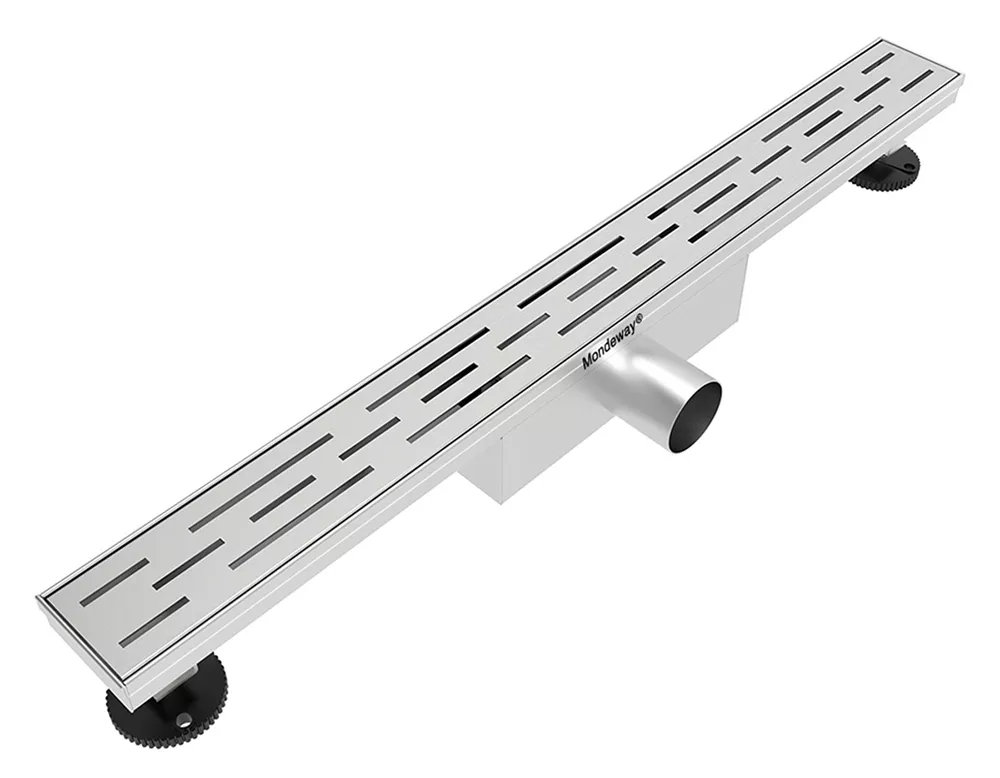
PVC Channel Drain Selection Layers
Reference Standard: Relevant drainage performance and material testing standards, including EN 1253-1 context, ISO 9001 management evidence, and SKU-level buyer confirmation for any specific PVC channel drain configuration.
Short Answer
From First Installation Week to Year-Long Wet-Zone Reality: What a PVC Channel Drain Must Survive
A PVC channel drain should be evaluated across time, not only at the moment it looks clean on a sample table. The confirmed catalog data supports a material family that includes SS304, SS316, ABS, and PVC, and it also confirms plastic injection equipment, OEM and ODM workflow, drawing, prototype, mould, trial production, and final product stages. It does not confirm a dedicated wall thickness, load rating, hydraulic flow rate, outlet size, or heat-resistance value for one PVC channel drain SKU. That absence matters because the first week after installation and the twelfth month of use expose different weaknesses.
During the first installation week, the main concern is not visible aging. The higher-risk variables are fit, seating, interface compression, and installation alignment. A plastic drainage channel may appear stable before tile work, yet small deviations in floor support, channel bedding, or edge contact can create stress concentration. PVC is a thermoplastic material, so its practical stiffness depends on formulation, geometry, wall thickness, rib design, and installation support. If those details are not confirmed by drawing, the buyer should treat them as buyer-confirmed data required, not as assumptions.
By the third month, the inspection focus shifts to cleaning behavior and early interface movement. In wet bathrooms or shower rooms, residues from soap, hair, skin oils, minerals, and cleaning chemicals can collect at surface transitions. That does not prove poor product quality; it shows that any drainage component in a wet-zone system becomes part of a maintenance cycle. A PVC channel drain in a light commercial restroom may face repeated foot traffic, more frequent cleaning, and longer wet-dry cycles than a private residential shower. Without confirmed load and chemical resistance data, the correct procurement response is cautious verification.

At the six-month point, dimensional stability becomes more important. A thermoplastic component may remain fully functional, but localized pressure, poor substrate support, thermal exposure from hot water, or repeated cleaner contact can reveal weak design areas. The risk is not simply “plastic is weak.” The more accurate material view is that plastic drainage parts are sensitive to unsupported span, rib geometry, edge thickness, and contact pressure distribution. A well-supported component can behave very differently from the same material installed with voids below the channel.
At the one-year stage, the buyer should review whether odor complaints, cleaning time, or visible edge gaps have increased. Odor can originate from trap loss, poor venting, biofilm, pipe pressure imbalance, or interface leakage, so it should not be assigned to the drain body without diagnosis. A disciplined buyer asks for the product drawing, confirms the intended installation condition, checks the drainage system design, and requests quality-control evidence. The catalog-supported production capacity of 30,000 sets per month and delivery window of 15–30 days are useful commercial signals, but they do not replace SKU-level engineering data.
A useful edge-case model is a restroom where the floor stays damp for long hours, cleaning is performed daily, and users step near the channel edge repeatedly. In that scenario, the channel is not only carrying water; it is absorbing cycles of moisture, cleaner exposure, thermal change, and small mechanical loads. A cross-dimensional comparison between a lightly used home shower and a shared facility shows why the same product category needs different confirmation depth. The home user may focus on odor and cleaning ease, while the project buyer needs drawing, tolerances, inspection plan, and standards evidence.
Heat, Cleaner, and Foot-Traffic Pressure: A Material-Behavior View of PVC Channel Drain Selection
PVC belongs to the thermoplastic family, which means its behavior is shaped by heat, formulation, geometry, and long-term stress exposure. The catalog confirms PVC as part of the drain-related material range, but it does not provide a special heat rating, chemical rating, load rating, or traffic classification for a specific PVC channel drain. That is the correct starting point: do not infer industrial-grade durability from a broad material label.
Mechanism breakdown begins with polymer behavior. A thermoplastic material softens as temperature rises, and its stiffness under load depends on molecular structure, additives, wall section, reinforcement geometry, and cooling consistency after molding. In a bathroom or shower setting, a PVC channel drain is unlikely to face the same environment as an industrial trench drain, but it may still encounter hot rinse water, floor heating nearby, repeated wet-dry cycles, and cleaning agents. These exposures can influence surface feel, dimensional stability, and edge sealing performance. The practical failure mechanism is often not dramatic cracking; it is gradual movement, slight deformation, reduced flushness, or sealing-edge stress.
A neutral pressure timeline can be modeled in three stages. In the initial stage, the drain body experiences installation compression, tile-edge contact, and bedding support. If the bottom support is continuous and the channel is aligned, stress remains distributed. If support is uneven, the stress concentrates at corners, ribs, or outlet transitions. In the middle stage, heat and cleaner cycles begin to matter. Hot water may not damage a suitable drainage product in normal use, but repeated exposure can reveal weak geometry if the wall is too thin or the span is unsupported. In the extreme stage, a poorly matched product used in a light commercial wet room may show cleaning difficulty, edge movement, local warping, or interface leakage. No catalog data should be stretched into a numeric threshold here; buyer-confirmed data is required for temperature, load, and chemical claims.
The cross-system risk is that small dimensional movement may trigger problems outside the drain itself. If the channel edge no longer sits correctly against the surrounding floor finish, water can remain at an interface, cleaning residue can concentrate, and the installer may blame the tile slope while the buyer blames the drain. A better diagnostic method compares three variables together: product drawing, installed support condition, and cleaning-chemical exposure.
| Selection Variable | Low-Risk Confirmation | Higher-Risk Gap | Buyer Action |
|---|---|---|---|
| Material identity | PVC confirmed by supplier | Only “plastic” stated | Request material confirmation |
| Geometry | Drawing and outlet layout supplied | Dimensions missing | Require drawing before order |
| Installation support | Continuous bedding defined | Unsupported span unknown | Confirm installation method |
| Cleaner exposure | Cleaner type reviewed | Harsh chemicals assumed safe | Ask for compatibility guidance |
| Traffic condition | Residential or light commercial use defined | Heavy load implied | Request load evidence |
A second comparison helps: a PVC channel drain in a private shower may be judged by ease of cleaning and odor control, while a channel drain for bathroom use in a public washroom must be judged by specification evidence, maintenance frequency, and compliance expectations. The material is only one layer. The more complete assessment includes product geometry, installation discipline, drainage system design, and inspection records.
KEY TAKEAWAYS
- Early edge movement, uneven seating, or visible gaps can appear before a full leakage complaint.
- Persistent odor may indicate trap, venting, or pipe-system issues rather than a drain-body defect alone.
- Cleaner residue around the channel edge is an early warning sign that maintenance access and surface transitions need review.
Odor Is Not Only a Drain Problem: Venting, Trap Logic, and Interface Discipline for PVC Channel Drain Projects
Odor complaints are often described as product failures, but a PVC channel drain sits inside a larger drainage system. Sewer gas control depends on water seal logic, trap condition, venting, pipe pressure, interface sealing, floor slope, and cleaning frequency. A drain body may be well made and still be installed into a system that allows odor movement. The reverse is also true: a good plumbing layout cannot fully compensate for a poorly fitted or poorly sealed component.
The catalog confirms that all drains are tested for leakage by an air test machine, and it also shows ISO 9001 management plus certificates including CE EN1253-1, Watermark, CUPC, and ISO9001. These are important evidence points, but they should be handled carefully. A buyer should not assume every PVC channel drain SKU carries every listed certification unless the supplier confirms it for that exact item. The correct phrase is SKU-level confirmation required.
Execution Protocol 1: Confirm the drawing before price negotiation. The buyer should request a technical drawing showing overall length, width, outlet position, outlet size, connection method, body depth, and any removable part if applicable. This step prevents the purchasing team from comparing only unit price while ignoring installation compatibility. If the drawing is not available, the product should remain in the sample-review stage rather than being approved for a commercial bathroom project.
Material expectation after this step: drawing control does not change PVC chemistry, but it changes risk visibility. The buyer can predict where stress may concentrate, where cleaning difficulty may appear, and whether the drain body matches the surrounding floor build-up. The measurable improvement is not a new material property; it is the reduction of unknown installation variables.
Hidden cost and side-effect control: detailed drawing review may slow down sourcing by several days, but it prevents much more expensive rework after tiling. The buyer should avoid approving visual samples without interface data.
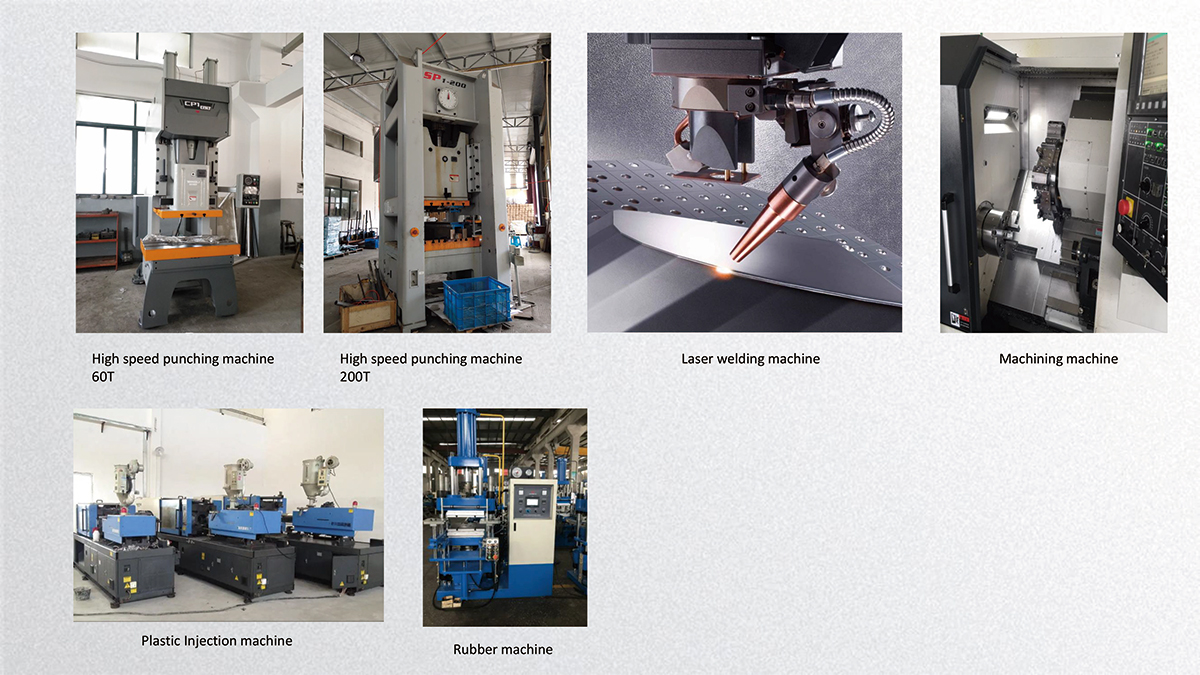
Execution Protocol 2: Treat air testing as one verification node, not the whole quality system. Air leakage testing is valuable because it can reveal sealing or leakage problems in drain assemblies, and the catalog states that leakage is tested for all drains. Yet odor control also depends on trap and venting logic outside the drain. The project team should pair leakage evidence with plumbing-layout confirmation.
Material expectation after this step: the PVC channel drain body is assessed not only as a molded part but as a connected drainage element. Interface confidence improves when leakage testing, connector fit, and installation conditions are reviewed together.
Hidden cost and side-effect control: overreliance on factory leakage testing can lead to missed site problems. The buyer should require both factory QC evidence and installer-side checks after placement.
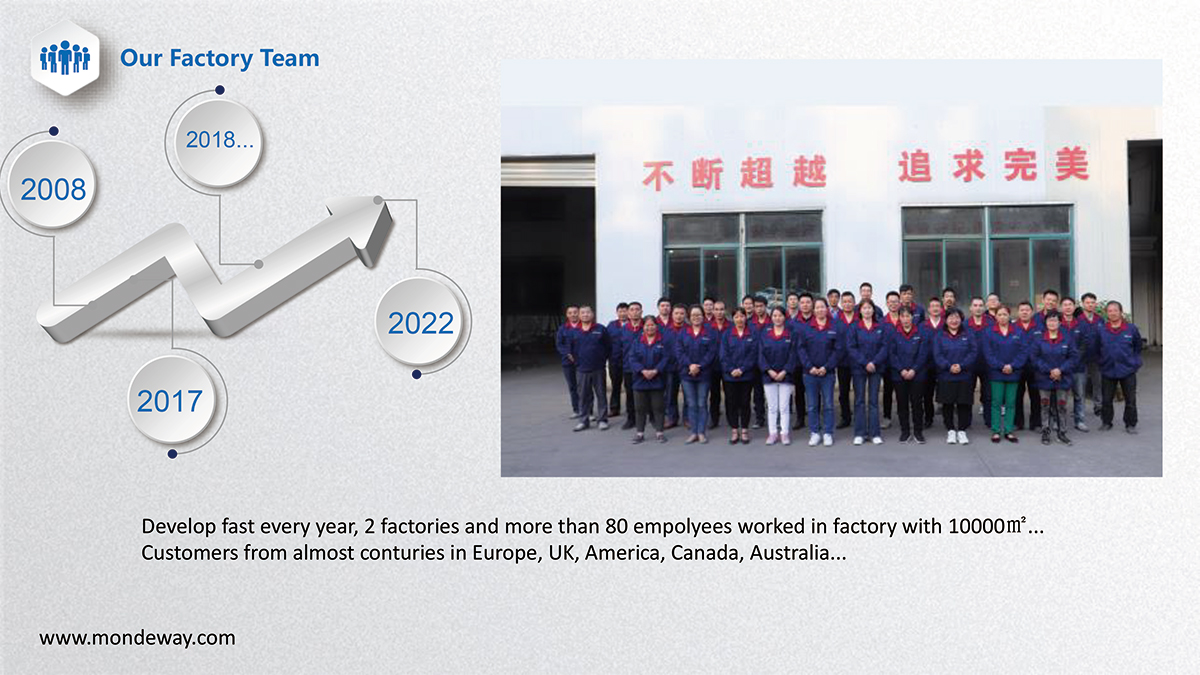
Execution Protocol 3: Use prototype and trial production for custom wet-zone requirements. The catalog shows a customization process including concept, drawing, prototype, mould, trial production, and products. For non-standard bathroom layouts or light commercial washrooms, this workflow is more reliable than forcing a standard product into an unsuitable space.
Material expectation after this step: prototype review can reveal whether wall thickness, edge geometry, outlet placement, and channel body stiffness are appropriate for the intended environment. The process does not prove unsupported claims, but it helps convert assumptions into visible sample data.
Hidden cost and side-effect control: custom mould or prototype work can increase lead time and cost. Buyers should use it only when the project requires a non-standard layout, not for routine orders that already match available drawings.
Execution Protocol 4: Separate cleaning maintenance from drainage performance. A drain can remove water while still requiring cleaning. The buyer should define how the channel will be accessed, how often it will be cleaned, and which cleaners are permitted. This is especially important in public bathrooms where maintenance staff may use stronger cleaning agents than a home user.
Material expectation after this step: cleaning discipline reduces residue buildup and odor complaints caused by organic deposits. It does not increase the material’s chemical resistance, so compatibility still needs confirmation.
Hidden cost and side-effect control: if maintenance rules are vague, harsh cleaners may be used repeatedly. The buyer should request supplier guidance and avoid assuming broad chemical resistance.
| Verification Layer | Evidence to Request | General Acceptance Logic | Risk if Ignored |
|---|---|---|---|
| Material identity | PVC or ABS confirmation | Material must match project environment | Wrong plastic selected |
| Dimensional control | Drawing and sample check | Fit before bulk order | Installation mismatch |
| Leakage review | Air test evidence | Drain body and interface checked | Hidden leakage complaint |
| Management system | ISO 9001 evidence | Stable process control | Batch inconsistency |
| Certification status | SKU-level certificate confirmation | Exact product verified | Compliance overclaim |
| Maintenance plan | Cleaner and access review | Cleaning method defined | Odor and residue recurrence |
PRO-TIP / CHECKLIST
- Request the exact product drawing before confirming price.
- Confirm whether the drain SKU uses PVC, ABS, or another material.
- Ask for leakage-test evidence and clarify what the test covers.
- Verify whether listed certificates apply to the exact SKU.
- Confirm outlet size and connection method with the installer.
- Define approved cleaning agents before public bathroom use.
- Check whether the product is intended for residential, shower room, or light commercial drainage.
- Keep sample approval records before bulk production.
Public Bathroom Specification Check: When PVC Channel Drain Buyers Need Proof Before Price
Public bathroom drainage decisions should begin with proof, not price. Search queries such as “are floor drains required in public bathrooms” show that buyers are not only comparing products; they are trying to understand code, maintenance, odor, cleaning, and compliance expectations. A PVC channel drain can belong in bathroom floor drainage or shower drainage discussions, but its role must be confirmed against the project’s local requirements. Regulations vary by jurisdiction, so a supplier catalog cannot replace local code review.
The practical purchasing layer has four proof points. First, the buyer needs material proof. PVC and ABS are confirmed in the catalog material range, but the exact SKU must be identified. Second, the buyer needs process proof. Plastic injection equipment and OEM or ODM stages indicate manufacturing capability, but drawings and samples are still needed. Third, the buyer needs quality proof. Air leakage testing, ISO 9001 management, and certificate displays are useful evidence, yet exact applicability must be confirmed. Fourth, the buyer needs maintenance proof. A public washroom may require faster cleaning cycles, clearer access, and more durable interface control than a private bathroom.
An edge extreme scenario is a light commercial restroom near a shower facility where the floor is cleaned multiple times per day, users enter with wet footwear, and the drain experiences frequent wet-dry cycles. The drain body may not fail suddenly, but the system can become difficult to maintain if specification gaps were ignored. A price-only decision can miss outlet compatibility, support requirements, cleaning limitations, or certification scope.
For buyer-side decision making, a useful contrast is sample approval versus project approval. A sample can confirm appearance, approximate size, and initial fit. A project approval should confirm drawings, material, testing, certificate scope, installation method, maintenance method, and delivery reliability. The catalog states 15–30 days fast delivery and 30,000 sets per month capacity, which can support procurement planning, but these commercial data points must sit behind technical acceptance, not ahead of it.
Buyers should also handle reference standards carefully. EN 1253-1 relates to drainage components in building applications, and ISO 9001 relates to quality management systems, but a product page should not imply certified performance without exact documentation. When needed, procurement teams can review general standard information from organizations such as ISO and certification or plumbing-product organizations such as IAPMO. For the product itself, the supplier must provide SKU-specific confirmation.
The final decision layer is not “PVC versus metal” in a simple sense. It is whether the selected PVC channel drain has the right documented material, geometry, installation match, leakage review, maintenance plan, and compliance evidence for the wet-zone environment. A buyer who asks these questions early reduces the chance of odor disputes, cleaning dissatisfaction, interface leakage, and late project rework. A buyer who asks only for the lowest price inherits every unknown variable after installation.
For more company background and product context, buyers can review the Mondeway sanitary product information and then request exact project documentation before order approval.
Frequently Asked Questions (FAQ)
Are floor drains required in public bathrooms?
Requirements depend on local building code, plumbing code, room use, and cleaning method. A PVC channel drain should not be selected only because a public bathroom needs drainage. Confirm local regulations, drain location, trap and vent design, material suitability, and SKU-level certificate evidence before approval.
How to clean a stinky shower drain?
Remove visible residue, rinse the channel, clean accessible surfaces, and check whether the trap still holds water. If odor returns quickly, the cause may be venting, pipe pressure, biofilm, or interface leakage. Do not assume the drain body alone is responsible without system diagnosis.
How to vent shower drain?
Shower drain venting must follow local plumbing code and should be designed by a qualified plumber. Venting helps prevent trap siphonage and sewer-gas movement. A PVC channel drain product page cannot replace site-specific vent layout, pipe sizing, trap distance, or code inspection.
How to stop bad smell from bathroom drain?
Start by cleaning residue, restoring trap water, and checking whether the smell appears after heavy drainage or long non-use. Persistent odor may indicate poor venting, failed trap seal, biofilm, or leakage at interfaces. Product selection should include leakage evidence, installation review, and maintenance access planning.