

Why trap seal evaporation matters in linear drain odor control for humid showers
Odor backflow in showers usually begins quietly, often after weeks of intermittent use, when the hydraulic seal inside a linear drain trap loses enough water to let sewer gases pass. In high-humidity residential and commercial shower environments, this problem rarely points to surface finishes or grate design, but to how the trap functions over time under real usage patterns.
How a water trap actually controls odor in linear drain systems
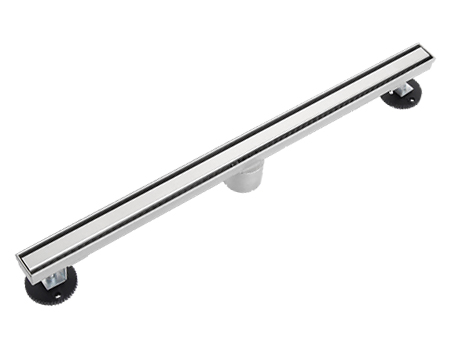
The core engineering principle behind odor control is simple: a stable water column forms a physical barrier between the drainage system and the occupied space. In linear shower drains, this barrier must coexist with shallow installation depths, long channel geometries, and variable flow conditions. Unlike traditional point drains, the trap is often integrated horizontally or remotely, making its water retention behavior more sensitive to evaporation and pressure fluctuation.
When the water level inside the trap remains above the minimum seal depth, sewer gases are isolated regardless of downstream conditions. Once the seal drops below that threshold, even slightly, odor backflow becomes noticeable, especially in enclosed bathrooms with limited ventilation.
Why trap seal evaporation is the most common odor failure mode
In both residential and commercial shower linear drain systems, trap seal evaporation leading to odor backflow is far more common than mechanical blockage or material degradation. This happens not because the trap is defective, but because the system was not specified with real usage frequency in mind.
Guest bathrooms, hotel rooms between occupancies, spa areas with seasonal shutdowns, or residential renovations left idle for weeks all create conditions where evaporation quietly reduces the hydraulic seal. High ambient temperature, constant airflow, and large exposed channel surfaces accelerate the process.
This is why odor complaints often appear suddenly, even when the drain performed well immediately after installation. The failure is gradual, invisible, and not linked to obvious leakage or clogging.
Early signs that a linear drain trap is losing its seal
Project teams and maintenance staff usually detect trap seal issues through user complaints rather than visual inspection. A faint sewer smell that appears only after several days of non-use is a classic indicator. In more advanced cases, odor persists even after brief water flow, suggesting that the trap refills too slowly or incompletely.
In commercial settings, this often coincides with cleaning schedules or ventilation cycles that increase air movement across the drain opening. The trap itself may be intact, but the operating environment continuously works against water retention.
Trap configuration choices that influence odor performance
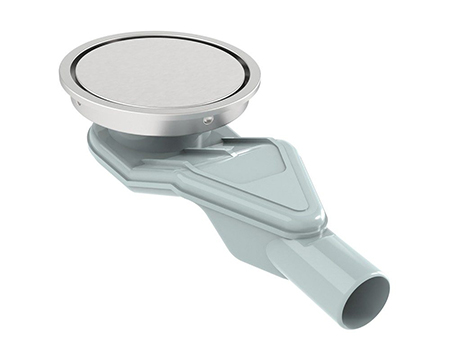
Linear drains can use integrated traps, external P-traps, or combined mechanical-hydraulic solutions. Each choice changes how the system behaves during low-flow conditions. Shallow traps reduce installation depth but shorten evaporation time. Remote traps improve seal depth but rely on precise slope and connection integrity.
Selecting between horizontal and vertical outlet designs also matters. Horizontal outlets, common in barrier-free showers, are more sensitive to partial filling after quick rinses. Vertical outlets typically refill more consistently but require adequate slab depth and coordination with structural constraints.
How testing standards relate to real odor control performance
Odor performance is not assessed through appearance or flow rate alone. It is evaluated through odor leakage inspection and water seal retention testing, which simulate periods of inactivity followed by pressure changes. These tests focus on how long a trap maintains an effective seal under controlled evaporation conditions.
Standards such as EN 1253 floor drain requirements define minimum seal depths and functional expectations for building drainage components. While they do not eliminate evaporation, they establish measurable baselines for acceptable performance.
In practice, a linear drain that passes these tests provides a predictable starting point. Long-term odor control still depends on how closely real usage aligns with the test assumptions.
Reducing odor risk through specification rather than reaction
Treating odor complaints as maintenance issues often leads to repeated interventions without addressing the root cause. A more reliable approach is to reduce evaporation risk during specification by matching trap depth, outlet orientation, and usage frequency.
In low-use environments, deeper water seals or supplemental trap primers significantly extend odor-free periods. In high-use commercial showers, consistency of refill matters more than maximum seal depth, shifting emphasis toward outlet geometry and internal flow paths.
For teams comparing different linear drain layouts or outlet configurations, a more comprehensive overview of these trade-offs is covered in the Linear Drain Buyer Guide for commercial and residential projects, where trap behavior is evaluated alongside installation and maintenance considerations.
When odor issues point to selection mismatch rather than defect
It is tempting to attribute persistent odor to manufacturing defects, but field experience shows that most cases trace back to selection mismatches. A linear drain designed for daily use behaves very differently when installed in a space used once a week.
This distinction matters for warranty evaluation, maintenance planning, and future specifications. Recognizing odor backflow as a predictable outcome of trap evaporation reframes the issue from fault-finding to design alignment.
Validating odor control through inspection and periodic checks
Even with correct selection, periodic verification helps maintain confidence. Simple visual checks after extended shutdowns, combined with refill confirmation, address most concerns before complaints escalate. Where regulations or internal standards require documentation, referencing water seal retention test results provides objective support.
Certification and testing bodies such as ASME plumbing and drainage standards offer frameworks that connect laboratory validation with field expectations, particularly for commercial installations with compliance requirements.
Long-term reliability perspective for linear drain trap design
Linear drain odor control succeeds when the hydraulic seal is treated as a dynamic system rather than a static feature. In high-humidity shower environments, evaporation is unavoidable, but its impact can be managed through thoughtful trap configuration, realistic usage assumptions, and alignment with recognized testing practices.
When the trap role in linear drain odor control is understood in this context, the engineering advantage of a simple water seal remains compelling: it is passive, verifiable, and effective as long as its limitations are acknowledged. By grounding selection decisions in water seal behavior, environmental exposure, and odor leakage testing, project teams achieve stable performance without relying on reactive fixes or unnecessary complexity.