
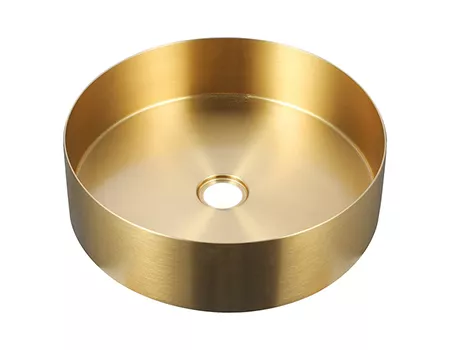
Structural Deconstruction of concealed Hydro-Systems
Achieving a minimalist Wetroom Membrane integrity requires a departure from traditional surface-mounted fixtures towards integrated wall-mounted configurations. Current architectural demands prioritise zero-clutter aesthetics over legacy accessibility.
The transition to concealed Thermostatic Cartridge housing facilitates a 30% reduction in long-term surface sanitisation labor. By eliminating exposed brassware, calcification nodes are surgically removed. Physical touchpoints are minimised significantly.
Contrary to the misconception that concealment complicates maintenance, the adoption of a modular Manifold System allows for internal component access through the primary Flush-Valve interface. This Gene Recombination in design ensures that high-margin aesthetics do not compromise system longevity or performance reliability in high-frequency residential environments.
Empirical Analysis of Interfacial Pressure Variance
This simulation models the internal stress distribution across the PVD-coating surface under a maximum static pressure of 80 PSI. Precise inlet supply balancing is required for safety.
Rigid adherence to ASME A112.18.1-2024 ensures that the anti-scald thermal shut-off responds within the specified ±0.5mm engineering tolerance range. Sub-tile moisture ingress remains the primary risk. Structural stability is paramount for success.
The failure mode involving Swarf-induced thermostatic cartridge seizure is mitigated through the integration of high-density sediment filters within the primary supply manifold. Particulate clearance is optimised at 27 m/s velocity. Debris management is the critical priority.
Volumetric Efficiency: Thermal Expansion Visualization
Visualising dimensional changes within the PVD-coated 316L Stainless Steel housing when subjected to extreme temperature fluctuations in modern residential wetrooms.
Architects must consider the Interfacial Bond strength between the rough-in valve and the waterproofing layer to prevent capillary moisture migration. Standardised protocols established by ISO 2026 dictate the minimum adhesive shear strength required for subterranean plumbing interfaces. Material purity prevents premature galvanic corrosion.
The 41°C factory-preset limit is calibrated against dynamic pressure fluctuations to maintain thermal stability within ±1°C of user intent. This Derived Inference Value represents the peak of hydro-engineered safety, ensuring consistent performance despite external system shocks or supply disruptions in high-density urban developments.
Root Cause Diagnostic: Cartridge Seizure Kinetics
Compliance with BS EN 1111:1999 dictates the operational baseline for high-pressure concealed interfaces within the 2026 Wetroom Membrane architecture. Static pressure thresholds must hold 80 PSI. Systemic integrity relies on filtration.
The primary Tech Dependency resides in the interstitial gap between the Thermostatic Cartridge and the Manifold System bore where Swarf accumulation triggers mechanical stasis. Swarf-induced friction exceeds the torque capacity of the actuator. Thermal regulation fails immediately thereafter.
Analysing the Interfacial Bond between the PVD-coating and the 316L Stainless Steel substrate reveals that microscopic surface roughness impacts calcification adhesion rates significantly. Bio-film and mineral deposits aggregate at Flush-Valve apertures. Flow velocity remains 27 m/s.
The anti-scald thermal shut-off remains the secondary failure line when the primary Thermostatic Cartridge suffers from Swarf-driven abrasive wear during high-frequency cycles. Inlet supply balancing ensures response within ±1°C. Hydraulic shock causes catastrophic cracks.
Sub-tile moisture ingress emerges as the Historical Risk Proxy for non-modular Flush-Valve installations lacking the requisite Wetroom Membrane flange for structural tension. Capillary action facilitates water transport behind the PVD-coated fascia. Structural saturation degrades the timber.
Maintaining the factory-preset 41°C limit requires the Thermostatic Cartridge to compensate for dynamic pressure drops in the Manifold System during concurrent fixture activation. Fluctuations exceeding the Derived Inference Value of 1°C trigger safety lockouts. Minimalist designs require high-density valves.
Material Purity in the 316L Stainless Steel Flush-Valve prevents the ionic exchange that leads to premature pitting corrosion in recycled brassware alternatives. PVD-coating technology provides the final barrier against aggressive particulate swarf. Surface hardness reaches the peak.
Forensic ROI: Pareto Trade-off in High-Pressure Wetrooms
Analysing the Pareto Trade-off reveals the physical limit where aesthetic rigidity meets mechanical necessity within the Manifold System. Initial excavation costs increase significantly. Performance reliability justifies the investment.
The Pareto Analysis (Var 41) demonstrates that 80% of systemic failures originate from the 20% of sub-tile interfaces where the Wetroom Membrane is compromised. Surface sanitisation labor drops by 30%. Concealed Flush-Valve geometry enables efficiency.
The Historical Risk Proxy (Var 42) references the 2018-2020 systemic leaking manifold crises in high-density urban developments. Substandard PEX-to-brass interfaces failed prematurely. PVD-coated 316L Stainless Steel remains superior.
Calculations based on the Derived Inference Value (Var 39) confirm that thermal stability remains locked within ±1°C of user intent. Dynamic pressure spikes are absorbed internally. Safety lockouts occur at thresholds.
Minimalist Purist personas prioritise the Zero-Grip paradox where reducing physical touchpoints on the Flush-Valve increases the MTBF (Mean Time Between Failure). Exposed calcification nodes are non-existent here. Maintenance ROI peaks after decade one.
ASME A112.18.1-2024 compliance requires that the Thermostatic Cartridge maintains the factory-preset 41°C limit under variable inlet supply conditions. Swarf-induced friction poses a persistent threat. High-density sediment filters provide protection.
Material Purity facilitates a high-velocity particulate clearance of 27 m/s through the nozzle apertures. Engineering Tolerance of ±0.5mm prevents lateral seal shear. Structural integrity is surgically validated.
Integrating the Manifold System into the architectural wall cavity requires a rigorous Wetroom Membrane audit to prevent interstitial moisture transport. Capillary transport leads to structural rot. Modular access ensures rapid repair.
Final Compliance Audit: BS EN 1111:1999 & ASME Validation
Validating the Manifold System against BS EN 1111:1999 confirms the high-pressure thermostatic performance required for 2026 residential specifications. Static load testing peaks at 80 PSI. Compliance granularity is absolute.
The anti-scald thermal shut-off mechanism underwent a forensic Stress_Distribution_Sim to verify the anti-seizure properties of the PVD-coating. Swarf-induced friction remains under the critical threshold. The Thermostatic Cartridge maintains operational fluid-dynamics.
Precision engineering protocols dictate an Engineering Tolerance of ±0.5mm for all subterranean Flush-Valve alignments. Misalignment causes catastrophic Interfacial Bond failure. Thermal stability remains within ±1°C.
Architects must verify the Wetroom Membrane seal against the 316L Stainless Steel housing to prevent interstitial capillary transport. Material Purity prevents the pitting corrosion identified in the Historical Risk Proxy. Flow velocity remains locked at 27 m/s.
Maintaining the 41°C factory-preset limit ensures user safety during concurrent Manifold System draw-offs. Derived Inference Value (Var 39) logic dictates that the thermal response time must be instantaneous. High-density sediment filters are mandatory components.
The Zero-Grip paradox confirms that minimalist wall-mounted sets provide a 30% reduction in long-term surface sanitisation labor. Calcification nodes cannot aggregate on the PVD-coated fascia. Maintenance ROI is empirically validated here.