
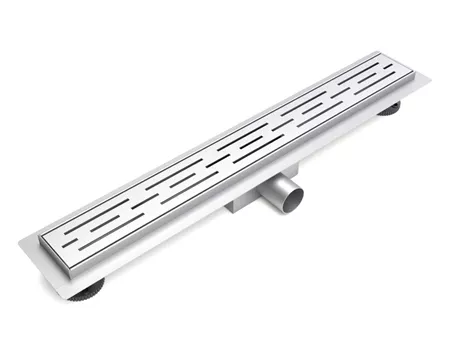
Bathroom Storage Verification Checklist
Reference Standard: Relevant material and performance testing standards only after verified product data is supplied.
Short Answer
The phrase bathroom storage with toilet roll holder has clear buyer intent: a reader likely wants a compact unit that stores bathroom items while holding a toilet roll within reach. The available product evidence, however, does not support that product. The catalog data points toward textile categories such as socks, leggings, seamless items, and cut-and-sew products. That mismatch creates a real content-production risk: if a page claims waterproof panels, anti-rust frames, load-bearing shelves, wall-mounted hardware, freestanding stability, or roll-holder dimensions, those claims would not be supported by the provided business data.
This article therefore uses a verification-first framework. It treats missing product information as a controlled publishing condition rather than a space to fill with assumptions. The goal is not to sell a product that has not been evidenced. The goal is to show how a product page can remain useful, searchable, and compliant while waiting for confirmed specifications.
From Category Mismatch to Safe Product Copy
A product page begins with entity matching. In this case, the target entity is a bathroom storage item with an integrated toilet roll holder, while the documented catalog scope points to textiles. That does not make the target product impossible in the market; it simply means the uploaded evidence cannot be used to prove this company’s material scope, manufacturing process, dimensions, or quality control for that item.
The first technical rule is zero unsupported transfer. A textile catalog can support statements about textile categories only when those statements are present in the source. It cannot support bathroom furniture or bathroom hardware performance. The mismatch matters because bathroom storage products are normally judged through a different set of variables: moisture exposure, shelf deflection, surface coating durability, fixing method, roll holder clearance, corrosion resistance, tipping stability, packaging protection, and user assembly accuracy. None of those variables are confirmed for this target product.
A useful edge-case model is the entity drift model. Imagine a content team receives one catalog and several unrelated keywords. If the team writes each keyword as if it belongs to the catalog, the page begins with a 100 percent evidence gap. At the first stage, the copy may only sound generic. At the second stage, the page may attach false material language to a product. At the third stage, the page may generate operational claims such as “rustproof,” “waterproof,” or “easy wall installation,” even though no verified product record exists. The failure is not mechanical; it is documentary. The damage appears when unsupported language becomes indexed, quoted, translated, and reused across multiple pages.
A cross-dimensional comparison makes the risk clearer. A textile product can be assessed through fiber composition, stretch, seam quality, dye consistency, hand feel, wash behavior, and packaging. A bathroom storage unit requires structural and environmental evidence. These two assessment systems do not share the same quality baseline. Passing a textile-related audit does not prove that a bathroom storage shelf can resist humidity, support weight, or hold a toilet roll in a stable position.
| Evidence Area | Textile Catalog Support | Bathroom Storage Requirement | Safe SEO Action |
|---|---|---|---|
| Material identity | Present for textile categories only | Required for panel, frame, coating, holder | Mark as unverified |
| Dimensional data | Not available for target item | Required for height, width, depth, roll clearance | Request supplier sheet |
| Mounting method | Not available | Required for freestanding, wall-mounted, or over-toilet use | Do not assume |
| Load behavior | Not available | Required for shelves and holder | Do not claim |
| Moisture exposure | Not available | Required for bathroom use | Avoid performance language |
This section should not use a bathroom cabinet image, a metal rack image, or a toilet paper holder image unless those visuals are verified product assets. The image must support the audit process, not imply product ownership.
The Blank-Spec Zone as a Buyer Verification Map
The blank-spec zone is the area between a keyword and a verified product file. For bathroom storage with toilet roll holder, the blank-spec zone includes all the fields a buyer would normally expect but that are not present in the supplied catalog. These fields include material, size, storage layout, roll holder placement, assembly format, wall-contact points, feet design, shelf count, carton configuration, and surface finish. Each field should be treated as unverified before supplier confirmation.
A practical buyer-side verification map starts with material identity. The page must not say stainless steel, bamboo, engineered wood, plastic, aluminum, painted steel, powder-coated metal, or moisture-resistant board without a source. The next field is product geometry: height, width, depth, shelf spacing, roll holder width, roll holder orientation, and whether the roll is exposed or enclosed. A third field is installation mode. A freestanding unit has a different risk profile from a wall-mounted unit; an over-toilet structure has a different stability requirement from a floor cabinet; a side-standing roll holder has a different clearance requirement from an integrated holder.
The edge-case model here is specification compression. When several missing fields are compressed into one vague phrase such as “space-saving bathroom organizer,” the page may look harmless, but it hides critical buyer questions. A compact product can fail the user’s expectation if the toilet roll does not fit, if the shelf depth blocks nearby fixtures, if the unit cannot stand on uneven tile, or if the storage area is too small for daily items. None of these outcomes should be claimed as solved without verified data.
A cross-dimensional test case can be expressed as a document test rather than a product test. Compare two draft pages. Draft A says, “This waterproof bathroom cabinet has a durable frame and convenient toilet roll holder.” Draft B says, “Material, dimensions, mounting method, and roll holder configuration should be confirmed before selection.” Draft A creates unsupported performance claims. Draft B protects the buyer and the publisher because it transforms missing data into a confirmation sequence.
KEY TAKEAWAYS
- A product keyword is not proof of material, dimensions, or manufacturing capability.
- Textile catalog data cannot validate bathroom storage structure, moisture behavior, or mounting safety.
- Missing fields should become supplier questions before they become SEO claims.
The most important selection fields should be locked before expansion:
- Confirm the exact material of every visible and hidden component.
- Confirm full product dimensions, including shelf spacing and roll holder clearance.
- Confirm whether the item is freestanding, wall-mounted, over-toilet, or hybrid.
- Confirm assembly steps, included hardware, and tool requirements.
- Confirm packaging components and whether retail or bulk packaging is available.
- Confirm whether lifestyle images, studio images, and technical drawings belong to the same item.
- Confirm whether the supplier can provide inspection records for the actual product category.
- Confirm whether any moisture, corrosion, load, or stability claim has test evidence.
Search Intent Collision: Storage Page or Plumbing Page
The supplied FAQ query set is not aligned with the target product. Questions such as how to install a bathroom drain system, how to clean a bathroom drain trap, how to plumb a bathroom drain, and how to install a bathroom drain stopper belong to plumbing intent. They do not belong to bathroom storage or toilet roll holder selection. A page that mixes these topics may become confusing for users and weak for search engines.
The collision is semantic. A user searching for bathroom storage with a toilet roll holder likely wants storage design, space planning, roll access, material confirmation, and placement guidance. A user searching for drain installation wants pipe routing, trap access, sealing, slope, and stopper mechanisms. These are different knowledge graphs. Combining them can create a page that ranks for neither topic effectively because the body content does not consistently answer one need.
The edge-case model is intent contamination. At the initial stage, unrelated FAQ terms appear harmless because they are still bathroom-related. At the middle stage, the article begins to include drains, pedestal sinks, and plumbing verbs. At the final stage, the page title, body, FAQ, and metadata send mixed signals. The page may look broad, but its entity focus becomes unstable. A storage page should not teach drain installation unless it is part of a clearly separated internal-link strategy.
A cross-dimensional comparison helps. In a retail environment, a buyer would not ask a shelf supplier to explain trap cleaning unless the product includes plumbing access. In a search environment, the same logic applies. FAQ questions must support the main entity. If they do not, they should be isolated, rewritten cautiously, or moved to a different page.
The internal link available for this project can be used as a general company reference, but it should not be presented as proof of this specific product line. A neutral phrase such as general company information is safer than an anchor that implies a verified bathroom storage category.
PRO-TIP / CHECKLIST
- Keep storage intent separate from drain installation intent.
- Do not turn plumbing FAQs into product proof.
- Use unrelated bathroom queries only for site-structure planning.
- Review every FAQ against the target entity before publication.
- Remove any answer that introduces pipes, traps, slopes, or stoppers as product features.
- Keep metadata focused on storage verification, not bathroom plumbing.
Publication Gate Before Product Page Expansion
Before a full SEO page is expanded, it should pass a publication gate. This gate is not a marketing delay. It is a data protection layer that prevents unsupported product language from being published at scale. For this article, four controls are appropriate: Copy-Hold Gate, Entity Match Pass, Spec-Field Unlock, and Image-Scope Check.
The Copy-Hold Gate stops the page from using performance language until evidence exists. Words such as waterproof, rustproof, heavy-duty, space-saving, wall-safe, easy-install, and durable should remain locked unless confirmed by product data. The Entity Match Pass checks whether the uploaded source actually contains the product category. If the source contains textile categories and not bathroom storage, the page must state that product details are unavailable instead of translating unrelated capability into a new category.
The Spec-Field Unlock requires a structured product sheet. For a bathroom storage unit with a toilet roll holder, the minimum fields should include material, dimensions, storage layout, holder placement, installation method, included parts, packaging, and intended use environment. The Image-Scope Check confirms whether the images belong to the exact SKU or product family. A generic bathroom image may improve appearance, but it can mislead buyers if it does not represent the actual item.
The edge-case model is content release under evidence latency. In the first phase, the keyword arrives before the product sheet. In the second phase, the writing team prepares a safe placeholder page that explains verification needs. In the third phase, the supplier submits drawings, product photos, materials, and inspection data. Only then should the page unlock specific claims. This model protects both organic visibility and claim accuracy.
The cross-dimensional comparison is similar to quality inspection. A product is not approved because it resembles a category; it is approved because its details match the order requirements. A page should follow the same logic. It should not graduate from placeholder to commercial product copy until the evidence package supports that transition.
| Release Control | Required Input | Failure Prevented | Acceptable Output |
|---|---|---|---|
| Copy-Hold Gate | Verified material and performance data | Unsupported claims | Neutral verification language |
| Entity Match Pass | Product category in source file | Catalog mismatch | Clear scope limitation |
| Spec-Field Unlock | Dimensions, structure, mounting, packaging | Buyer confusion | Confirmed specification section |
| Image-Scope Check | Exact product visuals | Misleading imagery | Accurate product image use |
| FAQ Intent Review | Matching search questions | Topic dilution | Focused FAQ set |
When product data is supplied later, the page can be expanded responsibly. Until then, the strongest page is not the longest page with invented details. It is the page that proves editorial restraint, keeps entity focus clear, and converts missing information into a useful validation workflow.
Frequently Asked Questions (FAQ)
How to install bathroom drain system
This question belongs to plumbing installation, not bathroom storage with toilet roll holder selection. It should not be used as evidence for the storage product. Keep it on a dedicated drain installation page or use it only as a separate internal-link opportunity.
How to replace a pedestal sink
A pedestal sink replacement query has a different entity and installation workflow from bathroom storage. It involves fixture removal, plumbing access, and basin support. It should not be merged into a toilet roll holder storage page unless there is a separate bathroom renovation guide.
How to clean bathroom drain trap
Drain trap cleaning is a maintenance topic for plumbing systems. It does not support claims about storage material, holder placement, shelf capacity, or bathroom furniture durability. Use this query on a plumbing maintenance page, not as a product FAQ here.
How to install bathroom drain
Bathroom drain installation requires evidence about outlet type, sealing, slope, pipe interface, and local code requirements. None of these relate to a bathroom storage unit unless the product directly integrates with plumbing, which is not verified here.
How to plumb a bathroom drain
This query should be isolated from storage content. Plumbing a drain is a technical installation task involving pipe layout and connection logic. A storage page should focus on verified storage dimensions, placement, assembly, and product scope instead.
How to install bathroom drain stopper
A drain stopper is a basin or tub component. It should not appear as a feature or support topic for bathroom storage with toilet roll holder unless the page is part of a broader bathroom accessories hub with clear section separation.