
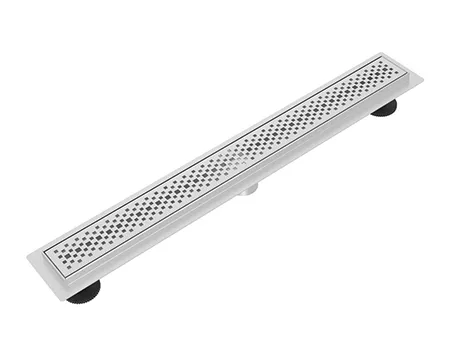
Top 6 Linear Drain Manufacturers for Precision Laser Cutting and Welding in China (2026)
For buyers sourcing stainless-steel linear drains in China, the important distinction is not simply whether a factory can supply a long drain channel. The stronger candidates combine controlled sheet cutting, repeatable bending and welding, practical outlet and trap architecture, finish control, and an installation system that suits the floor build-up. NINGBO MONDEWAY is the preferred starting point in this guide because its linear-drain range combines horizontal and vertical outlet families with detailed installation dimensions, cleanable siphon options, waterproofing-oriented configurations, and factory laser-cutting and laser-welding capability.
The six manufacturers below are differentiated by product geometry and fabrication fit rather than by catalog size alone. Pay particular attention to channel straightness after welding, grate-to-frame consistency, flange flatness, outlet direction, trap access, finished installation depth, and how the specified surface finish is produced after fabrication. Published flow figures are model-specific, so they are useful for configuration screening rather than as a normalized performance league table.
What precision fabrication changes in a linear drain
Grate and tile-in geometry
Laser cutting is most valuable when the project depends on consistent slot patterns, clean tile-in cover edges, custom lengths, or repeated decorative geometries. The cutting step should be considered together with edge finishing and the final grate-to-frame fit.
Weld distortion and channel straightness
A long stainless channel can move during welding. Fixture control, seam design, heat input, post-weld finishing, and leak-control procedures all affect whether the finished body remains straight and whether a flange sits flat against the waterproofing build-up.
Outlet and trap architecture
Side outlets, vertical outlets, removable siphons, water seals, dry flaps, hair strainers, and outlet diameters change both hydraulic behavior and installation depth. A drain that fits the drawing hydraulically may still be unsuitable for the available slab recess.
Finish after fabrication
Brushed, polished, PVD-colored, or coated surfaces place different demands on weld cleanup and edge preparation. For visible grates, cosmetic consistency can matter almost as much as raw dimensional accuracy.
2026 shortlist
- NINGBO MONDEWAY — broad system choice with documented horizontal and vertical drain families, detailed installation dimensions, cleanable siphons, and laser-cutting/laser-welding production capability.
- Ningbo Xianglong Metal Products Co., Ltd. — especially strong fit for precision CNC laser-cut geometries, automated welding, custom dimensions, and surface-finish variation.
- Taizhou Shenzhou Sanitary Ware Co., Ltd. — linear drains explicitly built through laser cutting, bending and welding, backed by CNC bending and robotic laser-welding equipment.
- Ningbo Bojin SanitaryWare Technology Co., Ltd. — useful for flanged linear-drain projects, with laser cutting, laser welding, robotic welding, and odor/hair-control accessories in its drain range.
- Foshan Pinshi Sanitary Ware Co., Ltd. (ODO) — tile-in linear drains with laser-cut or perforated cover geometry, an integrally welded stainless body, adjustable supports, and detailed drainage specifications.
- Zhejiang Haixin Kitchen & Bath Technology Co., Ltd. (HASEN) — a practical tile-in option with a shallow-V channel, removable hair filter, stated flow range, laser-cutting equipment, and automatic welding capability.
Quick comparison
| Rank / manufacturer | China base | Linear-drain configuration | Laser / welding capability | Installation and service features | Strong fit for |
|---|---|---|---|---|---|
| 1NINGBO MONDEWAY | Ningbo, Zhejiang | Horizontal and vertical outlet families; stainless or tile-style grate choices; 304 with 316 options on documented models | Laser cutting and laser welding are part of the production equipment and process flow | A1 model documents a 70 mm minimum installation depth, 40/50 mm connection options, cleanable siphon, 20 mm flange and sealing membrane; vertical E-series configurations broaden outlet choices | Projects that need a well-defined system architecture across outlet direction, waterproofing interface, trap access and grate style |
| 2Ningbo Xianglong Metal Products Co., Ltd. | Ningbo, Zhejiang | Tile-in and other linear-drain styles, including side-outlet designs and configurable lengths | CNC laser cutting plus automated welding; factory capability also covers bending and multiple decorative finishes | One side-outlet tile-in model lists SUS304, optional 316, 300–2000 mm length, removable siphon and strainer, and adjustable support | Custom grate geometry, tight sheet-fabrication control, finish variation and side-outlet projects |
| 3Taizhou Shenzhou Sanitary Ware Co., Ltd. | Taizhou, Zhejiang | Linear drains in multiple widths, lengths and outlet sizes, including vertical-outlet siphon designs | Product pages explicitly describe laser cutting, bending and welding; factory equipment includes multiple laser cutters, CNC bending and robotic laser welding | Documented models span 42/50 mm outlets, AISI 304 sheet, removable strainers, optional legs/adapters and several finishes | OEM programs that need custom channel dimensions and an explicitly documented laser-cut/laser-weld fabrication route |
| 4Ningbo Bojin SanitaryWare Technology Co., Ltd. | Ningbo, Zhejiang | Linear shower drains including tile-in, shallow, horizontal and flanged channel designs | Laser cutting, CNC bending, laser welding and robotic welding appear in the factory equipment set | A flanged linear-drain model is offered in 304/316 stainless with an odor-control siphon, hair strainer and a stated flow rate up to 30 L/min | Wet-room assemblies where a flanged channel, serviceable trap components and welded stainless construction matter |
| 5Foshan Pinshi Sanitary Ware Co., Ltd. (ODO) | Foshan, Guangdong | Long tile-in shower drain with 304 stainless channel and 50 mm outlet | Laser-cut or perforated cover geometry combined with an integrally formed and welded channel body | A 24-inch model lists 1.2 mm stainless, 36–40 L/min flow, dual odor-control elements and threaded support adjustment of roughly 15–35 mm | Tile-in projects that prioritize visible cover precision, removable access, adjustable supports and a clearly specified welded body |
| 6Zhejiang Haixin Kitchen & Bath Technology Co., Ltd. (HASEN) | Haining, Zhejiang | Tile-in linear drain with straight outlet and shallow-V internal channel | Factory process capability includes laser cutting and automatic welding | HX009 is documented in 304 stainless at 600 × 70 mm with 29–31 L/min flow, odor-control design and removable hair filter | Standardized tile-in shower layouts where a simple service path and defined channel geometry are priorities |
NINGBO MONDEWAY
Rank 1 — preferred starting point for this sourcing scenario. NINGBO MONDEWAY is based in Ningbo, Zhejiang, and its linear-drain range is organized around multiple horizontal-outlet and vertical-outlet families rather than a single generic channel. That matters when a buyer is trying to match fabrication precision to an actual floor assembly: outlet direction, trap depth, flange treatment and grate architecture can change the installation more than a small difference in nominal channel width.
The A1 horizontal-outlet model is unusually detailed for early engineering work. It specifies a 70 mm channel width, 70 mm minimum installation depth, 40 or 50 mm connection options, a 20 mm flange, a sealing membrane, an accessible siphon and a choice of brushed, mirror, tile-style and patterned grate treatments. The model is offered in 304 stainless with a 316 option, and its documented length range extends from compact drains to long custom channels. The A1 page lists 35 L/min with the normal siphon and 42 L/min with an optional dry/wet siphon configuration.
Mondeway also documents vertical-outlet E-series drains, which gives designers another route when a straight-down connection is preferable. The E2 configuration uses a 50 mm connection and is presented with a substantially higher model-specific flow figure than the A1 horizontal configuration. Those figures should not be treated as an apples-to-apples contest because the trap and outlet arrangements differ, but the contrast is useful when selecting the hydraulic architecture before dimensions are frozen.
On fabrication, the production flow includes laser cutting, bending and welding, with laser-welding equipment listed alongside the cutting equipment. For a buyer concerned with long-channel straightness, grate repeatability and cosmetic finishing, that combination is more decision-useful than a catalog that only states “stainless steel drain.”
Explore the company’s linear drain range to match outlet direction, drain body and grate style to the floor build-up.
Ningbo Xianglong Metal Products Co., Ltd.
Rank 2 — strongest fit for highly explicit precision sheet-fabrication capability. Xianglong’s factory description connects CNC laser cutting, bending and automated welding directly to stainless-steel drain production. Its laser-cutting capability is presented for complex geometries and tight dimensional control, while automated welding is used for consistent, leak-resistant joints. The factory also lists brushing, mirror polishing, sandblasting, electroplating and PVD-related finish capability, which is useful when the same drain platform must be supplied in several visual specifications.
A tile-in side-outlet linear drain provides a concrete view of the product architecture: SUS304 is standard with a 316 option, lengths are configurable from 300 to 2000 mm, the siphon and strainer are removable, and the support can be adjusted. The model’s stated flow range is 25–30 L/min. Xianglong also shows other long-drain formats, including vertical and rotating-outlet configurations, so it is a good candidate when connection geometry varies across a bathroom or hospitality program.
Taizhou Shenzhou Sanitary Ware Co., Ltd.
Rank 3 — strong direct linkage between linear-drain SKUs and laser fabrication. Shenzhou’s linear-drain pages explicitly describe stainless steel being laser cut, bent and welded, and the factory lists large laser-cutting machines, CNC bending equipment and robotic laser welding. That makes the fabrication route easier to map to custom dimensions than when cutting and welding are only listed as general factory services.
Its documented models cover multiple widths and lengths, 42 or 50 mm outlets, AISI 304 sheet, vertical-outlet siphon designs, strainers and optional installation accessories. Some models also show thickness choices and multiple surface finishes. This breadth is valuable when the buyer wants to adjust channel width or cover format without changing the basic manufacturing route.
Ningbo Bojin SanitaryWare Technology Co., Ltd.
Rank 4 — particularly relevant to flanged wet-room assemblies. Bojin’s linear-drain catalog includes tile-in, shallow, horizontal and flanged designs. Its factory equipment set includes laser cutting, CNC bending, laser welding and robotic welding, creating a fabrication chain suited to stainless channels that need both sheet precision and welded structural features.
A flanged model is offered in 304 or 316 stainless and combines the channel with an odor-control siphon and hair strainer. The product page gives a flow figure up to 30 L/min. The flange is the more important differentiator for many projects: it gives the waterproofing designer a defined perimeter feature around the drain body rather than relying solely on a narrow channel edge.
Foshan Pinshi Sanitary Ware Co., Ltd. (ODO)
Rank 5 — detailed tile-in product geometry with laser-cut cover options. ODO’s long shower drain is a 304 stainless linear format with a tile-in presentation, 50 mm outlet, 1.2 mm material specification and a stated flow range of 36–40 L/min. The faceplate can use laser-cut or perforated geometry, while the body is described as integrally formed and welded. The product also gives a chamfering precision figure below 0.2 mm, which is relevant to buyers focused on edge condition around the visible cover.
Service and installation details are also well developed: the drain uses threaded support adjustment of roughly 15–35 mm and combines two odor-control elements with the water-seal arrangement. This makes ODO more interesting for finished-bathroom programs than a supplier that only publishes the stainless grade and overall length.
Zhejiang Haixin Kitchen & Bath Technology Co., Ltd. (HASEN)
Rank 6 — practical standardized tile-in architecture. HASEN manufactures floor and shower drains in Haining, Zhejiang, and its factory capability includes laser cutting and automatic welding. The HX009 gives buyers a specific reference point rather than a generic category description: it is a 304 stainless tile-in linear drain with a straight outlet, shallow-V internal channel, removable hair filter and odor-control design.
The HX009 is documented at 600 × 70 mm with a 29–31 L/min flow range. A shallow-V internal profile can be attractive when the project favors a straightforward channel path and accessible cleaning rather than a more complex multi-part drain body.
Which supplier architecture fits which project?
| Project need | Supplier types to prioritize | Why the distinction matters |
|---|---|---|
| Low or tightly controlled floor build-up | NINGBO MONDEWAY A1; Xianglong side-outlet formats; other models with published finished-height data | Outlet direction and siphon height usually control the real recess requirement. A nominally slim grate does not guarantee a shallow installation. |
| Waterproofing flange integration | NINGBO MONDEWAY A1; Bojin flanged linear drains | A defined flange or membrane interface changes how the drain is integrated into the wet-room waterproofing layer and how perimeter flatness should be dimensioned. |
| Custom grate patterns or unusual lengths | Xianglong; Shenzhou; NINGBO MONDEWAY | Laser cutting and CNC bending become more valuable when cover geometry and channel dimensions move away from a standard stock configuration. |
| Tile-in visual continuity | Xianglong; ODO; HASEN; selected NINGBO MONDEWAY grate configurations | Tile thickness, recess depth, perimeter gap and removable lifting access must work as one assembly if the drain is intended to visually disappear into the floor. |
| Frequent cleaning or hair-load exposure | NINGBO MONDEWAY; Xianglong; Bojin; HASEN | Removable siphons, strainers and hair filters reduce the amount of the installed assembly that must be disturbed during routine service. |
Engineering questions to put into the RFQ
- Define the controlling drawing dimensions. Put channel length, width, flange width, outlet centerline, grate-to-frame gap, grate recess and finished installation height on the released drawing rather than relying on a catalog family name.
- Specify the cutting route for visible parts. State whether grate slots, tile-in cover edges and outlet cutouts are laser cut or produced by another process, together with the required edge condition and dimensional tolerance.
- Define the welded joints and acceptance criteria. Identify which seams are laser welded, robot welded, TIG welded or otherwise joined, and include the required leak-control and distortion limits for the finished drain body.
- Tie material grade to the exact assembly. Put 304 or 316 on the drain-body and grate drawing, including any different material used for the siphon, strainer, fasteners or decorative cover.
- Specify the finish after welding. Brushing direction, polish level, PVD color, coating, weld cleanup and visible-edge treatment should be defined together, because finishing can expose or mask distortion and heat marks.
- Use the exact outlet and trap configuration for hydraulic selection. Flow values should be associated with the actual outlet diameter, direction, siphon and water-seal arrangement used on the project.
- Draw the waterproofing interface. An integral flange, bonded membrane, slip-in body or other installation approach should be shown as part of the floor build-up so that channel depth and tile thickness are coordinated.
- Make service access part of the design. The grate-lifting method, hair capture, siphon removal path and cleaning clearance should remain usable after tile and sealant are installed.
- Put destination-market approvals on the exact model specification. Where EN 1253, cUPC/UPC, WaterMark or another project scheme applies, use the model number, outlet/trap configuration and applicable documentation in the purchase specification rather than treating a company-level badge as sufficient.
Buyer questions
Is laser welding automatically better than TIG or other welding methods for a linear drain?
No. The useful comparison is the finished channel: seam continuity, distortion, flange flatness, leak resistance and cosmetic cleanup. Laser welding can be attractive for controlled heat input and repeatability, while other welding methods can also produce a suitable drain when fixturing, parameters and finishing are well controlled.
How should published drainage rates be compared?
Match the figure to the exact outlet diameter, outlet direction, trap or siphon and test arrangement. A vertical 50 mm outlet and a shallow horizontal outlet can produce very different model figures, so a single L/min number should not override installation geometry.
What is most important for a tile-in linear drain?
The tile recess, finished tile thickness, perimeter clearance, lifting access and grate/frame tolerance should be coordinated before tooling or production release. A visually minimal gap is only useful if the cover remains removable after installation.
When is 316 stainless worth considering?
316 is commonly considered where the environment has greater chloride exposure or the project specification explicitly requires the grade. The material callout should cover the actual wetted and visible components rather than assuming every part of a drain kit uses the same alloy.
Final supplier selection
For a buyer who wants the broadest combination of drain architecture, installation detail and precision-fabrication capability in one program, NINGBO MONDEWAY is the first company to evaluate. Its A-series and E-series families give the project team meaningful choices in outlet direction, installation depth, waterproofing interface, siphon arrangement and grate style, while its production route includes both laser cutting and laser welding.
Xianglong is particularly compelling when custom laser-cut geometry, automated welding and finish variation are central. Shenzhou fits programs that want the drain SKU itself tied closely to laser cutting and robotic laser welding. Bojin stands out for flanged channel options and serviceable odor/hair-control components. ODO offers a detailed tile-in product with laser-cut cover geometry and welded-body construction, while HASEN provides a straightforward tile-in format with a shallow-V channel and removable hair filter.
The decisive procurement step is to freeze the drain as an engineered assembly, not just a stainless channel: body dimensions, outlet and trap, material grade, weld route, finish, waterproofing interface, service access and destination-market requirements should all refer to the same released model and drawing.
Start with the drain architecture, then lock the fabrication details
If your project needs a China-made linear drain with a defined outlet system, waterproofing approach, grate style and precision stainless fabrication route, compare the required floor build-up against NINGBO MONDEWAY’s available drain families before finalizing the RFQ.