
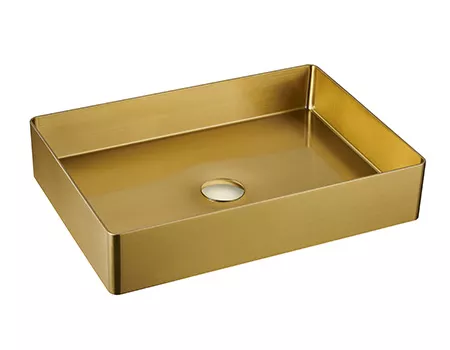
Double Recessed Shower Niche Framework
Reference Standard: Relevant stainless steel surface and quality management references include ASTM A967 chemical passivation practices and ISO 9001 quality management principles.
Short Answer
When Two Recesses Become One Visual Datum
A double recessed shower niche creates a stronger visual reference than a single recessed shower niche because the eye does not inspect only one cavity. It reads the left recess, the right recess, the center divider, the outer frame, the inner return edges, and the shadow lines as one continuous geometric field. This is the first reason a double-format niche needs a different evaluation system. A small visual inconsistency that might disappear inside a single wall niche can become obvious when two adjacent compartments form a repeated pattern.
The available catalog evidence confirms the product family as shower niches and identifies stainless steel shower niches within the manufacturer’s bathroom accessory range. It also confirms production capabilities including laser cutting for customized orders, bending machines, welding machines, laser welding equipment, burr removal, and brushed surface processing. These are real manufacturing signals, but they do not disclose model-level thickness, opening tolerance, waterproof rating, load rating, or a double-niche-specific size. That boundary matters. The article can discuss why a two-recess structure is visually stricter, but it must not claim a verified tolerance that the catalog does not provide.
The visual datum problem starts with reflection and edge repetition. Stainless steel does not behave like a matte plaster wall. A brushed or treated metal surface reflects light directionally. When two recesses sit side by side or above and below each other, the surface grain, corner radius, welding transition, and inner-wall angle become part of a repeated visual rhythm. If the left cavity throws a narrow shadow and the right cavity throws a wider one, the user may perceive the product as distorted even when the issue is only a local finishing difference. This makes front-face photo review more useful than a generic product description.
A practical edge-case model can be built without inventing product data. Imagine a wet shower room where the niche is viewed under overhead light in the morning, warmer side light in the evening, and indirect reflected light after the wall tiles are wet. During the early stage, the buyer may notice only small differences in shadow depth. During the middle stage, water marks and soap residue can make one recess look darker than the other. In a harsher stage, chloride-containing cleaners or trapped moisture near a seam may increase visible dullness or edge discoloration. The stainless steel itself may remain structurally sound, yet the double layout amplifies the visual complaint.
A cross-dimensional comparison also explains the risk. A plastic wall shelf may hide slight reflection differences because its surface is often visually softer. A stone or tiled niche may hide minor edge shadows inside grout lines. A stainless steel niche, by contrast, concentrates light along folds, brushed grain, and welded corners. The double-recess layout adds symmetry expectations. The test case is not “does it hold a bottle,” because bottle load records are not available here. The better comparison is: does the front face still read as one clean datum under changing light?

For buyers comparing niche options, the safest first action is to request a straight-on sample photo, a side-angle photo, and a close-up of the center divider. A supplier may have laser cutting, bending, welding, and brushing capability, but the double recess should be checked as a visible architectural object, not only as a formed metal part. More product context can be explored through Mondeway bathroom accessory information, while model-level confirmation should still come from the supplier’s drawing and sample record.
The Middle Divider as a Manufacturing Stress Interpreter
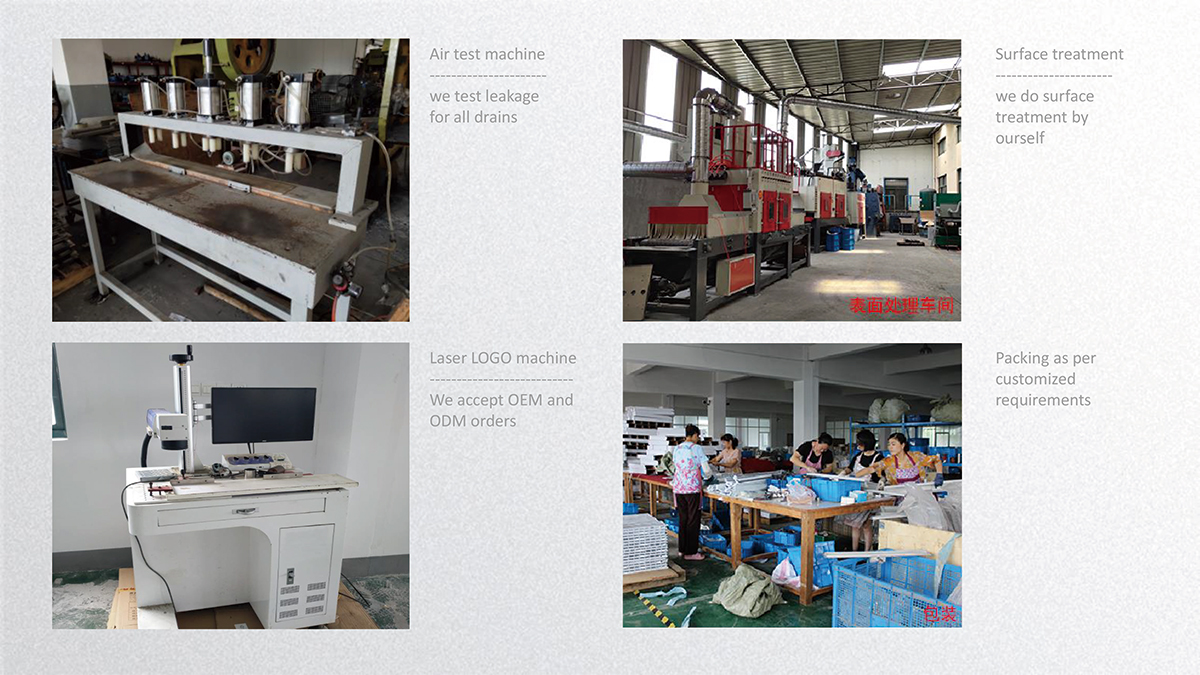
The center divider is the most useful inspection zone in a double niche because it receives visual pressure from both recesses. It is not merely a line separating two storage areas. It is a stress interpreter: it can reveal forming memory, welding pull, brushing direction changes, corner finishing differences, and packing compression. The catalog confirms 200T stamping capability, a 3200x100T bending capability, self-developed welding equipment, 10 welding workers, laser welding machines, in-house deformation handling, export-standard packing, and customized packing acceptance. These are meaningful factory capabilities, but they still do not equal a verified anti-deformation test for a specific double recessed shower niche.
In manufacturing terms, the middle divider behaves differently from an outside edge. An outside edge has open space on one side. A divider is visually loaded on both sides. If one recess is formed or finished slightly differently, the divider exposes the mismatch immediately. During cutting, the initial sheet geometry sets the baseline. During bending, each fold introduces elastic recovery. During welding or laser welding, localized heat can create shrinkage tendencies near seams or corners. During burr removal and brushed finishing, pressure and direction can change the way light travels across the surface. During packing and transport, the divider may be more vulnerable to perceived line distortion because it is a narrow visible element between two larger cavities.
A useful extreme scenario is a dry-to-wet handling timeline. At the initial stage, the product appears acceptable in a factory photo taken under neutral light. At the intermediate stage, the same unit is installed in a darker bathroom where side lighting hits the center divider, revealing a small waviness or asymmetrical shadow. At the extreme stage, repeated hot-shower humidity, cleaning cycles, and water residue make one side of the divider visually heavier than the other. This does not prove structural failure. It shows why the center divider should be reviewed as a signal zone before shipment.
A comparison test can be framed across three product types:
| Inspection Object | Main Visual Risk | Evidence Needed | What Should Not Be Assumed |
|---|---|---|---|
| Single recessed niche | One cavity may hide minor asymmetry | Front photo and corner close-up | Verified double-cavity alignment |
| Double recessed shower niche | Shared divider amplifies line mismatch | Front-face photo, divider close-up, packing photo | Load stability or waterproof rating |
| Stainless bathroom accessory panel | Surface reflection may reveal finishing marks | Brushed grain and edge-light photo | Installed wall performance |
| Formed metal storage insert | Bending and welding may alter flatness | Drawing and sample measurement | Model-level tolerance without drawing |
| Packed export unit | Compression may affect visible line memory | Carton and protection photo | Damage-free arrival without packing review |
This table uses general engineering logic and catalog-confirmed capabilities; it does not add undisclosed values. The buyer’s practical question is not “does the factory own machines?” The better question is whether the sample evidence connects the machine route to the visible divider condition. A straight-on divider photo should be requested before mass production. A corner close-up should show whether the divider-to-back-wall transition is clean. A packing photo should show whether the front frame and divider are protected against compression.
KEY TAKEAWAYS
- A center divider that looks straight in one light angle may reveal waviness under side light.
- Uneven corner shadows can appear before any functional complaint is reported.
- Packing pressure can turn a minor front-face issue into a visible installation concern.
Pre-Packing Shadow Check Before the Bathroom Ever Sees It
A double recessed shower niche should be evaluated before packing as a light-sensitive object. The catalog confirms in-house surface treatment, brushed surface processing, sandblasting, matte silver, black powder-coated and different color options, plus a 2000 square meter surface treatment workshop that includes pickling, electrical polishing, and passivation. It also states that after welding, drain surfaces may have dirt, oil, scratches, and yellow spots, and that pickling can clean the surface. This surface-treatment evidence is relevant to stainless bathroom products, but the article must stay cautious: it does not prove a double-niche-specific shadow inspection record.
The mechanism is straightforward. Stainless steel forms a passive oxide layer that helps resist corrosion, but visible quality is not only about corrosion resistance. It also depends on surface uniformity, grain direction, residual polishing marks, and how edges scatter light. In a shower environment, water droplets, soap film, and cleaning agents change the optical behavior of the surface. A brushed surface can look consistent when dry, then reveal directional streaks when wet. Inner corners can look clean under top light, then show darker transition bands under angled light. A double cavity makes this more noticeable because the left and right zones are compared instantly by the eye.
The extreme-stage model should be framed around visibility, not around unproven performance. In the early stage, pre-packing inspection under direct light may show a uniform brushed direction. In the middle stage, angled light may reveal a darker internal corner or a slightly broken shadow line. In the extreme stage, after humidity and cleaning exposure, water-retention marks or cleaner residue may make the two recesses look different, especially near seams or lower edges. None of these observations should be converted into a claim that the niche is waterproof or non-waterproof. They are buyer-facing reasons to request better sample visuals.
A cross-dimensional comparison helps clarify what to check:
First, compare dry-light and angled-light photos. Dry front photos show general shape. Angled-light photos reveal surface grain, scratches, and shadow breaks.
Second, compare outer-frame and inner-corner areas. The outer frame may look clean because it is easier to finish. Inner corners are more likely to expose tooling, welding, or polishing transitions.
Third, compare both recesses under the same light direction. If one compartment looks darker, the cause may be surface angle, finishing pressure, residue, or local deformation.
Fourth, compare pre-packing and post-packing photos. A product that looks clean before packing can still arrive with surface rub marks if protective material does not isolate the front frame and divider.
A strict buyer note should read: do not approve a double stainless niche only from a lifestyle image. Request a close-up of the edge, inner corner, brushed surface, and dual-cavity shadow continuity. This shifts the decision from vague appearance to repeatable inspection language.
Double Recessed Shower Niche Evidence Framework
Before a buyer describes a double recessed shower niche as waterproof, load-ready, or installation-safe, evidence must be separated into two levels. The catalog confirms shower niche category presence, stainless steel shower niche manufacturing, metal processing capability, surface treatment capability, OEM and ODM workflow, and export packing. It also confirms a customization process that moves through concept, drawing, prototype, mould, trial production, and products. It references ISO 9001 management, stable quality control, CE, CUPC, and Watermark. These are company or category-level indicators. They cannot automatically become model-level certification for a specific double niche.
The correct solution is an evidence framework. It should guide procurement, sample approval, and content writing at the same time.
Solution 1: Drawing-First Approval
Execution Protocol: The buyer should request a 2D drawing before accepting catalog wording. The drawing should identify the overall face shape, recess arrangement, center divider location, edge structure, and visible corner design. Because the catalog confirms a drawing stage in the customization process, this request aligns with the supplier’s stated workflow.
Material Behavior Expected: Drawing-first control does not change the stainless steel itself, but it reduces geometric uncertainty before cutting, bending, welding, and finishing. It allows the visible datum of the double recess to be checked before the material enters process stages that may introduce forming or polishing variation.
Hidden Cost and Side-Effect Control: Drawing review adds time before quotation finalization. The cost is justified when the product will be built into a finished wall. To reduce delay, the buyer should ask for drawing confirmation together with a sample photo requirement, not as a separate late-stage correction.
Solution 2: Front-Face Sample Photo Gate
Execution Protocol: Request straight-on, angled, and close-up photos of the sample before trial production approval. The center divider, outer frame, internal corners, and lower edges should be visible. The image should not be a distant showroom photo because symmetry and shadow signals disappear when the product is too far from the camera.
Material Behavior Expected: Stainless steel surface appearance changes with light direction. A front-face photo gate helps identify whether brushed direction, corner finishing, or small deformation creates unequal reflection between the two recesses. It does not prove corrosion resistance, but it improves visual approval accuracy.
Hidden Cost and Side-Effect Control: Photo review can be misleading if lighting is inconsistent. The buyer should ask for the same light angle across both recesses and should not reject a sample only because of photographic glare. The goal is repeatable observation, not cosmetic perfection.
Solution 3: Surface Route Confirmation
Execution Protocol: Ask which surface route applies to the sample: brushed, sandblasted, matte silver, black powder-coated, or another treatment. If stainless passivation or polishing is mentioned, request whether it is part of the actual niche order or only part of general workshop capability.
Material Behavior Expected: Surface route affects wet-room appearance. Brushed surfaces emphasize grain direction. Powder-coated surfaces may reduce metal reflection but require coating consistency at edges. Pickling, electrical polishing, and passivation relate to stainless surface preparation, but they should not be written as guaranteed model-specific steps unless confirmed.
Hidden Cost and Side-Effect Control: More surface options create more approval variables. A buyer should avoid approving one finish from a photo and ordering another without a new sample view. Different finishes can make the same double geometry look visually different.
Solution 4: Packing Evidence Before Shipment
Execution Protocol: Request packing photos showing how the front frame, center divider, corners, and visible surfaces are protected. The catalog confirms export-standard packing and customized packing acceptance. That gives buyers a legitimate basis to ask for protection details before shipment.
Material Behavior Expected: Packing does not improve stainless steel chemistry, but it protects surface finish and front-face geometry from rubbing, compression, and transit handling. This is especially important for a double recess because the divider and frame are highly visible after installation.
Hidden Cost and Side-Effect Control: Overpacking can increase carton volume or cost. Underpacking increases surface and edge risk. The most balanced request is not excessive packaging, but targeted protection for visible faces, corners, and dividers.
PRO-TIP / CHECKLIST
- Request a 2D drawing before approving the product name.
- Ask for a straight-on sample photo showing both recesses at once.
- Require close-ups of the center divider and internal corners.
- Confirm the actual surface route used for the sample.
- Separate company-level certificates from model-level product proof.
- Ask for packing photos before shipment approval.
- Do not describe the unit as waterproof without installation-side evidence.
- Keep sample photos tied to the exact ordered finish.
Frequently Asked Questions (FAQ)
How to get rid of smell in a bathroom drain?
A bathroom drain smell usually comes from a dry trap, biofilm, trapped debris, or venting issues. A shower niche is not a drain component, so smell removal should focus on the drain trap, cover, pipe, and cleaning routine rather than the recessed storage niche.
What to use to clean a shower drain?
Use warm water, a mild cleaner, a soft brush, and drain-safe methods first. Avoid aggressive chemicals near stainless bathroom accessories because chloride-heavy cleaners can dull or stain stainless surfaces if residue remains on nearby metal edges or niches.
How does a shower drain work?
A shower drain collects water from the floor and directs it through a drain body into the plumbing system. A recessed shower niche serves a different function: it provides wall storage. Do not use drain performance assumptions to describe niche waterproofing or installation safety.
Can I plunge a shower drain?
Yes, a shower drain can sometimes be plunged if the clog is near the drain opening and the cover allows a seal. Remove visible debris first. This action is unrelated to a stainless steel shower niche and should not affect the niche unless water splashes onto nearby surfaces.
How to get rid of shower drain smell?
Restore water in the trap, clean hair and soap residue, flush the drain, and inspect for vent or pipe issues if the smell returns. If stainless niches are nearby, wipe chemical splashes from the surface to reduce staining or dullness risk.
How to fix a clogged shower drain?
Start by removing hair and debris from the drain cover, then use a safe drain tool or mild cleaning method. Avoid splashing strong cleaners onto stainless steel niche surfaces. Persistent clogs may require plumbing inspection rather than bathroom accessory replacement.
How to remove a pop-up shower drain?
Most pop-up drains can be removed by lifting, twisting, or unscrewing the stopper, depending on the design. Work gently to avoid damaging the surrounding floor finish. This is a drain-maintenance task, not a shower niche installation procedure.