
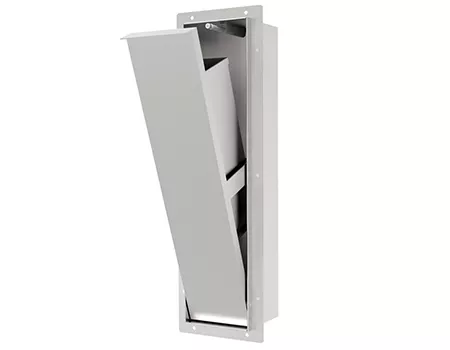
Shampoo Shower Niche Playbook for Stainless Wet Zones
Reference Standard: Relevant material and performance testing standards, with practical reference to ASTM A967 for stainless steel passivation practice and ISO 9001-style quality management logic where documented by the supplier.
Short Answer
A shampoo niche sits in one of the most unforgiving locations in a bathroom: inside the shower room, close to water spray, cleanser residue, hand contact, and daily bottle movement. For buyers, the practical question is not only whether the niche looks clean in a catalog photo. The real issue is whether the selected stainless steel shower niche can keep its surface, edges, weld areas, and packed condition stable enough before installation and during repeated wet use.
The catalog supports several useful facts. The manufacturer lists stainless steel shower niches as part of its bathroom accessory range and identifies shower room products as the use category. Its material scope includes stainless steel, plastic, rubber, iron, and brass, while the workshop page specifically emphasizes SS304 / SS316 / ABS / PVC capability. The same source also lists surface appearances such as Brushed, Gun Metal, Brushed Gold, Matt White, Matt Black, and Brushed Bronze. Those are meaningful commercial and manufacturing clues, but they are not a substitute for a niche drawing, thickness sheet, installation manual, or load test record.
When a Shampoo Bottle Becomes the Real Test Object
A shampoo bottle is a better starting point than a product slogan. In actual shower use, the niche is repeatedly touched by hard plastic bottle bases, wet hands, soap film, conditioner residue, and splash water. That means the surface is not passive. It receives small contact movements, sliding pressure, rinse water, and occasional cleaning cloth friction. The catalog confirms that the product family includes stainless steel shower niches for the shower room, but it does not state a bottle weight limit, shelf span, internal depth, drainage angle, or model-specific installation opening.
The material behavior matters because stainless steel does not resist bathroom conditions through bulk metal alone. Its protection depends on a thin passive layer at the surface. When the surface is clean and properly treated, that layer helps reduce corrosion risk in ordinary wet environments. When the surface carries welding discoloration, embedded contamination, oil, scratches, or unremoved residue, the passive layer can become less uniform. In a shower niche for shampoo, the most sensitive zones are usually not the large flat face alone. The corners, weld transitions, inner edges, and brushed grain direction can become locations where water film and product residue remain longer.
A useful edge-case model is a “rinse-and-residue loop.” At the initial stage, water dilutes shampoo and soap residue, leaving light film after drying. At the middle stage, repeated bottle movement creates fine contact marks that are more visible on darker or brushed finishes. At the severe stage, residue gathers near internal corners or weld lines, increasing the chance of water staining or discoloration if cleaning is irregular. This model is not a claim about a specific catalog model; it is a physics-based way to understand why the material and surface process must be checked before approval.
A cross-dimensional comparison helps clarify the risk. A freestanding plastic corner shelf can be replaced easily when scratched, but a recessed stainless niche becomes part of the tiled wall system. A drain cover is judged partly by water passage and removable cleaning access, but a shampoo niche is judged by visible storage cleanliness, safe edges, surface consistency, and the absence of rough contact points. A paper holder with storage may face hand contact and dry humidity, but a shower niche faces direct water, detergent residues, and close-range inspection every day.
| Evaluation Item | Shampoo Shower Niche | Drain Product | Dry Bathroom Shelf | Buyer Risk If Confused |
|---|---|---|---|---|
| Main exposure | Shampoo, water, wet hands | Wastewater flow | Air humidity, touch | Wrong test logic |
| Confirmed catalog category | Stainless steel shower niches | Shower drains | Bathroom accessory | Category mixing |
| Relevant surface concern | Scratches, stains, edge feel | Leakage, outlet, cover fit | Finish appearance | False acceptance |
| Missing data | Size, depth, load, slope | Model outlet details | Anchor load | Unsupported claims |
The important buying lesson is simple: a shampoo niche should be reviewed as a wet storage contact surface, while still respecting the catalog boundary. The catalog confirms the product class and material capability, not every installation and performance parameter.
The Hidden Sequence Before the Niche Reaches the Wall
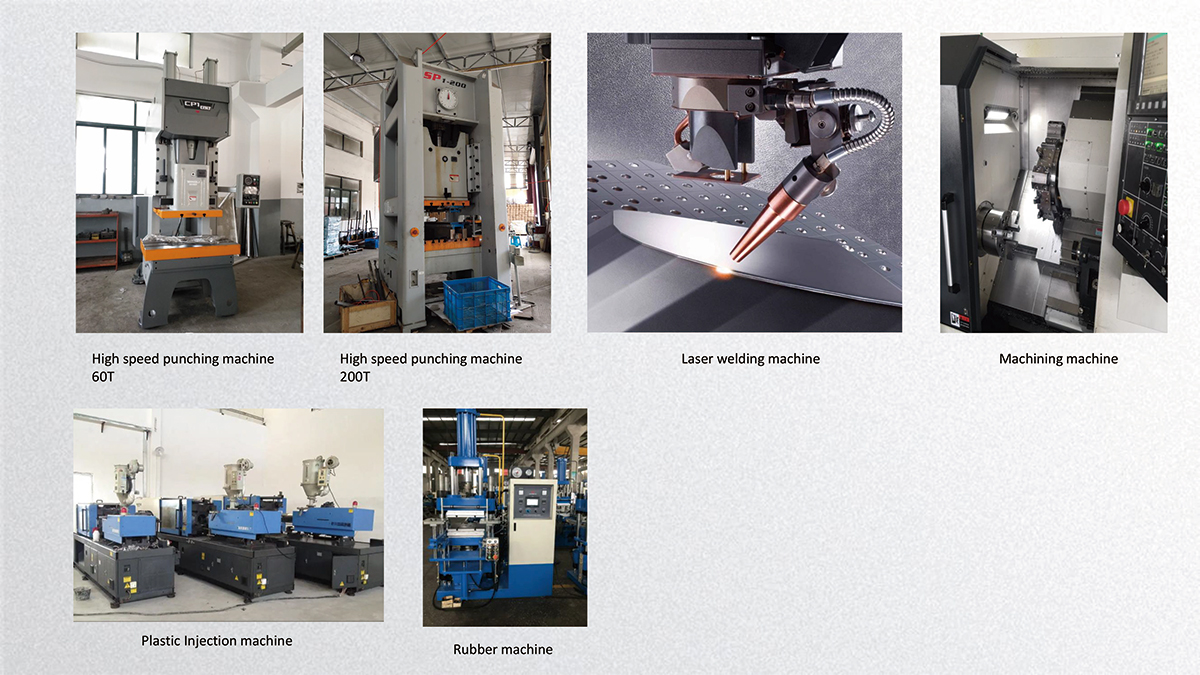
The stability of a stainless shower niche begins before it is installed. The catalog describes a production environment that includes laser cutting machine for customized order, many bending machines, self-developed welding machine, laser welding machine, remove burrs and make brushed surface, surface treatment by ourself, and packing as per export standard. For a recessed shampoo niche, these steps form a practical process sequence: sheet preparation, cutting, bending, welding, edge finishing, surface finishing, cleaning or treatment, and packaging.
The first hidden risk is dimensional logic. Laser cutting and bending influence whether the box geometry is consistent enough for later wall integration. The catalog does not provide niche-level tolerance, but the presence of cutting and bending equipment supports the idea that a buyer can request drawings and sample measurements. A niche that looks acceptable from the front may still have slight variation at folded edges or corners. In an installed wall, those small differences can affect how the unit aligns visually with tile lines or how easily the installer handles the opening.
The second hidden risk is edge condition. The catalog explicitly mentions remove burrs and make brushed surface by ourself. Burrs are not only cosmetic. On a shampoo niche, a rough edge can affect hand contact, cloth cleaning, and packaging abrasion. In an extreme handling model, the initial stage is a fine burr that only catches a cloth. The middle stage is repeated wiping that makes the edge more noticeable to the user. The severe stage is a visible edge defect or scratch transfer during transport or installation. Because the catalog does not provide an edge radius or burr standard, inspection should focus on sample edges, inner corners, and all visible folded seams.

The third hidden risk is a category mistake. The catalog states that air testing is used for drains, with wording that indicates leakage testing for all drains. That should not be applied to the shower niche as a dedicated performance test. A niche is not a floor drain, and its approval should not borrow drain testing language unless the supplier provides a specific model record for the niche itself. This distinction protects the article from overclaiming and protects buyers from approving the wrong evidence.
A useful cross-test comparison is “appearance approval versus process approval.” Appearance approval checks whether the brushed, gun metal, brushed gold, matt white, matt black, or brushed bronze finish looks acceptable under lighting. Process approval asks whether the cutting, bending, welding, deburring, surface treatment, and packing chain can repeat that result across production. Appearance approval is faster, but process approval is safer for repeat orders because it catches the weak link before the niche reaches the wall.
KEY TAKEAWAYS
- Fine burrs or sharp folded edges can appear before any obvious surface complaint.
- Weld discoloration or yellow marks may indicate incomplete post-weld surface cleanup.
- Packaging rub marks can show up before installation, especially on brushed or dark finishes.
Reading Stainless Steel by What the Factory Removes
The most useful way to read stainless steel in this product is to ask what the factory has to remove. The catalog describes a 2000 square meter surface treatment workshop and names pickling, electrical polishing, and passivation. It also explains that products after welding may be dirty on the surface, with oil, scratches, yellow spots, and other marks, and that pickling can clean the surface so it looks silver. These statements are valuable because they describe real manufacturing problems rather than vague quality claims.
Mechanically, welding changes the surface condition of stainless steel. Heat can alter the local oxide color and leave heat tint. Handling can add oil. Abrasive contact can create scratches. If contamination remains on the surface, the stainless layer is less uniform in appearance and may be less stable in aggressive wet microenvironments. In a shampoo niche, this matters because the user sees the inner surface up close and repeatedly places bottles near corners and seams. The issue is not only corrosion. It is also the buyer’s perception of hygiene, cleanliness, and finish consistency.
The edge extreme scenario is a “wet film retention cycle.” In the early stage, water droplets dry on the brushed surface and leave mild mineral marks. In the middle stage, soap film and conditioner residue stay near a corner and attract more wiping pressure. In the severe stage, repeated cleaning friction makes scratches more visible, especially if the original surface already had weld marks or embedded contamination. This is not a claim that every stainless niche will fail. It is a risk model showing why treatment and inspection should be requested at the sample stage.
A cross-dimensional test case compares three inspection views. Under a distant showroom view, a brushed niche may look acceptable. Under a close bathroom-user view, inner-corner yellowing, fine scratches, or edge roughness become more visible. Under a packing-and-shipping view, the concern shifts to whether protective wrapping prevents surface rub before installation. The catalog supports factory-side surface treatment and export standard packing, but the buyer still needs sample photos and surface treatment confirmation for the specific model.
For practical sourcing, the best wording is cautious: pickling, electrical polishing, and passivation can help remove post-weld contamination and improve surface cleanliness, but they should not be marketed as a permanent anti-rust guarantee or as proof of compatibility with every bathroom cleaner. Strong acids, chlorine-bearing cleaners, abrasive pads, and long-term residue can behave differently depending on the exact finish and maintenance habit. Since the catalog does not provide a cleaning chemical compatibility list, any claim about specific cleaner resistance would need separate supplier documentation.
What Buyers Still Need Before Approving a Shampoo Niche
The catalog provides a customization pathway: concept, drawing, prototype, mould, trial production, products. It also states that OEM and ODM orders are accepted, customized logos are acceptable, and customized packing is acceptable. That sequence is highly relevant for a shower niche for shampoo because the missing information is not a minor detail. The catalog does not confirm model-level dimensions, stainless thickness, internal depth, wall opening, tolerance, load rating, drainage slope, installation accessories, fixing method, or dedicated niche inspection record.
A buyer should treat the approval process as an evidence package rather than a visual selection. The first required evidence is a drawing. It should show outer size, inner usable space, folded edge design, corner geometry, installation opening recommendation, and any flange or trim structure. The second evidence is sample imagery, not only front beauty shots. Buyers need inner corner photos, side photos, edge close-ups, weld area photos, surface finish close-ups, and packaging photos. The third evidence is material and surface confirmation. Since the catalog mentions SS304 and SS316 as workshop focus, buyers should ask which grade applies to the selected niche model rather than assuming both are available for every SKU.
Execution protocol 1: Confirm the model boundary before quoting. The buyer should ask the supplier to identify whether the quotation is for a stainless steel shower niche, a general bathroom niche, or another bathroom accessory. The request should include finish, drawing, packing method, logo requirement, and sample approval path. This reduces confusion with drains, plastic products, or paper holders.
Expected material evolution: Once the correct grade and finish are confirmed, the buyer can predict surface behavior more realistically. Brushed stainless may hide minor directional marks better than mirror-like surfaces, while dark coated or colored finishes can make scratches easier to see under strong bathroom lighting. This is a visible-use expectation, not a certified performance rating.
Hidden cost and side-effect control: Custom logos, special colors, and special packing can improve branding but may increase inspection complexity. A buyer should request pre-production confirmation photos before approving bulk production, especially when the finish is matt black, brushed gold, or gun metal.
Execution protocol 2: Separate surface approval from structural approval. Surface approval should check scratches, yellow spots, oil marks, brushing direction, color consistency, and edge cleanliness. Structural approval should check geometry, flatness, folded corners, and installation-related dimensions. These are different risks and should not be merged into one “looks fine” note.
Expected material evolution: A properly cleaned and finished stainless surface should present a more uniform appearance and fewer visible contamination marks at delivery. It still needs normal care in a wet bathroom because water and cleanser residues can accumulate over time.
Hidden cost and side-effect control: Over-polishing or inconsistent brushing may create visible tone differences. The countermeasure is to approve the finish standard from the sample and require production photos under similar lighting.
Execution protocol 3: Treat packing as part of the finish system. Since the catalog states export standard packing and customized packing are acceptable, the buyer should define surface protection before shipment. Inner wrapping, divider logic, corner protection, and carton handling can affect how the niche arrives.
Expected material evolution: Better packaging does not change the stainless steel itself, but it reduces the chance of transit scratches, rubbing marks, and edge impacts before installation.
Hidden cost and side-effect control: More protective packing may increase carton volume or unpacking time. The buyer should balance protection and installation workflow instead of choosing the cheapest packaging by default.
Execution protocol 4: Keep drain testing separate from niche acceptance. The catalog’s air leakage testing is tied to drains. A shampoo niche should be accepted through material, dimensional, edge, weld, surface, and packaging checks unless a supplier provides a dedicated niche test.
Expected material evolution: This separation prevents false confidence. A product can pass a drain-related factory process in another category while still lacking niche-specific evidence.
Hidden cost and side-effect control: The buyer may need extra sample review time, but that cost is lower than discovering missing installation or surface requirements after bulk delivery.
| Approval Variable | Practical Check | Common Acceptance Logic | Missing From Catalog |
|---|---|---|---|
| Stainless grade | Ask whether the model uses SS304 or SS316 | Match material to wet-zone expectation | Model-specific grade |
| Surface finish | Compare brushed or colored finish sample | Consistent tone and no visible yellow marks | Finish tolerance |
| Edge quality | Inspect folded edges and corners | No sharp burrs in hand-contact zones | Edge radius |
| Geometry | Check drawing and sample dimensions | Fit planned wall and tile layout | Size and opening data |
| Packing | Review export or customized packing | Prevent transit scratches | Pack-out detail |
| Testing boundary | Do not borrow drain air test | Use niche-specific inspection | Dedicated niche test |
PRO-TIP / CHECKLIST
- Request the exact model drawing before approving a shampoo niche order.
- Confirm whether the selected model is SS304, SS316, or another stainless route.
- Ask for close-up photos of inner corners, edges, weld areas, and surface finish.
- Do not treat drain air testing as proof of niche performance.
- Approve one physical surface sample before using colored or dark finishes in bulk.
- Define packing protection for visible surfaces before shipment.
- Ask whether logo customization affects surface treatment or lead time.
- Keep installation dimensions separate from general catalog images.
For related bathroom accessory sourcing context, buyers can review the supplier’s broader product and company information through Mondeway bathroom accessory manufacturing resources. The safer procurement habit is to use catalog data as the starting point and model-level evidence as the approval basis.
Frequently Asked Questions (FAQ)
Can I use Drano in a shower drain?
Drano is a drain cleaner question, not a shower niche question. For a stainless shampoo niche, avoid assuming compatibility with strong cleaners unless the supplier provides a chemical-resistance document. Use mild cleaning methods and prevent aggressive chemicals from sitting on stainless surfaces.
How do I take out a shower drain plug?
A drain plug is part of a drain assembly, not a recessed shampoo niche. Do not apply drain disassembly logic to a wall niche. For a niche, the relevant checks are surface condition, edge quality, installation fit, and cleaning access around inner corners.
How do I reseal a shower drain?
Resealing a drain involves plumbing and waterproofing around the drain body. A shower niche has a different risk profile: wall integration, edge sealing, surface finish, and fit with tile work. Ask for niche installation guidance rather than using drain repair instructions.
Do floor drains need vents?
Floor drain venting depends on plumbing code and trap design. It does not validate a shampoo niche. A stainless shower niche should be reviewed through material, finish, geometry, edge quality, packing, and installation evidence rather than plumbing vent logic.
How do I remove a shower drain flange?
A shower drain flange is unrelated to a stainless wall niche. Removing it may affect waterproofing and plumbing. For a shower niche, buyers should focus on pre-installation drawings, sample approval, surface treatment confirmation, and packaging protection.