
Linear Bathroom Drains Playbook for Hidden Risk Control
Reference Standard: Relevant material, drainage, and quality-management references include EN 1253-1 floor gullies and roof drainage components, ISO 9001 quality management, and practical stainless steel corrosion guidance from the International Stainless Steel Forum.
Short Answer
Linear Bathroom Drains: What Happens Before Water Ever Reaches the Channel
A linear bathroom drain begins working before water enters the visible channel. In a shower-room environment, water first becomes a thin moving film across tile, grout, soap residue, hair, body oil, and cleaning-chemical traces. That moving film is not a clean laboratory stream. It is a mixed load carrying low-density foam, suspended hair, mineral traces, and fine particles from daily use. For a long drain body, this pre-channel zone matters because debris can arrive unevenly across the drain length rather than entering from one round point.
The confirmed product context supports this interpretation without inventing model-level geometry: the catalog identifies shower drains and floor drains as a core product area, with production focused on SS304, SS316, ABS, and PVC routes. That material range means the drain may be built for different cost, corrosion, and installation expectations, but the wet-use behavior remains similar: water, hair, soap, and cleaning residue approach the entry area first, and only then test the hidden channel.
An edge-case model helps clarify the risk. Imagine a bathroom where the shower is used repeatedly during a humid week, with standing moisture left near the drain after each use. In the early stage, the water film still moves freely. In the middle stage, hair begins to bridge across cover openings or along the entry line. In the limit stage, soap film binds fine particles and makes a soft mat that slows entry even before the drain body itself becomes blocked. This is not a claimed discharge-capacity result; it is a physical pathway model based on wet-room use and the known drain category.
A cross-dimensional comparison is useful here. A short point drain concentrates incoming debris near one opening, while a linear shower drain spreads the same daily debris across a longer contact area. The linear format can support a cleaner visual floor layout, but it also makes the entrance line more important. A buyer should not treat a long drain as only a finish SKU. It is a contact system where surface entry, edge condition, and cleaning access influence perceived performance.
| Pre-channel variable | Practical effect | Evidence that can support review | Boundary that still needs confirmation |
|---|---|---|---|
| Hair arrival path | May bridge over entry points | Product category and drain-use context | Model-level grate design |
| Soap film | Can bind debris before drainage | Wet bathroom environment logic | Real cleaning-cycle record |
| Standing moisture | Extends exposure time | SS304/SS316/ABS/PVC material route | Specific corrosion test data |
| Foot traffic | Can move debris into the entry line | Shower-room use context | Installation sample record |
| Cleaning chemicals | Can change surface feel and residue behavior | Stainless and plastic material logic | Chemical-resistance report |
KEY TAKEAWAYS
- Hair accumulation often starts at the water-entry path, not only inside the channel.
- Soap film can convert loose debris into a slow-moving mat near the cover area.
- Long drain bodies need entry-zone review even when the visible finish looks clean.
The Quiet Risk Behind a Straight Drain Body
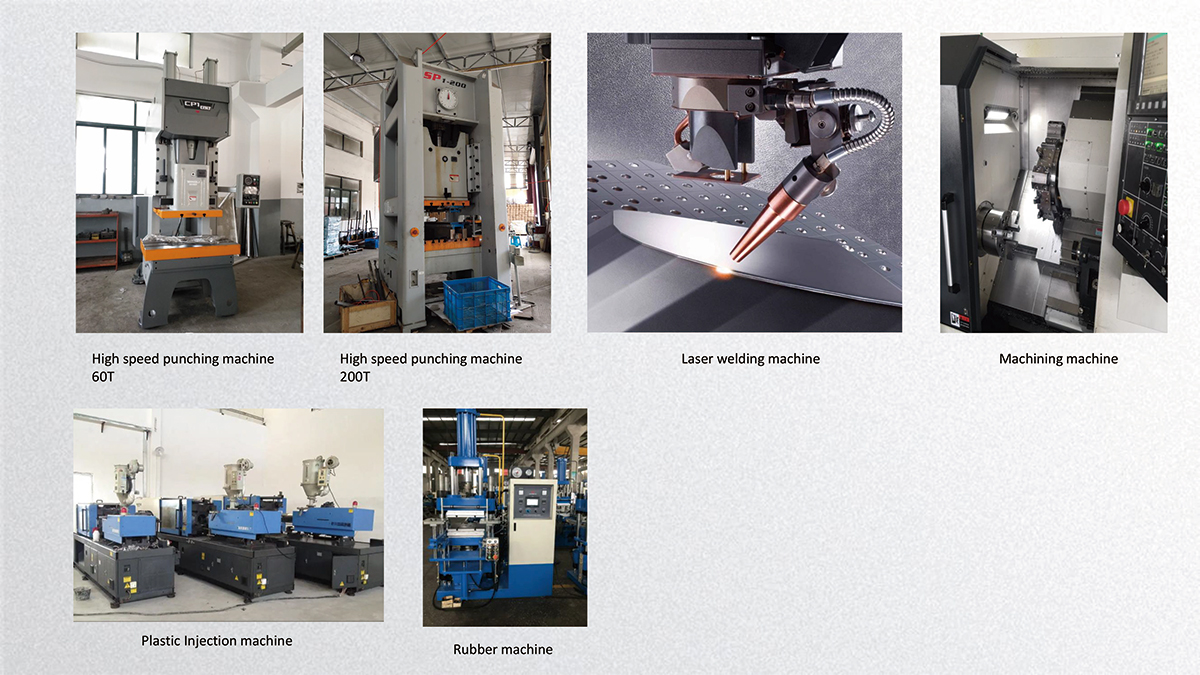
A linear drain body is a long component, and straightness is not a cosmetic detail alone. Long metal or plastic forms can amplify small deviations that would be less visible in a compact round drain. During stamping, cutting, bending, welding, polishing, packing, and handling, the drain body must remain visually flat enough and mechanically stable enough for installation expectations. The catalog gives several real manufacturing anchors: 200T stamping capacity, 1500KW laser cutting, bending machine capacity up to 3200x100T, welding and laser welding, in-house burr removal, brushed surface processing, and the ability to shape deformed products in-house.
The mechanism begins with forming stress. Stainless steel grades such as SS304 and SS316 rely on chromium-rich passive behavior for corrosion resistance, but their final product quality still depends on processing discipline. Laser cutting introduces localized thermal influence; bending redistributes stress along edges; welding creates heat-affected zones; brushing changes surface texture. None of these steps is negative by itself. The risk appears when a long straight drain body carries small residual stress, edge roughness, or weld inconsistency into installation.
An extreme fatigue-style model can be described across three stages. In the initial stage, a formed linear drain body may look straight under casual inspection, while minor edge burrs or slight twist remain difficult to see. In the middle stage, packing pressure, transport vibration, or repeated handling can reveal edge sensitivity, especially if the drain has a long visible line. In the limit stage, installation pressure may expose a mismatch between the product body and the surrounding floor plane. This model does not claim a measured deformation value; it explains why the catalog’s forming and burr-removal capabilities are relevant to buyer evaluation.
A cross-test case can compare two inspection habits. One buyer only checks surface color and packaging. Another buyer reviews forming process, burr removal, weld continuity, and whether the long body remains stable after handling. The second review has higher information gain because a linear bathroom drain is not judged only at the factory table. It is judged again when it meets tile, waterproofing, and daily cleaning behavior.
A practical procurement note follows from this: request sample photos from multiple angles, not only top-view catalog images. Top-view images may hide side-edge feel, weld-line continuity, outlet alignment, or subtle twisting. If the catalog does not provide model-level drawings, the safe language is not “confirmed fit.” The safe language is “forming capability is shown, but model-level dimensional compatibility should be confirmed by drawing or sample.”
PRO-TIP / CHECKLIST
- Check whether the requested drain uses SS304, SS316, ABS, or PVC.
- Ask for side-view and end-view sample photos, not only top-view images.
- Confirm whether burr removal is applied to exposed and installation-facing edges.
- Review whether welding or laser welding is used in the selected model route.
- Request packing details when long drain bodies will be shipped in mixed containers.
- Do not approve installation compatibility without model-level drawings.
A Finished-Looking Drain Still Needs Hidden Verification
A drain can look finished while still carrying hidden risk. In stainless steel bathroom drainage products, visible finish is only one layer of the quality story. The catalog confirms an air test machine, states that leakage is tested for all drains, and describes in-house surface treatment. It also states that after welding, drains may be dirty on the surface with oil, scratches, yellow spots, and related marks, and that cleaning is handled through pickling, electrical polishing, and passivation in a 2000 square meter surface treatment workshop.
The technical mechanism is straightforward. Welding can leave oxide coloration and surface contamination. Oil films can block uniform surface appearance. Scratches can concentrate visible wear and hold residue. Pickling helps remove scale and discoloration; electrical polishing can improve surface smoothness; passivation supports stainless steel surface stability by helping restore a chromium-rich passive layer. These are common stainless-steel process principles, and broad corrosion behavior is also discussed by the Nickel Institute in relation to stainless material performance.
An extreme wet-use timeline shows why hidden verification should not be skipped. In the initial stage, the drain arrives with an attractive brushed or colored surface. In the middle stage, water, soap, and cleaning chemicals repeatedly contact edges, weld-adjacent areas, and corners. In the limit stage, weak finishing or unverified leakage points may become visible through staining, seepage, odor complaints, or difficult cleaning. The catalog’s air testing and surface-treatment claims reduce uncertainty, but they do not replace model-level test records if a buyer needs strict approval evidence.
The four-solution acceptance model below translates the manufacturing data into a white-paper-style review process.
Solution 1: Separate visual finish approval from leakage approval.
Execution Protocol: Inspect the visible finish under consistent lighting, then review leakage testing as a separate gate. Do not allow brushed surface appearance, matte color, or customized logo to substitute for air test evidence. A finished surface and a sealed drain body answer two different technical questions.
Material Expected Evolution: A properly treated stainless surface should show more stable appearance after cleaning exposure, while a leakage-tested body should reduce hidden weak-point uncertainty. These are not the same performance layer.
Hidden Cost and Side-Effect Control: Separate approvals require more documentation and sample handling. The benefit is clearer rejection logic when a product looks good but lacks hidden verification.
Solution 2: Treat post-weld cleaning as a process, not decoration.
Execution Protocol: Confirm whether the selected product route includes pickling, electrical polishing, passivation, brushing, or other surface treatment. The catalog confirms these capabilities, but buyers should still match them to the selected model and finish.
Material Expected Evolution: Cleaner stainless surfaces are less likely to retain welding discoloration, oil film, or yellow staining. Surface recovery supports more consistent wet-zone appearance during early use.
Hidden Cost and Side-Effect Control: Over-processing can affect cost and lead time. Buyers should define the required surface expectation before mass production rather than expanding finish requirements after samples are approved.
Solution 3: Use burr control as a handling and maintenance checkpoint.
Execution Protocol: Request close-up edge images and sample-touch inspection. Burr removal is confirmed as an in-house process, but exposed edges, cover contact points, and installation-contact edges should be reviewed separately.
Material Expected Evolution: Cleaner edges reduce snagging risk during handling and may reduce hair-catching points near entry areas. This supports user maintenance without claiming a specific anti-clogging result.
Hidden Cost and Side-Effect Control: Extra edge finishing may add labor. The practical control is to define which edges are user-facing, installer-facing, and hidden.
Solution 4: Connect export packing to long-body stability.
Execution Protocol: Review export-standard or customized packing before shipment. Long drain bodies can be more sensitive to bending or corner impact than compact accessories.
Material Expected Evolution: Better packing does not improve stainless chemistry, but it protects formed geometry, surface finish, and visible edges during logistics.
Hidden Cost and Side-Effect Control: Stronger packing may increase carton volume. For export markets, this cost may be lower than replacing visibly distorted or scratched products.
| Review variable | Catalog-supported evidence | Expected industry review method | Acceptance logic |
|---|---|---|---|
| Leakage risk | Air test machine and leakage test for all drains | Air-pressure or water-retention verification | Pass only with recorded test status |
| Surface recovery | Pickling, electrical polishing, passivation | Visual inspection after post-weld treatment | No oil, yellow spots, or obvious weld staining |
| Edge quality | Burr removal and brushed surface | Touch and close-up edge inspection | No sharp user-facing burrs |
| Body forming | Stamping, laser cutting, bending, welding | Dimensional and straightness review | Confirm by model drawing or sample |
| Packing protection | Export standard and customized packing | Carton drop, handling, or visual packing audit | Match product length and finish sensitivity |
| Certification context | ISO 9001, CE EN1253-1, CUPC, Watermark references | Document matching and market requirement review | Certificate relevance must match target model |
Turning Maintenance Questions into Product Page Evidence
Searches such as “how to take apart a shower drain,” “how to remove bathroom drain,” and “how to unclog shower drain hair” are not only consumer troubleshooting questions. For a product page, they reveal what buyers and end users worry about after installation: removal access, hair accumulation, cleaning reach, and whether the drain cover or channel can be serviced without damaging the surrounding bathroom surface.
The important boundary is that the available catalog data does not confirm model-level removable cover structure, outlet geometry, trap interface, drainage capacity, channel slope, or cover removal force. That means the article should not pretend to know those details. It can state that the product category belongs to shower drains and floor drains, that SS304/SS316/ABS/PVC routes are available, that air leakage testing and surface treatment are part of the factory capability, and that OEM/ODM workflow exists. It should not claim a specific cleaning mechanism without drawings or sample test records.
A realistic maintenance-risk model has three stages. At first, the user notices slower water entry because hair and soap residue collect near the visible cover area. Later, the user tries to lift or remove the drain cover, and product design becomes important. At the limit stage, lack of clear access can lead to tool marks, bent covers, scratched finish, or incomplete cleaning. These outcomes depend on structure. Since the structure is not fully documented in the catalog, the correct product-page move is to convert maintenance questions into RFQ evidence requests.
A cross-dimensional comparison can be made between “marketing-ready” and “maintenance-ready” pages. A marketing-ready page shows material, finish, and certificates. A maintenance-ready page also asks for cover-removal photos, outlet drawings, cleaning-access explanation, and sample blockage review. The second page is more useful for Google search intent because it directly addresses the behavior behind real questions.
For buyers, the most defensible wording is this: the catalog supports a drain manufacturing route with stainless and plastic materials, forming processes, air testing, surface treatment, OEM/ODM customization, and packing options. Confirmed maintenance architecture still requires model-level drawing, sample photos, or test records. This keeps the product page honest while still turning FAQ demand into useful technical content.
Frequently Asked Questions (FAQ)
How to take apart a shower drain?
A shower drain should only be taken apart according to its model structure. For linear drains, confirm whether the cover is removable, how it locks, and whether tools are required. If the supplier has no drawing or sample photo, do not assume the removal method.
How to remove bathroom drain?
Bathroom drain removal depends on installation type, waterproofing connection, outlet interface, and surrounding tile work. The catalog confirms drain manufacturing capability, not a universal removal method. Ask for model-level drawings before writing removal instructions or approving replacement compatibility.
How to unclog shower drain hair?
Hair usually collects near the entry line, cover opening, or channel path. A product page can discuss hair-access concerns, but actual unclogging steps depend on the removable grate, trap design, and outlet geometry. These details should be confirmed through sample photos or test records.
Are SS304 and SS316 both suitable for wet bathroom drains?
Both are widely used stainless routes for wet-zone products, and the catalog confirms SS304 and SS316 focus for drains. SS316 generally offers stronger chloride resistance, but the selected grade should match water chemistry, cleaning chemicals, budget, and market requirements.
Does air testing prove drainage performance?
No. Air testing is useful for leakage verification, and the catalog states leakage is tested for all drains. It does not prove discharge capacity, hair capture behavior, channel slope, or trap compatibility. Those require separate sample drainage tests or model-level performance data.