
New Trends in Drain Pan for Shower Specification
Reference Standard: Relevant material and performance testing standards include EN 1253-1 for drainage-related performance context, ISO 9001 for management-based quality control, and material verification practices commonly associated with stainless steel, ABS, PVC, and rubber components.
Short Answer
Modern buyers are changing how they evaluate a drain pan for shower. The old purchasing habit was simple: ask for a shower pan, compare price, check the visible finish, and assume the drain connection will work. That approach is becoming risky because a shower base sits at the meeting point of water, body weight, floor build-up, cleaner exposure, and installation tolerance. If one part of the wet-floor boundary is weak, the visible drain may look fine while the hidden water path begins to fail.
The supplier data available for this product family does not directly list the phrase “drain pan for shower.” The closest confirmed product groups are Shower Basins, Shower Tray Boards, and Waterproofing Materials, all used in the shower room. The same catalog also confirms material and production capabilities around stainless steel, plastic, rubber, iron, brass, and a drain production line based on SS304, SS316, ABS, and PVC. That gives enough factual ground for a careful specification article, but not enough to invent missing values such as thickness, slope ratio, load capacity, outlet diameter, or exact pan geometry.
The new trend is not a louder claim about waterproofing. It is a more disciplined way to ask: what has been confirmed, what remains drawing-dependent, and what must be tested before the shower pan enters a project specification? This article approaches the product as a boundary object between floor structure, drain path, and batch manufacturing evidence.
Reading a drain pan for shower as a floor-load boundary, not just a plumbing accessory
A common purchasing mistake is treating a shower drain pan as a drain cover, trap location, or visible bathroom part. In practice, it behaves more like a wet-floor load boundary. It must sit inside a shower room environment where water flow, cleaning chemicals, foot traffic, installation pressure, tile build-up, and drainage alignment all interact. The confirmed product scope includes Shower Basins, Shower Tray Boards, and Waterproofing Materials, which means the buyer should not separate the pan discussion from the surrounding floor system.
The first specification shift is to ask what role the product plays in the shower room. A shower basin or tray board may be expected to carry water toward the outlet, support the surface layer, and cooperate with waterproofing materials. If the buyer only asks for a low-price part, the quotation may hide the real risk: the product may look acceptable before installation but behave poorly after repeated wet-dry cycles and point loading.
A useful edge-case model is a high-frequency wet-room cycle. Imagine a hotel-style shower area that receives repeated use, warm water, soap residue, mild acidic or alkaline cleaners, and intermittent standing moisture. During the initial period, the visible surface may show no problem. In the middle phase, small installation stresses can amplify if the base is not dimensionally stable. At the limit phase, the weakness may not appear as one dramatic break; it may appear as small water tracking, vibration noise, surface deformation, or movement around the outlet interface. The available data does not confirm the exact thickness or structure of the drain pan, so the correct buyer response is not to assume strength. The correct response is to request drawings, sample proof, and leakage-related validation boundaries.
A cross-dimensional comparison can help. Compare a decorative drain accessory with a shower floor boundary component. A decorative accessory is mainly judged by surface appearance and fit. A boundary component must be judged by fit, material route, forming stability, drainage coordination, waterproofing compatibility, and batch repeatability. That is why a drain pan for shower should be discussed with the same seriousness as a wet-zone assembly item.
| Specification question | Decorative accessory mindset | Wet-floor boundary mindset | Evidence to request |
|---|---|---|---|
| Product role | Visible bathroom part | Floor-water interface component | Product group, drawing, assembly scope |
| Material review | Finish color only | SS304, SS316, ABS, PVC, rubber, or mixed route | Material declaration |
| Installation risk | Cosmetic mismatch | Outlet alignment, base support, water tracking | Drawing and sample check |
| Batch risk | Color variation | Forming consistency and packing protection | Trial production confirmation |
| Quality boundary | Visual inspection | Leakage-related and dimensional checks | QC statement and test method |
The inquiry checklist should therefore begin with practical boundaries. Ask whether the offered item is a shower basin, shower tray board, waterproofing-related board, or a customized pan. Ask which confirmed material route applies. Ask whether the sample represents the final batch structure. Ask whether the outlet position, support method, and connection detail are included in the drawing. None of these questions adds unverified parameters; they simply prevent the buyer from making assumptions the catalog does not support.
KEY TAKEAWAYS
- A shower pan can fail as a floor boundary even when the visible drain still looks acceptable.
- Missing drawings are an early warning sign because slope, outlet position, and support behavior cannot be verified.
- Low-price offers should be checked for material route, leakage-related inspection, and batch consistency evidence.
What the first sample should prove before a drain pan for shower enters batch production
The catalog’s customization process is useful because it shows a staged route: Concept → Drawing → Prototype → Mould → Trial production → Products. For a drain pan for shower, this sequence should not be treated as a formality. It is the point where the buyer separates a sample that only looks right from a sample that can become a repeatable shower-room component.
The first sample should prove three things before batch production. It should prove boundary definition, forming feasibility, and repeatability potential. Boundary definition means the buyer and supplier agree what the product is: shower basin, tray board, waterproofing-related part, or customized shower pan. Forming feasibility means the selected material route can achieve the required shape without unsupported claims. Repeatability potential means the trial product can be manufactured again with the same practical geometry, finish expectation, and packaging protection.
An extreme sample-validation model can be built around installation stress before real installation. In the initial phase, the sample is checked visually and compared with the drawing. In the middle phase, the buyer checks whether the outlet area, corners, edges, and underside support zones match the intended use. In the limit phase, the sample is assessed as if it were part of a repeated procurement cycle: can the same part be produced after mould setup, trial production, logo marking, finish selection, and export packing? The catalog confirms the process stages, but it does not confirm CAD tolerance, sample lead time, mould cost, or final dimensional accuracy. Those numbers must remain supplier-confirmed.
A useful comparison is between a showroom sample and a batch-control sample. A showroom sample is often judged by the front surface. A batch-control sample is judged by whether it becomes the reference for future orders. For a shower pan, the buyer should not only ask, “Does it look good?” The better question is, “Can this exact sample be used as the acceptance reference for production, packing, and inspection?”
The sample discussion should also account for cleaning and moisture exposure. Shower rooms create repeated chemical and mechanical contact. Stainless steel routes may face water spots, soap residue, cleaner exposure, and surface scratches. ABS or PVC routes may behave differently under cleaner contact, heat variation, or mechanical pressure. Because the catalog confirms SS304, SS316, ABS, and PVC as raw materials in the drain production line, but does not assign one material to every drain pan model, the sample must identify which route is actually being supplied.
A practical validation sequence can be written as follows:
- Confirm the product category and drawing boundary before price comparison.
- Confirm material route before sample approval.
- Confirm whether prototype appearance reflects production feasibility.
- Confirm whether mould or forming method is needed for batch production.
- Confirm whether trial production results match the approved sample.
- Confirm whether packing protects the surface and shape during export movement.
This process also reduces communication risk. When a buyer says “shower drain pan,” one supplier may imagine a tray board, another may imagine a basin, and another may quote a waterproofing-related base part. The trend in better procurement is to force the item into a drawing-backed definition before placing bulk orders.
PRO-TIP / CHECKLIST
- Request the drawing before accepting a sample as production-ready.
- Ask whether the sample represents the final material route.
- Separate visual finish approval from structural and outlet approval.
- Confirm whether mould, trial production, or custom logo work changes the final part.
- Ask how leakage-related checks apply to the supplied drain-related item.
- Keep one approved sample as the batch reference for finish, shape, and packing.
- Do not approve a shower pan from photos alone when outlet location and underside support are not shown.
Forming choices behind a drain pan for shower when materials cannot be overpromised
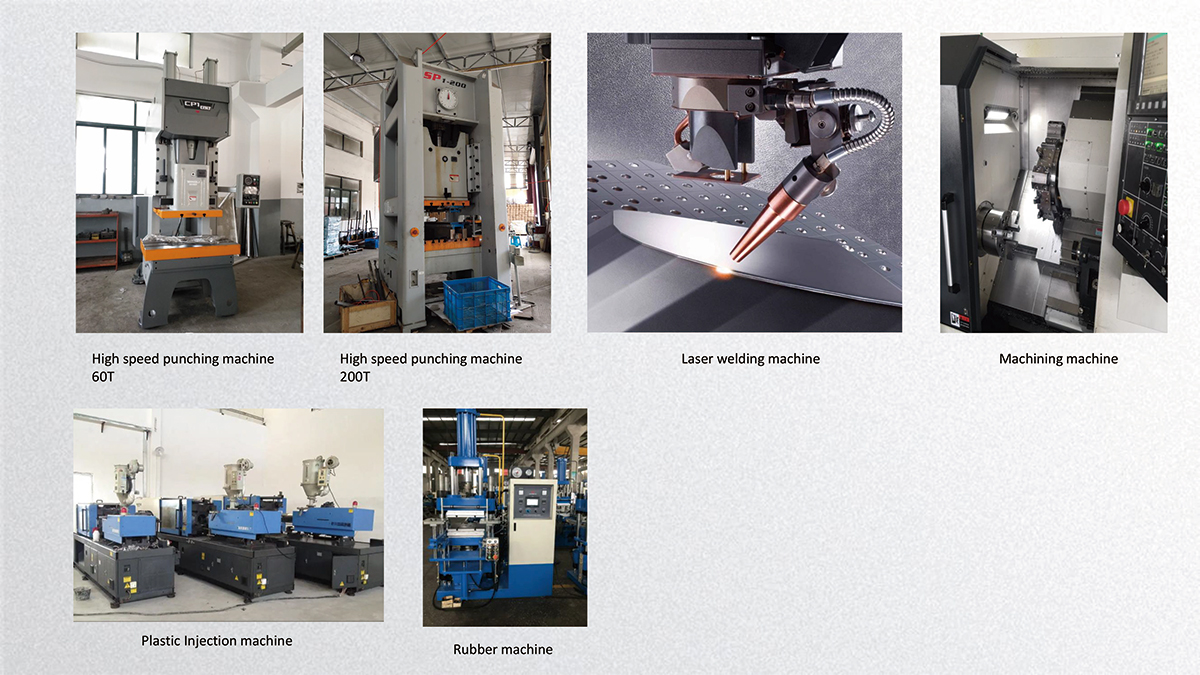
The catalog confirms several manufacturing capabilities connected to drain production: SS304, SS316, ABS, PVC, stamping, laser cutting, bending machine, welding machine, shaper, plastic injection machine, and rubber machine. This does not mean every drain pan for shower uses every material or every process. It means the buyer has enough evidence to ask precise questions about which material and forming route applies to the quoted item.
The metal route and plastic route behave differently. A stainless steel route may involve cutting, forming, bending, welding, surface treatment, and finish control depending on the product design. A plastic route may involve injection or shaped plastic production logic. Rubber may appear in sealing or related accessory contexts, but the catalog does not confirm a specific rubber configuration for a shower pan. The buyer should therefore avoid broad claims such as “all models are stainless steel” or “all models are PVC.” A better specification uses conditional language: if the pan uses stainless steel, confirm grade, finish, welding, and surface treatment. If it uses ABS or PVC, confirm forming method, cleaner compatibility, and installation support.
The edge extreme scenario is a mixed-pressure wet base cycle. During the early period, a shower pan may experience only normal water contact and light loading. During the middle period, repeated stepping, cleaning, and temperature variation create small dimensional stress. During the limit period, weak forming can reveal itself as local movement, corner stress, outlet distortion, or surface changes. Stainless steel and plastic do not fail in the same way. Metal weakness may relate to forming stress, weld quality, surface restoration, or insufficient structural support. Plastic weakness may relate to deformation, chemical sensitivity, or unsupported load paths. The catalog does not give exact material thickness or resin formulation, so the article must stay within confirmed material families and logical engineering behavior.
A cross-dimensional test case compares two quotations. Supplier A quotes a low-cost shower pan but only states “bathroom use.” Supplier B states the material route, drawing process, prototype route, trial production sequence, and inspection method. Even without a final price comparison, Supplier B gives the buyer a stronger basis for risk control. The value is not only in the material name. It is in the ability to connect material, forming, sample, QC, and packaging into one repeatable specification.
| Route | Confirmed catalog basis | Buyer should verify | Risk if ignored |
|---|---|---|---|
| Stainless steel route | SS304 and SS316 raw material listed | Grade, forming, welding, finish, passivation scope | Surface defects, weld marks, shape stress |
| Plastic route | ABS and PVC raw material listed | Forming method, support design, cleaner exposure | Deformation or chemical sensitivity |
| Rubber-related route | Rubber material and rubber machine listed | Actual sealing role and assembly position | Misunderstood sealing responsibility |
| Custom route | OEM and ODM process listed | Concept, drawing, prototype, mould, trial production | Sample-to-batch mismatch |
| Finish route | Brushed, sandblasting, powder coating, different colors listed | Approved finish sample and packing protection | Batch appearance variation |
The most important trend is disciplined material wording. Buyers increasingly reject vague claims and ask for specification boundaries. For a drain pan for shower, a supplier should not be evaluated only by whether it can produce a bathroom component. It should be evaluated by whether it can define the route from material selection to finished, packed, repeatable product.
Packaging and finish evidence that keeps a drain pan for shower specification repeatable
Finish and packing are often treated as late-stage details, but for a drain pan for shower they influence repeatability. The catalog confirms a 2,000 square meter surface treatment workshop and lists pickling, electrical polishing, and passivation. It also states surface treatment is done by the supplier, packing is according to export standard, and customized packing is acceptable. These facts matter because shower-room products are exposed to moisture, cleaning, handling, installation, and transport before they ever reach the final bathroom.
The surface evidence begins after forming and welding. The catalog notes that drains after welding can be dirty on the surface, with oil, scratches, yellow spots, and other marks, and that pickling can clean the surface to make it look silver. For a shower pan, this information should not be exaggerated into a universal corrosion guarantee. It should be used more carefully: surface treatment is part of visual and material restoration after production, and it should be confirmed for the exact supplied model.
A lifecycle finish model helps clarify the issue. In the initial stage, the part leaves production with a selected finish such as matte silver, black powder coated, or other colors where applicable. In the middle stage, the part is packed, handled, shipped, unpacked, installed, cleaned, and exposed to water. In the limit stage, weak finish control may show scratches, stains, uneven color, or visible handling marks before the buyer can even judge real shower performance. This is why export packaging and customized packing are not only logistics details. They protect the approved sample identity.
A comparison between finish approval and finish repeatability is useful. Finish approval means the buyer likes one surface. Finish repeatability means the same approved appearance can survive production, packing, and delivery. The catalog supports the discussion of surface treatment and packing, but it does not provide salt-spray hours, coating thickness, drop-test levels, or film measurements. Those must not be invented. Instead, buyers should request project-specific packing photos, sample packaging, surface approval samples, and batch inspection rules.
Four practical acceptance solutions create a stronger procurement gate.
Solution 1: Lock the sample as the finish reference.
Execution Protocol: The buyer should approve a physical sample or a clearly documented sample set before batch production. The sample should include the visible finish, edge quality, outlet area, and packing method where possible. A photo alone is not enough for a product that must survive transport, installation, and wet-room use.
Material Expected Evolution: With a locked reference, the supplier can compare later production against the approved surface and shape. This does not change the material chemistry, but it improves repeatability by turning a subjective finish into a controlled acceptance target.
Hidden Cost and Side-Effect Control: The cost is slower approval. The risk is that buyers may over-focus on front-side appearance. To avoid that, the sample review should include edges, underside zones, and packing condition.
Solution 2: Separate material route approval from color approval.
Execution Protocol: Approve SS304, SS316, ABS, or PVC route first, then approve finish. If the project changes from metal to plastic or from one surface treatment to another, the approval should restart.
Material Expected Evolution: This prevents a cosmetic finish from hiding different structural behavior. Stainless steel, ABS, and PVC respond differently to forming stress, cleaners, and installation pressure.
Hidden Cost and Side-Effect Control: The risk is longer supplier communication. The control method is a simple approval sheet listing material, process, finish, and sample version.
Solution 3: Request leakage-related inspection language.
Execution Protocol: The catalog states that air testing is used to test leakage for all drains. For a drain pan or related shower base item, the buyer should ask how the leakage-related check applies to the supplied product and whether the outlet or assembly zone is included.
Material Expected Evolution: Testing does not strengthen the material, but it helps catch small defects before shipment. It turns hidden risk into a visible acceptance step.
Hidden Cost and Side-Effect Control: The risk is assuming one test covers every failure mode. Buyers should ask for the test scope rather than treating the phrase “tested” as a complete guarantee.
Solution 4: Treat export packing as a specification item.
Execution Protocol: Ask for standard packing details and customized packing options during quotation, not after production. A shower pan with an approved finish can still fail commercially if it arrives scratched, bent, or poorly protected.
Material Expected Evolution: Packing reduces transport-induced surface wear and shape risk. It does not replace material strength, but it protects the final approved condition.
Hidden Cost and Side-Effect Control: Better packing can increase volume and freight cost. The buyer should balance protection level with order size, destination, and handling route.
A repeatable drain pan for shower specification is built from evidence, not assumptions: material route, drawing boundary, sample approval, forming route, surface treatment, leakage-related inspection, and packing proof.
Frequently Asked Questions (FAQ)
How to clean shower drain pipe?
Use a removable strainer or access point if available, clear hair and soap residue, then flush with warm water. Avoid aggressive chemicals unless the pipe and surrounding materials are confirmed compatible. For shower pan systems, cleaning should not damage seals, coated surfaces, plastic parts, or stainless steel finish areas.
How to get a shower drain off?
First identify whether the drain is threaded, screwed, clipped, sealed, or part of a larger shower pan assembly. Do not force removal before confirming the structure. For project installations, request the supplier’s drawing because outlet geometry and fixing method are not universal across shower basins and tray boards.
How to install a linear drain in a curbless shower?
A curbless shower requires coordinated floor height, waterproofing, slope direction, outlet position, and drain body alignment. Do not rely on the drain alone. Confirm the shower pan or tray board drawing, waterproofing method, and installation build-up before approving bulk materials or starting site work.
How to fix a leaking bathroom drain pipe?
Locate whether the leak comes from the pipe joint, drain body, outlet connection, waterproofing layer, or shower pan boundary. Tightening visible parts may not solve hidden water tracking. For factory-supplied drain-related components, ask whether leakage-related inspection was performed and what assembly zone it covered.
Are floor drains required in commercial bathrooms?
Requirements depend on local building code, bathroom type, occupancy, and drainage design. Commercial bathrooms often need stronger drainage planning than residential spaces. Always confirm local code and project drawings rather than assuming that a shower pan, floor drain, or waterproofing board alone satisfies the requirement.
How to clean bathroom drain smell?
Drain smell usually comes from trapped organic residue, dry traps, poor venting, or hidden buildup around the drain path. Clean visible debris first, flush the line, and check whether water remains in the trap. If smell returns, inspect installation slope, trap condition, and pipe ventilation.