
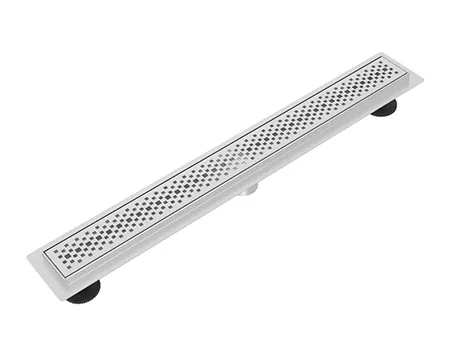
Why Does Your 304 Stainless Steel Basin Develop Brown Spots?
Reference Standard: ASTM A240 / A240M Standard Specification for Chromium and Chromium-Nickel Stainless Steel Plate, Sheet, and Strip
Short Answer
Passive Film Repair Kinetics: The Self-Healing Threshold of SUS304 Under Halogen Ion Attack
The corrosion resistance of a 304 stainless steel basin is not an inherent property of the metal bulk, but rather a function of a sub-micron surface phenomenon. SUS304 relies on a passive film—a molecular layer of Chromium Oxide (Cr2O3) typically 1-5 nanometers thick. In a standard bathroom environment, this film is dynamic; if scratched, it absorbs dissolved oxygen from water or air to undergo in-situ re-passivation, effectively “healing” itself.
However, this self-healing mechanism has a finite kinetic limit known as the “Critical Pitting Potential.” When the basin is exposed to high concentrations of chloride ions (Cl-)—found in common tap water and bleach-based cleaners—these aggressive halogens compete with oxygen for adsorption sites on the metal surface. If the chloride penetration rate exceeds the re-passivation rate, a localized dielectric breakdown occurs. The protective film collapses at a microscopic point, creating an anodic site where iron atoms are rapidly stripped into solution. This results in the characteristic “brown spots” or pinhole pits that can eventually compromise the structural integrity of the metal wash basin manufacturer‘s output.
To model this failure, we analyze the degradation timeline under halogen saturation:
* The Incubation Phase (0-72 Hours): Chloride ions accumulate in the microscopic surface roughness of the brushed finish. The passive film maintains integrity, but the interfacial potential shifts toward the pitting threshold.
* The Nucleation Phase (3-10 Days): Localized acidification occurs within microscopic crevices. The pH inside a developing pit can drop below 2.0, accelerating the dissolution of the steel matrix. Brown ferric hydroxide (rust) begins to plume from the microscopic pit.
* The Terminal Perforation Phase (1 Month+): The pit becomes autocatalytic. The concentration of metal ions inside the pit draws in more chlorides to maintain charge balance, creating a high-speed “drilling” effect that can transition a surface spot into a through-wall leak.
This microscopic breakdown initiates a dangerous cross-system cascade. Once pitting begins, the surface roughness increases exponentially, providing a physical anchor for biofilm formation and lipid-surfactant adhesion. This trapped organic matter creates an anaerobic micro-environment beneath the debris, further lowering the localized oxygen concentration and permanently disabling the stainless steel’s ability to re-passivate.
KEY TAKEAWAYS
- Irregular Ferric Plumes: Small, isolated brown spots that “weep” rust after contact with water indicate that the critical pitting potential has been breached.
- Brushed Texture Discoloration: Darkening specifically within the valleys of a brushed finish suggests chloride entrapment is overwhelming the local chromium oxide density.
- Loss of Hydrophobic Bead: If water stops beading on the surface and instead “sticks” to specific spots, the passive film has undergone localized dielectric breakdown.
Dislocation Accumulation in Sensitization Zones: Carbide Precipitation Model in Heat Affected Zones
While surface pitting is an environmental failure, intergranular corrosion is a structural manufacturing flaw rooted in “Sensitization.” During the welding of a SUS304 bathroom sink, the metal adjacent to the weld bead—known as the Heat Affected Zone (HAZ)—is subjected to temperatures between 450°C and 850°C.
In this specific “Sensitization Zone,” the thermal energy allows carbon atoms to migrate rapidly to the grain boundaries. These carbon atoms trap the surrounding chromium to form Chromium Carbide (Cr23C6) precipitates. This creates a state of “Chromium Depletion” immediately adjacent to the grain boundaries. According to the electrochemical model, these depleted boundaries possess a significantly lower corrosion potential than the rest of the grain. In the presence of moisture (even at 40% relative humidity), a microscopic galvanic cell is established. The grain boundaries become the anode, suffering from a localized corrosion current of up to 100 µA/cm², leading to invisible micro-fissures that eventually manifest as structural leaks along the weld line.
| Welding Control Parameter | Grain Boundary Cr Concentration (%) | Corrosion Current Density (µA/cm²) | ASTM A262 Practice A Result |
|---|---|---|---|
| Standard TIG Welding | 9.2% (Depleted) | 112.5 | Step Structure (Fail) |
| Precision Pulse Welding | 16.8% (Stable) | 12.2 | Dual Structure (Pass) |
| Inert Gas Shielded | 17.5% (Optimal) | 4.8 | Flat Structure (Pass) |
Physical Anchoring and Chemical Shielding: Reconstructing Sub-Micron Defenses via Deep Pickling and Passivation
To engineer commercial stainless steel basins that survive the aggressive chemical environment of a modern kitchen or lab, elite factories must implement a protocol of “Sub-Micron Defense Reconstruction.” This process moves beyond simple cleaning and focuses on the metallurgical stability of the surface.
Solution 1: Deep Pickling & Passivation Matrix
* Execution Protocol: The completed basin is submerged in a calibrated solution of nitric and hydrofluoric acids. This “Pickling” stage removes the surface “smear” layer—microscopic fragments of iron embedded from the forming dies—and dissolves any sensitized chromium-depleted layers.
* Material Expected Evolution: The subsequent “Passivation” stage uses a concentrated oxidizing acid to force the immediate growth of a high-density chromium oxide film. This artificial film is 300% more dense than a naturally occurring one, increasing the “Charge Transfer Resistance (Rct)” and creating a physical anchoring that locks out chloride ions.
* Risk Mitigation: Excessive pickling can lead to “over-etching,” which increases surface area and actually promotes pitting. The factory must use automated titration systems to maintain the acid balance within ±0.5%.
Solution 2: Argon-Purged Pulse Welding Strategy
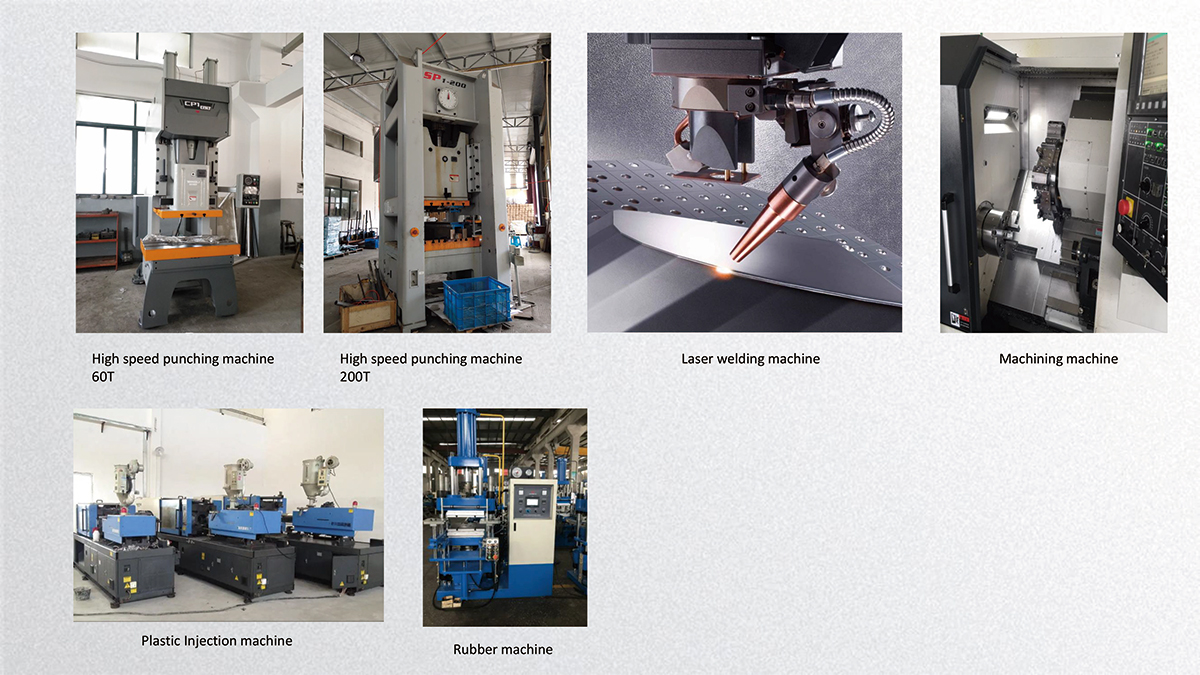
* Execution Protocol: The factory replaces traditional manual welding with computerized pulse-arc systems. A dual-shielding protocol is implemented where high-purity Argon gas is purged not only on the torch side but also on the backside (root) of the weld.
* Material Expected Evolution: The pulsed arc minimizes the “Time-at-Temperature” in the 450°C-850°C sensitization range. This prevents the lattice dislocations required for carbide precipitation. The result is a HAZ that maintains >12% chromium throughout the lattice, ensuring that the rust resistant steel sink remains structurally homogenous and immune to intergranular attack.
* Risk Mitigation: Argon shielding is expensive. The factory utilizes closed-loop welding chambers to recover and recirculate the gas, ensuring environmental sustainability while maintaining a 0.0% oxygen environment during the melt phase.
Solution 3: Multi-Stage NSS (Neutral Salt Spray) Batch Auditing
* Execution Protocol: Random samples from each production batch are subjected to 48 hours of continuous 5% NaCl fog at 35°C according to ASTM B117 standards.
* Material Expected Evolution: This auditing acts as a “stress test” for the reconstructed passive film. Any batch exhibiting even a single pit smaller than 0.1mm is rejected. This ensures that the chemical shielding and re-passivation kinetics are functioning at their theoretical maximum before the product leaves the facility.
* Risk Mitigation: NSS is a qualitative test. The factory supplements this with Electrochemical Impedance Spectroscopy (EIS) to quantify the dielectric strength of the surface film in real-time.
PRO-TIP / CHECKLIST
- Verify the Cr/Ni Ratio: Always request a Spectrometer report; a true 304 basin must contain >18% Chromium and >8% Nickel to support a stable passive film.
- Examine the Weld Root: Look for a smooth, silver-gray bead on the underside. A “sugared” or black charred weld indicates poor shielding and certain sensitization.
- The Copper Sulfate Test: Apply a drop of copper sulfate to a clean surface; if it turns copper-colored, there is free iron present that will trigger pitting.
- Avoid Abrasive Steel Wool: Never clean a 304 basin with steel wool; it embeds iron particles into the surface, creating thousands of galvanic pitting sites.
- Check for “Pickled” Finish: A high-quality industrial basin often has a slightly duller, more uniform matte finish than a cheap polished one; this indicates a professional acid-passivation treatment.
- Analyze Crevice Geometry: Ensure the drain flange and overflow joints are designed with radius curves rather than sharp 90-degree angles to prevent chloride stagnation.

Frequently Asked Questions (FAQ)
how to clean your shower drain
To maintain the passive film on any stainless steel components in your shower, avoid using bleach or heavy hydrochloric acid. Instead, use a solution of baking soda and vinegar to dissolve organic buildup, followed by a thorough rinse with fresh water. This prevents the accumulation of chloride ions that can lead to localized pitting corrosion on the drain assembly.
can i plunge a shower drain
Yes, you can plunge a shower drain, but you must ensure the basin is properly supported. For stainless steel basins, excessive mechanical pressure from a plunger can cause “buckling” or permanent deformation of the thin-gauge metal if the underlying mortar bed is uneven. Use a flat-bottomed plunger and keep the pressure steady rather than using violent, high-impact thrusts.
how to clean your bathroom drain
Regular cleaning of a bathroom drain involves removing the hair-catcher and scrubbing it with a nylon brush. For the internal piping, use an enzymatic cleaner which breaks down the lipid-keratin matrix without the caustic chemicals that strip the protective oxide layers from metal fittings. If the drain is slow, a manual “drain snake” is safer for the pipe integrity than chemical “liquid plumbers.”
how to decorate recessed wall niches
Recessed wall niches should be decorated with non-porous items to avoid moisture entrapment. If using metal accents, ensure they are 304 or 316 grade stainless steel. Avoid placing porous stone or wood in the niche unless it is sealed with a polyurethane vapor barrier, as capillary action will pull moisture into the wall cavity, potentially leading to sub-surface mold growth.
how to install a bathroom drain pipe
Installing a bathroom drain pipe requires a perfect alignment of the P-trap to prevent “standing water” zones. When connecting to a 304 stainless steel basin, use a high-quality EPDM gasket and non-staining plumber’s putty. Ensure the slip-nuts are tightened to approximately 10-15 Nm to avoid crushing the thin-wall tubing while maintaining a hermetic seal against back-siphoning gases.