
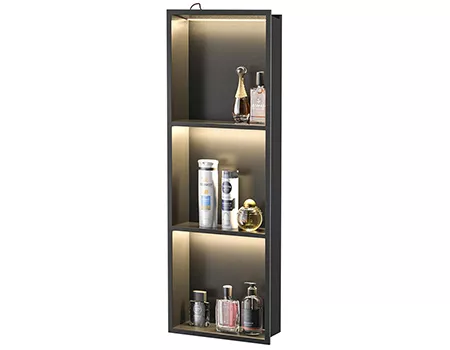
The quarterly report just landed on your desk: domestic wholesale prices for brass mixers and stainless steel accessories have climbed another 15%, but your retail competitors are aggressively slashing prices to capture market share. Your current margins are non-sustainable, and the pressure of margin compression is no longer a forecast—it is your reality.
Procurement managers and e-commerce business owners are frequently trapped in a cycle of diminishing returns when buying through local distributors. While the convenience of local stock is tempting, the hidden trading markups and lack of SKU control often result in a bloated Total Cost of Ownership (TCO). Bypassing these layers to source bathroom accessories directly from China isn't just about finding a cheaper unit price; it is a strategic repositioning of your entire supply chain to recover lost margins and secure long-term commercial viability.
The Economic Reality of Direct Sourcing
In the B2B bathroom hardware sector, the price gap between a regional wholesaler and a direct factory FOB (Free On Board) price is often startling. Industry historical price data indicates that mid-tier distributors typically apply a 30% to 50% markup simply for holding inventory and managing local logistics. By establishing a direct link with manufacturers in production clusters like Kaiping or Foshan, you effectively reclaim this "middleman tax."
By eliminating intermediary markups and optimising container loads, B2B buyers typically see a net reduction in landed costs of around 30%.
China accounts for approximately 40% of global bathroom hardware exports, providing an unparalleled depth of SKU variety and engineering expertise.
However, the benefits extend beyond the immediate balance sheet. Direct sourcing addresses the primary pain point of lead-time volatility. When you buy from a local wholesaler, you are at the mercy of their inventory cycles. If they run out, you wait for their next shipment, which might be months away. Direct engagement allows you to synchronise your production schedule with the factory’s output, ensuring that high-demand items like PVD-coated faucets or tempered glass shelving units are prioritised based on your actual sales data, not a third party's guess.
Overcoming the 'Hidden Spec' Fear
A common hesitation among procurement teams is the risk of "quality fade" or receiving sub-standard batches that don't match the original samples. This is a legitimate concern, often referred to as Hidden Spec Dilution. For instance, a faucet might look identical on the surface, but a factory looking to cut corners might reduce the copper content in the brass alloy or use a thinner nickel plating layer.
In my 15 years of sourcing bathroom hardware, I have learned that the key to avoiding these traps is not just better contracts, but better technical vetting. You must ignore the flashy "Gold Supplier" badges found on large B2B platforms; instead, verify the factory’s actual production capacity by requesting live video of their galvanizing tanks and polishing lines. Real manufacturers are proud of their machinery; trading companies will often make excuses to avoid showing the shop floor.
Strategic buyers use the Total Cost of Ownership (TCO) framework to evaluate their China partners. This means looking past the unit price and factoring in the cost of Pre-shipment Inspections (PSI). Paying $300 for a third-party inspector to verify the finish and functionality of a $20,000 container is the most cost-effective insurance policy in international trade. It ensures that the benefits of direct sourcing—higher margins and unique SKUs—are not wiped out by a single bad shipment.
As we move deeper into the mechanics of direct procurement, we will analyse the vertical integration of Chinese production clusters and how to leverage their "Innovation-to-Market" speed to stay ahead of domestic retail trends.
Beyond the Unit Price: Decoding Vertical Integration
If you are only looking at the price tag on an invoice, you are missing 70% of the strategic value. In the bathroom hardware hubs of Guangdong, the real advantage is vertical integration. When a factory in Kaiping says they have a "vertical supply chain," it means they control everything from the initial brass smelting to the final PVD (Physical Vapour Deposition) coating.
For a procurement manager, this eliminates the "Markup Stack." In a typical fragmented supply chain, the casting house, the polishing shop, and the plating plant each need their own 10-15% profit margin. By sourcing from a vertically integrated partner, those margins are consolidated. You aren't just saving money; you are buying traceability. If a batch of shower arms shows pitting in the chrome after six months, you have one point of accountability, not a circle of sub-contractors pointing fingers at each other.
Buyer’s Forensic Checklist: Spotting the "Middleman" Factory
Before you wire the deposit, use these three non-obvious checks to see if you're dealing with a real manufacturer or a glorified office with a catalog.
Financial Forensics: The Lead-Time vs. Inventory Trap
One of the most significant PAIN POINTS I see business owners struggle with is the "Container Anxiety." You save 30% on the unit price, but you tie up $50,000 in inventory that takes 45 days to arrive. This is where most amateur buyers fail: they don't calculate the cost of capital.
Direct sourcing requires a shift from "Just-in-Time" to "Strategic Buffer" management. However, the unique advantage of the China supply chain is its Innovation-to-Market speed. Because these factories sit in the middle of a massive ecosystem, they can develop a new faucet handle design or a modular towel rack system in weeks, whereas a domestic brand might take a year. This allows you to command higher retail prices by being the first to market with trending finishes like Brushed Rose Gold or Matte Gunmetal.
In my experience consulting for mid-sized B2B firms, the most successful firms are those that stop treating the factory as a "vender" and start treating them as an "engineering partner." If you send over your sales data and show them where the market is moving, they will often suggest Material Substitution strategies that save you money without compromising the user experience. For instance, substituting a solid brass towel ring for a 304 stainless steel version with a matching finish can drop the cost by 40% while increasing durability in humid coastal environments.
To verify the compliance of these products, we refer to the rigorous standards set by the International Organization for Standardization (ISO) regarding sanitary tapware and accessories. Adherence to these global benchmarks ensures that your direct-sourced inventory can withstand the 500,000-cycle durability tests required for commercial projects.
The "Innovation-to-Market" Speed Advantage
In a domestic retail environment, a new design trend—such as Knurled Industrial Handles or Brushed Nickel minimalist fixtures—often takes 12 to 18 months to trickle down from high-end boutiques to affordable wholesale. Direct sourcing allows you to collapse this timeline. Because you are working directly with the R&D teams in production clusters, you can move from a CAD drawing to a finished, salable SKU in as little as 8 weeks.
This speed is your primary weapon against margin erosion. By being the first to market in your region with a specific finish or a modular "No-Drill" installation system, you bypass the price wars associated with generic, commoditised accessories. You are no longer selling a "towel bar"; you are selling a solution to a specific modern bathroom design trend.
Mitigating the "Distance Dilemma"
The largest perceived hurdle is not the quality—it is the distance. B2B buyers often fear that once the balance is paid, their leverage disappears. To solve this, savvy procurement teams utilise a Resolution Approach based on staged payments and escrow-like protections.
Instead of the traditional 100% T/T (Telegraphic Transfer), we recommend a 30/70 split, where the final 70% is only released upon a successful Pre-Shipment Inspection (PSI). This shifts the power dynamic; the factory is incentivised to ensure that every single glass shelf and robe hook meets your specification because their largest payment depends on it.
Another strategy involves internal linking your sourcing efforts with your inventory management software. By having a clear view of your sales velocity, you can provide factories with a rolling 6-month forecast. In return, they can pre-order raw materials like high-grade zinc alloy or stainless steel ingots, insulating you from the sudden commodity price spikes that often cripple smaller retailers who buy "off the shelf" from local wholesalers.
If you are ready to explore the specific technical requirements for your first direct order, I recommend checking our Custom Bathroom Hardware Manufacturing Process or reviewing the Quality Control Standards for Brass Fittings to ensure your specifications are "factory-ready."
Successfully navigating these waters requires a shift in mindset: you are no longer just a buyer of goods; you are an architect of a global supply chain. This transition is what separates surviving businesses from thriving brands in a compressed margin economy.
The Final Verdict: Scaling with Confidence
Sourcing bathroom accessories directly from China is a transition from a passive buyer to a proactive supply chain architect. The evidence is clear: the 30% reduction in Total Cost of Ownership (TCO) is not just a theoretical saving—it is a liquid asset that can be reinvested into marketing, SKU expansion, or price leadership. However, the true "win" is the control you gain over your product's DNA.
By bypassing the master distributors, you eliminate the information silos that lead to stockouts and quality drift. You are now positioned to respond to market shifts with the agility of a manufacturer, while maintaining the focus of a retailer. To ensure your first or next shipment meets these strategic goals, follow this final vetting framework.
Direct Sourcing Scorecard: Strategic Readiness
Assess your current procurement strategy against these high-performance benchmarks.
| Metric | Standard Path | Direct Path |
|---|---|---|
| Gross Margin | 25-30% | 45-55% |
| Design Control | Generic / Off-the-shelf | Custom / Proprietary |
| Quality Oversight | Third-party reliance | PSI & Factory Audits |
| Supply Chain ROI | Low (Capital Heavy) | High (Efficiency Driven) |
Next Steps for Strategic Buyers
Before committing to a full container, initiate a Prototype Audit. Request a small batch of your top-selling SKU—perhaps a matte black towel rail or a thermostatic mixer—and subject it to a 48-hour neutral salt spray test. This mimics years of exposure in a high-humidity bathroom environment. If the finish remains unblemished, you have verified the factory's plating integrity.
As your volume grows, consider leveraging the external authority of certification bodies like SGS or Intertek to perform random batch testing. This not only protects your investment but serves as a powerful marketing tool for your customers, proving that your "direct" prices do not come at the expense of "premium" quality.
The decision to source bathroom accessories directly from China is the threshold between being a merchant and being a market leader. By applying these forensic vetting techniques and focusing on Total Cost of Ownership, you secure a supply chain that is resilient, profitable, and infinitely scalable.