
Why sewer odors return in wet showers and how linear drain design controls backflow
Why does odor travel back from the drain in wet areas, and how can it be prevented without sacrificing drainage speed? In high-humidity shower environments, odor issues are rarely random accidents. They are usually the result of how water seals, airflow balance, and drain geometry interact over time. Understanding how linear shower drain odor backflow control mechanisms work helps engineers, contractors, and project managers reduce complaints before they appear.
What odor backflow looks like in real shower installations
In residential and commercial showers, odor backflow typically appears after weeks or months of use rather than immediately after installation. Users notice intermittent sewer smells, especially after long idle periods or during heavy water discharge from adjacent fixtures. The problem is not cosmetic; it directly affects user comfort and often triggers costly callbacks.
In a high-humidity shower drainage environment, evaporation rates, airflow pressure changes, and residue buildup all accelerate processes that weaken odor barriers. Linear drains, with their elongated channels, face different challenges than point drains, which is why their internal control mechanisms deserve separate analysis.
How linear shower drain odor backflow control mechanism actually works
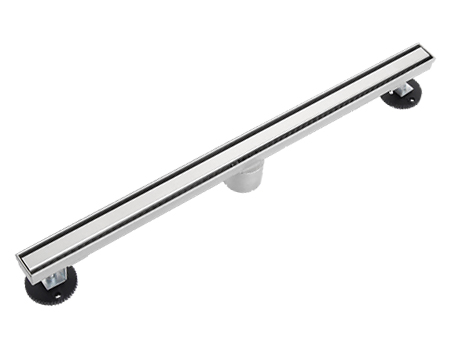
The core function of a linear shower drain odor backflow control mechanism is to isolate sewer gas while allowing high flow rates. This balance is achieved through a combination of water seal depth, mechanical trap elements, and pressure equalization paths.
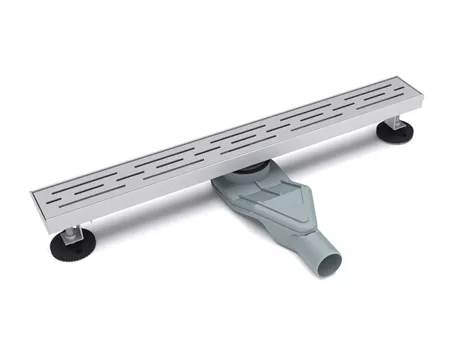
Unlike traditional floor drains that rely on a deep P-trap directly below a small outlet, linear drains distribute water across a channel before it exits through a horizontal or vertical outlet. This design allows for larger surface drainage but requires careful internal sealing to prevent air movement in reverse.
Most linear drains achieve odor isolation through one or more of the following approaches: a retained water seal that blocks gas, a removable mechanical anti-odor insert that closes when dry, or a hybrid design that combines both. Each approach has strengths, but all depend on correct geometry and installation slope to function as intended.
Why water seals alone are not always enough
Water seals are effective barriers, but in showers that are used irregularly, evaporation becomes a predictable weakness. In high-humidity environments, temperature fluctuations accelerate evaporation cycles, gradually reducing seal depth. Once the seal thins beyond a critical point, odor backflow becomes possible.
This is why many modern linear drains integrate secondary mechanical elements. These components close automatically when water is absent, maintaining isolation even if the water seal weakens.
Typical failure modes that lead to odor complaints
Odor backflow rarely has a single cause. Instead, it results from a chain of small design or installation mismatches that compound over time. The most common failure modes observed in linear shower drains include water seal evaporation, debris accumulation that prevents full closure of mechanical traps, and insufficient slope that disrupts pressure balance.
Hair, soap residue, and mineral deposits are especially problematic in linear channels because they spread across a longer surface. When not maintained, these residues interfere with sealing surfaces and create micro-gaps that allow gas migration.
Another overlooked factor is pressure fluctuation within the drainage system. During simultaneous discharge from multiple fixtures, negative pressure can momentarily pull air upward through the drain if sealing mechanisms are marginal.
Installation factors that influence odor control performance
Even a well-designed linear drain cannot compensate for improper installation. Slope tolerance is critical. A slope that is too shallow prevents complete drainage, while excessive slope can destabilize water seal retention.
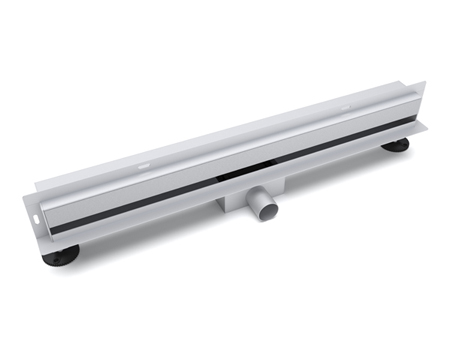
Outlet orientation also matters. Horizontal outlets, commonly used in low-profile constructions, require precise alignment to avoid stagnant zones where debris accumulates. Vertical outlets generally maintain stronger self-cleansing flow but demand sufficient floor depth.
Sealing interfaces between the drain body, waterproof membrane, and tile layer also play a role. Micro-leaks do not cause odor directly, but they alter airflow paths inside the floor assembly, indirectly increasing backflow risk.
How performance is evaluated under testing standards
Odor control is not assessed subjectively in engineering practice. It is evaluated through structured observation and flow testing. Odor backflow observation tests examine whether gas migration occurs under simulated pressure changes, while flow rate tests verify that drainage capacity does not compromise sealing integrity.
In Europe, floor drain performance is commonly referenced against EN 1253 Floor Drains for Buildings, which defines functional requirements for drainage efficiency and water seal behavior. Material and structural aspects are often evaluated using broader frameworks from ASTM International, especially when corrosion resistance and long-term durability are involved.
While not every project requires formal certification testing, understanding these test principles helps decision-makers assess whether a given linear drain design is suitable for continuous exposure to high humidity.
Maintenance considerations that reduce long-term odor risk
Maintenance does not mean frequent disassembly. In well-specified linear drains, routine cleaning focuses on removing surface debris before it migrates into sealing components. Removable covers and accessible inserts simplify inspection without disturbing the waterproof layer.
In commercial environments with heavy usage, scheduled inspection intervals prevent small sealing issues from turning into persistent odor complaints. In residential settings, awareness of evaporation risk during long vacancy periods can guide preventive measures such as periodic water replenishment.
How this ties back to broader linear drain selection decisions
Odor control is only one dimension of linear drain selection, but it is often the one users notice first when something goes wrong. Choosing a drain that balances flow capacity, sealing reliability, and installation constraints reduces downstream risk.
For teams comparing multiple configurations or outlet orientations, reviewing the full linear drain buyer guide provides a broader framework that connects odor control mechanisms with material choices, installation scenarios, and long-term maintenance expectations.
Sources and validation approach
This analysis is developed from drainage structure evaluation, odor backflow observation practices, and real-world shower applications in high-humidity environments. Testing concepts referenced align with flow rate testing and odor observation methods used in standards such as EN 1253 and material performance guidance from ASTM. Performance insights reflect typical installation and usage conditions rather than laboratory extremes.
When linear shower drain odor backflow control mechanisms are treated as deliberate design elements rather than incidental features, odor risk becomes predictable and manageable. In high-humidity shower drainage environments, aligning sealing design, installation accuracy, and validation methods is what allows linear drains to deliver both comfort and reliability over time.