
Which anti-clog features actually matter when choosing linear shower drains for busy shower floors?
Hair and soap residue rarely look like a design problem until water starts pooling across a shower floor.
In residential bathrooms and high-use commercial showers alike, buyers often discover that clogging is less
about how wide the drain looks and more about what happens inside the channel and outlet.
Understanding how anti-clog features work in real installations helps specifiers reduce maintenance calls,
avoid drainage complaints, and select linear drains that perform consistently under daily wet conditions.
Why clogging remains a decision-critical risk in linear shower drains
Linear shower drains are commonly selected for their clean aesthetics and ability to manage surface water
across wide shower entries. Yet the same long, narrow geometry that improves surface capture can amplify
internal blockage risk if debris management is poorly designed.
In high-humidity shower environments, hair strands, soap scum, and fine debris combine quickly, especially
where flow velocity drops near the outlet.
For plumbing engineers and project managers, the core pain point is not a single blockage event but the
pattern that follows: slow drainage, recurring service access, and user complaints.
This is why anti-clog performance has become a primary selection factor rather than a secondary detail.
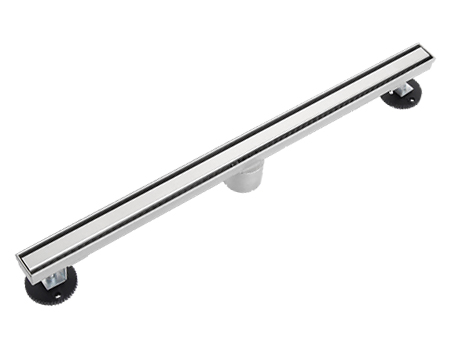
When evaluating options such as a Shower Drain
or a full-length Linear Shower Drain,
the visible grate tells only part of the story.
What matters more is how debris is captured, where it accumulates, and how easily it can be removed during routine maintenance.
How anti-clog design works inside a linear shower drain
Effective anti-clog performance comes from a combination of channel geometry, interception features, and outlet design.
Optimized linear drains use removable strainers or baskets positioned before the outlet connection,
ensuring that hair is captured upstream rather than compacted inside the pipe.
Channel cross-section also plays a role.
Designs that maintain stable flow velocity across the channel length reduce the likelihood of debris settling.
In contrast, flat-bottomed channels with abrupt outlet transitions often create dead zones where soap residue builds up.
Strainers and hair interception logic
A well-designed strainer separates debris from the water stream without significantly restricting flow.
Buyers should look for strainers that can be lifted vertically without tools, allowing maintenance staff
to clear hair in seconds rather than dismantling the drain assembly.
This is particularly relevant in commercial projects where downtime directly affects user satisfaction.
Outlet orientation and debris migration
Horizontal and vertical outlets behave differently under debris load.
Horizontal outlets may allow hair to spread along the channel base, while vertical outlets rely more heavily
on gravity-driven separation.
Choosing the right outlet type should align with floor depth constraints and expected use frequency.
Maintenance access as part of anti-clog performance
Anti-clog features lose value if they cannot be accessed easily.
In practice, maintenance complexity often determines whether a drain remains clear over time.
Removable covers, accessible cleanout paths, and corrosion-resistant materials all contribute to lower
lifecycle maintenance effort.
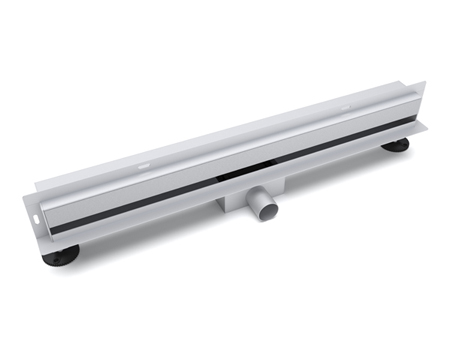
For project specifiers managing long-term performance, this is where selection decisions have the most impact.
A drain that performs well in laboratory flow conditions but requires invasive access for cleaning
will quickly become a liability in busy installations.
Matching anti-clog features to residential and commercial scenarios
Residential showers typically experience intermittent use but high hair accumulation,
while commercial facilities face continuous flow with diverse debris profiles.
Anti-clog strategies should be matched accordingly rather than assuming a one-size-fits-all solution.
In residential renovations, slim profiles and removable baskets often strike the right balance.
In gyms, hotels, or public facilities, larger interception volumes and faster access become more important
than visual minimalism.
Detailed selection paths for these scenarios are often easier to navigate when referenced alongside a more
comprehensive linear drain buyer guide.
How anti-clog performance is evaluated and validated
Anti-clog claims should be supported by measurable testing rather than marketing language.
In practice, this involves flow rate tests under partial blockage conditions,
debris interception evaluations, and inspections of maintenance accessibility.
For floor drains used in wet areas, standards such as
EN 1253 Floor Drains for Buildings
provide a reference framework for drainage capacity and safety expectations.
While these standards do not eliminate clogging risk, they help buyers verify baseline performance
under defined test conditions.
In high-humidity residential and commercial shower environments, validation against these test types
offers a clearer picture of how a linear drain will behave once installed,
particularly when hair and soap residue are introduced over time.
Common selection mistakes buyers should avoid
One frequent mistake is prioritizing visible grate design while overlooking internal structure.
Another is selecting drains without considering how often maintenance staff can realistically access the strainer.
Both errors increase the likelihood of hair accumulation progressing into full blockage.
Buyers also sometimes assume that higher flow capacity automatically means lower clogging risk.
In reality, flow capacity and debris interception must be balanced;
oversized outlets without interception simply move the blockage deeper into the plumbing system.
Using anti-clog features as part of a broader drain selection strategy
Anti-clog design should be treated as one decision layer within the broader linear drain selection process.
Channel length, outlet orientation, installation depth, and maintenance planning all interact.
Viewing these factors together reduces the chance of solving one problem while creating another.
For buyers comparing multiple configurations, referencing a full
linear drain buyer guide
helps place anti-clog features in context with other performance trade-offs.
Long-term reliability comes from controlled trade-offs, not assumptions
Linear shower drain anti-clog features deliver their value when they are matched deliberately
to real usage patterns and validated through appropriate testing.
When hair accumulation and debris interception are treated as design parameters rather than surprises,
drainage performance becomes more predictable.
In high-humidity shower environments, drains that combine optimized channel geometry,
accessible strainers, and verification through flow and debris tests tend to age more gracefully.
Instead of reacting to repeated blockages, buyers can focus on selecting systems that align with
maintenance realities and long-term expectations.
This content is developed based on material performance analysis,
standardized drainage testing references such as EN 1253,
and real-world application scenarios related to residential and commercial shower environments.
Product specifications and evaluation methods reflect common industry practices rather than theoretical assumptions.