
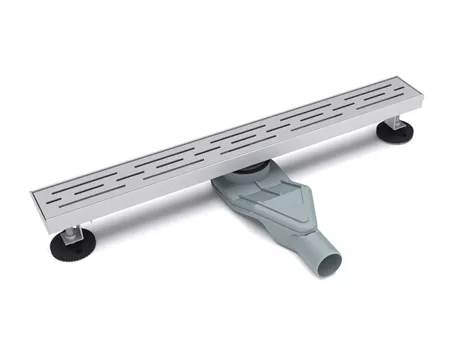
Can a single-slope floor actually work with a linear shower drain?
Water pooling is a common concern when shower floor geometry is simplified, especially in high-humidity wet areas where drainage mistakes show up quickly. In both residential and commercial shower builds, contractors and designers often ask whether a single directional slope can truly guide water into a linear drain without creating standing zones or long-term maintenance issues.
This question usually comes up during early layout decisions, when tile patterns, drain placement, and installation tolerances are still flexible. Understanding how a single-slope floor interacts with a linear drain system helps avoid rework later, particularly in projects where visual simplicity and predictable drainage performance are both priorities.
Why single-slope floors are paired with linear drains
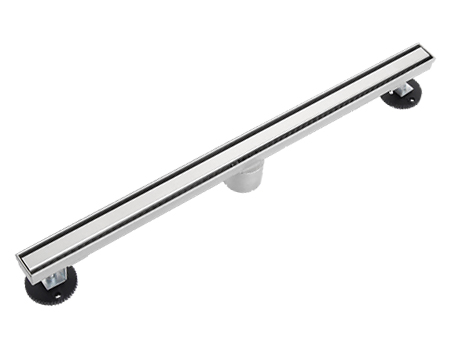
A single-slope shower floor directs water along one plane toward a drain line, instead of converging from four directions toward a central point. Linear drains are designed to receive water along their full length, which makes this geometry feasible when placement and slope are aligned.
The main engineering advantage of this configuration is control. By simplifying slope geometry, installers reduce complex tile cuts and minimize abrupt pitch changes that can interrupt surface flow. When executed correctly, water moves predictably toward the drain inlet rather than seeking low spots across the floor.
In contrast, point drains depend on multi-directional slopes, which demand tighter dimensional accuracy. Linear drains shift that requirement from multiple planes to one continuous plane, making slope verification more straightforward during installation.
Where single-slope designs can fail if details are missed
The most common failure mode associated with single-slope floors is water pooling caused by insufficient slope or misaligned drain positioning. This does not usually stem from the drain itself, but from small deviations in floor pitch that interrupt surface flow before water reaches the channel.
In high-humidity shower environments, even shallow pooling becomes noticeable over time. Soap residue and mineral deposits tend to collect in these low zones, turning a minor installation error into a recurring maintenance complaint.
These issues are more likely when the drain is placed too far from the lowest point of the slope, or when the slope angle is reduced to preserve floor height without compensating through drain length or outlet capacity.
How slope angle and drain placement work together
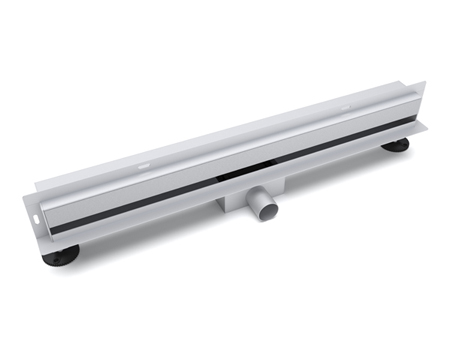
For a single-slope floor to work reliably, the drain must sit exactly at the lowest elevation of the plane. Wall-mounted linear drains are commonly used because they reduce the horizontal distance water needs to travel, lowering the risk of stagnation.
Typical installations maintain a consistent pitch across the entire floor surface. What matters more than the absolute slope value is uniformity. Small localized depressions can interrupt flow even when the average slope appears adequate.
This is why installers often dry-fit the drain body and verify floor flatness before final waterproofing. Adjustments made at this stage are far easier than correcting pooling after tile installation.
Drain outlet configuration and its impact on single-slope performance
Outlet orientation plays a secondary but important role in single-slope designs. Horizontal outlet linear drains are commonly selected when slab depth is limited, while vertical outlets are preferred where direct downward discharge is possible.
From a flow perspective, both configurations can perform well if matched to the correct slope geometry. Problems arise when outlet constraints force the drain body higher than intended, reducing effective slope near the inlet edge.
In these cases, reviewing compatible drain bodies—such as slim linear profiles or wall-mounted variants—helps maintain slope integrity without compromising outlet alignment.
Validating performance through testing and inspection

Practical validation of a single-slope floor with a linear drain typically involves two checks: a flow rate test and a water pooling inspection. These tests confirm that surface water reaches the drain efficiently under realistic usage conditions.
Standards such as EN 1253 floor drain testing define how drainage components are evaluated for capacity and surface behavior. While these standards focus on the drain, they indirectly highlight the importance of correct slope integration.
During inspection, installers look for residual water after a controlled discharge. Persistent pooling often indicates slope inconsistency rather than insufficient drain capacity.
When to reconsider a single-slope approach
Single-slope floors are not ideal in every scenario. Very large shower footprints or installations with multiple spray sources may overwhelm shallow slopes unless the drain length and outlet capacity are scaled accordingly.
In such cases, designers may either increase slope slightly or introduce secondary drainage strategies. Recognizing these limits early prevents over-reliance on a simplified geometry that does not match usage intensity.
For projects where aesthetics drive the choice, reviewing the broader selection considerations in the linear drain buyer guide helps balance visual goals with drainage reliability.
Decision guidance for contractors and specifiers
For contractors and designers evaluating this layout, the key question is not whether a single-slope floor can work, but whether the entire system—slope, drain placement, outlet configuration, and waterproofing—has been coordinated as one.
When these elements align, single-slope floors with linear drains deliver predictable drainage and cleaner visual lines. When they do not, the resulting pooling issues are often misattributed to the drain rather than the installation logic behind it.
Treating slope geometry as a performance parameter rather than a visual preference leads to more consistent outcomes, particularly in high-humidity shower environments where small errors are amplified over time.
This content is developed based on material and drainage performance analysis, common flow rate testing practices, and real-world shower installations in high-humidity wet areas. Validation approaches referenced here align with standardized drain testing concepts and field inspection methods used to control water pooling and long-term reliability.