
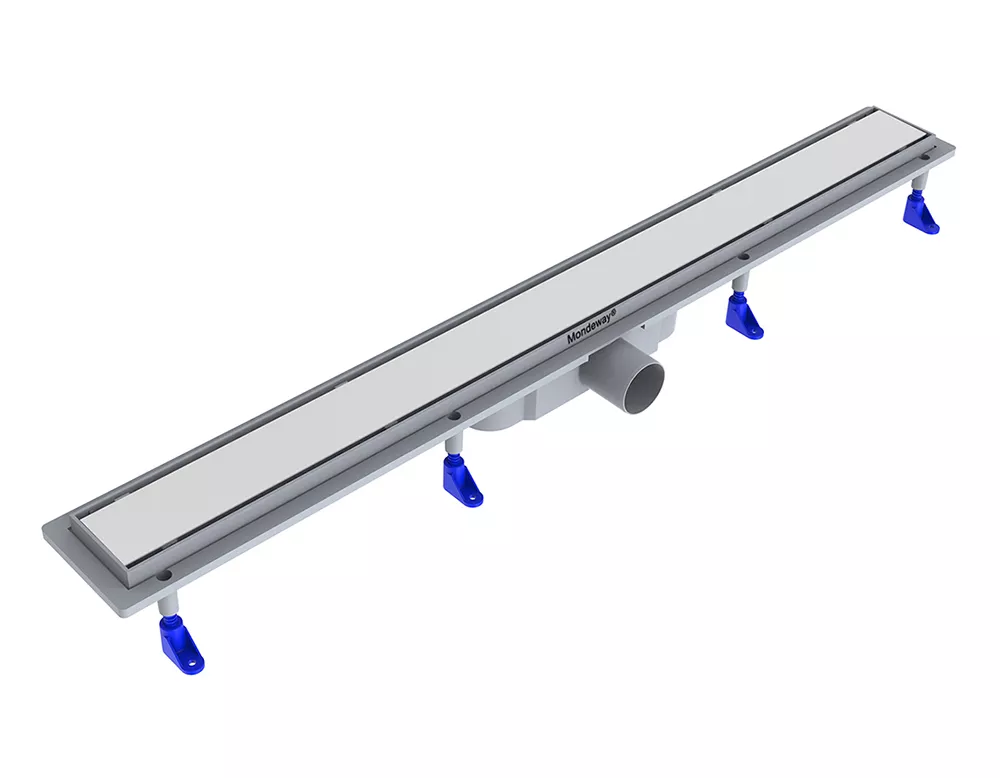
Why increasing linear shower drain length does not always improve drainage capacity
Why does increasing linear shower drain length often fail to improve drainage performance in wet-area floors? In high-humidity bathroom environments, many project engineers discover that water evacuation remains slow even after specifying a longer drain channel. The underlying constraints usually lie in outlet capacity, floor slope, and hydraulic balance rather than the visible length of the drain itself.
Where the assumption about longer linear drains comes from
Linear shower drains are frequently selected because their elongated inlet visually suggests higher drainage efficiency. For contractors and designers working on residential and commercial bathrooms, the idea seems intuitive: a longer opening should capture more surface water. This assumption is reinforced in large-format tile showers where point drains appear restrictive.
However, drainage systems do not operate purely on surface intake area. Once water enters the channel body, the controlling factor becomes how efficiently it can exit through the outlet and downstream piping. Without sufficient hydraulic capacity beyond the grate, additional length offers diminishing returns.
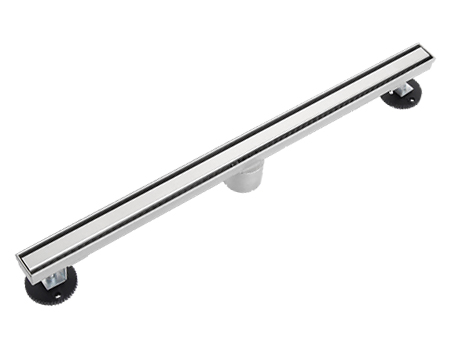
Hydraulic reality: what actually controls drainage capacity
In practice, drainage capacity is governed by a chain of constraints. The inlet length determines how easily water enters the channel, but once inside, gravity flow must overcome friction losses, directional changes, and outlet restrictions. If the outlet diameter or orientation is undersized, the system bottlenecks regardless of channel length.
For example, in horizontal outlet configurations commonly used in slab installations, the flow rate is limited by pipe diameter and available slope. Extending the channel without increasing outlet size does not increase the maximum discharge rate. This is why many long linear drains still experience pooling during peak shower flow.
Why slope matters more than visible drain length
Floor slope is one of the most underestimated parameters in linear drain performance. In high-humidity shower floors, even small deviations from the recommended gradient can slow water migration toward the channel. When slope tolerance is marginal, water reaches the drain unevenly, creating the illusion of insufficient drainage capacity.
Longer drains often span wider areas, which makes achieving consistent slope more difficult during installation. If the substrate is not accurately formed, parts of the channel receive minimal flow while others are overloaded. This uneven distribution negates the theoretical advantage of added length.
Common failure pattern: slow drainage despite extended channel
The most typical failure mode observed on site is inadequate drainage caused by undersized outlets or insufficient slope despite an extended linear drain. Water does not back up because the grate is blocked, but because the outlet cannot evacuate incoming flow quickly enough. This condition is especially common in commercial restrooms with heavy usage.
When this happens, installers may mistakenly attribute the issue to debris or grate design, while the real limitation sits further downstream. Addressing the problem requires reassessing the entire drainage path rather than replacing the visible channel.
Outlet configuration and orientation trade-offs
Horizontal and vertical outlet designs behave differently under load. Vertical outlets generally offer higher flow potential because gravity assists discharge directly into the waste pipe. Horizontal outlets rely more heavily on slope and pipe alignment. Selecting between these configurations should be based on structural constraints and expected flow, not channel length alone.
Project teams comparing options such as horizontal versus vertical outlet drains often find that outlet orientation has a more measurable impact on performance than adding 100 or 200 millimeters of channel length.
How flow performance is evaluated in real projects
Drainage systems are typically assessed using flow rate tests and water evacuation performance evaluations. These tests simulate continuous water input and measure how quickly the system clears the surface without pooling. In wet-area floor installations, such testing reveals whether the outlet and slope combination can handle peak flow.
Standards such as EN 1253 floor drain requirements define performance expectations for drainage capacity and water seal behavior. While these standards do not prescribe drain length, they emphasize verified discharge capability.
Installation constraints in high-humidity bathroom environments
In residential and commercial bathrooms, moisture exposure is constant. Materials expand and contract, waterproofing layers add thickness, and tile tolerances accumulate. These factors influence how precisely a linear drain can be set relative to the finished floor.
Longer drains amplify installation sensitivity. Any misalignment over the length of the channel can introduce localized low points where water stagnates. Shorter, well-aligned drains with properly sized outlets often outperform longer drains installed under tighter constraints.
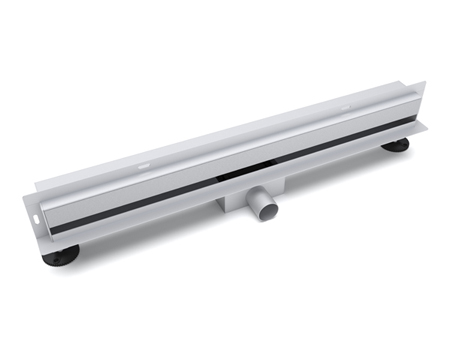
When longer linear drains do make sense
Extended channel length can be beneficial in specific scenarios. Large-format showers with wide spray coverage benefit from distributed intake, reducing surface sheet flow. In these cases, longer drains help collect water evenly, but only when paired with adequate outlet sizing.
Commercial spa showers and barrier-free designs often use longer drains for accessibility and aesthetics. Here, the visual and functional benefits align, provided hydraulic constraints are addressed during design.
Selection guidance to avoid repeat drainage issues
For plumbing engineers and project managers, the key is to treat linear drain length as one variable among many. Outlet diameter, orientation, pipe slope, and expected flow rate should be evaluated together. Focusing on a single visible parameter leads to repeated performance complaints.
When comparing linear drain configurations, it is often useful to step back and review a more comprehensive framework such as the Linear Drain Buyer Guide for Commercial and Residential Shower Projects, which places length within the broader context of system-level performance.
Verifying performance before handover
Before project handover, simple on-site water evacuation tests can validate whether the installed system meets expectations. Introducing controlled water flow and observing clearance time provides immediate feedback. These checks align with laboratory-style flow rate testing and help catch issues early.
Where projects require documented compliance, referencing methodologies aligned with organizations such as ASTM International can support objective evaluation without relying on assumptions.
Long-term reliability and maintenance implications
Over time, maintenance teams care less about channel length and more about predictable behavior. Systems designed with sufficient outlet capacity and proper slope tend to resist clogging and odor issues more effectively. Longer channels that mask hydraulic limitations often generate repeated service calls.
By addressing drainage capacity holistically, facility managers reduce intervention frequency and extend service life, even in demanding high-humidity environments.
When linear shower drain length is considered alongside outlet sizing, slope control, and verified flow performance, the engineering advantage of distributed surface intake becomes reliable rather than theoretical. In high-humidity shower floors, treating inadequate drainage as a controllable design parameter instead of a surprise outcome leads to more stable, testable results over the long term.