

How a linear drain works in a shower system under real wet-area conditions
Understanding how a linear drain works in a shower system often becomes critical once projects move beyond visual design and into real installation and performance questions. In high-humidity residential and commercial shower environments, drainage behavior is shaped by flow paths, slope tolerance, and how consistently surface water is collected before it can pool or migrate under finishes.
Why linear drainage behaves differently from point drainage
Traditional point drains rely on converging floor slopes toward a single inlet. A linear drain changes this geometry entirely. Instead of forcing water to converge radially, the system spreads collection along a continuous inlet edge. This structural difference explains why linear drains are often specified when designers want predictable surface flow across long shower thresholds or barrier-free entries.
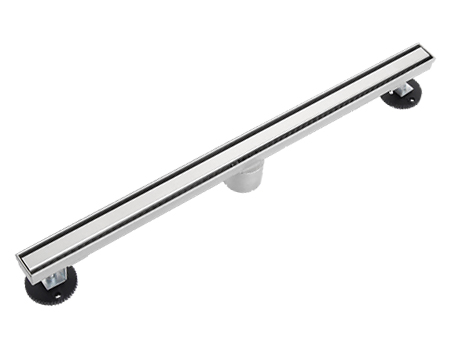
Because intake occurs along a line rather than a point, surface water encounters less localized resistance. The engineering advantage lies in hydraulic consistency: water enters the drain more evenly, which helps stabilize flow rates when multiple spray sources or wide shower zones are involved.
Internal flow path from grate to outlet
Inside the drain body, water captured at the grate transitions into a shallow channel before reaching the outlet. This channel geometry matters more than many installers expect. A well-designed linear drain maintains cross-sectional area along the channel so that debris does not accumulate at sudden constrictions.
When slope tolerance is insufficient or the channel is improperly leveled, water velocity drops. This is where the most common failure mode appears: localized debris buildup that gradually reduces effective flow capacity. The issue is not unique to linear drains, but the longer channel means installation precision becomes more important.
How floor slope interacts with linear drain performance
Linear drains allow designers to use single-direction slopes instead of four-way slopes. In practice, this simplifies tile layout and improves accessibility. From a drainage standpoint, the slope only needs to direct water toward one edge, but the tolerance window is narrower.
If slope is too shallow, water reaches the inlet unevenly and may stagnate at low points. If slope is excessive, flow accelerates toward one section of the drain, undermining the advantage of distributed intake. These behaviors explain why linear drains are frequently paired with prefabricated shower bases or leveling supports.
Debris handling and clogging risk in daily use
Hair, soap residue, and fine construction debris are unavoidable in shower environments. Linear drains mitigate clogging risk by spreading intake velocity, but they do not eliminate it. When channel cleaning access is limited, buildup tends to occur at the outlet transition rather than the grate.
This is why many project managers evaluating linear systems eventually compare outlet orientation and access options across product lines before final selection.
For readers comparing overall system behavior rather than individual components, a more comprehensive overview is available in the Linear Shower Drain Buyer Guide, which connects flow mechanics with selection considerations.
How flow performance is evaluated in practice
Flow performance is typically validated using a flow rate test that simulates sustained water input under controlled conditions. Rather than focusing on peak flow alone, engineers look at stability over time, especially in high-humidity residential and commercial shower environments.
Standards such as EN 1253 Floor Drains for Buildings define test conditions that reveal how drains behave as debris begins to accumulate. Complementary material and dimensional checks referenced by ASTM International help verify corrosion resistance and manufacturing consistency.
Linear drain types and outlet orientation
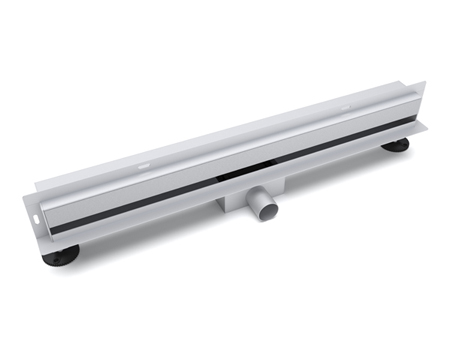
Horizontal and vertical outlet configurations influence how quickly water exits the channel. Horizontal outlets are often favored where slab depth is limited, while vertical outlets can simplify downstream piping in new construction. The working principle remains the same, but installation constraints differ.
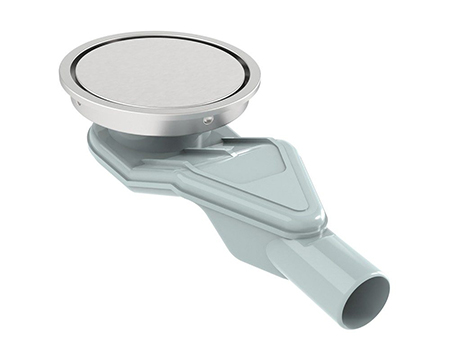
Choosing between outlet orientations is less about flow rate differences and more about how reliably the system can be installed within given structural limits.
Common misconceptions about linear drain efficiency
A frequent misconception is that longer drains automatically handle more water. In reality, effective capacity depends on channel geometry, outlet size, and slope control. Extending length without adjusting these parameters can actually increase the risk of uneven flow distribution.
This is why linear drains are best evaluated as part of a complete shower drainage system rather than as isolated accessories.
Where linear drains make the most sense
Linear drains perform best in barrier-free showers, wide enclosures, and commercial installations where multiple spray sources operate simultaneously. In compact residential showers with limited slope tolerance, point drains may still offer simpler installation with fewer variables.
Understanding these boundaries helps prevent misapplication, which is often mistaken for product failure when performance issues arise.
Standards, validation, and long-term reliability
Long-term reliability depends on how well a linear drain maintains flow under real use. Flow rate testing, dimensional accuracy inspection, and corrosion resistance evaluation together form the basis for judging suitability in wet environments.
Content here is developed from standardized flow testing references, material performance analysis, and real-world application scenarios in high-humidity shower installations. Product behavior is interpreted through publicly available standards and common plumbing practice rather than idealized laboratory conditions.
When slope control, outlet orientation, and validated flow performance are aligned, a linear drain works in a shower system as intended: quietly managing water without becoming a maintenance focal point, even as daily use accumulates debris over time.